Why there are Amazon links here: Brave Review is paid a commission for qualifying Amazon purchases made through the links below. Your price does not change, and using our links is entirely optional. How this works
ALLWEI Portable Power Station 300W vs EnginStar Portable Power Station 300W: Battery Chemistry Decides It
The ALLWEI Portable Power Station 300W and the EnginStar Portable Power Station 300W sit in the same size class and within a few dollars of each other, so the choice comes down to what is inside the case. The ALLWEI carries a LiFePO4 battery, USB-C PD 60W fast charging and MPPT/BMS protection. The EnginStar leans on a larger raw capacity figure and a lower price. This comparison lays out the differences dimension by dimension and names the buyer each one fits.
ALLWEI Portable Power Station 300W
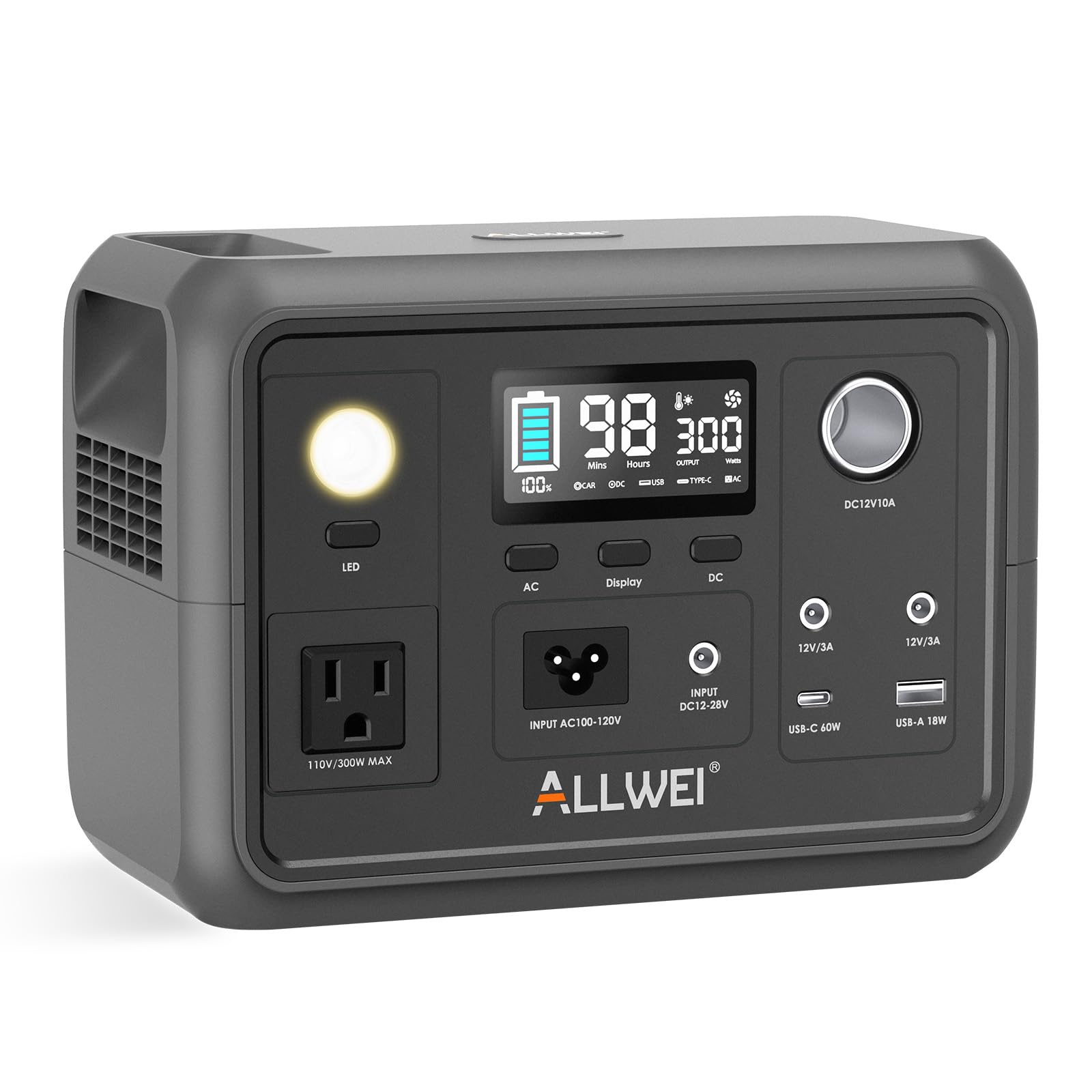
Battery Chemistry: LiFePO4 (lithium iron phosphate)
Capacity: 256Wh
AC Output: 300W, pure sine wave
USB-C Charging: PD 60W fast charging
Protection: MPPT solar regulation and BMS battery management
Intended Use: Camping, outdoor, home backup, emergency, CPAP
Form Factor: Compact
The ALLWEI is built around a LiFePO4 battery, which is the chemistry buyers should look for when a power station will sit unused for months between camping trips or outages. LiFePO4 tolerates deep discharges and long storage better than the older lithium blends, and it holds up over more charge cycles. The 256Wh capacity is modest but honest for a compact unit, and the pure sine wave AC output means sensitive electronics like CPAP machines and laptops get clean power rather than a modified waveform.
The PD 60W USB-C port is the practical standout. It can top up a laptop or phone at a rate that actually matters, and combined with MPPT solar regulation the unit can be recharged from a panel without wasting panel output. The BMS layer guards against overcharge and over-discharge, which matters most for buyers who leave the station plugged in as a standby.
Trade-off: The 256Wh capacity will not run a full-size fridge or a space heater for long, and buyers with heavy backup loads will outgrow it quickly.
Check the current price on Amazon
EnginStar Portable Power Station 300W
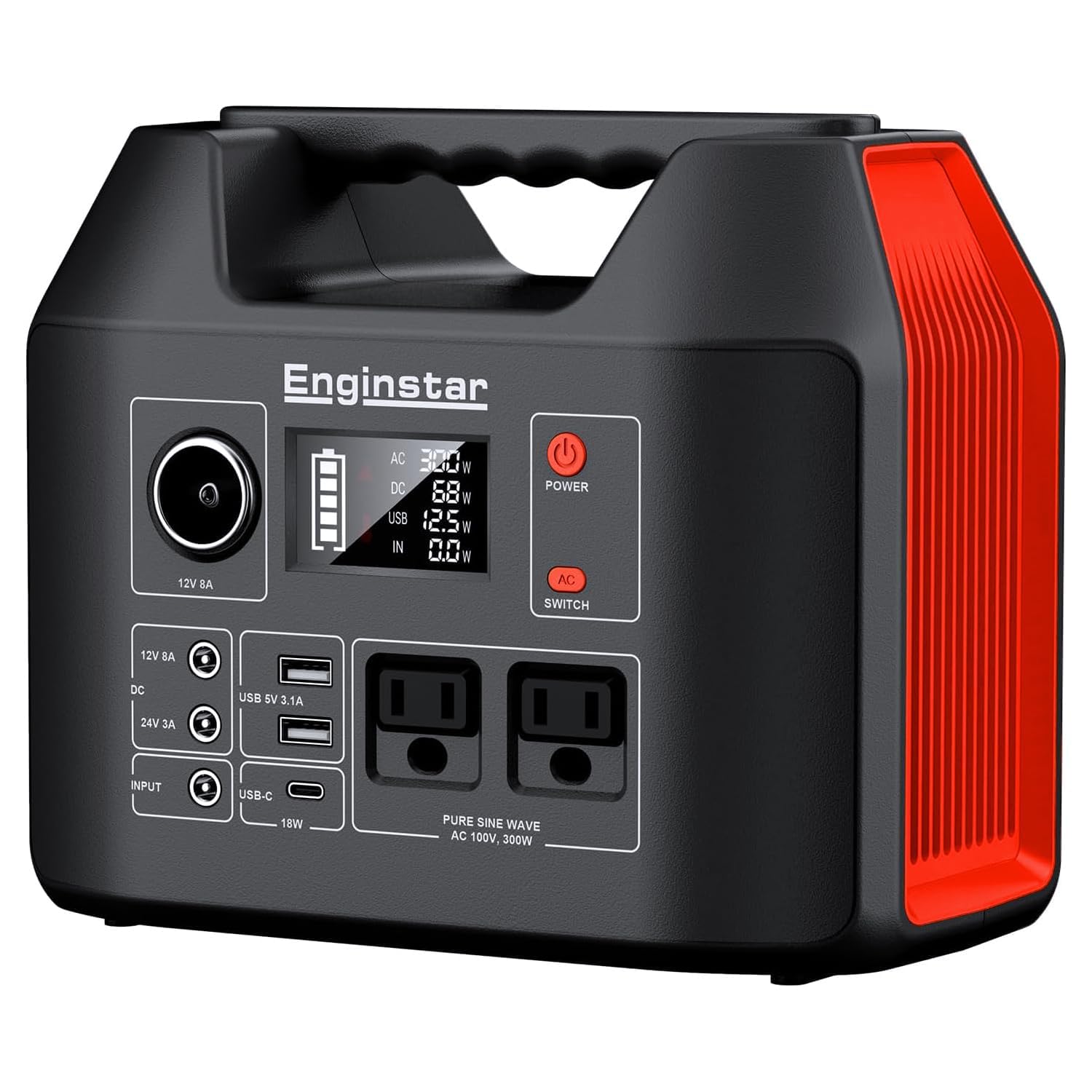
Battery Capacity: 296Wh (80,000mAh)
AC Output: 300W, pure sine wave
Intended Use: Outdoor camping, travel, emergency blackout, CPAP
Form Factor: Portable backup power supply
Battery Type: Lithium backup battery
The EnginStar puts a larger number on the box: 296Wh against the ALLWEI’s 256Wh, which works out to roughly 15 percent more stored energy. For a buyer whose main use is running a CPAP through the night or keeping phones and a fan alive during a short blackout, that extra headroom is real and it comes at a slightly lower price. The pure sine wave AC outlet covers the same sensitive-device territory as the ALLWEI.
Where the EnginStar gives ground is in the details the name does not advertise. There is no mention of LiFePO4 chemistry, no USB-C PD fast charging figure and no MPPT solar regulation called out, which suggests a more conventional lithium cell and simpler charging path. That is not a defect, but it points to a shorter service life under frequent deep cycling and slower solar recharge.
Trade-off: The larger capacity figure comes without LiFePO4 longevity or a fast USB-C charging path, so buyers who cycle the unit hard will likely replace it sooner.
Check the current price on Amazon
Side-by-Side Comparison
| Attribute | ALLWEI 300W | EnginStar 300W |
|---|---|---|
| Battery chemistry | LiFePO4 | Lithium (type not stated in name) |
| Capacity | 256Wh | 296Wh (80,000mAh) |
| AC output | 300W pure sine wave | 300W pure sine wave |
| USB-C fast charging | PD 60W | Not stated |
| Solar regulation | MPPT | Not stated |
| Battery management | BMS protection | Not stated |
| Stated uses | Camping, home backup, emergency, CPAP | Camping, travel, blackout, CPAP |
| Price tier | Slightly higher | Slightly lower |
How the Two Compare
The capacity gap is the first thing buyers notice, and it favors the EnginStar by a clear margin. On paper, 296Wh stretches a CPAP night or a laptop charge further than 256Wh, and the EnginStar does it for less money. Buyers who read only the headline numbers will stop here and pick the EnginStar, and for a light-duty user that is a defensible call.
Battery chemistry is where the ALLWEI pulls ahead, and it matters more the longer a buyer owns the unit. LiFePO4 cells are the reason the ALLWEI can sit in a closet for a season, get drained flat during an outage and still take a charge afterward, and they are why the BMS protection layer is worth having. The EnginStar’s conventional lithium cell is fine for occasional use but less forgiving of hard cycling and long storage.
Charging speed splits the two as well. The ALLWEI’s PD 60W USB-C port and MPPT solar input mean it refills faster from a wall outlet or a panel, which shortens the downtime between uses. The EnginStar’s name gives no fast-charge or MPPT figure, so buyers should expect a slower, more basic recharge path. Neither unit will run a household appliance for hours, and both are best understood as laptop-and-CPAP-class backup rather than whole-home power.
Which Should You Buy?
Choose the ALLWEI if the station will be stored for long stretches, cycled hard during outages, or recharged from a solar panel. The LiFePO4 chemistry, BMS protection, MPPT regulation and PD 60W USB-C port all point at a buyer who wants the unit to last and to refill quickly.
Choose the EnginStar if the priority is the most stored energy for the money and the use case is light and occasional. Campers who want extra capacity for phones, lights and a CPAP for a night or two, and who will not lean on solar or fast USB-C charging, get more watt-hours per dollar here.
FAQ
-
Is the ALLWEI or the EnginStar better for CPAP use?
Both list CPAP among their intended uses and both provide pure sine wave AC output, so either can run a CPAP machine. The EnginStar’s larger 296Wh capacity gives more runtime per charge, while the ALLWEI’s LiFePO4 chemistry holds up better over years of nightly cycles. -
Which one has the better battery for long-term storage?
The ALLWEI, because it uses LiFePO4 chemistry, which is more tolerant of long idle periods and deep discharges than conventional lithium cells. Buyers who charge a station a few times a year and leave it stored will get more life from the ALLWEI. -
Can either unit be recharged with a solar panel?
The ALLWEI explicitly lists MPPT solar regulation, which means it is designed for panel recharge and manages panel output efficiently. The EnginStar’s name does not call out solar regulation, so buyers planning regular solar charging should favor the ALLWEI. -
Which one charges a laptop faster?
The ALLWEI, thanks to its PD 60W USB-C fast charging port. The EnginStar’s name lists no USB-C fast-charge figure, so laptop charging there will likely be slower. -
Does the EnginStar’s larger capacity make it the better buy?
Only for light, occasional use. The EnginStar offers more watt-hours for less money, but it gives up LiFePO4 longevity, MPPT solar input and PD 60W USB-C charging to get there. -
Are either of these enough to run a refrigerator?
Neither is a good fit for a full-size refrigerator. Both are 300W-class units with roughly 250-300Wh of storage, which suits laptops, phones, lights, fans and CPAP machines rather than large appliances. -
Which is the better value?
It depends on the buyer. The EnginStar wins on capacity per dollar for occasional use, while the ALLWEI wins on total cost of ownership for anyone who will cycle the unit often or store it long-term.
Bottom Line
The ALLWEI Portable Power Station 300W is the stronger pick for most buyers, because LiFePO4 chemistry, BMS protection, MPPT solar regulation and PD 60W USB-C charging make it the unit that lasts longer and refills faster. The EnginStar remains the right call for buyers who want maximum stored energy at the lowest price and will only use it occasionally.