Why there are Amazon links here: Brave Review is paid a commission for qualifying Amazon purchases made through the links below. Your price does not change, and using our links is entirely optional. How this works
Best Z-Wave Hub for a House: 5 Picks That Actually Run the Place
A Z-Wave hub is the box that lets locks, sensors, switches and thermostats talk to each other and to a phone. The five picks below split into two camps: standalone hubs that run the house on their own, and Z-Wave radios that plug into a computer already running Home Assistant. Standalone buyers should look at the Hubitat or the Homey Bridge; tinkerers with a Home Assistant server should go straight to the dongles. The overview table shows the field at a glance, and the reviews explain who each one is not for.
The Picks at a Glance
| Product | Key Spec | Best Use | Price Tier |
|---|---|---|---|
| Hubitat Elevation C-8 Pro | Z-Wave, Zigbee, Matter, local automation, no subscription | Whole-house standalone control | Premium |
| Home Assistant Connect ZWA-2 | Official Home Assistant Z-Wave radio | Home Assistant users who want plug-and-play | Mid |
| SONOFF Z-Wave 800 Dongle Plus | EFR32ZG23 USB stick, S2 security | Budget Home Assistant builds | Budget |
| Homey Bridge | Z-Wave Plus, Zigbee, Wi-Fi, BLE, infrared | Mixed-protocol homes, cloud-driven | Budget |
| Aeotec Smart Home Hub2 V4 | Zigbee and Matter, no Z-Wave | SmartThings users on Zigbee/Matter only | Mid |
1. Hubitat Elevation C-8 Pro Smart Home Hub — Best Standalone Hub
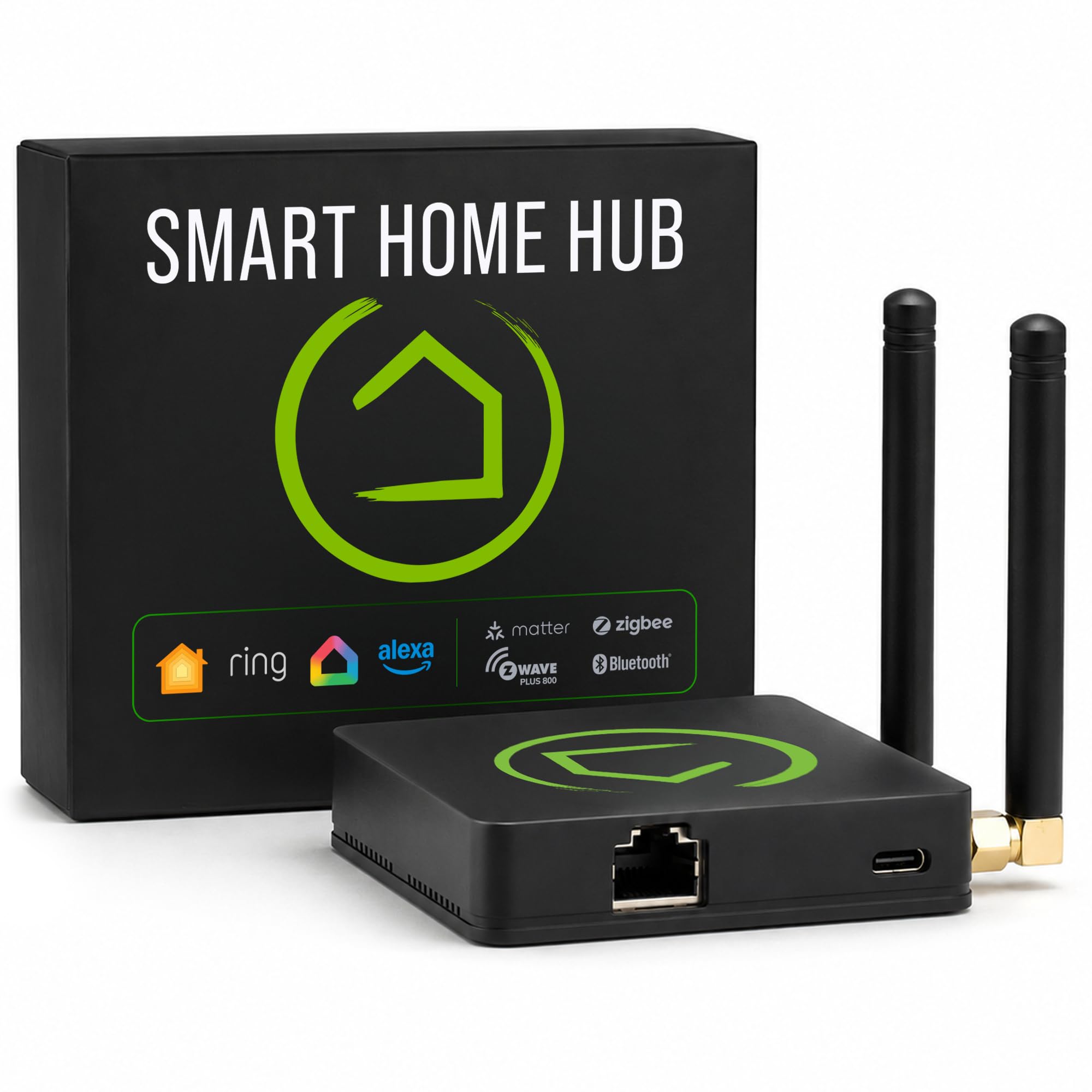
Type: Standalone smart home hub
Radios: Z-Wave, Zigbee, Matter, Bluetooth
Voice Control: Alexa, Google Home, HomeKit compatible
Subscription: None required
Integration: Ring cameras
Hubitat Elevation C-8 Pro Smart Home Hub – Z-Wave Zigbee Matter
The C-8 Pro is the closest thing here to a complete brain for a Z-Wave house. It carries Z-Wave, Zigbee, Matter and Bluetooth in one chassis, runs automations locally so routines keep firing when the internet drops, and does it without a monthly fee. HomeKit, Alexa and Google compatibility means the household can keep the voice assistant it already likes, and Ring camera integration covers the doorbell crowd.
This is the pick for a buyer who wants to set up rules once and never touch a server. It is also the pick for a large house, because a standalone hub with local processing is the simplest way to keep dozens of devices responsive. The caution: a local-first hub expects the owner to build the automations, and the learning curve is real for anyone who has only used app-driven plugs.
Trade-off: The upfront cost is the highest of the five, and the setup rewards patience more than plug-and-play buyers usually have.
Check the current price on Amazon
2. Home Assistant Connect ZWA-2 — Best for Home Assistant Households
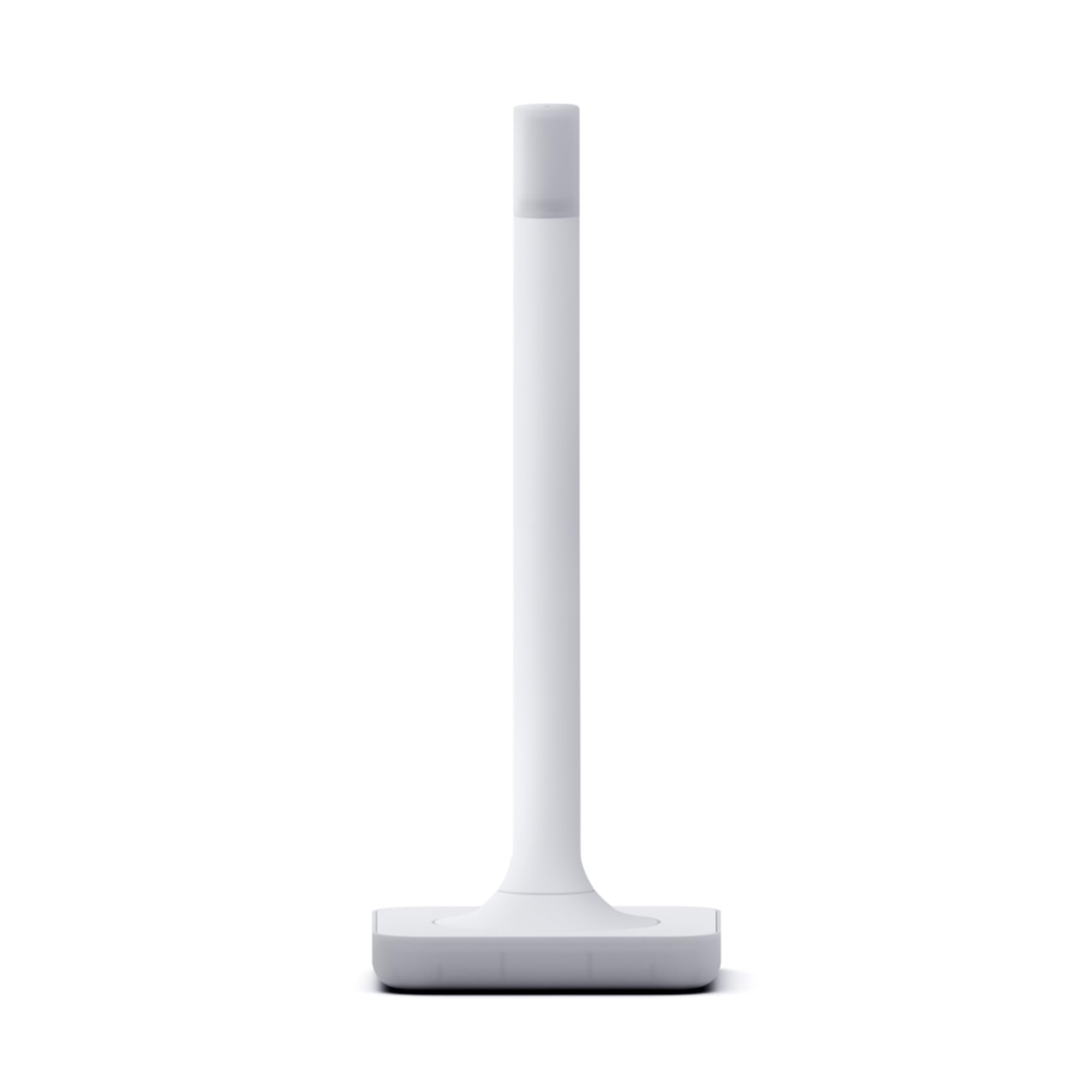
Type: Z-Wave radio for Home Assistant
Brand: Official Home Assistant hardware
Connection: Connects Z-Wave devices to Home Assistant
Intended Use: Extending an existing Home Assistant install
Home Assistant Connect ZWA-2 | Connect Z-Wave Devices to Home Assistant
The ZWA-2 is not a hub in the standalone sense — it is the official Z-Wave radio for a Home Assistant server already running in the house. Buyers who have committed to Home Assistant get first-party hardware that the software recognizes immediately, which removes the guesswork of picking a third-party stick. The build is small and purpose-built, designed to sit next to the server rather than in a central closet.
It earns its place for the household that already has Home Assistant and wants Z-Wave added without a second automation platform. It is also the safer choice for buyers who value official support over saving a few dollars. The caution: without a Home Assistant machine, this device does nothing at all.
Trade-off: It is a companion, not a hub — buyers without a Home Assistant server should skip it entirely.
Check the current price on Amazon
3. SONOFF Z-Wave 800 Dongle Plus — Best Budget Z-Wave Radio
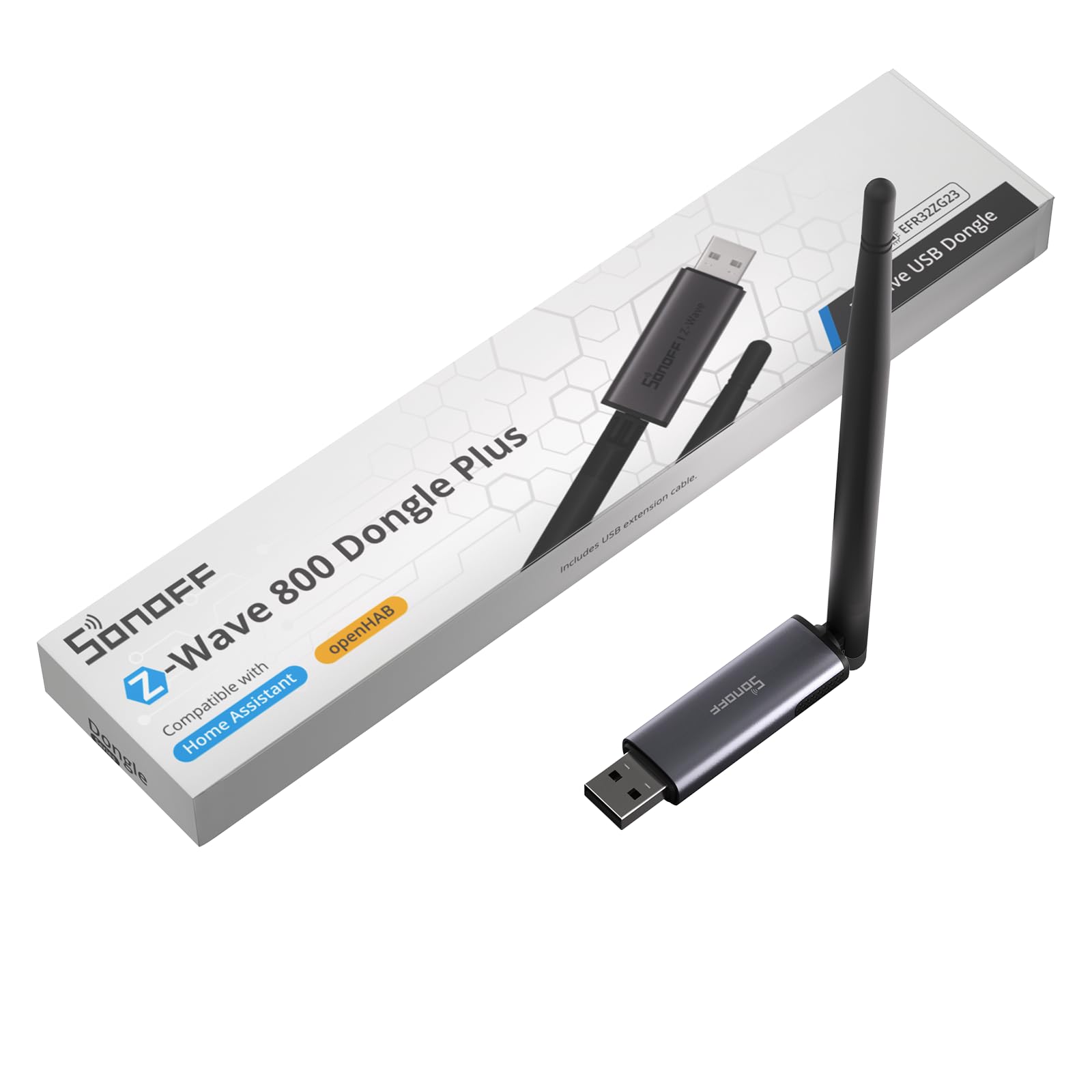
Type: USB Z-Wave stick
Chipset: EFR32ZG23
Security: S2 Security
Compatibility: Home Assistant, openHAB
Range: Long-range smart home control
SONOFF Z-Wave 800 Dongle Plus (Dongle-PZG23)
The SONOFF dongle is the cheapest way into Z-Wave for a Home Assistant or openHAB build. The EFR32ZG23 chipset and S2 security support put it in modern territory, and the USB form factor means it plugs into a server, mini PC or Raspberry Pi without extra hardware. Long-range control matters in a house where the server sits in a basement and the locks are two floors up.
This is the pick for a budget-conscious tinkerer who already runs one of the supported platforms and does not mind a bare-board solution. It also suits a second Z-Wave network for a garage or outbuilding. The caution: a USB stick has no antenna housing to speak of, so placement near the server matters more than with a standalone hub.
Trade-off: Buyers who want a polished app and a warranty conversation with a big brand will find the bare dongle approach thin.
Check the current price on Amazon
4. Homey Bridge — Best for Mixed-Protocol Homes

Type: Smart home hub
Radios: Z-Wave Plus, Zigbee, Wi-Fi, Bluetooth Low Energy, Infrared
Voice Control: Amazon Alexa, Google Home
Homey Bridge | Smart Home Hub for Home Automation
The Homey Bridge is the most protocol-diverse pick here. Z-Wave Plus sits alongside Zigbee, Wi-Fi, Bluetooth Low Energy and infrared, which means a house with an old IR-controlled air conditioner and a Z-Wave lock can run both from one place. Alexa and Google Home compatibility keeps voice control simple, and the compact chassis suits a shelf or side table.
It earns its spot for the household that inherited a mix of devices and does not want to replace any of them. It is also the friendliest option for a buyer who wants a clean app experience rather than a rule engine. The caution: a hub this small and this cheap leans on the cloud, so automations depend on an internet connection and the vendor’s service staying up.
Trade-off: The low price is offset by cloud dependence, which is the opposite of what local-first buyers want.
Check the current price on Amazon
5. Aeotec Smart Home Hub2 V4 — Best SmartThings Hub (No Z-Wave)
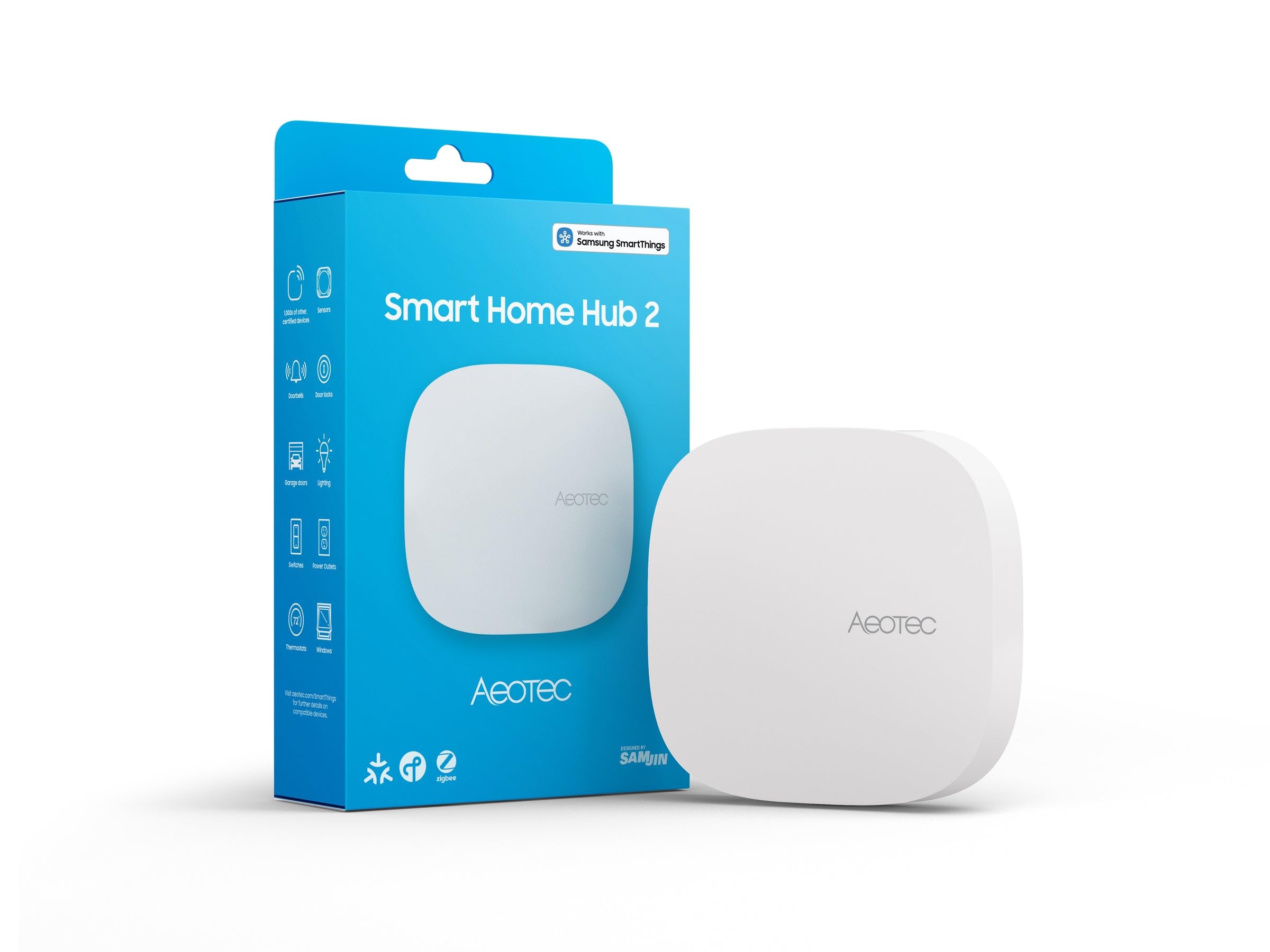
Type: SmartThings-compatible smart home hub
Radios: Zigbee, Matter gateway, Wi-Fi
Voice Control: Alexa, Google Assistant
Z-Wave: Not included
Aeotec Smart Home Hub2 – V4, Works as a SmartThings Hub
The Aeotec Hub2 is the SmartThings route, with Zigbee and Matter on board and a Wi-Fi connection to the cloud. It is a solid choice for a house standardizing on Matter and Zigbee devices, and the SmartThings ecosystem is one of the most widely supported in consumer smart home gear. Alexa and Google Assistant compatibility rounds out the voice side.
It belongs in this list for one specific reason: buyers who assumed every SmartThings hub speaks Z-Wave need to know this version does not. It suits a household building on Matter and Zigbee, or one that already owns SmartThings-compatible sensors. The caution is right in the name — a Z-Wave lock or switch will not pair with this hub at all.
Trade-off: The missing Z-Wave radio makes it the wrong pick for anyone whose devices are already Z-Wave.
Check the current price on Amazon
Before You Buy
- Platform first: Decide whether the house runs a standalone hub or Home Assistant before comparing radios — the two dongles are useless without a server.
- Z-Wave check: Confirm the hub actually lists Z-Wave; the Aeotec Hub2 V4 does not, despite the SmartThings name.
- Protocol mix: A house with Zigbee, Wi-Fi and infrared devices needs a multi-radio hub like the Homey Bridge or the Hubitat.
- Cloud vs. local: Cloud-driven hubs are simpler to set up; local hubs keep automations running when the internet drops.
- Subscription: Check whether advanced features sit behind a monthly fee; the Hubitat advertises no subscription required.
- Placement: A USB stick lives next to the server, so map device distance before committing to a dongle.
- Scale: Count devices and plan for growth — a large house with dozens of nodes benefits from a hub built for local processing.
Frequently Asked Questions
-
What is the best Z-Wave hub for a house with no smart home experience?
The Hubitat Elevation C-8 Pro is the strongest standalone starting point, though the Homey Bridge is easier to live with day to day. -
Do these hubs need a subscription?
The Hubitat explicitly requires no subscription. Others vary by platform, so the feature list should be checked before buying. -
Can a Z-Wave USB stick replace a hub?
Only if a computer running Home Assistant or openHAB is already in the house. The stick is a radio, not a brain. -
Does the Aeotec Smart Home Hub2 V4 work with Z-Wave devices?
No. It covers Zigbee and Matter, and the product name states plainly that Z-Wave is not included. -
Which hub handles the widest range of device types?
The Homey Bridge, with Z-Wave Plus, Zigbee, Wi-Fi, Bluetooth Low Energy and infrared in one unit. -
Is a local hub better than a cloud hub?
Local hubs keep automations running during an internet outage; cloud hubs are typically simpler to set up and cheaper upfront.
Bottom Line
For most houses, the Hubitat Elevation C-8 Pro is the best Z-Wave hub for a house because it runs the whole system locally, covers Z-Wave, Zigbee and Matter, and asks for no subscription. Buyers already running Home Assistant should take the ZWA-2, budget tinkerers the SONOFF dongle, mixed-protocol homes the Homey Bridge, and Matter-only households the Aeotec Hub2 — with the Z-Wave caveat firmly in mind.