Why there are Amazon links here: Brave Review is paid a commission for qualifying Amazon purchases made through the links below. Your price does not change, and using our links is entirely optional. How this works
Best Draught and Heat Loss Survey Kit for Fast, Confident Home Audits
A draught and heat loss survey comes down to two jobs: finding where heat escapes and measuring the pressure that drives air through a building. The five tools below split cleanly across those jobs, so the right pick depends on the survey being run. Thermal cameras suit homeowners, landlords, and energy assessors who need a fast visual read on cold spots, while manometers and combustion analyzers suit HVAC technicians and retrofit professionals who need hard pressure numbers. The overview table below lines up every pick by key spec and best use, so a decision is usually possible before scrolling further.
The Picks at a Glance
| Product | Key Spec | Best Use | Price Tier |
|---|---|---|---|
| TOPDON TC004 Mini Thermal Imaging Camera | 128 x 128 IR, 15H battery | Budget thermal walkarounds | Budget |
| GT24S UIRA-IR Thermal Camera | 256×192 native sensor, 198g | Detailed building thermography | Mid-range |
| H128 Thermal Camera | 25 Hz, 24H battery | All-day building inspection | Budget |
| Fieldpiece JL3KM2 Manometer Probe Kit | Dual-port wireless static, gas and draft gauge | Draught pressure testing | Mid-range |
| Fieldpiece CAT85 Combustion Analyzer | Live draft and built-in manometer | Pro combustion and draught work | Premium |
TOPDON TC004 Mini Thermal Imaging Camera
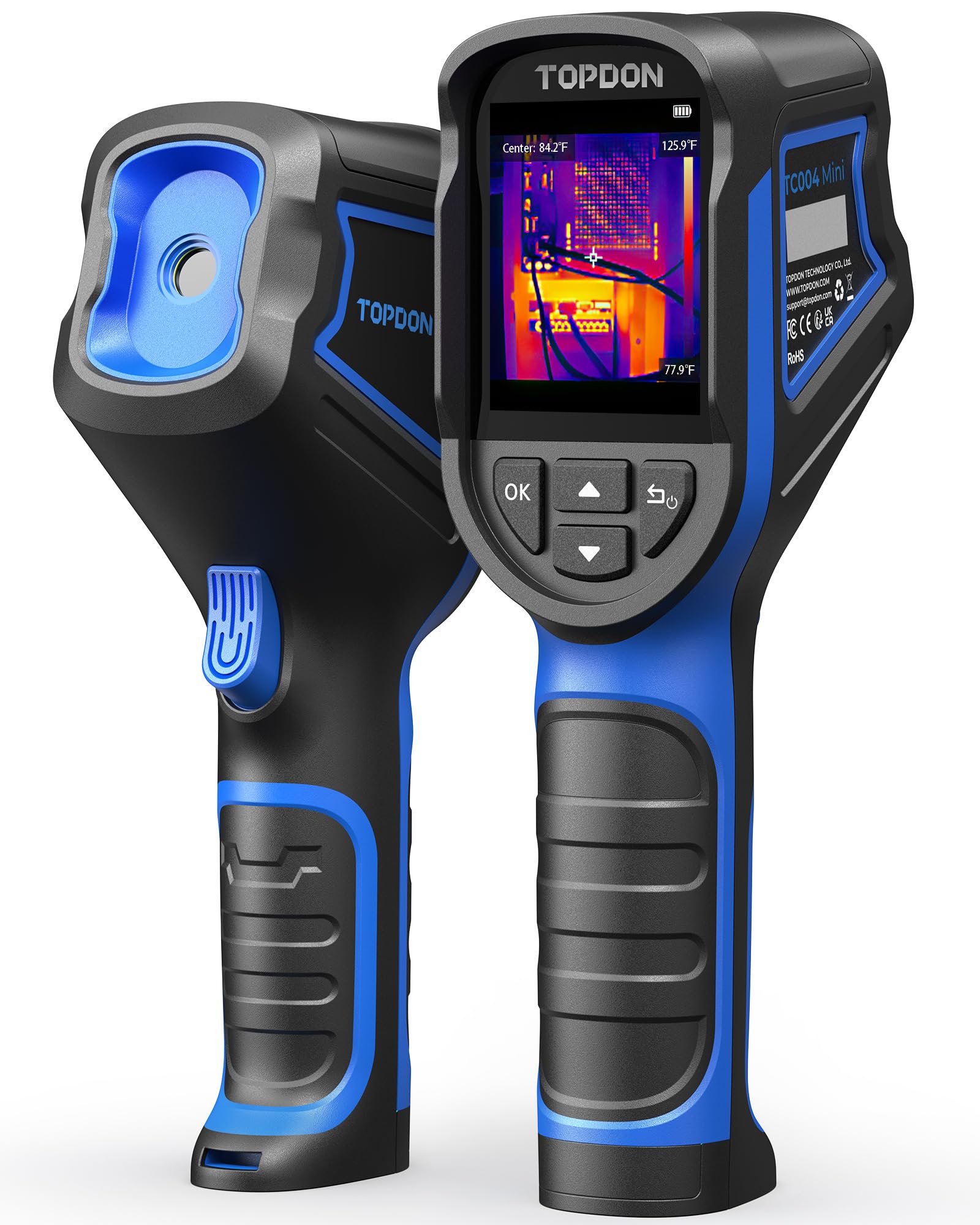
IR Resolution: 128 x 128
Thermal Resolution: 240 x 240 TISR
Frame Rate: 25Hz
Battery Life: 15 hours
Alerts: High/low temperature
Auto Shutdown: Yes
The TC004 is the entry point into thermal surveying, built as a compact handheld that fits in a jacket pocket between checks. Its 128 x 128 IR core is modest, but the 25Hz refresh keeps the live image smooth enough to sweep a wall and spot the cold streaks that mark a draught path. High and low temperature alerts flag out-of-range readings without staring at the screen, and auto shutdown protects the battery between rooms.
This is the pick for homeowners and landlords running a first-pass survey on their own property, and for assessors who want a cheap second camera for quick checks. The trade-off is resolution: a 128 x 128 core shows broad temperature bands rather than fine detail, so pinpointing a narrow leak behind trim takes patience.
Check the current price on Amazon
GT24S UIRA-IR Thermal Camera
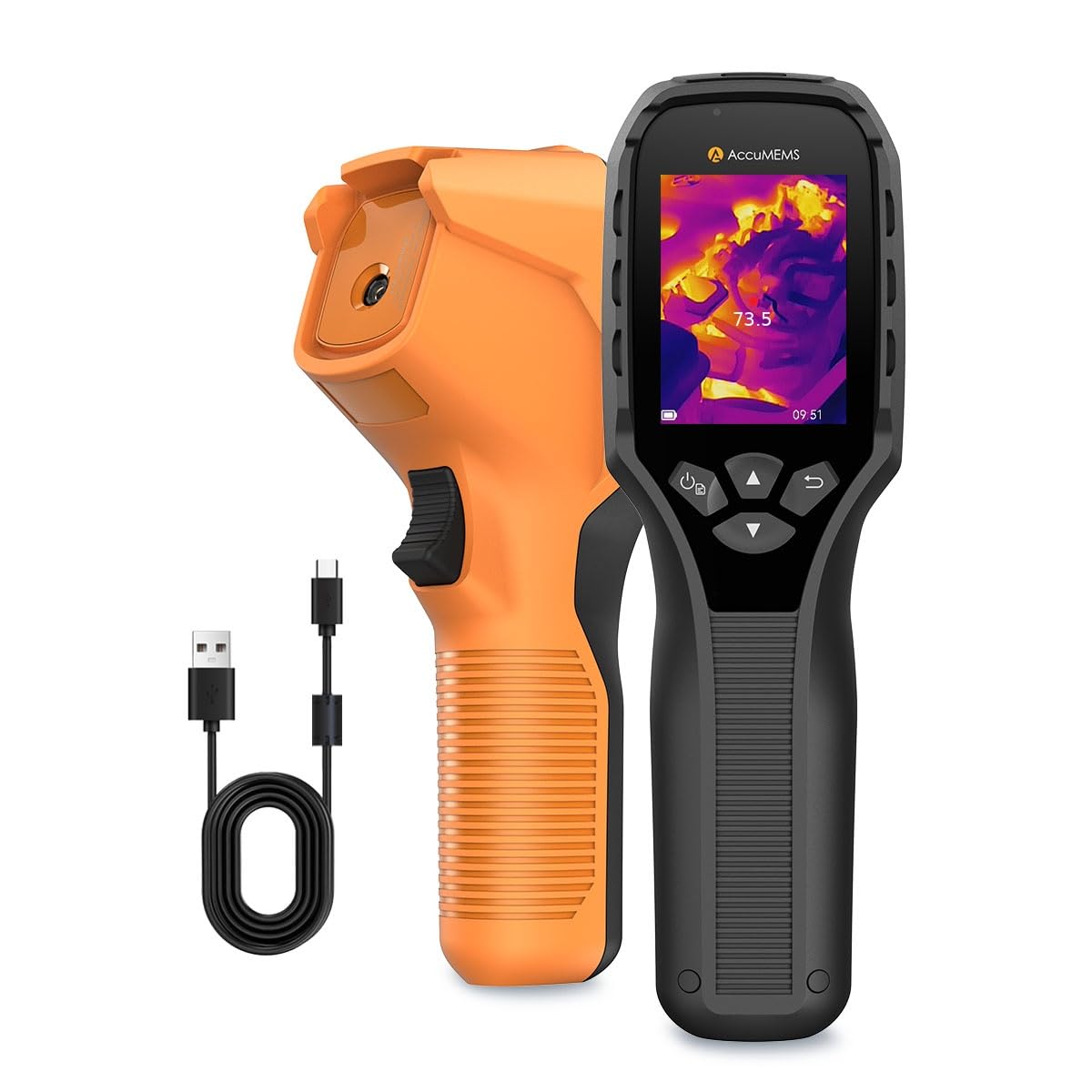
Native Sensor: 256×192
Display Resolution: 320×240
Weight: 198g
Temperature Range: -4°F to 1202°F
Frame Rate: 25Hz
Thermal Sensitivity: NETD <40mK
Battery Life: 10 hours
The GT24S steps up the sensor to a 256×192 native core, which is the meaningful jump for building work: edges of cold bridges and window frames resolve far more clearly than on entry-level cameras. The NETD figure under 40mK means small temperature differences register, so a slightly cooler patch of plaster shows up before it becomes a obvious damp problem. At 198g it hangs off a lanyard all day without fatigue, and the wide temperature range covers everything from a cold loft to a hot flue.
HVAC technicians and energy assessors doing paid surveys will get the most from this sensor, and the thermometer mode makes spot checks quick to log. The trade-off is that the higher-resolution core and wide range cost more than a basic camera, which is hard to justify for a one-off home check.
Check the current price on Amazon
H128 Thermal Camera

Thermal Resolution: 240 x 240 TISR
Frame Rate: 25 Hz
Battery Life: 24 hours
Alarm: Smart temperature alarm
Build: Drop-proof durable housing
Intended Use: HVAC, electrical, building inspection
The H128 is built for the reality of survey work: ladders, loft hatches, and the occasional drop. A drop-proof housing and a 24-hour battery mean it can stay in a tool bag and come out ready, which matters more on site than any single spec. The smart temperature alarm flags anomalies as the camera sweeps, and the 25 Hz frame rate keeps the view steady while walking a room.
It suits jobbing tradespeople and inspectors who need one rugged camera for HVAC, electrical, and building checks rather than a dedicated thermography instrument. The trade-off is that a 240 x 240 thermal resolution sits below the native-sensor detail of pricier cameras, so very fine leaks may need a closer look.
Check the current price on Amazon
Fieldpiece JL3KM2 Manometer Probe Kit

Type: Dual-port manometer probe kit
System: Job Link wireless
Measures: Static, gas and draft pressure
Ports: Dual
Connectivity: Long-range wireless
Intended Use: HVAC pressure testing
A thermal camera shows where heat escapes; a manometer shows the pressure driving that air movement, and the JL3KM2 is the draught-measurement half of a survey kit. The dual-port design reads static pressure and draft in one instrument, and the Job Link wireless system sends readings to a phone so one technician can adjust a vent while watching the gauge. It is the tool for proving a draught rather than just suspecting one.
HVAC technicians and retrofit assessors running pressure diagnostics will find this the practical middle ground, and it pairs naturally with any of the cameras above. The trade-off is that it is a probe kit rather than a standalone display, so it depends on the Job Link app and a phone to be useful in the field.
Check the current price on Amazon
Fieldpiece CAT85 Combustion Analyzer
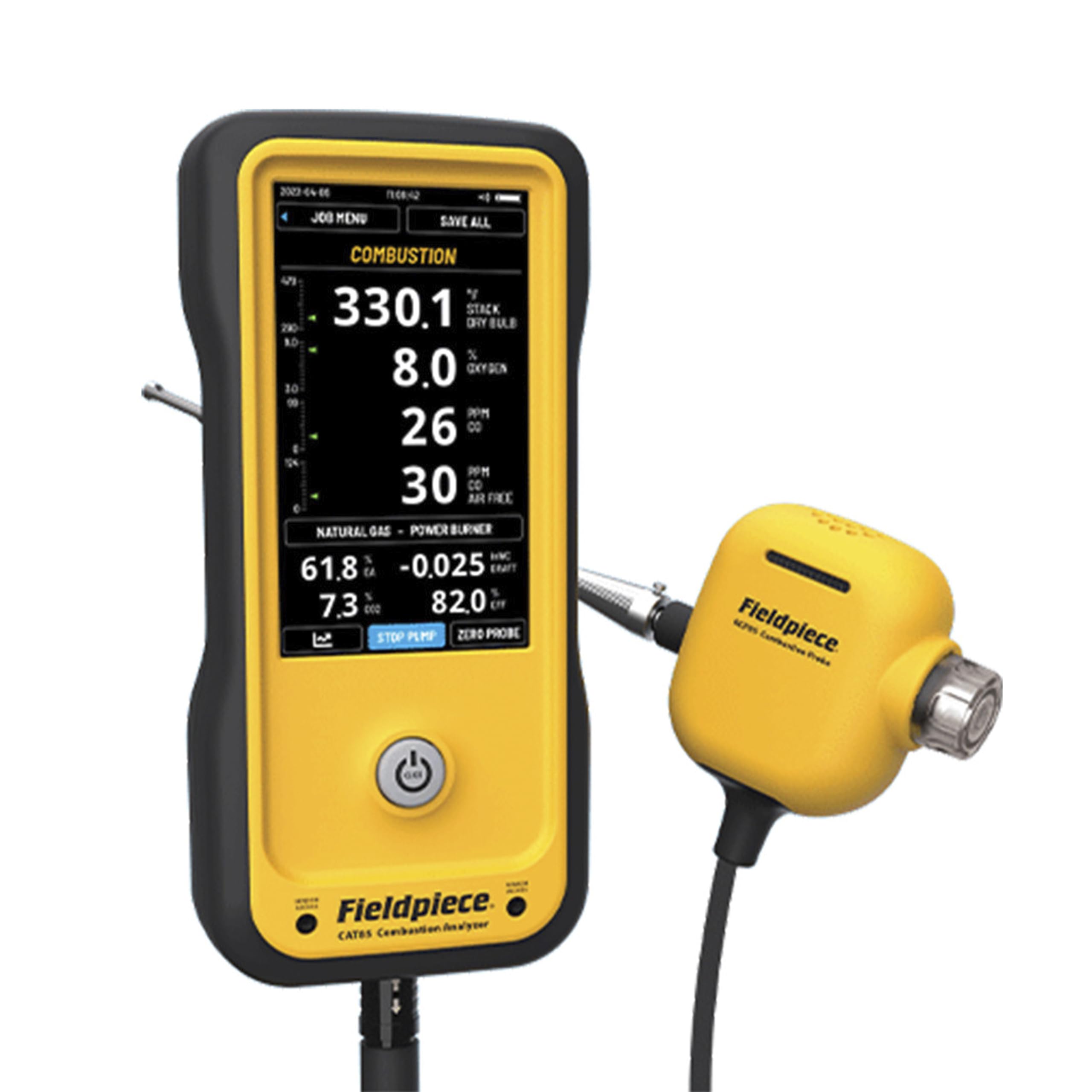
Type: Combustion analyzer
Draft Measurement: Live draft
Manometer: Built-in
Intended Use: Professional combustion and draught testing
Brand: Fieldpiece
Fieldpiece CAT85 – Combustion Analyzer with Live Draft and Built-in Monometer
The CAT85 is the professional end of the draught and heat loss survey kit, combining a combustion analyzer with live draft and a built-in manometer in one instrument. For anyone servicing boilers, fires, or flues, that combination means a single visit covers both combustion safety and the draught reading that proves the appliance is venting correctly. It is a serious instrument for technicians who bill for that work.
This is the pick for heating engineers and registered gas professionals whose surveys include appliance testing, not just building fabric. The trade-off is cost: at the premium end of the market, it only earns its place for technicians who will use the combustion and draft functions regularly, not for general draught hunting.
Check the current price on Amazon
Before You Buy
- Measurement type: Cameras find temperature differences; manometers and analyzers measure pressure. A complete survey kit often needs one of each.
- Sensor resolution: A higher native IR resolution resolves finer cold bridges and leaks, which matters for paid surveys more than for a quick home check.
- Thermal sensitivity: A low NETD figure means small temperature differences register, so subtle draught paths show up sooner.
- Battery life and build: Survey work happens in lofts and on ladders, so battery runtime and a drop-proof housing are practical criteria, not luxuries.
- Wireless and app support: Probe kits that rely on a phone app need a charged device and signal on site, so plan for that before relying on one.
- Intended use: Match the tool to the job — building fabric checks, HVAC pressure testing, or combustion and flue work are three different surveys.
Frequently Asked Questions
-
What is a draught and heat loss survey kit used for?
It is used to find where heat escapes a building and to measure the air pressure driving draughts, so insulation, sealing, and ventilation work can be targeted. -
Do I need a thermal camera and a manometer?
A camera shows where surfaces run cold, while a manometer proves the pressure behind a draught. Professionals often carry both; homeowners can usually start with a camera. -
What IR resolution is good enough for a home survey?
A 128 x 128 core picks up broad cold areas, while 256×192 native sensors resolve finer detail like window frames and cold bridges. -
Can these tools be used for HVAC and electrical checks too?
Yes. Several of the cameras here are specified for HVAC, electrical, and building inspection, which makes them useful beyond draught hunting. -
Is a combustion analyzer necessary for a draught survey?
Only where the survey covers boilers, fires, or flues. It combines draft and combustion testing for technicians doing appliance work. -
How long do these tools run on a charge?
Battery life varies widely across the picks, from around 10 hours on the higher-resolution camera to 24 hours on the rugged H128.
Bottom Line
For most buyers, the TOPDON TC004 Mini Thermal Imaging Camera is the fastest way into a draught and heat loss survey: a pocketable, smooth-refreshing thermal camera at a budget price. Professionals who need finer detail should step up to the GT24S, and anyone measuring pressure rather than temperature should pair a camera with the Fieldpiece JL3KM2 manometer kit.
