Why there are Amazon links here: Brave Review is paid a commission for qualifying Amazon purchases made through the links below. Your price does not change, and using our links is entirely optional. How this works
Honeywell TH9320WF5003 WiFi Color Thermostat: The C-Wire Smart Thermostat for Older Homes
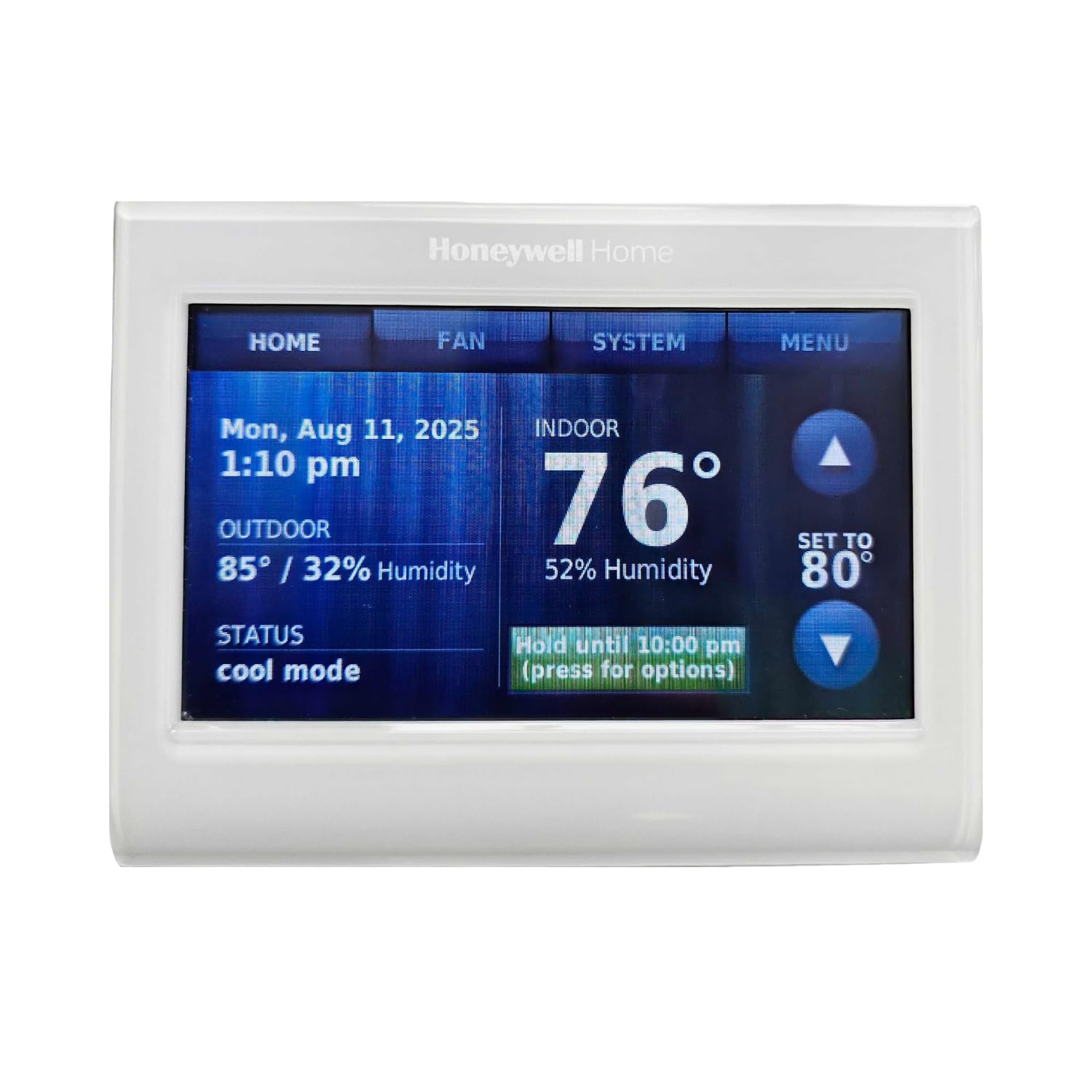
The Honeywell TH9320WF5003 is a WiFi color thermostat built for homeowners who want app control and a seven-day schedule without jumping to a subscription-heavy ecosystem. It is a strong fit for houses that already have a C wire available at the wall plate, and a poor fit for anyone hoping to drop it onto a two-wire setup without extra work. This review covers what the thermostat does, how it is built, where the C-wire requirement bites, and which buyers should look elsewhere.
Trade-off: The C-wire requirement is the whole story here — a home without a spare low-voltage conductor will need a rewiring job or a power adapter before this unit will run.
Features and Specifications
Product: Honeywell TH9320WF5003 WiFi Color Thermostat
Connectivity: WiFi, wireless app control
Power Requirement: Needs a C wire (common wire)
Programming: 7 programmable days
Display: Color screen
Physical Size: 3.5” x 4.5”
Efficiency Rating: Energy Star certified
What the Specs Actually Mean
The headline number here is the 3.5” by 4.5” footprint, which puts this unit in the compact wall-plate class — it covers a standard thermostat opening without a trim plate in most cases, and it does not dominate a hallway wall the way a large smart display does. The color screen is the visible upgrade over a plain monochrome LCD, and it is the reason the model carries a premium over Honeywell’s basic programmable units.
The seven-day programming is the practical core. Each day of the week can carry its own schedule, which matters for households where weekends look nothing like weekdays — a retired couple, a shift worker, or a family with someone home during the day. A five-two schedule forces compromises; seven-day does not.
Energy Star certification is the efficiency credential, and it is the one spec that speaks directly to operating cost. It signals the thermostat meets a recognized efficiency threshold rather than simply adding app control to an old design.
Build and Installation
The unit is a wall-mounted thermostat with a color display and a WiFi radio inside a standard rectangular housing. The wireless piece matters less than it sounds — WiFi here means app control and remote scheduling, not battery-powered placement. The thermostat still needs to be wired to the HVAC system’s control terminals, and that is where the C wire comes in.
A C wire, or common wire, provides a continuous low-voltage return path that powers the thermostat itself. Older homes wired for a basic thermostat often have only the heating, cooling, fan, and power-switching conductors, with no spare conductor for the display and radio. The TH9320WF5003 needs that continuous power, so a home without a C wire at the wall plate is looking at either running a new conductor or fitting an add-a-wire adapter.
Buyers who already have a C wire — common in homes built or rewired in the last couple of decades, and in systems that previously ran a powered thermostat — can treat this as a straightforward swap.
Programming and App Control
Seven-day programming covers the full week independently, and the color interface is the on-wall way to adjust it. The app side handles the rest: schedule changes and setpoint adjustments from a phone rather than standing in front of the unit.
The realistic expectation is scheduling and remote control, not deep automation. This is a WiFi thermostat in Honeywell’s conventional line, not a hub-centric smart-home device, so buyers should not assume it will act as a control center for other equipment. What it does, it does in a self-contained way, which is the appeal for anyone who does not want a thermostat tied to a specific voice-assistant ecosystem.
Maintenance and Longevity
Thermostats of this type are close to maintenance-free: no filters, no moving parts beyond the internal relays that switch the HVAC equipment. The practical maintenance is occasional cleaning of the display and keeping the WiFi credentials current if the router changes.
The bigger longevity question is the C wire itself. A thermostat that loses its common connection behaves erratically or drops off WiFi, so a homeowner installing this unit should confirm the C terminal is live at the air handler before blaming the thermostat for connection problems. Getting that right at install is most of the reliability story.
Where It Falls Short
The C-wire dependency is the honest drawback, and it is not a small one. A buyer in an older home with a four-wire cable will pay for an electrician or an adapter, and that cost can approach the price of the thermostat itself. Honeywell sells C-wire alternatives, but the extra step is real friction that a battery-powered model would avoid entirely.
The second caution is scope. The color screen and WiFi are conveniences, not efficiency features — the savings come from the schedule and the Energy Star baseline, not the display. Buyers expecting a learning thermostat that adapts on its own will find this unit waits to be programmed.
Trade-off: A solid, self-contained programmable WiFi thermostat that rewards a home already wired for it and penalizes one that is not.
Check the current price on Amazon
Who Should Buy the Honeywell TH9320WF5003
This thermostat suits the homeowner replacing an older programmable unit in a house with a C wire already present, especially one who wants a per-day schedule and phone access without committing to a full smart-home platform. It also fits the buyer who prefers a recognizable HVAC brand over a tech-first ecosystem.
It is not for renters who cannot modify wiring, and not for anyone in a two-wire or four-wire house who wants a plug-and-play install. Buyers in that position should look at battery-powered WiFi models or budget for the adapter.
FAQ
-
Does the Honeywell TH9320WF5003 need a C wire?
Yes. The unit requires a common wire to power its display and WiFi radio, and it will not operate correctly on a wiring setup that lacks one. -
What happens if there is no C wire at the wall?
The options are running a new conductor from the air handler, fitting an add-a-wire adapter, or choosing a different thermostat. The unit itself cannot run without continuous low-voltage power. -
Is this thermostat Energy Star certified?
Yes. The product is Energy Star rated, which speaks to the efficiency of its scheduling and setpoint behavior rather than to the display. -
Can the schedule differ for each day of the week?
Yes. It is a seven-day programmable thermostat, so each day can carry its own setpoints and times. -
Does it work with a phone app?
Yes. The WiFi radio allows remote scheduling and setpoint changes from a phone, in addition to on-wall control. -
How big is the thermostat on the wall?
The unit measures 3.5 inches by 4.5 inches, a compact footprint that generally fits a standard thermostat opening. -
Is this a learning thermostat that programs itself?
No. It is a programmable thermostat with WiFi control; the schedule is set by the user, not learned automatically. -
Can it control heating and cooling?
It is a conventional HVAC thermostat designed for a standard forced-air system with heating and cooling stages, wired to the control terminals. -
Does it need batteries?
The C wire supplies operating power, which is the point of the requirement — the unit is designed to run wired rather than on disposable batteries. -
Is it a good fit for an older home?
Only if the wiring has been checked first. Older homes frequently lack a C wire, and that single fact decides whether this is a simple swap or a project.
Bottom Line
The Honeywell TH9320WF5003 is a well-judged choice for the buyer whose wall plate already has a C wire: seven-day programming, a color display, app control, and an Energy Star rating in a compact package that does not demand a smart-home subscription. The C-wire requirement is the deciding factor — confirm it before buying, and this thermostat does its job without fuss. Buyers without that wire should budget for the fix or pick a battery-powered alternative instead.
