Why there are Amazon links here: Brave Review is paid a commission for qualifying Amazon purchases made through the links below. Your price does not change, and using our links is entirely optional. How this works
Best Radon Detector for a Home: 5 Picks That Fit Real Budgets and Real Basements
Radon is invisible, odorless, and the second leading cause of lung cancer in the United States, so a home test is not a nice-to-have. This short roundup covers five radon detectors that fit three kinds of buyers: the renter or mover who needs a quick portable reading, the homeowner who wants continuous monitoring with phone alerts, and the budget-conscious buyer who just wants a plug-in alarm that never needs an app. Every pick below is a real, currently sold unit, and the overview table shows the key differences at a glance. Read the table, pick the tier that matches the job, then jump to that review.
The Picks at a Glance
| Product | Key Spec | Best Use | Price Tier |
|---|---|---|---|
| Airthings Corentium Home Radon Detector 223 | Battery-powered portable, pCi/L readout | Short-term testing and moving between rooms | Mid |
| HOUND-1011S Portable Radon Detector | Audible and visual alarms, pCi/L or Bq/m³ | Basements and quick spot checks | Budget |
| X-Sense Wi-Fi Radon Detector XR0A-iR | Wi-Fi app notifications, no lab fees | Remote monitoring and long-term tracking | Premium |
| Radon Plus Radon Detector | E-ink display, 10-minute readings, 7-year battery | Fast readings with temperature and humidity data | Mid |
| Safety Siren Pro4 Series | Plug-in, audible and visual alert, no app | Set-and-forget basement coverage | Budget |
1. Airthings Corentium Home Radon Detector 223

Type: Portable battery-operated detector
Readout: pCi/L, USA version
Power: Three AAA batteries
Build: Lightweight handheld housing
Intended use: Home testing and room-to-room checks
Airthings Corentium Home Radon Detector 223 is the unit most people picture when they think of a home radon tester, and for good reason. It runs on three AAA batteries, so it can sit on a shelf in a basement for a week and then move to a bedroom without hunting for an outlet. The pCi/L readout is the US-standard number, which makes it easy to compare against the EPA’s action level without converting anything.
This is the pick for the buyer who is moving into a new house, renting, or wants to test one room before committing to a permanent install. The trade-off is that battery portables are slow to settle: it needs days of placement to give a useful average, so it is a testing tool rather than an instant alarm.
Check the current price on Amazon
Trade-off: A portable unit gives up instant alerting and app connectivity in exchange for placement flexibility, so it is not the right choice for someone who wants a phone to buzz the moment levels climb.
2. HOUND-1011S Portable Radon Detector
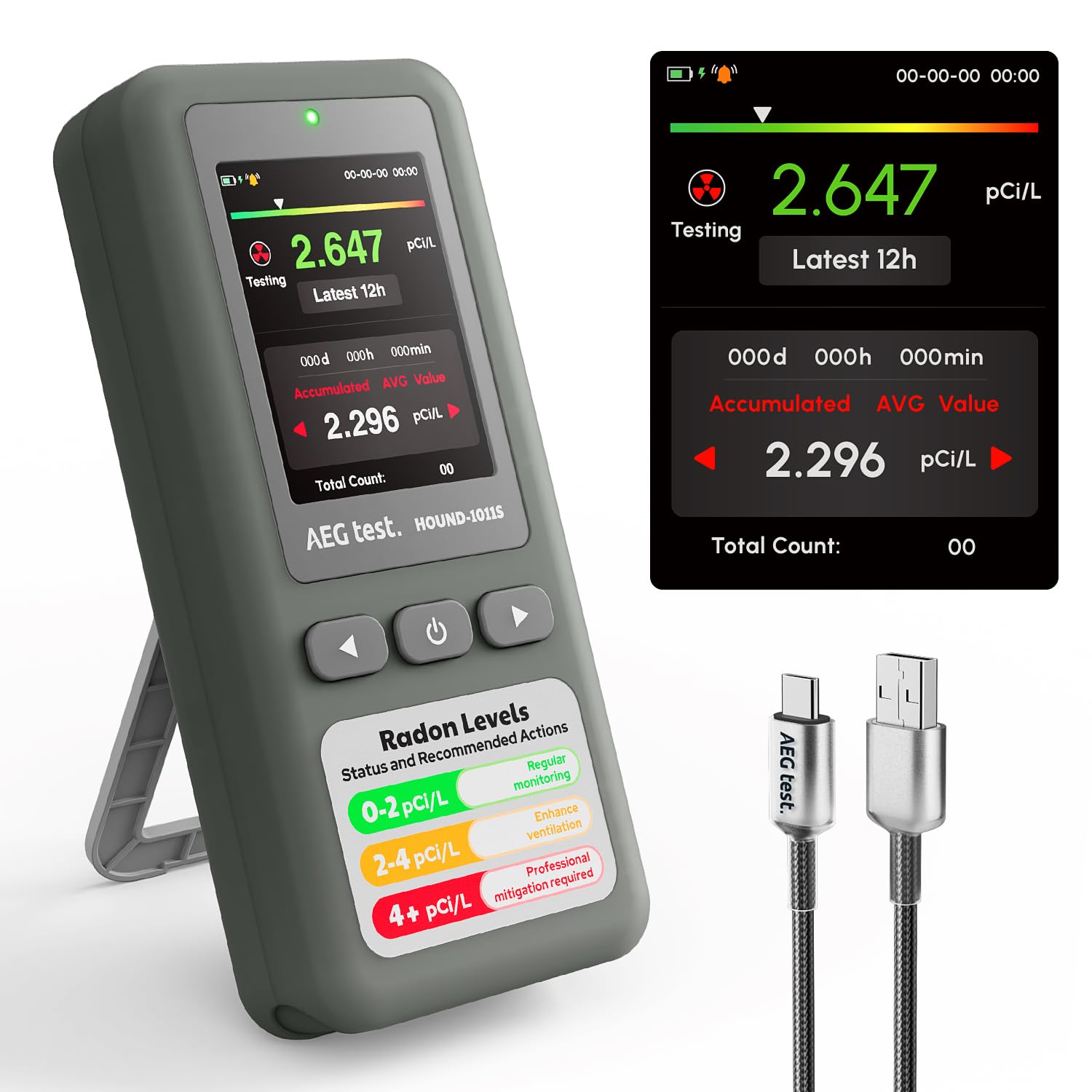
Type: Portable detector with alarms
Readout: pCi/L or Bq/m³, switchable
Alerts: Audible and visual
Monitoring: Long-term
Build: Lightweight handheld housing
Intended use: Basement testing
HOUND-1011S Portable Radon Detector is the value pick, and it is the only unit here that pairs a portable form with both audible and visual alarms. That combination matters for a basement: the device can sit on a shelf and still make itself heard if levels rise, without anyone needing to check a screen. The unit reads in either pCi/L or Bq/m³, so it works for US buyers and for anyone comparing against international guidance.
It suits the buyer who wants a low-cost second opinion in a basement, crawlspace, or rental, and it is the easiest of the group to hand to a family member who does not want to learn an app. The caveat is that a budget sensor with alarms is still a screening tool, so a professional test is the right next step if it flags anything.
Trade-off: The low price and portable build mean a simpler sensor and no app or cloud history, so buyers who want long-term charts should look at the Wi-Fi pick instead.
3. X-Sense Wi-Fi Radon Detector XR0A-iR
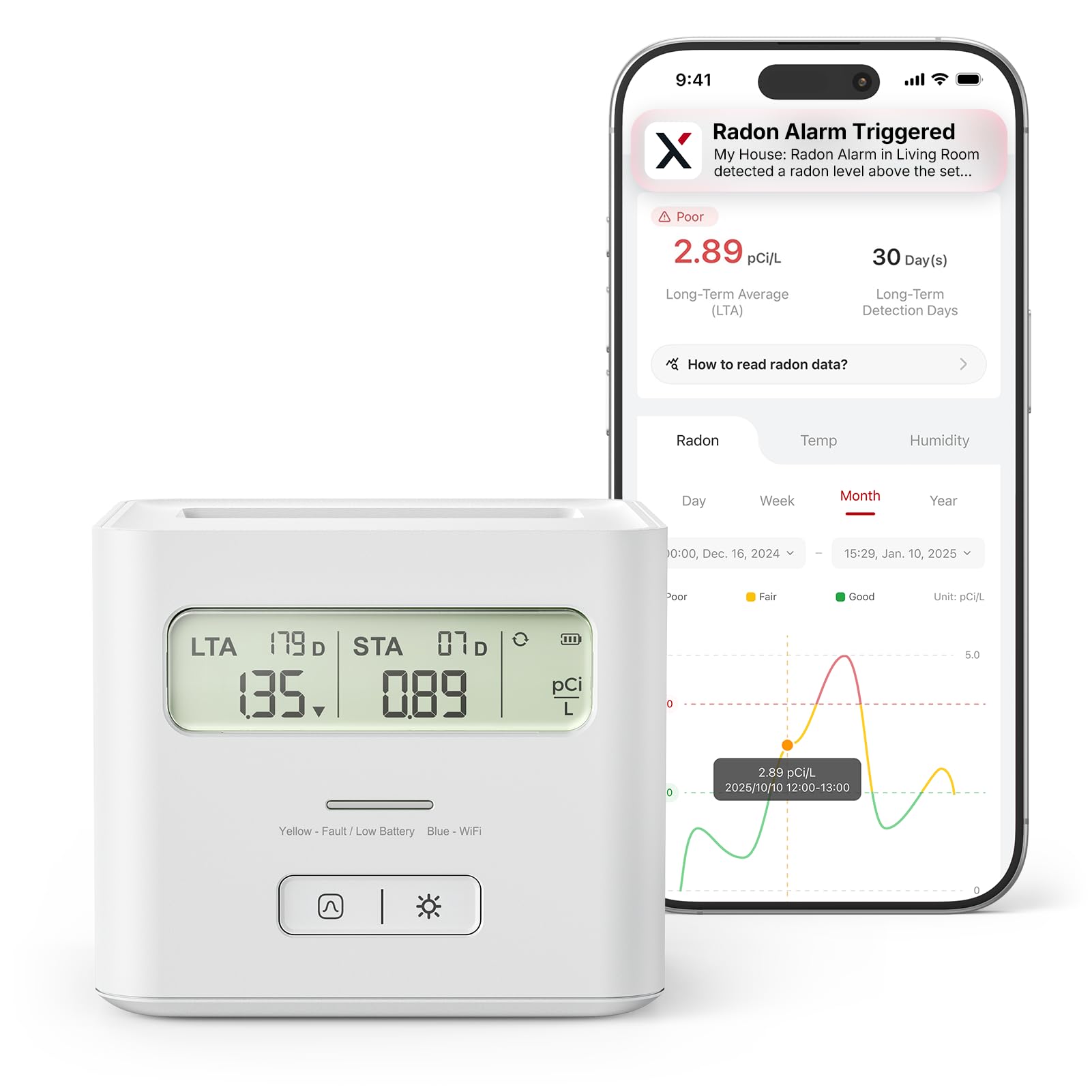
Type: Wi-Fi connected detector
Monitoring: Continuous
Alerts: App notifications
Fees: Zero lab fees
Installation: No installation required
Intended use: Whole-home remote monitoring
X-Sense Wi-Fi Radon Detector XR0A-iR is the premium pick for the homeowner who wants to see radon trends in an app instead of squinting at a small screen. Continuous monitoring means the unit tracks levels around the clock, and the app notification feature pushes an alert when readings move outside the expected range. There are no lab fees, which separates it from the mail-in test kit model where a lab charges per sample.
This is the right unit for a family that travels, owns a finished basement, or wants a permanent record of radon levels across seasons. The trade-off is that it depends on a Wi-Fi network and an app, so a buyer who wants zero setup or no phone dependency should skip it.
Trade-off: App-based monitoring adds convenience but also a dependency — a dropped Wi-Fi connection or an unmaintained app means alerts may not reach the phone.
4. Radon Plus Radon Detector
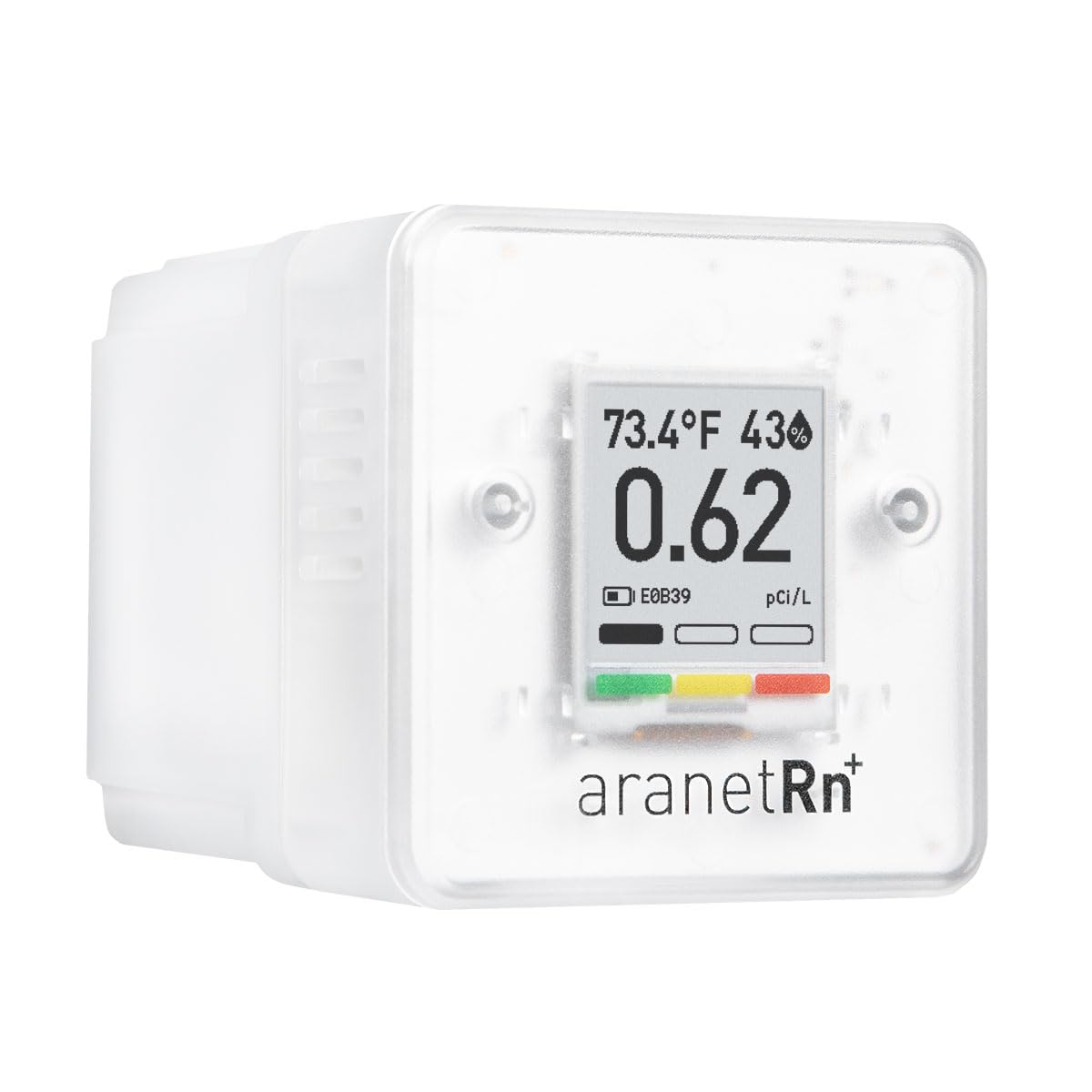
Type: Standalone detector with display
Display: E-ink with color-coded levels
Readings: 10-minute intervals
Power: Seven-year battery on two AA
Extras: Temperature, humidity, and pressure tracking
Intended use: Fast, low-maintenance home checks
Radon Plus Radon Detector is the fast-feedback pick. Most radon detectors need days to build a reliable average, but this unit reports readings every ten minutes, which makes it useful for a buyer who wants to see movement quickly after opening a basement window or running a mitigation fan. The e-ink display uses color-coded levels, so a glance tells the story without reading numbers.
The seven-year battery life on two AA cells is the standout feature for a set-and-forget install: it can live on a basement wall for years without a charger or an outlet. It also logs temperature, humidity, and pressure, which is genuinely useful for anyone trying to understand why radon readings swing. The trade-off is that short-interval readings are noisier than long-term averages, so a single spike should not be treated as a verdict.
See the current price on Amazon
Trade-off: Ten-minute readings are convenient but more variable than a multi-day average, so buyers should watch the trend rather than react to any single number.
5. Safety Siren Pro4 Series Plug-In Radon Detector
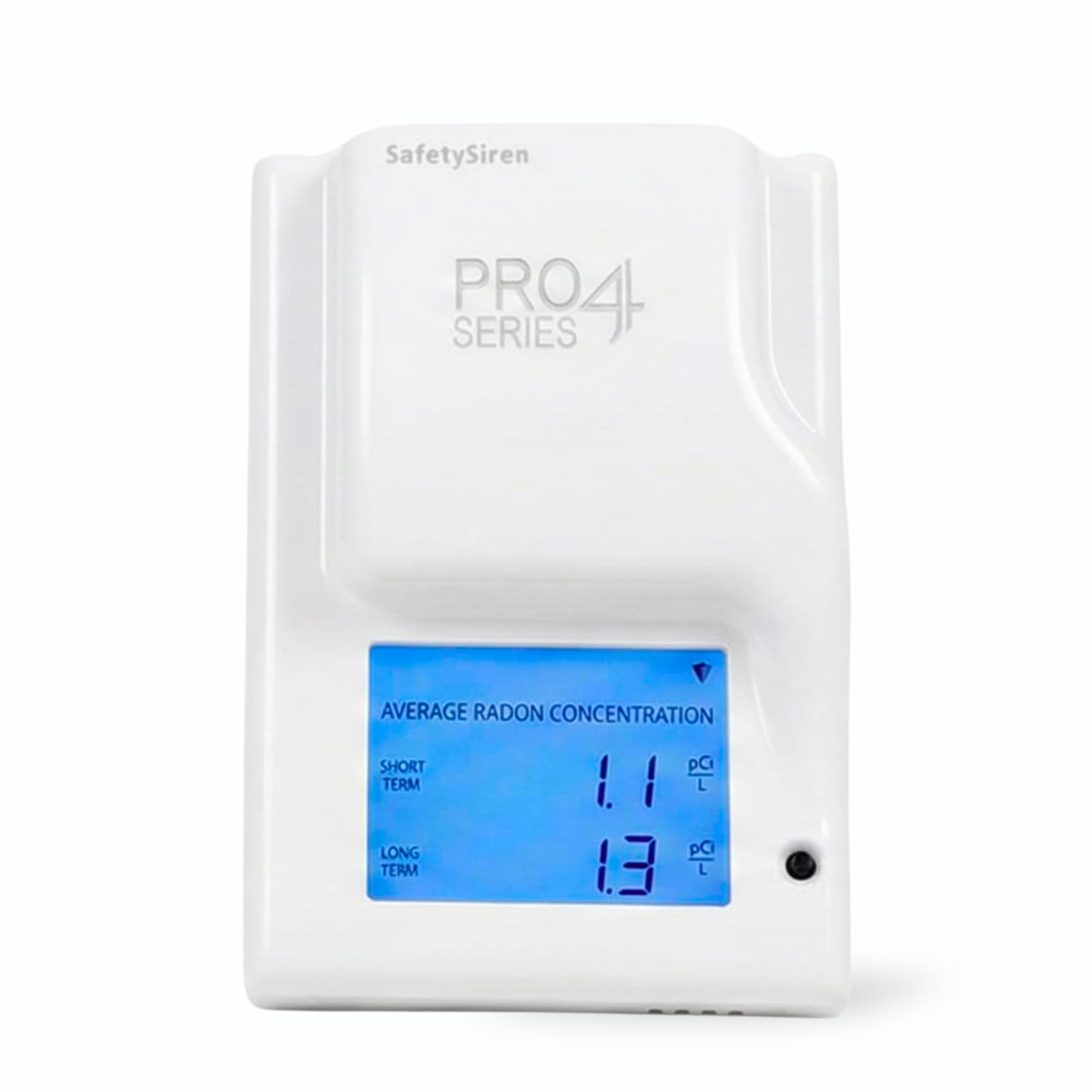
Type: Plug-in continuous monitor
Alerts: Audible and visual
Connectivity: None — no app or Wi-Fi
Subscription: None
Origin: Made in USA since 1993
Intended use: Basement, home, and office
Safety Siren Pro4 Series Plug-In Radon Detector is the simplest unit in the roundup, and that is the point. It plugs into a wall outlet and monitors continuously, with an audible and visual alert when levels rise. There is no app, no Wi-Fi, and no subscription, so a buyer who does not want another connected device in the house gets a working alarm with zero setup friction.
It suits older buyers, rental property owners, and anyone who wants a radon alarm in a basement or office without a phone in the loop. The trade-off is that it must stay plugged in and offers no remote visibility, so a homeowner who travels should pair it with the Wi-Fi pick.
Trade-off: No app or connectivity means alerts only reach someone who is physically present to hear or see them.
Before You Buy
- Placement: Radon accumulates low, so the detector belongs on the lowest livable level of the home, not on a top floor.
- Power source: Battery units go anywhere; plug-in units need an outlet and stay put; Wi-Fi units need both power and a stable network.
- Readout units: US buyers should confirm pCi/L, while Bq/m³ is useful for comparing against international guidance.
- Speed vs. accuracy: Short-interval readings are good for spotting trends, but a multi-day average is the number that matters.
- Connectivity needs: App alerts suit travelers and landlords; a plug-in alarm suits buyers who want no phone dependency.
- Maintenance: Check battery life and sensor age before buying, since a detector that dies quietly is worse than no detector.
- Follow-up testing: Any alert should be confirmed with a professional test before mitigation spending begins.
Frequently Asked Questions
- How long does a radon detector take to give a useful reading? Most home detectors need several days of continuous placement to build an average, though some units report short-interval numbers within minutes.
- Is a portable detector as accurate as a professional test? A consumer detector is a screening tool; a professional test remains the standard for confirming levels before mitigation.
- Do I need Wi-Fi on a radon detector? No. A plug-in alarm works without any network, while Wi-Fi units add remote alerts and history for buyers who want them.
- Where should the detector be placed in a house? The lowest livable level, in a room that is used regularly and away from drafts, windows, and exterior walls.
- What level should trigger action? The EPA’s action level is 4 pCi/L, and any confirmed reading at or above it warrants a follow-up test and a mitigation conversation.
- Do these detectors require a subscription? None of the picks here require one, and lab-fee-free models avoid the per-sample costs of mail-in kits.
Bottom Line
The best radon detector for a home depends on how the buyer plans to use it, but the Airthings Corentium Home Radon Detector 223 is the safest starting point for most households. It is portable, runs on AAA batteries, reads in pCi/L, and moves from basement to bedroom without an electrician or an app. Buyers who want remote alerts should step up to the X-Sense Wi-Fi model, and buyers who want a zero-setup plug-in alarm should take the Safety Siren Pro4.
