Why there are Amazon links here: Brave Review is paid a commission for qualifying Amazon purchases made through the links below. Your price does not change, and using our links is entirely optional. How this works
Best Low Energy Appliances for a Household: 5 Picks That Cut Waste
Energy bills reward the household that plans, not the one that buys the biggest unit on the shelf. This roundup covers the best low energy appliances for a household — five practical picks split between plug-in power savers, a compact microwave, and two Energy Star mini fridges. It suits renters in small apartments, dorm and office setups, and budget-conscious families who want to trim standby draw without replacing everything at once. The overview table below puts all five side by side so a reader can pick a lane in under a minute.
Overview of the Picks
| Product | Key Spec | Best Use | Price Tier |
|---|---|---|---|
| Stopwatt SmartPlug Device, 4 Pack | 4-plug pack, US plug | Cutting standby draw on small electronics | Budget |
| COMFEE’ Countertop Microwave Oven | 0.7 cu.ft, 700W, ECO Mode | Small kitchens, dorms, offices | Budget |
| Midea 1.7 Cu.ft Mini Fridge | 1.7 cu.ft, Energy Star Certified, low noise | Bedrooms, offices, tight spaces | Mid-range |
| Midea 3.1 Cu.ft Mini Fridge with Freezer | 3.1 cu.ft, Energy Star Certified, freezer compartment | Dorms and apartments needing frozen storage | Upper mid-range |
| Stopwatt 4 Pack Plug-in Voltage Protector | 4-pack, surge and brownout protection | Guarding appliances from unstable power | Budget |
1. Stopwatt SmartPlug Device, 4 Pack
Type: Plug-in power management box
Pack Size: 4 pack
Plug Standard: US plug
Intended Use: Home and office electronics
Best For: Standby power reduction
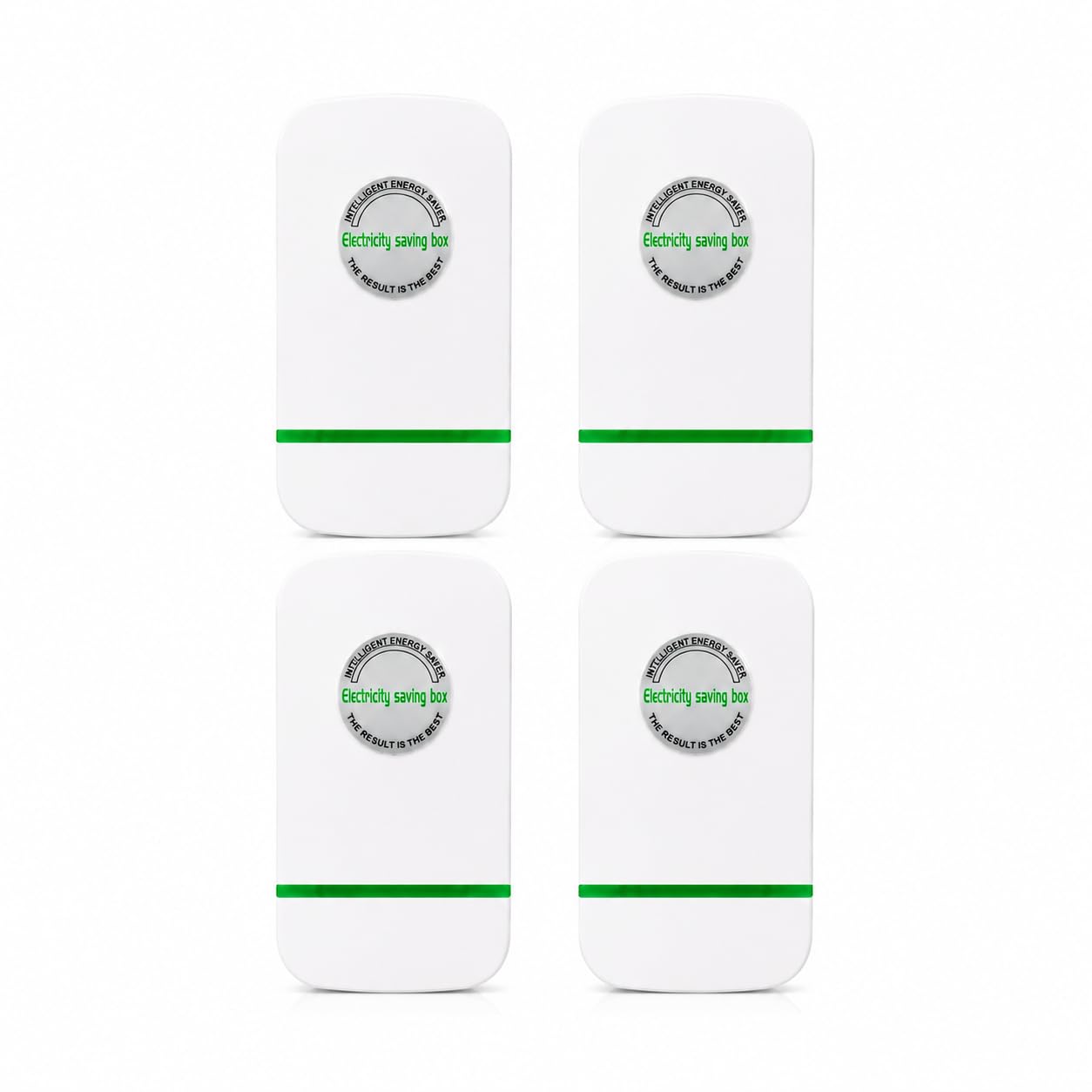
The Stopwatt plug-in box is the cheapest route into low energy living because it targets the load most households never think about: the slow drain from devices left plugged in and idle. Each unit in the four-pack sits between the wall outlet and the appliance, so installation needs no tools and no wiring. The plastic housing is built for ordinary indoor sockets in a home or office, and the US plug format keeps it simple for North American buyers. It is aimed at renters and desk workers who want a quick win rather than a rewire.
This pick earns its place for households with a cluster of small electronics — a TV, a router, a charger station — that sit warm and wasteful overnight. It is not for anyone expecting a plug-in box to offset a central air conditioner or an electric water heater; the draw those appliances pull is far beyond what a small inline device can meaningfully touch.
Trade-off: A plug-in saver helps only with devices that draw power while switched off, so a household with nothing on standby should not expect a visible change on the bill.
2. COMFEE’ Countertop Microwave Oven
Type: Countertop microwave
Capacity: 0.7 cu.ft
Power: 700W
Color: Pearl White
Features: ECO Mode, sound on/off, one-touch buttons, child lock
Best For: Small kitchens and dorms

COMFEE’ Countertop Microwave Oven, 0.7 Cu.Ft, 700W, Pearl White, ECO Mode
A 700-watt microwave is the sensible middle ground for a low energy kitchen: it heats a plate or a mug without the draw of a full-size oven, and the 0.7 cu.ft cavity suits one or two people rather than a family roast. The ECO Mode is the headline feature here, letting the unit settle into a lower-power idle state between uses, which matters for a countertop appliance that stays plugged in all day. Pearl white keeps it visually light in a small kitchen, and the one-touch buttons, sound on/off switch and child lock are the kind of practical extras that make daily use easier. The compact footprint suits an apartment counter, a dorm desk or an office break area.
The pick suits students and single cooks who reheat far more often than they bake. It is not for a household that regularly defrosts large cuts of meat or feeds four at once — the cavity and wattage both run short at that scale.
Trade-off: The small cavity and modest wattage mean uneven results on dense or large portions, so a bigger unit is the better call for family cooking.
3. Midea 1.7 Cu.ft Mini Fridge
Type: Mini fridge
Capacity: 1.7 cu.ft
Certification: Energy Star Certified
Features: Adjustable thermostat, reversible door, low noise
Color: White
Best For: Bedrooms and offices

Midea 1.7 Cu.ft Mini Fridge, Energy Star Certified, Low Noise for Bedroom
Energy Star certification is the reason this Midea model belongs in a low energy roundup: the rating is a third-party benchmark for efficient operation, not a marketing badge. At 1.7 cu.ft the interior holds drinks, snacks and a few small containers, which is the right scope for a bedroom, office or single-occupant setup. The adjustable thermostat lets the owner dial in temperature rather than accept a fixed setting, and the reversible door means the unit can open against either wall — a real advantage in tight rooms. Low-noise operation is pitched at the bedroom use case, where a humming compressor at night is the usual complaint.
It suits renters and remote workers who want cold drinks within reach and a small footprint under a desk. It is not for anyone planning to store frozen food or a week of groceries; there is no freezer compartment and the capacity is deliberately modest.
Trade-off: The small interior fills fast once a few bottles and containers go in, so it works as a secondary fridge rather than a household’s only one.
4. Midea 3.1 Cu.ft Mini Fridge with Freezer
Type: Mini fridge with freezer compartment
Capacity: 3.1 cu.ft
Certification: Energy Star Certified
Features: Adjustable removable glass shelves, reversible door
Color: Black
Best For: Dorms and small apartments

Midea 3.1 Cu.ft Mini Fridge with Freezer, Energy Star Certified, for Dorm
The 3.1 cu.ft Midea steps up to a proper freezer compartment, which changes what a small fridge can do: ice, frozen meals and leftovers become options rather than compromises. Energy Star certification keeps the efficiency story consistent with its smaller sibling, and the adjustable removable glass shelves make it easy to reconfigure the interior for tall bottles or stacked containers. The reversible door helps in a dorm room where the layout is fixed, and the black finish hides scuffs better than white in a high-traffic space.
This is the pick for a dorm resident or apartment dweller who wants one appliance to cover both fresh and frozen storage without paying for a full kitchen fridge. It is not for a household of three or more — 3.1 cu.ft is still a secondary unit, and the freezer section is compact enough that a full grocery run will not fit.
Trade-off: The freezer compartment eats into the fresh-food space, so buyers who mostly chill drinks may find the smaller, cheaper model the better value.
5. Stopwatt 4 Pack Plug-in Voltage Protector
Type: Plug-in voltage and surge protector
Pack Size: 4 pack
Protection: Surge and brownout protection
Intended Use: Household electronics
Color: Green
Best For: Homes with unstable power
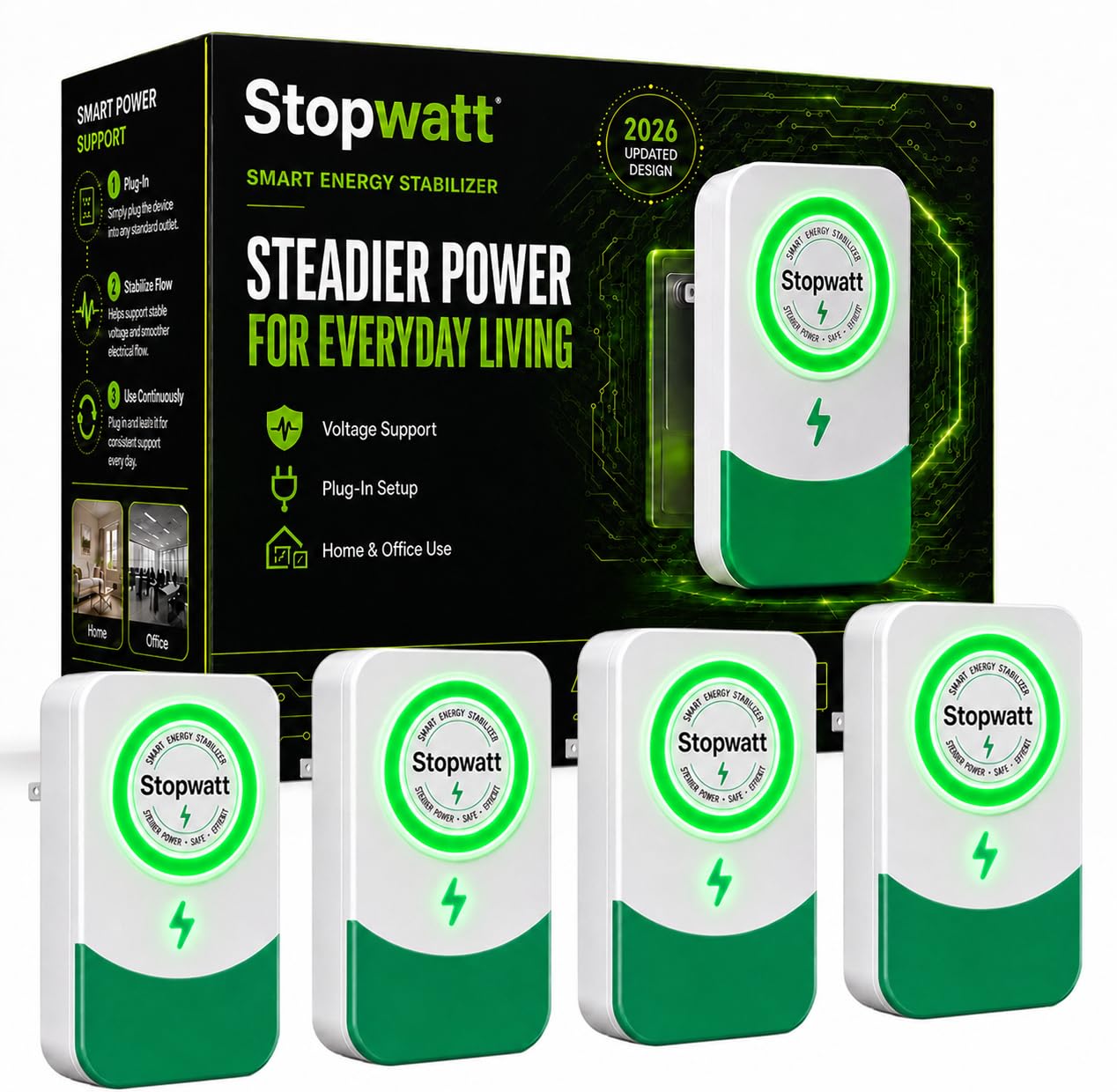
This Stopwatt four-pack is less an energy saver in the billing sense and more a protector of the appliances already in the house. Surge and brownout protection matters in older buildings and areas where the supply dips, because repeated small voltage events are what shorten the life of a fridge compressor or a microwave’s control board. The plug-in format needs no electrician, and four units cover several rooms at once. The green housing makes it easy to spot which outlets are already protected.
It suits households in older housing stock or regions with unreliable power, where protecting a fridge or a home office setup is the priority. It is not for anyone shopping purely for a lower monthly bill — voltage protection preserves equipment, it does not generate savings on its own.
Trade-off: The device guards against damage rather than reducing consumption, so a household with stable power may see little practical benefit.
Before You Buy
- Power draw: Check the wattage on the label before buying; a 700W microwave and a mini fridge sit in a very different range from a space heater.
- Certification: Energy Star certification is the clearest third-party efficiency signal available on a product listing.
- Size and fit: Measure the counter or alcove first — a 0.7 cu.ft microwave and a 3.1 cu.ft fridge both need clearance for airflow.
- Door swing: A reversible door is worth prioritizing in dorms and bedrooms where the unit sits against a wall.
- Noise: For bedroom or office use, low-noise operation should be a stated feature, not an assumption.
- Standby load: A plug-in saver only pays off on devices that draw power while switched off.
- Protection needs: Households with unstable supply should weigh surge and brownout protection alongside efficiency.
Frequently Asked Questions
-
What counts as a low energy appliance?
Any appliance that draws comparatively little power for its job — a 700W microwave, an Energy Star mini fridge, or a plug-in device that trims standby draw. -
Do plug-in energy saving boxes really lower a bill?
They can reduce the power wasted by devices left idle on standby, but the effect is modest and depends entirely on how many such devices a household runs. -
Is a mini fridge cheaper to run than a full-size fridge?
A smaller, Energy Star certified unit generally draws less, but it is best treated as a secondary fridge rather than a replacement for a full kitchen appliance. -
What does ECO Mode do on a microwave?
It puts the unit into a lower-power state between uses, which helps when a countertop microwave stays plugged in all day. -
Does surge protection save energy?
No — it protects appliances from voltage spikes and brownouts, which extends equipment life rather than cutting consumption.
Bottom Line
For most households, the fastest low energy win is the Stopwatt SmartPlug four-pack, because it costs little and targets the standby drain that runs quietly all year. Pair it with the COMFEE’ microwave if a compact, ECO Mode countertop unit is also on the list, and add an Energy Star Midea fridge only if secondary cold storage is genuinely needed. Check the current price on Amazon before deciding.
