Why there are Amazon links here: Brave Review is paid a commission for qualifying Amazon purchases made through the links below. Your price does not change, and using our links is entirely optional. How this works
Best Door and Window Sensors for a Rental: 5 Picks That Install Without Drilling
Renters need door and window sensors that go up without holes, come down without damage, and do not lock anyone into a remodel-grade security contract. This guide covers five options that fit that brief: two peel-and-stick alarm sets, a smart-home contact sensor pair, a mini Zigbee sensor, and one full alarm kit with a keypad and hub. The overview table below puts the key spec for each pick side by side, so the right one is usually clear within a minute; the reviews that follow explain who each set actually suits.
Overview of the Picks
| Product | Key Spec | Best Use | Price Tier |
|---|---|---|---|
| Ring Alarm Contact Sensor 2-Pack | Requires Ring Base Station, ~3-year battery | Smart alerts in a home that already runs Ring | Budget |
| 125dB Wireless Door Window Alarm Sensors, 5 Pack | 125dB siren, adjustable volume | Loud standalone coverage on five openings | Budget |
| Aqara Zigbee Door and Window Sensor 3 Pack | Requires Aqara Hub, HomeKit/Alexa/IFTTT | Apple Home and automation-led setups | Mid-range |
| Sliding Front Door Opening Sensor Alarms, 5-Pack | 120dB burglar alert, slim white housing | Sliding doors, garage entries, dementia care | Budget |
| All-in-One Keypad Hub Alarm Kit, 14 Pack | Keypad hub, 120dB siren, 8 door/window + 2 motion sensors | A whole apartment covered in one box | Premium |
1. Ring Alarm Contact Sensor 2-Pack (2nd Gen)

Type: Contact sensor for doors and windows
Pack Size: 2 sensors
Battery Life: Approximately 3 years
Design: Slim profile
Installation: Easy, peel-and-stick mounting
Requirement: Ring Base Station required
The Ring Alarm Contact Sensor is a two-piece magnetic contact: one half mounts on the frame, the other on the door or sash, and separation triggers an alert. The 2nd Gen housing is slim enough to sit almost flush against a frame, which matters for renters who want the sensor to disappear rather than announce itself. Installation is adhesive-based, so no screws and no holes in the trim. The roughly three-year battery life means the ladder comes out rarely, and the two-pack covers a front door plus one window or a pair of windows.
This is the pick for a household that already has or plans to add a Ring Base Station, because these sensors will not talk to anything on their own. That hub dependency is the trade-off: the pair looks inexpensive, but it is only the entry ticket to a system the renter has to buy separately. Buyers who want a self-contained alarm should look at the standalone sirens below. Renters already inside the Ring ecosystem get the cleanest fit here, with app alerts and no monthly fee required for basic sensor notifications.
Trade-off: The sensors are useless without a Ring Base Station, so the real cost is the hub plus the sensors, not the two-pack alone.
2. 125dB Wireless Door Window Alarm Sensors, 5 Pack
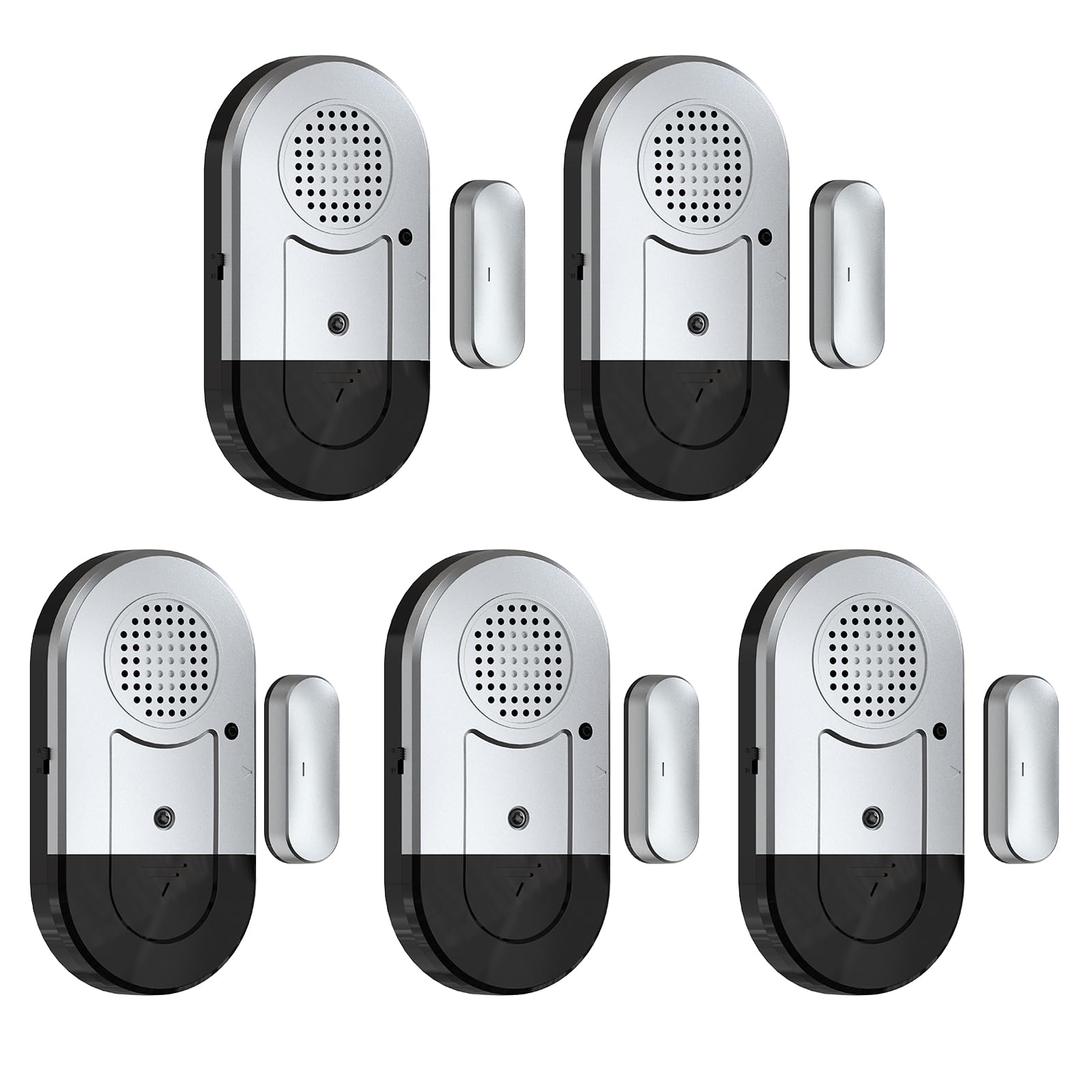
Type: Standalone door and window alarm
Pack Size: 5 sensors
Alarm Volume: 125dB
Volume Control: Adjustable
Installation: Easy, no wiring
Power: Long-life battery
These are self-contained alarms rather than smart sensors: each unit pairs a magnet with a siren, and opening the door or window sets off the alarm locally. At 125dB the siren is genuinely loud, and the adjustable volume control lets a renter dial it down for a bedroom window or leave it maxed on an entry door. Five units in one pack cover a typical one-bedroom apartment’s openings, and installation is a matter of sticking each half in place.
There is no app, no hub, and no Wi-Fi here, which is exactly the appeal for a renter who does not want another account or a device on the network. The trade-off is the flip side of that simplicity: alerts stay in the room, so nobody gets a phone notification while away from home. These suit renters who want an audible deterrent on a budget, and they work well as a first layer for a ground-floor apartment. Buyers who need remote alerts should pair them with a camera or move up to the hub kit below.
Trade-off: Nothing reaches a phone — these alarms only sound locally, so they protect the home while someone is in it, not while everyone is out.
3. Aqara Zigbee Door and Window Sensor 3 Pack

Type: Smart contact sensor
Pack Size: 3 sensors
Protocol: Zigbee
Hub: Aqara Hub required
Compatibility: Apple HomeKit, Alexa, IFTTT
Design: Wireless mini housing
Use Case: Kid safety and automation
The Aqara sensor is the smallest unit in this roundup, and the mini housing is the reason it earns a place: on a narrow window sash or a sliding closet door, a bulky sensor catches on curtains and looks out of place. Zigbee is a low-power mesh protocol, so batteries last a long time and the sensors respond quickly. The three-pack covers a door and two windows, or three windows in a rental where the entry is already handled.
Compatibility is the headline. Working with Apple HomeKit, Alexa, and IFTTT means these sensors can trigger automations rather than just beep — a hallway light when a door opens, a notification when a child’s window is disturbed, a routine that arms at night. That flexibility comes at a price: an Aqara Hub is mandatory, and the hub is a separate purchase. This pick suits renters building a smart home around Apple or Alexa who want sensors that participate in routines. Anyone who just wants a siren should skip it.
Trade-off: Without the Aqara Hub the sensors do nothing, and the hub pushes the total well above what the three-pack appears to cost.
4. Sliding Front Door Opening Sensor Alarms, 5-Pack
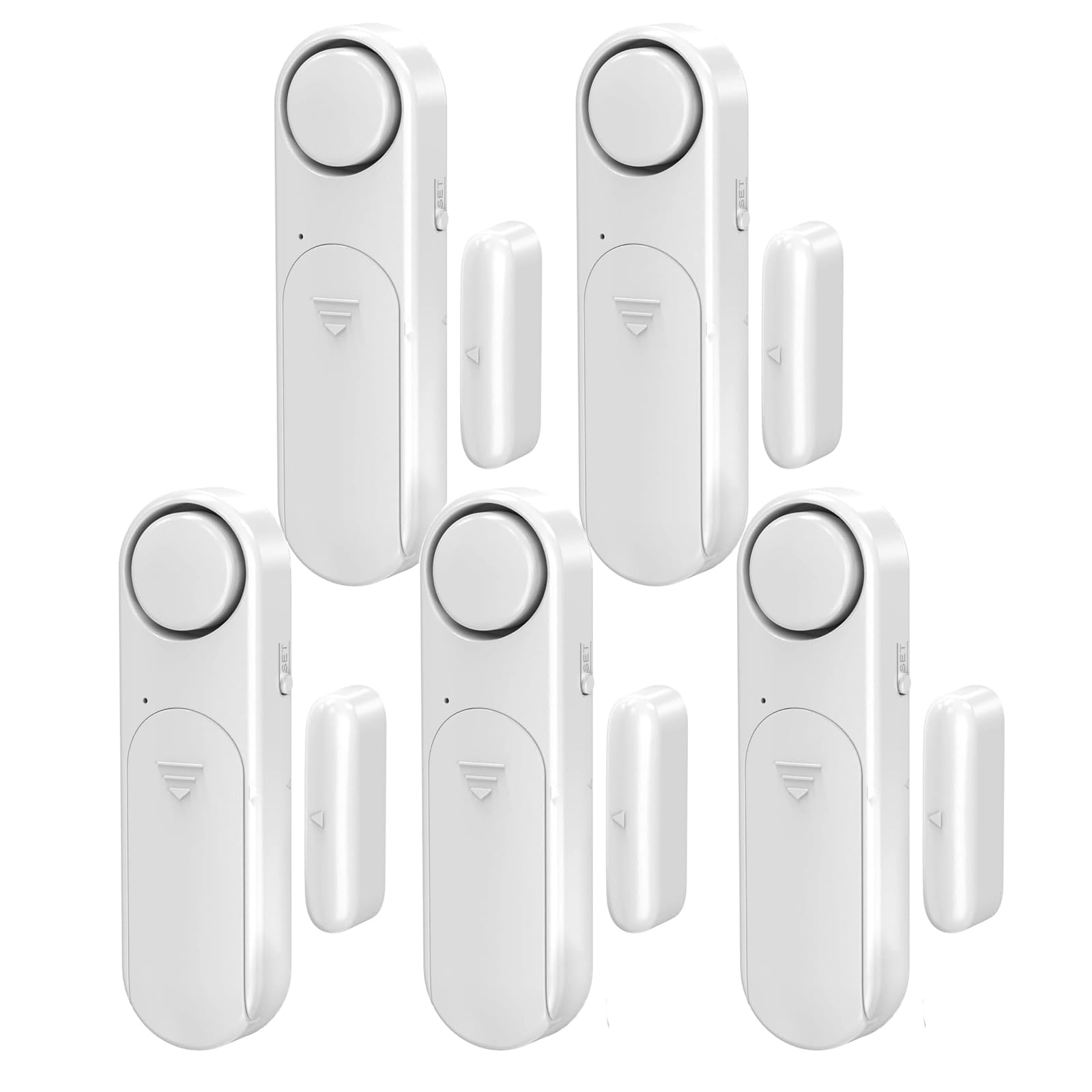
Type: Standalone door and window alarm
Pack Size: 5 sensors
Alarm Volume: 120dB
Color: White
Best For: Sliding doors, garage entries, apartment and house windows
Use Case: Kids safety, dementia care, burglar alert
This set is built around the openings that standard contact sensors struggle with: sliding patio doors, garage entry doors, and the wide windows common in apartments. The white housing blends into light trim, and the 120dB siren is loud enough to startle an intruder and wake a household. Five units let a renter cover a patio slider plus several windows without buying twice.
The name also flags a use case worth taking seriously: dementia care. A loud local alarm on an exterior door is a simple, reliable way to alert a caregiver when someone wanders, and it needs no phone, no app, and no subscription. Like the other standalone set here, there is no remote notification, so it is a deterrent and an in-home alert rather than a monitored system. It suits renters with a slider or garage door and caregivers who want an uncomplicated audible cue.
Trade-off: The alarm only sounds at the door, so a caregiver in another part of the home or away from the property gets no notification.
5. All-in-One Keypad Hub Alarm Kit, 14 Pack

Type: Complete DIY alarm system
Pack Size: 14 pieces
Includes: Keypad hub, 8 door/window sensors, 2 motion sensors
Alarm Volume: 120dB siren
Backup Battery: 8 hours
Monitoring Fee: None
Connectivity: Wi-Fi with app alerts
This is the only pick that covers an entire rental in one box: a keypad hub, eight door and window sensors, and two motion sensors. The keypad matters for renters because it gives a physical arm/disarm point by the door, so a roommate, dog sitter, or cleaner can use the system without a phone. The 120dB siren is built into the hub, the eight-hour backup battery keeps it running through a power cut, and app alerts cover the remote-notification gap the standalone sirens leave open.
The no-monthly-fee positioning is the reason it belongs in a rental guide. A renter can install the whole kit with adhesive mounts, run it off Wi-Fi, and walk away at the end of the lease without a contract to cancel. Two motion sensors are a bonus for hallways and living rooms, though motion sensors are the least rental-friendly part of any kit since pets can trigger them. This suits a renter who wants one system, one app, and full coverage rather than piecemeal devices.
Trade-off: The kit is the most expensive option here by a wide margin, and the motion sensors can be set off by pets, so a household with animals may get less value from the full 14 pieces.
Before You Buy
- Hub requirement: The Ring and Aqara sensors need a base station or hub to function; the standalone sirens and the all-in-one kit do not.
- Mounting method: Confirm the sensor uses adhesive mounting, and test the adhesive on a hidden patch of trim before committing to a door frame.
- Openings covered: Count doors and windows first — a two-pack leaves gaps, while a five-pack or the 14-piece kit covers a full apartment.
- Alerts: Decide whether local sirens are enough or remote phone alerts are needed; only the hub-based picks deliver notifications.
- Pets and motion: Motion sensors add coverage but can false-trigger on cats and dogs, so a sensor-only setup may suit pet owners better.
- Lease terms: Check the lease for rules on adhesives and devices on doors, and keep the mounting hardware so everything can be removed cleanly at move-out.
- Power: Battery-powered sensors avoid wiring and outlets entirely, which is the renter-friendly choice in older units with few plugs.
Frequently Asked Questions
-
Do door and window sensors damage rental walls or trim?
Adhesive-mounted sensors are designed to peel off, and most damage comes from paint that was already loose. Warming the adhesive slightly before removal helps, and a hidden test patch confirms how the finish will react. -
Do these sensors need Wi-Fi or a subscription?
The standalone sirens need neither. The Ring and Aqara sensors need their own hub, and the all-in-one kit uses Wi-Fi with no monthly fee for app alerts. -
Can renters take door and window sensors to the next apartment?
Yes — adhesive-mounted sensors and hub kits are portable. Keep the original mounts and boxes, and the system moves with the household. -
Are door and window sensors enough for apartment security?
They cover the most common entry points and provide an audible deterrent. A camera or a motion sensor adds coverage for hallways and living areas. -
Will a door sensor work on a sliding patio door?
Yes, provided the sensor is mounted so the magnet separates when the panel slides. The sliding-door-focused set above is built with that mounting in mind. -
How long do the batteries last?
Battery life varies by model; the Ring sensors are rated at approximately three years, and the standalone sirens are described as long-life. Hub-based kits usually report battery status in the app.
Bottom Line
For most renters, the Ring Alarm Contact Sensor 2-Pack is the best door and window sensor for a rental: slim, adhesive-mounted, and backed by roughly three years of battery life, provided a Ring Base Station is already in the home. Renters who want no hub, no app, and no account should take the 125dB five-pack instead, and anyone covering a full apartment with remote alerts should go straight to the all-in-one keypad kit. Check the current price on the Ring 2-Pack before deciding.
