Why there are Amazon links here: Brave Review is paid a commission for qualifying Amazon purchases made through the links below. Your price does not change, and using our links is entirely optional. How this works
Best Device Limits and Band Steering Controllers for Managing Crowded Wi-Fi Networks
Device limits and band steering are the two numbers that decide whether a network stays fast as it grows. A controller that caps out too early becomes a bottleneck, and one that never steers clients between bands leaves the slower radio crowded. This roundup covers five controllers with very different device ceilings, from a six-access-point desktop unit to an on-premise appliance rated for a thousand devices. It suits home-lab tinkerers, small-office administrators, and IT generalists who inherited a network and need to tighten it up. The overview table below puts the key specs side by side before the individual reviews.
Overview of the Picks
| Product | Key Spec | Best Use | Price Tier |
|---|---|---|---|
| Dragy Pro GPS Lap Timer + Go-Kart Steering Wheel Band | 25Hz GNSS, 6-axis IMU | Karting data logging | Mid |
| TP-Link OC200 V3 Hardware Controller | Manages up to 500 devices | Small business SDN | Budget |
| Alta Control On-Premise Controller | Manages up to 1,000 devices | Growing enterprise | Premium |
| D-Link DNH-1000 Nuclias Connect Controller | Manages up to 500 devices | NDAA-conscious deployments | Mid |
| RUCKUS ZoneDirector 1106 | Supports up to 6 access points | Legacy ZoneFlex sites | Premium |
Dragy Pro GPS Lap Timer + Go-Kart Steering Wheel Band
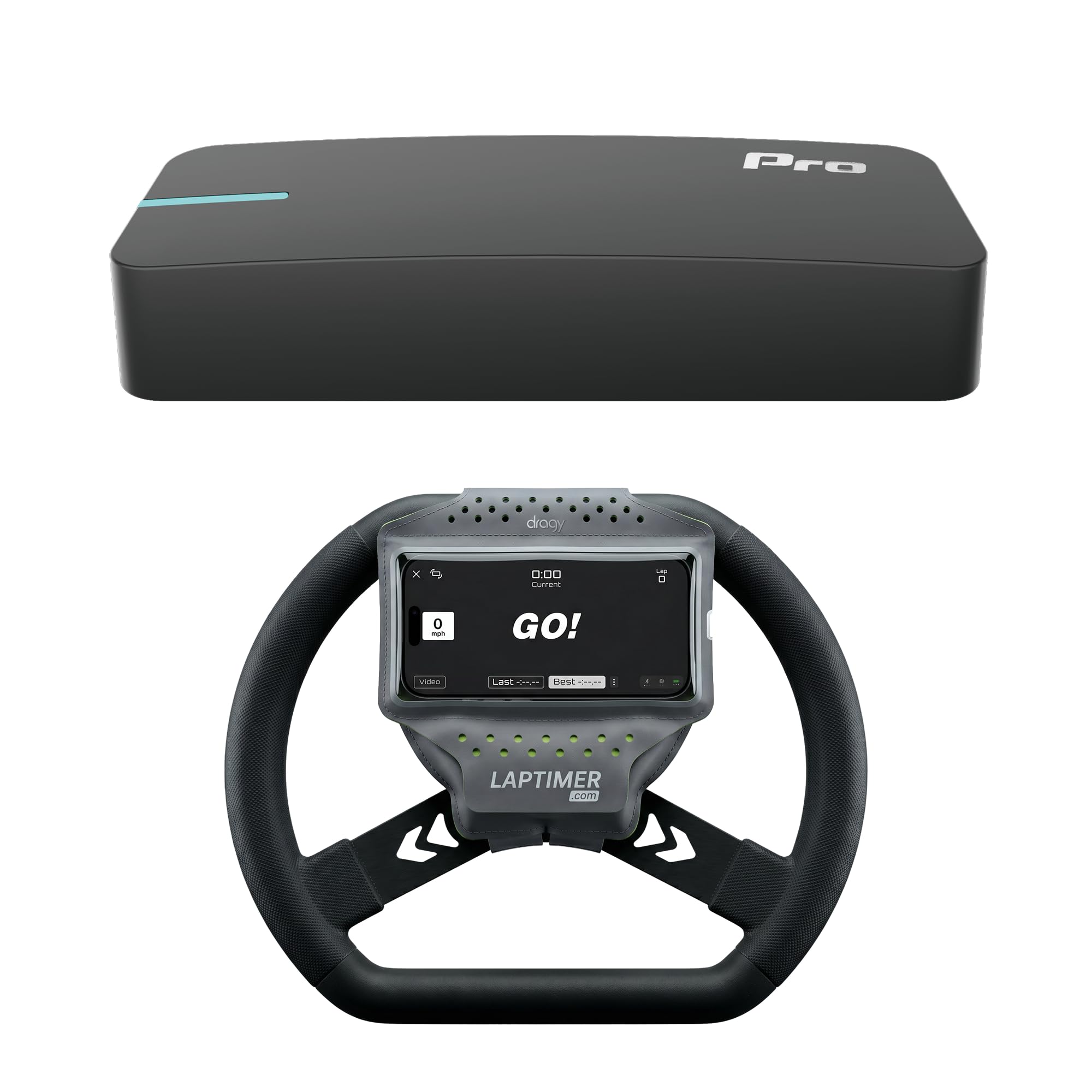
Type: GPS lap timer with steering wheel band
Positioning: 25Hz GNSS
Motion sensing: 6-axis IMU
Storage: Built-in
Intended use: Karting
This is the odd one out in the lineup, and deliberately so. It is not a Wi-Fi controller at all — it is a karting telemetry device that pairs a high-refresh GNSS receiver with a six-axis IMU and built-in storage, mounted to a steering wheel band. The 25Hz position update rate is the headline figure: it samples far more often than a consumer GPS puck, which matters when lap times are separated by tenths. Built-in storage means sessions can be recorded without a phone tethered the whole time.
It earns a place here because band steering and device limits are really about managing radio traffic, and this device is a reminder that not every "controller" on a network is an access point. Buyers shopping for a karting data logger will find the form factor convenient, since the band keeps the unit on the wheel rather than loose in a pocket.
Trade-off: The steering-wheel band mounting is convenient but ties the unit to one wheel, so buyers rotating between karts will want a second band or a different mount.
TP-Link OC200 V3 Omada Hardware Controller

Type: Hardware SDN controller
Device ceiling: Up to 500 devices
Port: USB 3.0
Management: Cloud access and app support
Monitoring: Intelligent network monitoring
The OC200 is the budget entry point for anyone who wants a dedicated controller box instead of running the software on a spare PC. It manages up to 500 devices, which covers a small office or a dense home deployment with room to spare. The USB 3.0 port and cloud access mean configuration can be handled locally or remotely through the app, and the integrated SDN approach keeps access points, switches, and gateways under one pane of glass.
Band steering lives inside that SDN layer, so the controller is what pushes dual-band clients toward the less congested radio. Buyers who already run Omada access points get the most from it, since the ecosystem is designed to be managed together.
Trade-off: The 500-device ceiling is generous for a small site but leaves no headroom for a campus-scale rollout, and the controller is only useful inside the Omada ecosystem.
Alta Control On-Premise Network Controller
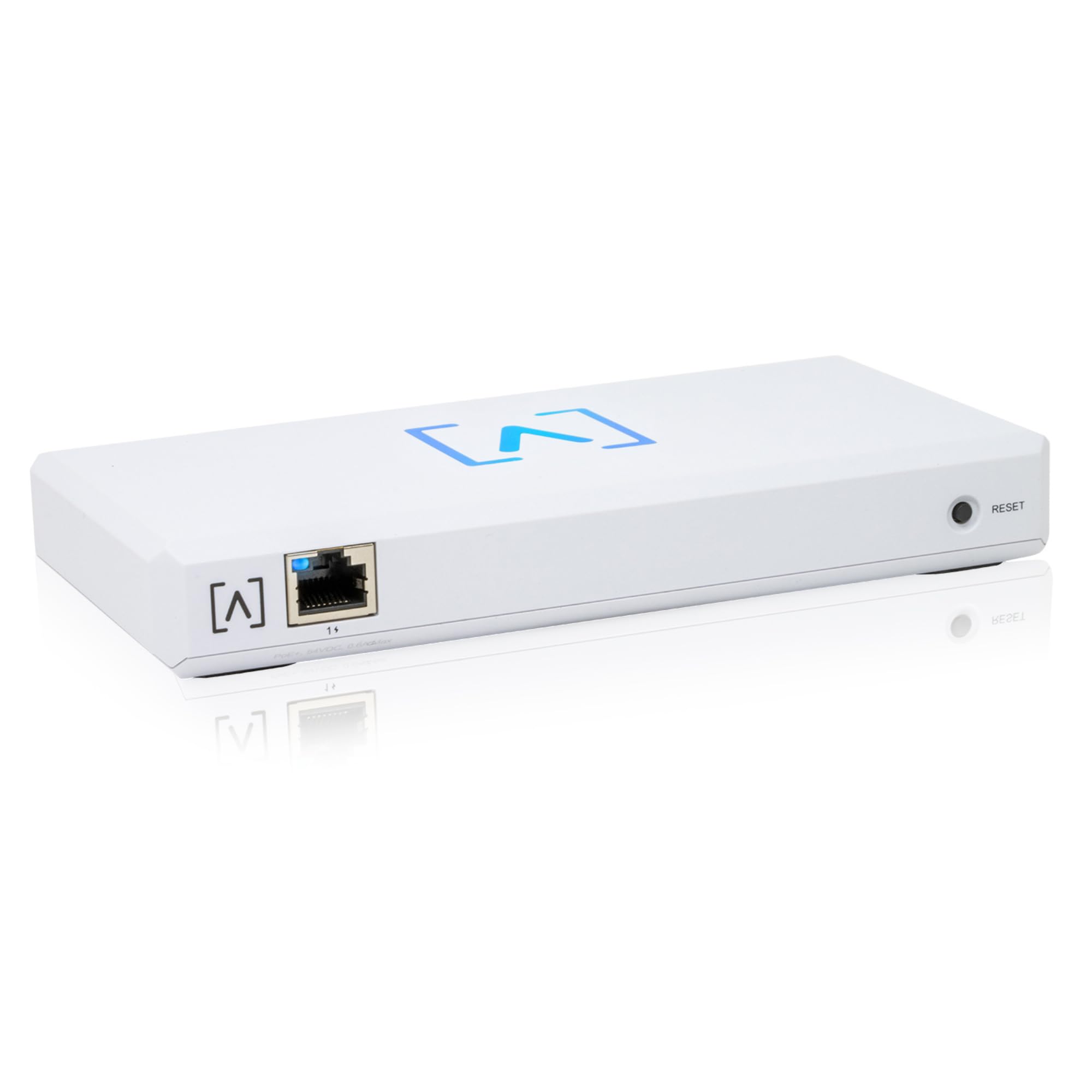
Type: On-premise network controller
Device ceiling: Up to 1,000 devices
Compatibility: All Alta Labs WiFi access points
Power: PoE+
Features: Advanced filtering, hotspot
Positioning: Secure enterprise network management
Alta Control is the highest-capacity pick here, rated for up to 1,000 devices on premise. It is built to sit alongside Alta Labs access points and draws power over PoE+, which simplifies installation where an outlet is not handy. Advanced filtering and hotspot support push it past basic controller duty into guest-network and policy territory, and the on-premise design keeps management traffic inside the building.
For buyers who expect the device count to climb — a school, a clinic, a warehouse — the extra ceiling is the whole argument. Band steering and client balancing are handled at the controller level, so the access points stay simple.
Trade-off: The 1,000-device capacity and enterprise feature set are more than a small office needs, and the on-premise design means no cloud dashboard without additional setup.
D-Link DNH-1000 Nuclias Connect Hardware Controller
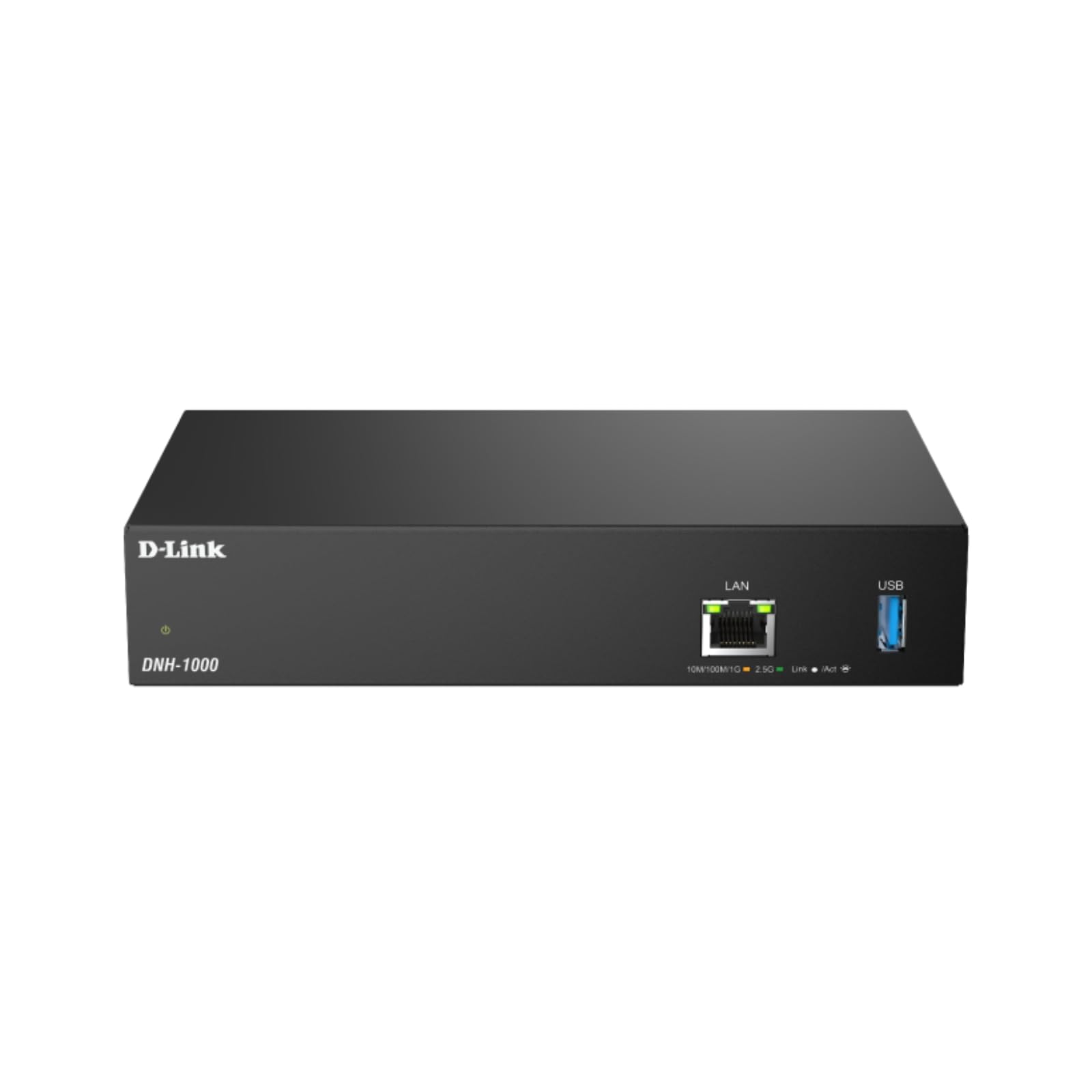
Type: Hardware network controller
Device ceiling: Up to 500 devices
Form factor: Compact
Compliance: Follows NDAA
Positioning: Scalable network management
The DNH-1000 is a compact box that manages up to 500 devices through Nuclias Connect. Its distinguishing feature is NDAA compliance, which matters to buyers in government, education, and regulated industries where procurement rules filter out certain vendors. The compact chassis means it can live on a shelf or in a small rack without eating space.
Band steering and client management are handled through the Nuclias interface, and the 500-device ceiling matches the TP-Link unit above. Buyers choosing between the two should weigh ecosystem fit and procurement requirements rather than raw capacity.
Trade-off: The 500-device ceiling is identical to cheaper alternatives, so the premium here buys compliance and form factor rather than more headroom.
RUCKUS ZoneDirector 1106 Smart Wireless LAN Controller
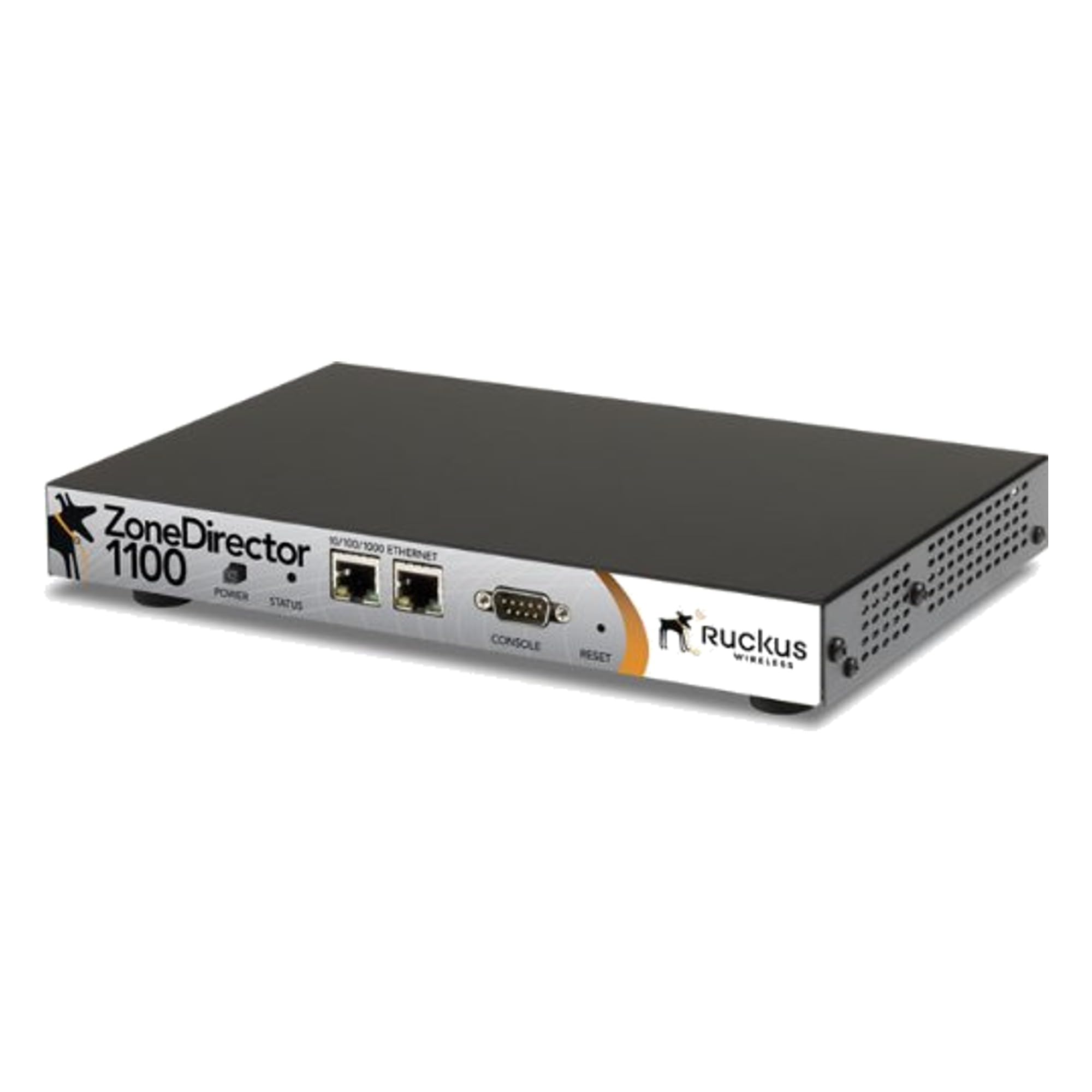
Type: Smart wireless LAN controller
Access point support: Up to 6 ZoneFlex access points
Ports: 2x Gigabit RJ-45
WLAN capacity: 128 WLANs
User database: 1,250 users
Form factor: Desktop
The ZoneDirector 1106 is the specialist pick: a desktop controller that supports up to six ZoneFlex access points, 128 WLANs, and a 1,250-user database. Those numbers describe a small, dense deployment — a branch office or a single floor — rather than a sprawling campus. Two gigabit RJ-45 ports handle the uplink and management traffic.
Band steering on Ruckus gear has historically been one of its stronger features, and the controller is where that logic runs. Buyers already sitting on ZoneFlex hardware will find this the natural way to manage it; buyers starting fresh should look elsewhere.
Trade-off: Six access points is a hard ceiling that leaves little room to grow, and the platform is aimed at existing ZoneFlex owners rather than new deployments.
Before You Buy
- Device ceiling: Match the controller’s rated device count to the network’s realistic peak, not its current size — a 500-device unit leaves little room for growth.
- Band steering support: Confirm the controller actually handles band steering for the access points in use; the feature often depends on the ecosystem, not the controller alone.
- Ecosystem compatibility: A controller is only useful with access points it supports, so check the vendor list before buying.
- Form factor: Desktop units suit small sites, while rack-friendly or PoE+-powered units fit wiring closets better.
- Compliance: Buyers in regulated procurement should confirm NDAA or similar requirements are met before ordering.
- Power: PoE+ controllers need a compatible switch or injector; desktop units need a nearby outlet.
Frequently Asked Questions
- What does "device limit" mean on a network controller? It is the maximum number of client devices or managed access points the controller can track at once. Exceeding it causes dropped management, not necessarily dropped Wi-Fi.
- Does band steering need a controller? On most enterprise ecosystems, yes — the steering logic runs on the controller and pushes dual-band clients to the better radio.
- Can a 500-device controller handle a busy office? It can, provided the office stays under that ceiling with headroom to spare. Dense sites with guest traffic should size up.
- Is the Dragy Pro a Wi-Fi controller? No. It is a karting lap timer and telemetry device included here for buyers comparing controller-type gadgets.
- Why does NDAA compliance matter? Some public-sector and regulated buyers cannot purchase networking gear from certain vendors, so compliance narrows the shortlist.
- Can these controllers manage access points from other brands? Generally no — each is tied to its own ecosystem, with the Alta Control explicitly limited to Alta Labs access points.
Bottom Line
For most buyers weighing device limits and band steering, the TP-Link OC200 V3 is the safest starting point: a 500-device ceiling, app and cloud management, and a budget-tier price that leaves room for access points. Buyers who expect to grow past that should step up to the Alta Control On-Premise Network Controller and its 1,000-device capacity.
