Why there are Amazon links here: Brave Review is paid a commission for qualifying Amazon purchases made through the links below. Your price does not change, and using our links is entirely optional. How this works
ABOK Ark3600 Portable Power Station: Whole-Home Backup That Grows With the Load
The ABOK Ark3600 portable power station is a large-capacity LiFePO4 battery unit built for buyers who need serious whole-home backup, not just a camping gadget. It carries a 3840Wh battery that expands to 11520Wh with extra packs, runs 15 outlets from a 3600W inverter, and accepts up to 2000W of solar input. This review covers what the numbers mean, who the unit fits, and where the trade-offs land — the short answer is that it rewards buyers with a real backup plan and punishes anyone expecting a grab-and-go box.
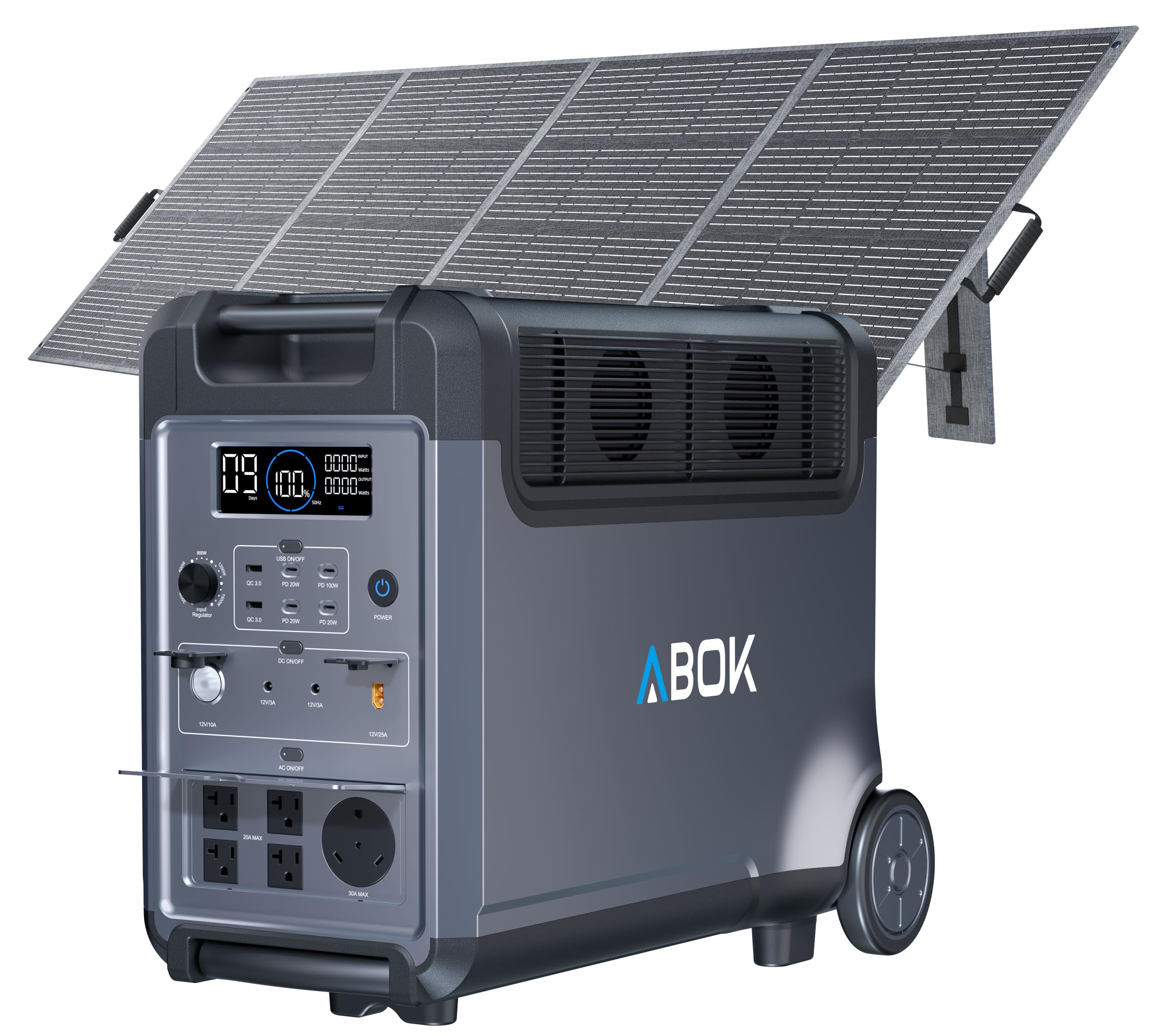
Features and Specifications
Battery Type: LiFePO4
Battery Capacity: 3840Wh, expandable to 11520Wh
Inverter Output: 3600W
Outlets: 15
Solar Input: 2000W maximum
Included Solar Panel: 400W
Intended Use: Home backup, hurricane outages, camping, RV
The headline figure is the 3840Wh LiFePO4 pack. LiFePO4 is the chemistry buyers want in a backup unit because it holds up over many charge cycles and tolerates heat better than older lithium blends — a real consideration for a box that may sit in a garage for months between outages.
The 3600W inverter is what separates this unit from the camping class. It is sized for the loads a household actually runs during an outage: a fridge, a freezer, a furnace blower, lights, router and a few chargers at once, rather than one device at a time.
Expansion to 11520Wh is the feature that decides the purchase. Buyers who plan to ride out multi-day hurricane outages can add battery capacity over time instead of replacing the whole station, and that modular path is the main reason to pick this model over a sealed all-in-one.
Build and Battery Capacity
The Ark3600 is a stationary-class power station. At this capacity the battery cells, inverter and thermal hardware add up to a heavy enclosure, so the realistic home for the unit is a garage shelf, utility room or closet near the breaker panel — not the trunk of a car. Buyers should plan the storage spot and the lifting before the box arrives.
Capacity is the number to read carefully. A 3840Wh pack does not mean 3840Wh of usable output at every load; inverter losses and depth-of-discharge limits trim the real figure. The honest way to size it is to add up the watt-hours of the essentials for one day, then compare.
That is where the expansion to 11520Wh earns its place. A single unit covers a short outage comfortably. A buyer facing week-long hurricane-season cuts can stack additional capacity and treat the station as a small home battery rather than a one-shot backup.
Trade-off: The capacity that makes this unit useful for whole-home backup also makes it heavy and awkward to move, so it is a poor fit for buyers who want one box for both the campsite and the house.
Power Output and Outlets
Fifteen outlets is a generous count, and the practical benefit is that a household can leave the essentials plugged in permanently — fridge, freezer, network gear, a lamp or two — and simply switch the station on when the grid drops. No unplugging and re-routing during a storm.
The 3600W inverter sets the ceiling. Resistive loads like space heaters and kettles pull hard and drain the pack quickly, while motor loads like fridges and furnaces draw a surge at startup. Buyers with a well pump or central AC should check the startup draw against the inverter rating before assuming the unit will carry it.
The 15-outlet layout suits mixed use: standard household plugs for appliances alongside the USB and DC ports small electronics need. That spread is what makes the Ark3600 a home-backup unit first and a camping unit second.
Solar Input and Recharging
The 2000W solar input is the standout spec for off-grid buyers. Most portable stations cap solar charging far lower, which stretches recharge time across a full sunny day. A 2000W ceiling means a large array can refill the pack in a fraction of that time — useful when outages stretch across days and the sun is the only source.
The included 400W panel is a starter, not a full array. It will top the battery up over a sunny day, but buyers planning serious solar resilience will want to add panels up to the input limit. The 400W panel is best read as a bundled entry point that saves a separate purchase.
Wall charging remains the everyday method for most households. Buyers should expect the station to live on the mains between outages so it is full when needed, with solar as the backup to the backup.
Trade-off: The bundled 400W panel is well short of the 2000W solar ceiling, so buyers who intend to rely on solar will spend more on additional panels than the sticker suggests.
Who the ABOK Ark3600 Suits
This unit fits homeowners in hurricane or winter-storm territory who want a permanent backup for the fridge, furnace and communications gear, and who are willing to store a heavy box and maintain it. It also suits RV owners and off-grid cabin users who need substantial capacity and plan to expand later.
It does not suit campers who want a light, portable box for a weekend tent trip, apartment dwellers with no storage space, or buyers on a tight budget who only need to charge phones and a laptop. Those buyers are better served by a small, cheap station.
Trade-off: At a premium price tier for a portable station, the Ark3600 only makes financial sense for buyers who will actually use the capacity and the expansion path — casual users pay for headroom they never touch.
Check the current price and availability on Amazon
FAQ
-
What can the ABOK Ark3600 power during an outage?
The 3600W inverter and 15 outlets are sized for household essentials — fridge, freezer, furnace blower, lights, router and chargers — run together rather than one at a time. High-draw appliances like space heaters and central AC should be checked against the inverter rating first. -
How long will the 3840Wh battery last?
Runtime depends entirely on the load. Buyers should total the watt-hours of the devices they plan to run for a day and compare that to the pack. Light essential loads stretch much further than heating or cooling appliances. -
Can the battery capacity be expanded later?
Yes. The Ark3600 is designed to expand from 3840Wh up to 11520Wh, so buyers can add capacity over time instead of replacing the whole station. -
Is LiFePO4 better than other battery types?
LiFePO4 is generally the preferred chemistry for backup stations because it tolerates many charge cycles and handles heat better than older lithium blends, which matters for a unit stored in a garage between outages. -
How fast does it recharge from solar?
The station accepts up to 2000W of solar input, so a large array can refill it far faster than a small one. The included 400W panel is a starter and will take considerably longer than a full array. -
Can the Ark3600 be used for camping and RV trips?
Yes, though its weight and size make it a poor fit for tent camping. RV owners and cabin users with space to store it are a much better match. -
Does it come with a solar panel?
Yes, a 400W solar panel is included. Buyers planning to rely heavily on solar will likely want to add more panels up to the 2000W input limit. -
Is this unit portable enough to carry?
It is portable in the sense that it can be moved, but at this capacity it is a stationary-class unit best kept in one place near the breaker panel or in a garage. -
What should buyers check before purchasing?
Storage space, the startup draw of any well pump or AC, and whether the expansion path will actually be used. Buyers who only need small-device charging should look at a compact station instead. -
Is the ABOK Ark3600 a good value?
It sits in the premium tier for a portable station, and the value comes from capacity, the 3600W inverter and the expansion path. Buyers who will use all three get their money’s worth; casual users will not.
Bottom Line
The ABOK Ark3600 portable power station is the right pick for homeowners who want a real whole-home backup they can grow over time — 3840Wh of LiFePO4, a 3600W inverter, 15 outlets and a 2000W solar ceiling that most rivals cannot match. It is heavy, it is priced in the premium tier, and the bundled 400W panel is only a starting point, so campers and casual users should look elsewhere. Buyers with a genuine outage plan should check the ABOK Ark3600 on Amazon and confirm current pricing.
