Why there are Amazon links here: Brave Review is paid a commission for qualifying Amazon purchases made through the links below. Your price does not change, and using our links is entirely optional. How this works
AFERIY Portable Power Station (1024Wh, 1800W): Camping and Blackout Backup in One Compact Unit
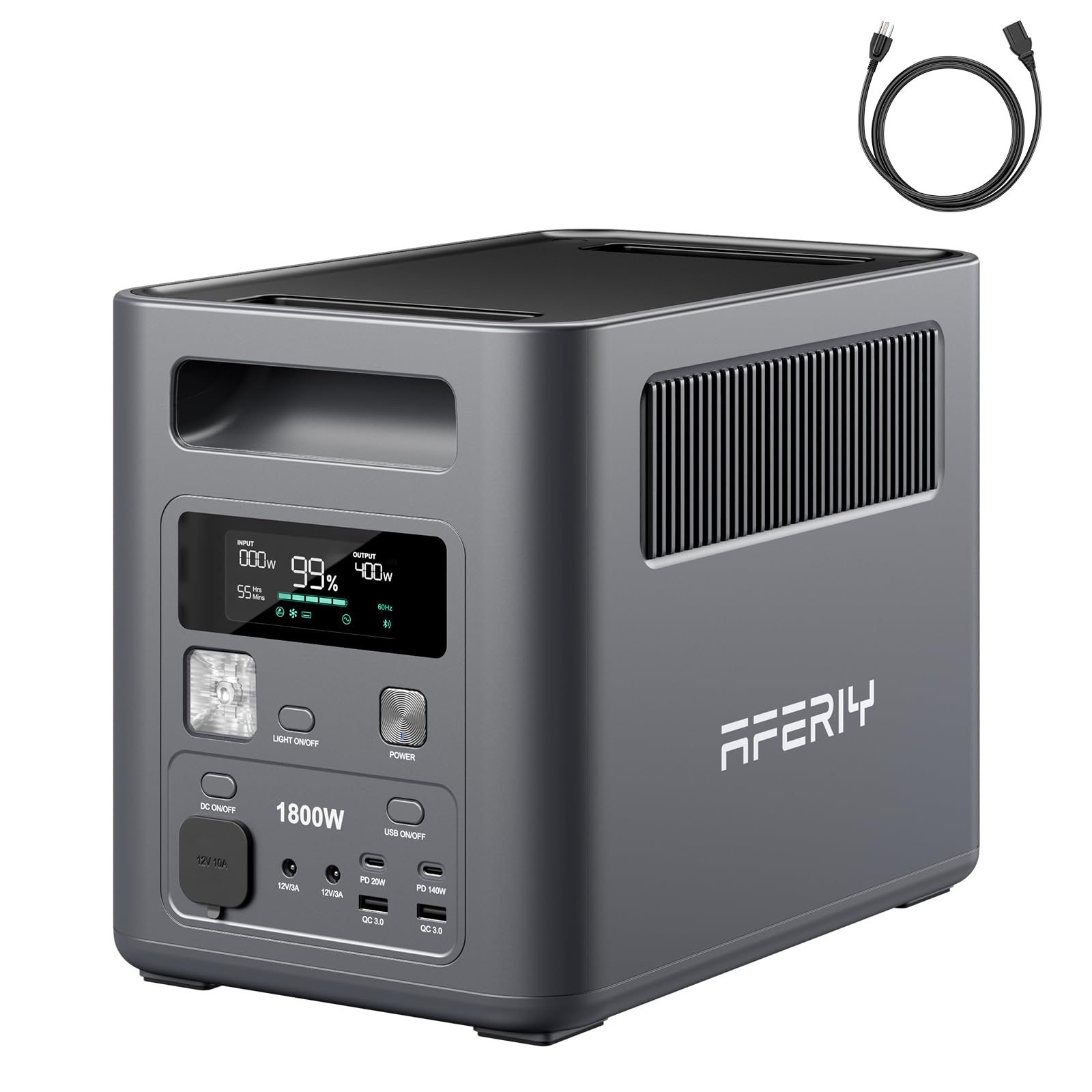
The AFERIY portable power station is a 1024Wh lithium-iron-phosphate battery with an 1800W AC inverter, built for camping trips, tailgates, and short home outages. It sits in the middle of the portable power market: big enough to run a fridge or a coffee maker for a while, small enough to move without help. This review covers what the specifications mean in practice, where the unit fits, and the compromises buyers should expect at this price tier.
Features and Specifications
Battery Chemistry: LiFePO4 (lithium iron phosphate)
Battery Capacity: 1024Wh
AC Output: 1800W continuous
Peak Output: 3600W
Intended Use: Home backup, camping, outdoor emergencies
Charging: Fast recharge, solar panel optional (sold separately)
Design: Compact, lightweight
Price Tier: Mid-range budget
The headline numbers are the 1024Wh capacity and the 1800W continuous AC output. Capacity is the size of the tank; output is the width of the pipe. A unit can hold plenty of energy and still fail to start a device that pulls a big surge at the moment it switches on.
That is where the 3600W peak figure matters. Motors and compressors draw a spike of power when they start, then settle down. The AFERIY is rated to handle double its continuous output for those brief moments, which is what makes the difference between a fridge that starts and one that trips the unit.
Build and Design
The name describes a compact, lightweight design, and that is the point of this class of unit. A 1024Wh battery is heavy by nature, but the enclosure and layout are arranged so one person can carry it from a car to a campsite or from a closet to a kitchen counter. Buyers who have struggled with larger, wheeled units will notice the difference.
Lightweight in this category always means a trade. A smaller shell and fewer internal components keep the weight down, but they also leave less room for cooling and for the extra ports a bigger unit would carry. Buyers who plan to run several high-draw devices at once should look at the port layout carefully before committing.
LiFePO4 chemistry is the other structural decision worth noting. It is the more stable and longer-lived lithium chemistry compared with older alternatives, and it is the reason this unit can be marketed for home and emergency use rather than just weekend camping.
Capacity and Runtime
1024Wh is roughly one kilowatt-hour of stored energy. In real terms, that is enough to run a full-size refrigerator for a stretch of hours, keep phones, laptops, and a router alive for days, or power a CPAP machine overnight. It is not enough to run a space heater or a window air conditioner for long.
Runtime depends entirely on the load. A device that draws 100W will run for many hours; a device that draws 1500W will drain the battery in well under an hour. Buyers should add up the wattage of what they intend to run and treat 1024Wh as a budget to spend, not a guarantee.
For camping, the capacity covers lights, a fan, a portable fridge, camera batteries, and a laptop for a weekend. For home backup, it covers the essentials during a short outage — the fridge, the router, a few lamps, and phone charging — rather than a whole-house solution.
Power Output and Recharging
1800W continuous output puts this unit in the range of appliances rather than just electronics. It can run a coffee maker, a microwave, a blender, or a small power tool, provided the total draw stays under the limit. The 3600W peak gives motor-driven appliances a realistic chance of starting.
The fast recharge claim is the feature that separates this unit from older, slower power stations. Recharging speed matters most in a blackout, when the grid is the only source and time is short. Buyers who pair the unit with a solar panel — sold separately, as the name notes — get a second charging path for longer off-grid trips.
The solar option is genuinely optional here. Buyers who never plan to leave the grid can skip it and rely on wall charging; buyers who camp off-grid for multiple days will want to budget for a panel, which adds to the total cost.
Maintenance and Ownership
LiFePO4 batteries are the low-maintenance choice in this category. They do not need the careful partial-charging habits that older lithium packs demanded, and they hold up better to being stored for long periods between uses. For a unit that spends most of the year in a closet waiting for an outage, that matters.
The practical maintenance routine is simple: keep the unit charged, store it somewhere dry and moderate, and run it occasionally so the battery stays exercised. Buyers should also check the manual for the manufacturer’s guidance on long-term storage, since every brand sets its own recommendation.
Trade-off: At this price tier, buyers get strong capacity and output for the money, but the compact, lightweight build means fewer ports and less cooling headroom than larger premium units, so it suits one or two devices at a time better than a full appliance load.
Check the current price on Amazon
Who the AFERIY Portable Power Station Suits
This unit fits buyers who want one box that covers both weekend camping and short home outages without spending premium money. The 1024Wh capacity and 1800W output are a sensible middle ground: enough to be genuinely useful, not so much that the unit becomes too heavy or too expensive to justify.
It is a good match for campers who run a portable fridge, lights, and electronics; for households that want a fridge-and-router backup for storm season; and for anyone who needs to keep medical devices running during an outage.
It is not for buyers who need to run a space heater, a window AC unit, or a whole-house transfer setup. Those jobs need far more capacity and output than this class of unit provides, and buyers with those needs should be looking at larger, heavier systems.
FAQ
-
How long will the AFERIY portable power station run a refrigerator?
A typical full-size fridge draws somewhere in the low hundreds of watts when the compressor runs, and it cycles on and off. Buyers can expect several hours of fridge operation from a full 1024Wh charge, with the exact time depending on the fridge’s efficiency and how often the door opens. -
Can the AFERIY power station run a CPAP machine overnight?
Yes, that is one of the most common uses for a unit this size. A CPAP draws modest wattage, so a full charge covers a night with room to spare, and the unit can be recharged the next day. -
Does the AFERIY portable power station come with a solar panel?
No. The product name lists the solar panel as optional, meaning it is sold separately. Buyers who want off-grid recharging need to budget for a panel in addition to the station. -
What can 1800W run?
1800W continuous covers most small kitchen appliances, power tools, fans, lights, and electronics. The 3600W peak helps motor-driven appliances start. Buyers should add up the wattage of everything they plan to run at the same time and stay under the continuous limit. -
Is LiFePO4 better than other lithium batteries?
LiFePO4 is generally the preferred chemistry for power stations because it is more thermally stable and tolerates long storage better than older lithium formulations. That makes it a good fit for a unit kept on standby for emergencies. -
Can the AFERIY power station be used indoors?
Yes, with the usual caution. It produces no exhaust fumes, which makes it suitable for indoor emergency use, but buyers should follow the manufacturer’s ventilation guidance and avoid running high-draw appliances in enclosed spaces. -
How do buyers recharge the AFERIY power station?
The unit supports fast recharging from a wall outlet, and it can also be charged from an optional solar panel. Wall charging is the faster path; solar is the option for off-grid trips. -
Is 1024Wh enough for a home blackout?
For a short outage covering the fridge, router, lights, and phone charging, yes. For multi-day outages or for running heating and cooling appliances, buyers need a larger system or a generator. -
Who should not buy this unit?
Buyers who need to power a space heater, an air conditioner, or an entire home during a long outage should look at bigger, heavier systems. Buyers who only need to charge a phone occasionally would be overpaying for this much capacity. -
Does the compact design mean fewer outlets?
Compact units generally carry fewer ports than full-size power stations, so buyers with several devices should check the port layout before buying. The trade-off for the lighter build is a smaller connection panel.
Bottom Line
The AFERIY portable power station is a well-judged middle option for buyers who want real backup capability without premium pricing. Its 1024Wh LiFePO4 battery, 1800W continuous output, and 3600W peak cover camping essentials and short home outages, and the optional solar input extends its range for off-grid use. Buyers who need to run heating or cooling appliances should look elsewhere, but for fridge backup, device charging, and weekend camping, this unit is a sensible pick.
