Why there are Amazon links here: Brave Review is paid a commission for qualifying Amazon purchases made through the links below. Your price does not change, and using our links is entirely optional. How this works
Amazon Echo Hub: The Wall-Mounted Control Panel That Tames a Smart Home
The Amazon Echo Hub is a dedicated smart home controller, not a speaker with a screen bolted on. It is built for the household that has accumulated smart bulbs, plugs, cameras and thermostats and needs one always-on surface to run them all. This review covers what the Echo Hub does, how its 8-inch touchscreen and customizable controls fit into daily routines, who should buy it, and where it falls short. Readers who want a single control point for a busy smart home can check the current price at Amazon.
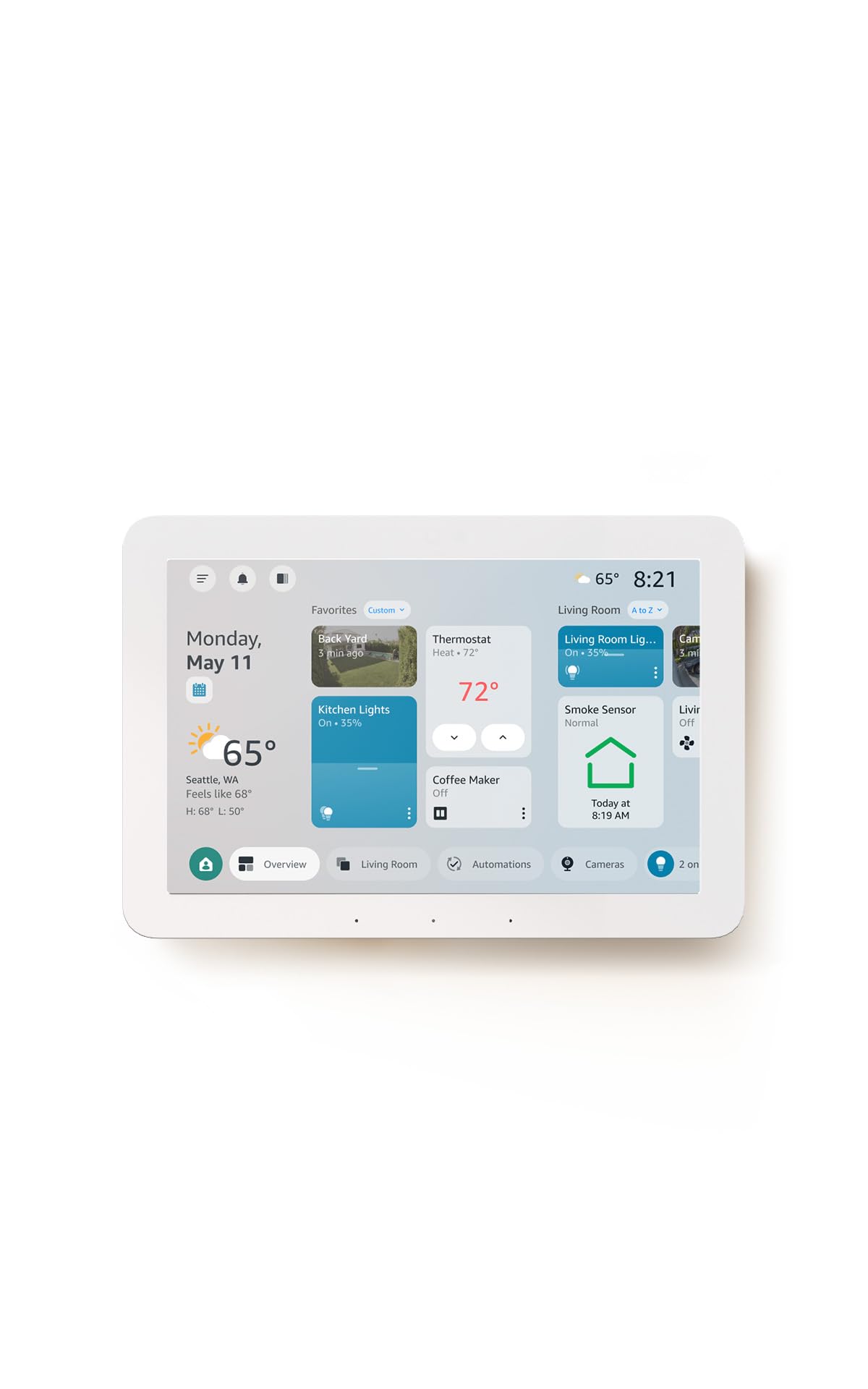
Features and Specifications
Product Name: Amazon Echo Hub (newest model)
Display: 8-inch touchscreen
Design: Redesigned with customizable control
Voice Assistant: Alexa+
Compatibility: Thousands of smart home devices
Primary Role: Central smart home control panel
Mounting: Wall-mountable control surface
The Echo Hub is a purpose-built control panel rather than a general-purpose smart display. Its 8-inch touchscreen is sized to sit on a wall or counter and stay visible, and the redesign points toward customizable controls that put favorite devices and scenes within a tap. The Alexa+ assistant handles voice commands alongside the touch interface, and Amazon states compatibility with thousands of devices, which covers the major smart home ecosystems most households already own.
The central idea is separation of duties. A phone works as a smart home remote, but it is also a phone, so notifications, calls and apps compete for attention. The Echo Hub stays on the wall and shows only the home: lights, locks, cameras, thermostats and scenes. That focus is the product’s reason to exist, and it is the lens through which every other specification should be read.
Build and Design
The Echo Hub is designed to be mounted and left in place, which shapes how buyers should think about it. A wall-mounted panel needs a nearby power source and a spot with good sightlines, typically a hallway, kitchen or entryway where the household passes through. The redesigned customizable control layout matters here: the screen is meant to be configured once and then read at a glance, not fiddled with.
The 8-inch size is a deliberate middle ground. It is large enough to show a grid of device tiles and camera feeds without squinting, and small enough to fit a wall plate without dominating a room. Buyers who want a giant touchscreen for video calls or streaming should look at a full smart display instead; the Echo Hub is optimized for control, not entertainment.
Control and Compatibility
The headline capability is compatibility with thousands of devices, and the practical question is whether a given household’s gear is covered. Buyers should confirm their specific brands and hubs before committing, since the Echo Hub is a controller and depends on the devices it talks to. For a home built around popular smart bulbs, plugs, cameras and thermostats, the breadth of support is the main selling point.
Customizable controls are the feature that separates a good control panel from a bad one. The Echo Hub lets the household decide which devices and scenes get prime screen space, so the most-used controls sit on the first screen and the rest stay a swipe away. That configuration takes some setup time up front, but it is what makes the panel genuinely faster than opening an app.
Power and Placement
Because the Echo Hub is meant to live on a wall, power and placement are part of the purchase decision, not an afterthought. Buyers need a location with access to power and a clear view from the spots where the household actually stands. A panel mounted where nobody walks is a panel nobody uses.
The trade-off of a fixed panel is that it does not travel. A phone goes room to room; the Echo Hub stays put. Households should pick the highest-traffic wall in the home and treat the Echo Hub as the command center for that zone, with phones and voice commands covering the rest.
Maintenance and Daily Use
Daily use is mostly taps and glances: adjusting lights, checking a camera, running a scene on the way out the door. The Alexa+ assistant adds voice on top of touch, so a household can speak a command when hands are full and tap when quiet matters. The panel is designed to be always available, which is the point of a dedicated controller.
Maintenance is light. The main ongoing task is keeping the customizable layout current as devices are added or rooms are rearranged. Buyers who enjoy tuning a smart home will treat that as a feature; buyers who want zero setup should expect an initial configuration session before the panel feels natural.
Trade-off: A dedicated wall panel only earns its place in a home that already runs several smart devices and has a good spot to mount it, so simpler setups may not get enough daily use out of it to justify the cost.
Check the current price of the Amazon Echo Hub at Amazon
Who the Echo Hub Is For, and Who It Is Not
The Echo Hub suits households that have crossed a threshold: enough smart devices that controlling them one app at a time has become a chore. It also suits buyers who want a shared control point the whole household can use, rather than one person’s phone holding all the apps. A wall panel in a kitchen or entryway is a natural fit for that profile.
It is not for buyers just starting a smart home with one or two devices, who will find a phone or a voice speaker sufficient. It is also not for anyone who wants a smart display for video calls, streaming or recipes, since the Echo Hub is built for control first. And it is not for a home without a sensible wall location and power access, because a fixed panel needs a fixed home.
FAQ
-
What is the Amazon Echo Hub?
It is a dedicated smart home control panel with an 8-inch touchscreen, Alexa+ voice control, customizable controls and compatibility with thousands of devices, designed to be mounted and left in place. -
Does the Echo Hub work with different smart home brands?
Amazon states compatibility with thousands of devices. Buyers should confirm their specific brands and any required hubs before purchasing, since the Echo Hub controls devices rather than replacing them. -
Does the Echo Hub need to be mounted on a wall?
It is designed as a wall-mountable control panel, so buyers should plan a location with power access and good sightlines. A fixed spot in a high-traffic area gets the most use. -
Is the Echo Hub a replacement for a smart speaker?
No. It is a control panel first. Households that want music and voice answers throughout the home still need speakers, while the Echo Hub handles the device dashboard. -
What does Alexa+ add to the Echo Hub?
Alexa+ provides voice control on top of the touchscreen, so the household can speak commands when hands are full and tap the customizable controls when quiet is preferred. -
How many devices can the Echo Hub control?
Amazon states compatibility with thousands of devices rather than a fixed per-panel count. The practical limit is the household’s own setup and how the customizable layout is organized. -
Is the Echo Hub good for renters?
Renters should weigh the wall-mounting requirement against their lease. A panel that needs a permanent spot and power is easier to justify in a home the buyer plans to stay in. -
Does the Echo Hub replace a smart home hub like a bridge?
Not necessarily. Some devices require their own bridge or hub to connect. Buyers should check whether their gear needs one before assuming the Echo Hub is the only box required. -
Who should skip the Echo Hub?
Households with only one or two smart devices, buyers who want a smart display for video and streaming, and homes without a good wall location and power access should skip it. -
Is the Echo Hub worth it for a busy smart home?
For a home with many devices and a high-traffic wall, a dedicated always-on control panel can replace a lot of app-switching. The value depends on how many devices the household actually runs daily.
Bottom Line
The Amazon Echo Hub is the right purchase for a household that has outgrown app-based smart home control and wants one always-on panel the whole family can use. Its 8-inch touchscreen, customizable controls, Alexa+ voice and broad device compatibility make it a focused command center rather than a general-purpose display. Buyers with a modest setup or no good wall location should wait, but for a busy smart home, the Echo Hub earns its place on the wall. Check the latest price on Amazon.