Why there are Amazon links here: Brave Review is paid a commission for qualifying Amazon purchases made through the links below. Your price does not change, and using our links is entirely optional. How this works
Amazon Smart Thermostat: A Budget Entry to a Smarter Home
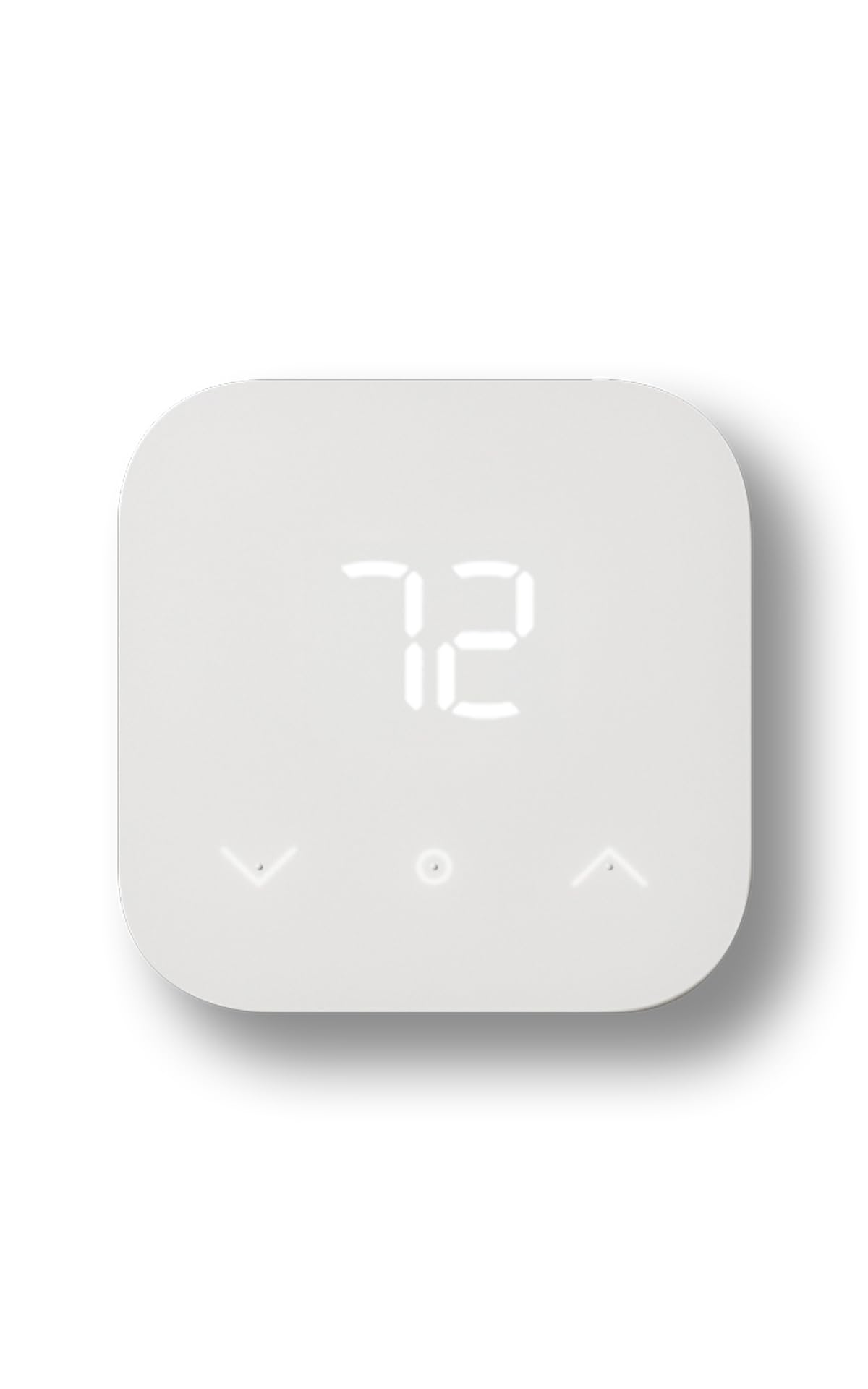
The Amazon Smart Thermostat is a low-cost way to put a connected thermostat on the wall without paying premium prices. It suits renters and first-time smart-home buyers who already lean on Alexa or Ring and want heating and cooling control from a phone or by voice. This review covers what the unit does, how it is built, what it costs in practice, and who should skip it. Buyers ready to move can jump straight to the price check.
Features and Specifications
- Type: Smart thermostat
- Brand: Amazon
- Ecosystem: Works with Alexa and Ring
- Core job: Heating and cooling schedule control; energy-saving scheduling
- Control: Voice control via Alexa; app-based control through the Alexa app
- Power: Draws power from the home’s low-voltage thermostat wiring
- Price tier: Budget
The headline here is ecosystem fit. This is an Amazon-first device, and its natural home is a household that already talks to Alexa or checks a Ring camera. Voice control and app control both run through Amazon’s software, so the setup assumes an Amazon account as the starting point.
The energy-saving claim in the product name is the second key point. Buyers should read it as schedule-based savings — the thermostat can hold a temperature when nobody is home and recover it before people return — rather than as a promise of a specific dollar figure. Savings depend on the home, the climate and the schedule.
How It Is Built and Installed
The unit is a wall-mounted thermostat designed to replace an existing low-voltage model. It is not a plug-in device: it needs the thermostat wiring already present in most homes that have central heating and cooling. Buyers with a bare wall and no wiring should expect an electrician or HVAC technician visit, which changes the true cost considerably.
Installation is the part most buyers underestimate. Replacing a thermostat involves shutting off the HVAC system at the breaker, labeling wires, and matching them to the new unit’s terminals. Confident DIYers handle this in under an hour; anyone unsure about wiring should budget for professional installation. That labor cost can easily exceed the price of the thermostat itself.
Power and Compatibility
The thermostat runs on the low-voltage power supplied through the thermostat wiring, so it does not need batteries for everyday operation in a standard setup. Homes with unusual wiring — older systems, some heat-pump configurations, or two-wire setups without a common wire — can run into trouble. Buyers should confirm their existing wiring before ordering rather than after.
Compatibility with the home’s HVAC equipment is the single biggest deciding factor. This is a mainstream thermostat aimed at conventional forced-air systems, and buyers with zoned systems, proprietary communicating thermostats or unusual boiler setups should check carefully. A thermostat that does not match the equipment cannot deliver the savings it advertises.
Smart Features and the Alexa and Ring Tie-In
The value of this thermostat scales with how deep the household already is in Amazon’s ecosystem. With Alexa, temperature changes can be handled by voice — useful when hands are full or when adjusting the setting from across the room. Through the Alexa app, schedules and remote adjustments are handled from a phone.
The Ring connection matters for households that already use Ring devices. It extends the same account-based control approach to the thermostat, which keeps everything in one app family rather than scattering the smart home across three or four different platforms. Buyers who use Apple Home or Google Home as their primary platform will find less here.
Maintenance and Day-to-Day Use
Day-to-day, the thermostat is a set-and-forget device. Once schedules are in place, most households touch it rarely — occasionally overriding a setting on a mild day or adjusting for a guest. There are no filters to change and no consumables to buy, which keeps the long-term cost close to zero.
The maintenance that matters is seasonal. A schedule set in summer needs revisiting in winter, and the savings only materialize when the schedule matches the household’s actual routine. Buyers who set it once and never look at it again will get less out of it than buyers who spend ten minutes each season tuning the schedule.
Trade-off: The low price buys a device that leans heavily on Amazon’s ecosystem and on existing thermostat wiring, so households outside Alexa and Ring or with unusual HVAC setups may spend more on installation and get less from the smart features.
Who Should Buy It and Who Should Not
This thermostat is a strong fit for renters and first-time smart-home buyers who already use Alexa or Ring, have standard thermostat wiring, and want voice and app control without spending premium money. It also suits households replacing a failing basic thermostat who want a modest upgrade rather than a full smart-home overhaul.
Buyers who should look elsewhere fall into a few clear groups. Households built around Apple Home or Google Home will find the ecosystem tie-in frustrating. Anyone with unusual wiring, a heat pump, or a zoned system should verify compatibility before buying. And buyers who want advanced features — room sensors, detailed energy reporting, learning algorithms — will need to spend more on a premium model.
Check the current price on Amazon
FAQ
-
Does the Amazon Smart Thermostat work without Alexa?
The device is built around Amazon’s ecosystem, and the app control runs through the Alexa app. A household without an Amazon account will find setup and daily use awkward, so Alexa or Ring users are the intended audience. -
Can it be installed without an electrician?
Many buyers with standard low-voltage wiring install it themselves in under an hour. Anyone unsure about breaker shutoff or wire labeling should hire a professional — the labor cost is worth avoiding a mistake. -
Does it need a common wire?
Some homes lack a common wire, and that can complicate installation. Buyers should check the wiring behind their existing thermostat before ordering so they know what they are dealing with. -
Will it actually save money on energy bills?
The savings come from scheduling — holding a temperature when the home is empty and recovering it before people return. Actual savings vary with climate, insulation and routine, and no thermostat can promise a fixed figure. -
Does it work with heat pumps?
Compatibility varies by system, and heat pumps are one of the setups buyers should verify carefully. Checking the HVAC equipment against the thermostat’s supported systems before purchase avoids a return. -
Can it be controlled from a phone when away from home?
Yes. App-based control through the Alexa app allows remote adjustment, which is useful for warming or cooling a home before arrival. -
Does it work with Ring devices?
The product is built to work with Ring as part of the same Amazon ecosystem, which keeps control in one app family for households already using Ring cameras and doorbells. -
Is it a good fit for renters?
Renters with standard wiring and an existing Alexa setup are a natural fit, since the device is inexpensive and removable. Renters in buildings with shared or unusual HVAC systems should check with the landlord first. -
How often does the schedule need updating?
A schedule set for one season usually needs revisiting for the next. Ten minutes each season keeps the savings on track. -
What is the main reason to choose a more expensive thermostat?
Premium models add room sensors, learning behavior and detailed energy reporting. Buyers who want those features will need to spend more; this unit covers the basics at a budget price.
Bottom Line
The Amazon Smart Thermostat is the sensible pick for Alexa and Ring households with standard wiring who want voice and app control without a premium price. It covers the essentials — scheduling, remote control, voice adjustment — and skips the extras that push premium thermostats into another price bracket. Buyers outside Amazon’s ecosystem or with unusual HVAC equipment should look at a platform-agnostic model instead.
