Why there are Amazon links here: Brave Review is paid a commission for qualifying Amazon purchases made through the links below. Your price does not change, and using our links is entirely optional. How this works
Anker SOLIX C1000 Gen 2: Fast-Charging Power for Outages and Off-Grid Days
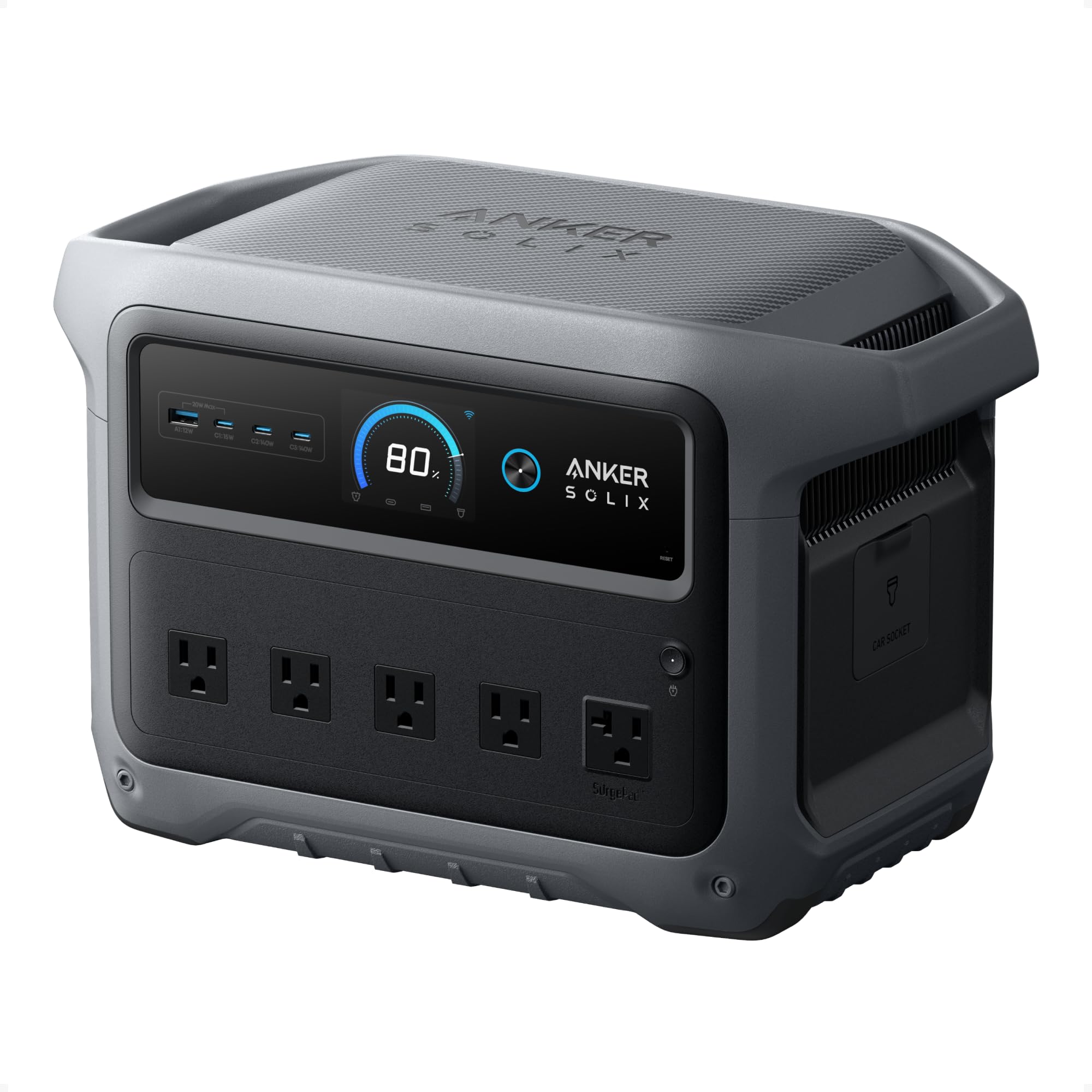
The Anker SOLIX C1000 Gen 2 is a mid-size portable power station built around a lithium iron phosphate battery, and it targets two kinds of buyer: households that want a real backup for short outages, and campers or van dwellers who need silent power away from a hookup. This review covers what the unit is built to do, how its capacity and output translate into real use, what the fast recharge actually means in practice, and where the design makes compromises. It closes with a plain verdict on who should buy it and who should look elsewhere.
Features and Specifications
Type: Portable power station / solar generator
Battery Chemistry: LiFePO4 (lithium iron phosphate)
Battery Capacity: 1,024Wh
AC Output: 2,000W continuous, 3,000W peak
Recharge Time: Full charge in 49 minutes
Intended Use: UPS backup, outdoor use, emergency power
The headline figure is the 1,024Wh capacity, which sits in the sweet spot between pocket-sized units that can only top up a phone and heavy whole-home batteries that need two people to lift. The LiFePO4 chemistry is the more important detail for anyone planning to keep the unit for years, because that chemistry is chosen for longevity and stability rather than for the lowest possible cost per watt-hour.
The 2,000W continuous rating with a 3,000W peak is enough to run a fridge, a space heater on a lower setting, a microwave, or a power tool one at a time, and the surge headroom covers the brief spike a motor draws at startup. The 49-minute full recharge is the standout spec, and it changes how the unit gets used: instead of a device that sits on a charger overnight, it becomes something that can be topped up between errands or during a short window of generator time.
Build and Portability
A 1,024Wh LiFePO4 station is a substantial object, and buyers should expect to move it with two hands rather than carry it in one. That weight is the direct cost of the capacity and the chemistry — the same pack in a lighter format would mean either less stored energy or a less durable cell type. The payoff is a unit that can live in a closet or garage and be hauled out when needed without feeling like a permanent installation.
Anker builds this class of product around a molded enclosure with integrated handles and a display, and the C1000 Gen 2 follows that pattern. The practical question for a buyer is not whether it is portable in the abstract but whether it is portable enough for the intended job: fine for carrying to a patio, a campsite table, or a garage shelf, less suited to backpacking or daily hauling up stairs.
Capacity and Real Runtime
Capacity is where most buyers misjudge a power station. The 1,024Wh figure is the total energy stored, and real runtime depends entirely on what gets plugged in. A phone or a laptop draws very little and will run for days; a full-size fridge cycles on and off and will last many hours; a space heater or a kettle draws heavily and will drain the pack quickly.
The sensible way to plan around this unit is to think in terms of a short outage rather than a long one. It is sized to keep essentials alive — refrigeration, lighting, communications, a medical device — through an evening or a day, not to run a household for a week. Buyers who need multi-day coverage should be looking at a larger station or a paired expansion battery rather than expecting this one to stretch.
Power Output and What It Can Run
The 2,000W continuous output puts most household appliances within reach, and the 3,000W peak gives motor-driven devices the startup surge they need. The limit that matters is simultaneous load: running a microwave and a heater together will approach the ceiling, and the unit will protect itself rather than deliver more than it is rated for.
Buyers should treat the output rating as a budget to be spent one major appliance at a time. That is normal for this class of product and not a flaw, but it does mean the C1000 Gen 2 suits a staged approach to backup power — run the fridge for a while, then switch to something else — rather than a whole-panel solution.
Recharge and UPS Role
The 49-minute full charge is the feature that separates this unit from most of its competition, and it is most useful in two scenarios. The first is the outage itself: when grid power returns briefly, the station can refill fast enough to be ready for the next drop. The second is solar, where a fast acceptance rate means a modest panel array does not have to sit in full sun all day to matter.
The UPS designation is the other practical draw. Buyers who want a desktop or home-office setup to ride through a brief interruption can use the unit as a bridge, keeping a router, a monitor, or a small appliance alive long enough to save work or shut down cleanly. That role is where the fast recharge and the stable LiFePO4 chemistry earn their keep together.
Trade-off: The fast recharge and high output are the selling points, but the capacity is sized for short outages and essential loads — buyers expecting to run a whole home or a heavy appliance for a full day will find the 1,024Wh pack runs out sooner than the marketing implies.
Check the current price on Amazon
Who Should Buy the Anker SOLIX C1000 Gen 2
The clearest fit is a household that wants a real, ready-to-go backup for short outages without installing a permanent system. The unit covers the essentials, recharges fast enough to keep up with an unstable grid, and can double as a UPS for a home office. Buyers in that group get the most value from the design.
The second fit is the outdoor user — car campers, van dwellers, tailgaters — who wants silent power for a fridge, lights, and device charging without a generator’s noise and fumes. The capacity is generous for that use, and the fast recharge means a short drive or a solar session restores it.
It is a poor fit for two groups. Buyers who need to run a whole home, a large appliance, or a multi-day outage should step up to a bigger station or a paired battery. And buyers who want the lightest possible unit for backpacking or daily carrying should accept that this capacity class comes with real weight.
FAQ
-
How long does the Anker SOLIX C1000 Gen 2 take to charge?
The unit is rated for a full charge in 49 minutes, which is unusually quick for this capacity class. That speed is the main reason it works well as a backup that stays ready between outages. -
What can the 2,000W output run?
The continuous rating covers most household appliances one at a time, and the 3,000W peak handles the startup surge from motor-driven devices. Running several heavy loads at once will approach the limit. -
Is LiFePO4 better than a regular lithium battery?
LiFePO4 is chosen for stability and long service life rather than for the lowest cost. For a unit that sits idle between emergencies, that chemistry is the more durable choice. -
Can it be used as a UPS?
Yes — the unit is intended for UPS use, so it can bridge a home-office setup through a brief interruption. That makes it useful for a router, a monitor, or a small appliance that needs to stay on. -
Can it be charged with solar panels?
The unit is sold as a solar generator, so it accepts panel input. The fast charge rate means a modest array can refill it in a reasonable window of sunlight. -
How long will 1,024Wh actually last?
Runtime depends entirely on the load. A phone or laptop will run for days, a fridge for many hours, and a heater or kettle for a much shorter stretch. Planning around essentials is the realistic approach. -
Is it heavy enough to need two people?
A 1,024Wh LiFePO4 station is a substantial unit that is best moved with two hands. It is portable for a garage, patio, or campsite but not for backpacking or daily carrying. -
Who is this power station not for?
Buyers who need whole-home backup or multi-day coverage should look at a larger station. Buyers who want the lightest possible unit for carrying should look at a smaller capacity class. -
Does it work for camping and van life?
Yes — the capacity and silent operation suit car camping, van life, and tailgating, where a fridge, lights, and device charging are the main loads.
Bottom Line
The Anker SOLIX C1000 Gen 2 is the right pick for buyers who want a fast-recharging, LiFePO4-based backup for short outages and outdoor power for essentials — its 49-minute full charge and 2,000W output cover the jobs most people actually have. Buyers who need whole-home or multi-day coverage should size up, but for the household or camper in this class, it is a straightforward choice.