Why there are Amazon links here: Brave Review is paid a commission for qualifying Amazon purchases made through the links below. Your price does not change, and using our links is entirely optional. How this works
Best Armoured Cable Run to an Outbuilding for Safe Buried and Overhead Power
Running power to a shed, garage, pump house or detached workshop starts with choosing the right cable assembly, and the wrong jacket or conductor gauge turns a weekend job into a redo. This roundup covers five cable products suited to three kinds of buyer: the DIYer trenching a direct-burial feeder, the installer pulling armored cable through a structure, and the homeowner who just needs a short flexible whip to finish a disconnect. Each pick is matched to a real job, and the overview table below sorts them at a glance so a decision can be made in under a minute.
Overview of the Picks
| Product | Key Spec | Best Use | Price Tier |
|---|---|---|---|
| FIRMERST 14/2 UF-B Wire with Ground, 100 FT | 14 AWG, 2 conductor + ground, direct burial | Underground run to a shed, pump or outlet | Budget |
| HUANCHAIN 10/2 MC Cable 125FT | 10 AWG, 2 conductor + ground, aluminum armor | Long indoor/outdoor commercial runs | Mid |
| Southwire 68580052 50-Foot 12-Gauge Type MC Cable | 12 AWG, 2 conductor, aluminum armor | Shorter armored runs in a structure | Budget |
| 10/2 MC Cable with Ground, 100FT | 10 AWG, 2 conductor + ground, aluminum armor | Heavy-duty armored feeder at 100 ft | Mid |
| TAUROX 1/2-Inch 3 Conductor 10 Gauge Whip Kit | 10 AWG, 3 conductor + ground, liquid-tight flex, 4 ft | AC disconnect and short outdoor hookups | Budget |
1. FIRMERST 14/2 UF-B Wire with Ground, 100 FT Direct Burial Feeder Cable
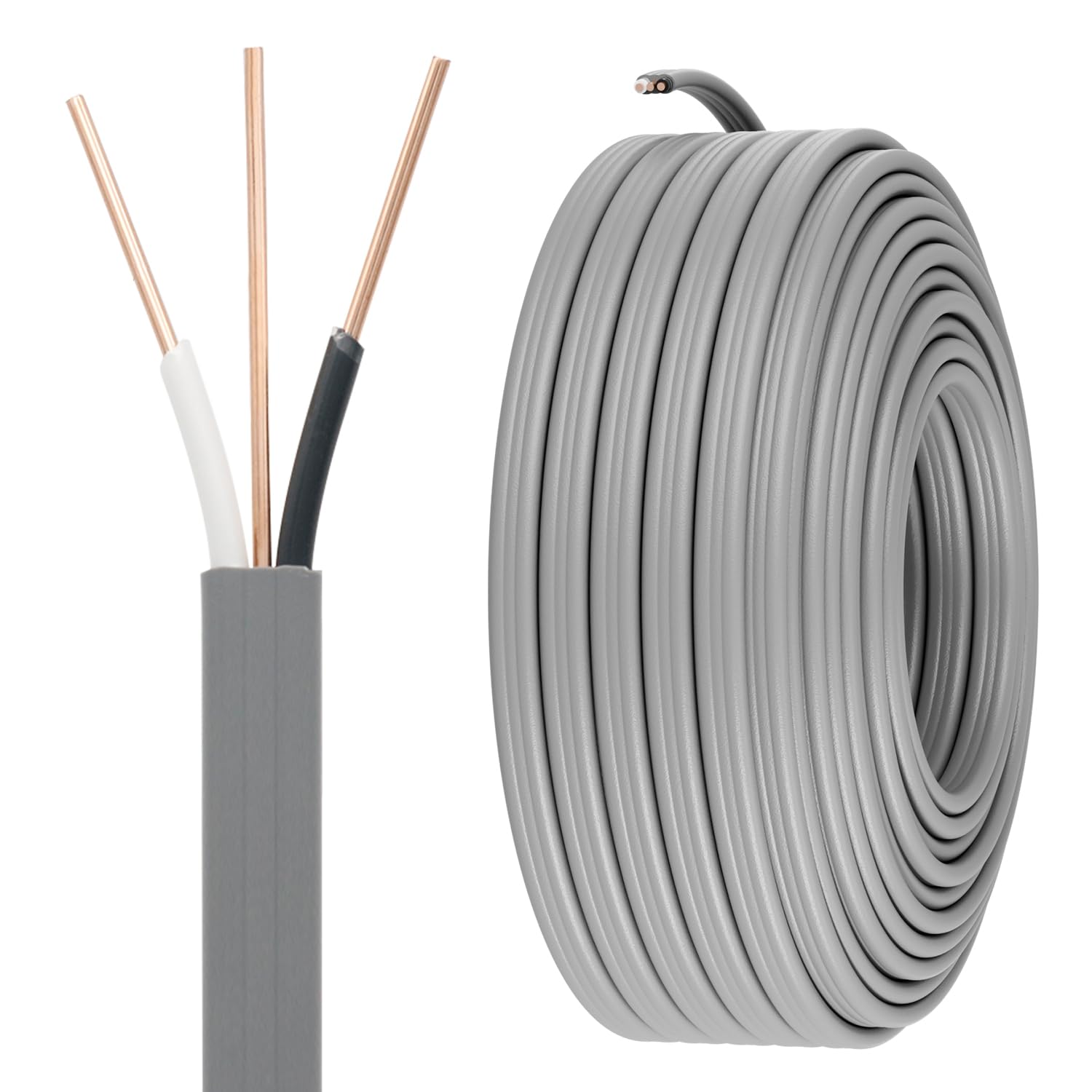
Configuration: 14/2 with ground
Length: 100 ft
Jacket: UF-B, direct burial rated
Conductors: Solid copper
Listing: ETL Listed
Intended use: Underground runs to sheds, pumps and outlets
Check the current price on Amazon
This is the classic answer for a trench-and-cover job. The UF-B jacket is built for direct burial, so the cable goes into the ground without a separate conduit, and the solid copper conductors keep terminations firm at outlets and pump disconnects. The 100 ft length suits a shed set back from the house, and the ETL listing gives the inspector something to sign off on. It is a feeder cable, not a flexible appliance cord, so it wants a clean trench and proper burial depth.
Trade-off: The 14-gauge conductors limit this cable to light loads such as lighting and small receptacles, so a heater, welder or large pump will need a heavier gauge.
2. HUANCHAIN 10/2 MC Cable 125FT Solid Copper Wire with Aluminum Armor
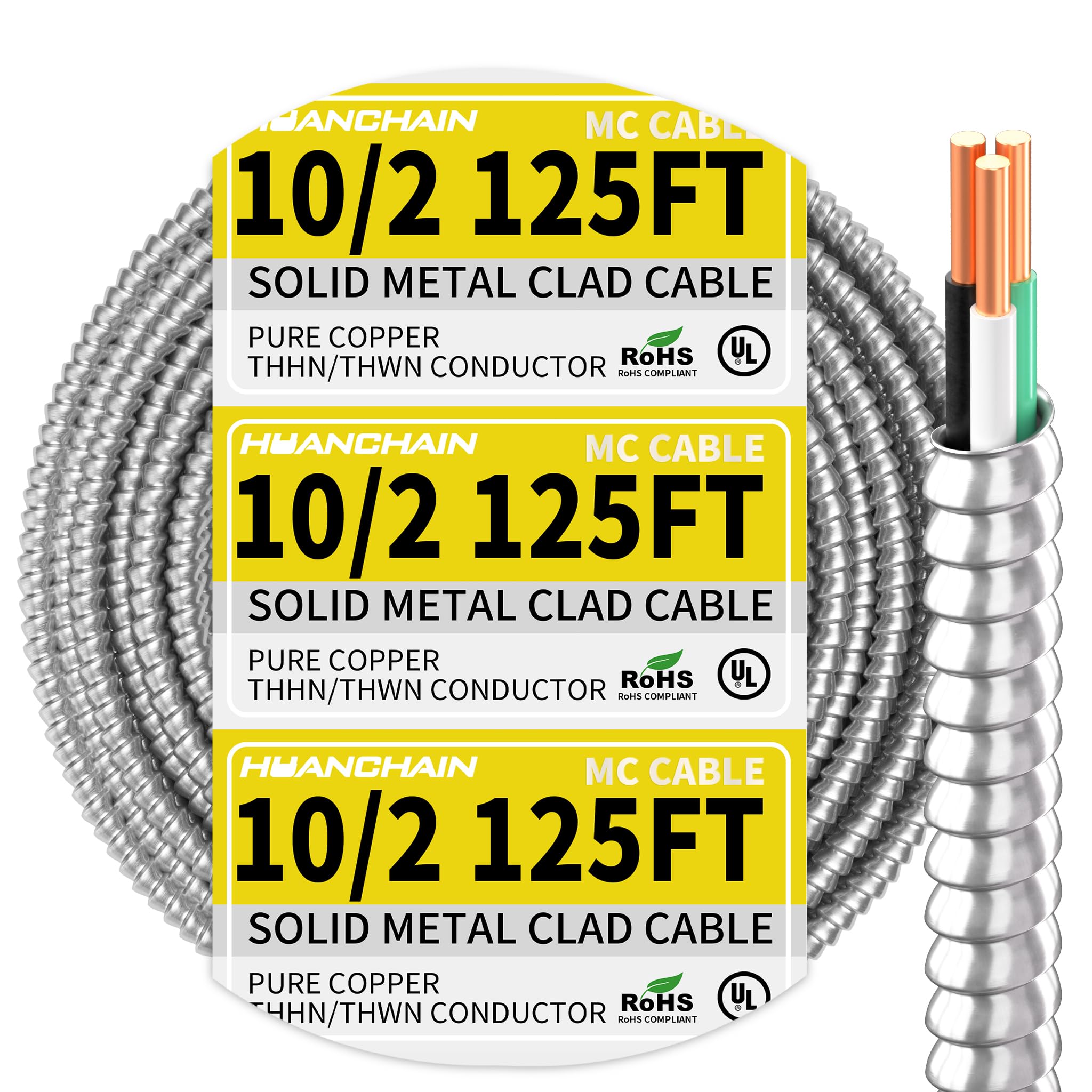
Configuration: 10/2 with ground
Length: 125 ft
Armor: Aluminum
Conductors: Solid copper
Voltage rating: 600V
Listing: UL Listed
Intended use: Indoor, outdoor, commercial and industrial
Check the current price on Amazon
Metal-clad cable earns its place where the run is exposed or needs mechanical protection. The interlocked aluminum armor shields the conductors from knocks and rodents, and the 10-gauge copper carries a heavier load than 14-gauge over the same distance. At 125 ft, this spool covers a long garage or workshop feed with slack to spare, and the 600V rating plus UL listing suit commercial and industrial settings as well as a residential outbuilding. The solid copper conductors terminate cleanly in boxes and disconnects.
Trade-off: The aluminum armor is stiff and awkward to bend in tight corners, so a run with several sharp turns will need careful routing and the right fittings.
3. Southwire 68580052 50-Foot 12-Gauge 2-Conductor Type MC Cable Aluminum

Configuration: 12/2
Length: 50 ft
Armor: Aluminum
Conductors: Copper
Type: MC cable
Intended use: Armored branch circuits indoors and out
Check the current price on Amazon
A 50 ft spool of 12-gauge armored cable is the practical size for a short branch circuit to a detached structure or a subpanel stub. The 12-gauge copper handles a 20-amp circuit, which covers most receptacle and lighting needs in a workshop or shed. Southwire is a familiar name in electrical supply, and the aluminum armor gives the run protection where it leaves the ground and enters a building. The shorter length keeps waste down on jobs that do not need a full 100 ft.
Trade-off: Fifty feet runs out fast on a long trench or a tall wall pull, and the 12-gauge copper is heavier to work with than smaller branch-circuit cable.
4. 10/2 MC Cable with Ground, 100FT Pure Copper 10AWG/2 Metal Clad Wire
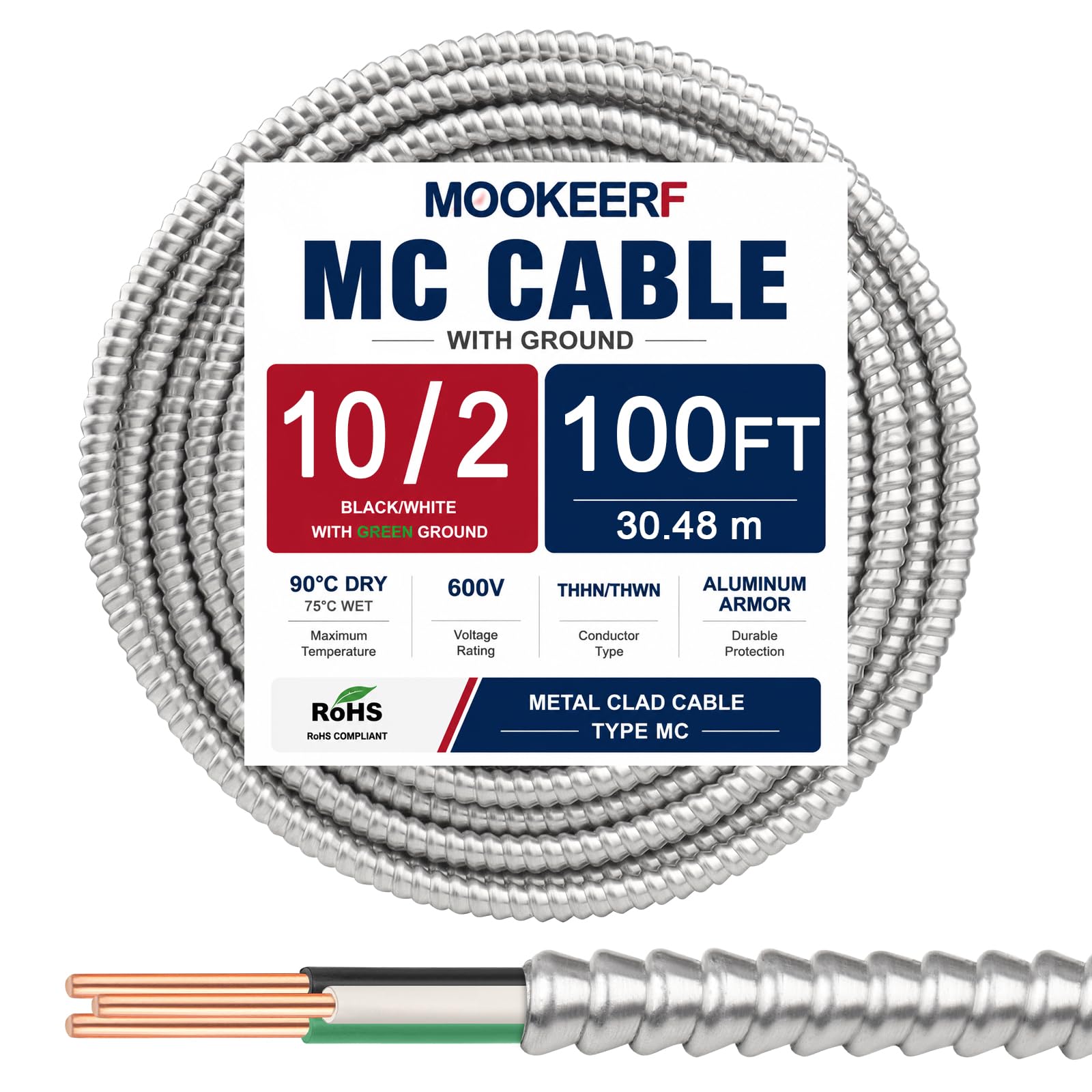
Configuration: 10/2 with ground
Length: 100 ft
Armor: Aluminum
Conductors: Pure copper, 10 AWG
Type: MC aluminum cable
Intended use: Armored feeder runs to outbuildings
Check the current price on Amazon
This spool lands in the middle of the range: heavy 10-gauge copper for a load-bearing feeder, 100 ft for a realistic run to a garage or workshop, and aluminum armor for protection above ground. The pure copper conductors are the draw here, since they carry current with less loss over distance than smaller gauges. Buyers who need to power a compressor, a welder or a subpanel in a detached building will find the combination of length and gauge fits the job without splicing.
Trade-off: The armor adds bulk and weight, so this spool is harder to carry and feed through joists than a bare UF cable of the same length.
5. TAUROX 1/2-Inch 3 Conductor 10 Gauge Liquid Tight Conduit Wire Whip Kit

Configuration: 3 conductor with ground
Gauge: 10 AWG
Conduit: 1/2-inch liquid-tight flexible nonmetallic
Length: 4 ft
Intended use: AC disconnect box, outdoor whip assembly
Check the current price on Amazon
This is the finishing piece rather than the main run. The liquid-tight flexible conduit protects the conductors from moisture and physical damage in the last few feet between a disconnect box and an outdoor unit, and the 10-gauge wire handles a substantial load. The factory-made whip assembly saves the time of cutting conduit and pulling conductors on site, and the 1/2-inch trade size fits standard fittings. It suits the homeowner or tech who needs a clean, code-friendly connection at the end of a longer feeder.
Trade-off: At 4 ft, this whip only covers the final connection, so it cannot serve as the main cable run to an outbuilding on its own.
Before You Buy
- Burial vs. protection: Direct-burial UF cable goes in the ground; metal-clad and liquid-tight products protect runs above ground or where mechanical damage is a risk.
- Gauge and load: Match the conductor gauge to the load and distance. Light loads tolerate 14-gauge, while pumps, heaters and subpanels need 10- or 12-gauge copper.
- Length: Measure the trench or pull path and add slack for terminations. A 50 ft spool will not cover a 75 ft run.
- Conductor count: Two-conductor-with-ground cable suits most 120/240V feeders, while three-conductor whips fit specific disconnect setups.
- Listing: Choose ETL- or UL-listed cable so the installation passes inspection.
- Fittings and boxes: Armored and liquid-tight cable needs the correct connectors and junction boxes; budget for them alongside the cable.
- Environment: Wet locations and direct burial demand jackets rated for them, not indoor-only cable.
Frequently Asked Questions
- Can UF-B cable be buried without conduit? Yes. UF-B is designed for direct burial, so it can go into a trench without a conduit sleeve, though local code may require protection where it emerges from the ground.
- Is metal-clad cable suitable for an outdoor run? MC cable with aluminum armor can be used outdoors where protected from water entry, but it is most often chosen for exposed runs on walls and structures rather than direct burial.
- What gauge cable is needed for a shed subpanel? It depends on the load and distance. A 10-gauge copper feeder is a common choice for a modest subpanel, while heavier loads need larger conductors sized by an electrician.
- Can a liquid-tight whip be used as the main feeder? No. A 4 ft whip is a final connection between a disconnect and equipment, not a substitute for the main cable run.
- Does armored cable need special connectors? Yes. Metal-clad cable requires listed connectors and boxes rated for armored cable, and the armor must be properly grounded.
- How much slack should be left at each end? Leave enough cable at both ends to reach the box or panel comfortably and make terminations without strain, typically a foot or two beyond the entry point.
Bottom Line
For most outbuilding projects, the FIRMERST 14/2 UF-B direct-burial cable is the simplest path to a working shed, pump or outlet circuit, and its ETL listing keeps inspection straightforward. Buyers pulling a heavier load should step up to a 10-gauge metal-clad spool, while anyone finishing a disconnect needs the TAUROX whip kit. Check the current price on Amazon before ordering.