Why there are Amazon links here: Brave Review is paid a commission for qualifying Amazon purchases made through the links below. Your price does not change, and using our links is entirely optional. How this works
Best Battery Backup for a Pellet Stove During a Storm
A pellet stove keeps a house warm only while its auger, fan, and control board have power, and a storm outage shuts all three down at once. This guide covers the best battery backup for a pellet stove during a storm, from compact UPS units that bridge short flickers to large power stations that run the stove for hours. Short outages suit the tower-style picks, overnight storms suit the mid-size stations, and multi-day events point to the expandable flagship. The overview below puts all five side by side, and each review explains who it fits.
Overview of the Picks
| Product | Key Spec | Best Use | Price Tier |
|---|---|---|---|
| CyberPower CP1500PFCLCD | 1500VA/1000W, 12 outlets, sinewave | Clean power for short outages | Mid |
| APC BX1500M | 1500VA/900W, 10 outlets, 68 min @100W | Budget bridge for flickers | Budget |
| Jackery HomePower 3600 Plus | 3584Wh, 3600W, expandable to 21kWh | Multi-day storms | Premium |
| BLUETTI Elite 100 V2 | 1024Wh, 1800W, 10ms UPS | Portable one-room backup | Mid |
| CyberPower CP1500AVRLCD3 | 1500VA/900W, 12 outlets, 2 USB | Everyday value UPS | Budget |
CyberPower CP1500PFCLCD PFC Sinewave UPS

Capacity: 1500VA / 1000W
Outlets: 12
Power type: PFC sinewave
Regulation: AVR
Form factor: Mini tower
Certification: UL certified
This is the pick for stove owners whose real worry is a short outage or a dirty power line. The PFC sinewave output produces the smooth wave shape that modern control boards and blower motors expect, so the stove’s electronics see power close to what the wall normally supplies. AVR corrects brownouts and surges without draining the internal battery, which matters in storms when voltage sags before the lights go out. The mini tower footprint fits beside a stove or on a shelf, and the twelve outlets leave room for the stove plus a phone charger and a lamp.
The unit runs the stove for minutes rather than hours, which is exactly the job: carry the burn through a brief interruption and give the homeowner time to shut the stove down cleanly or start a generator. Buyers with frequent short flickers get the most from it, and so do households that already own a generator and want a buffer between grid loss and generator start.
Trade-off: The internal battery is sized for bridging gaps, not for an all-night run, so a multi-hour storm will outlast it.
APC BX1500M UPS Battery Backup & Surge Protector
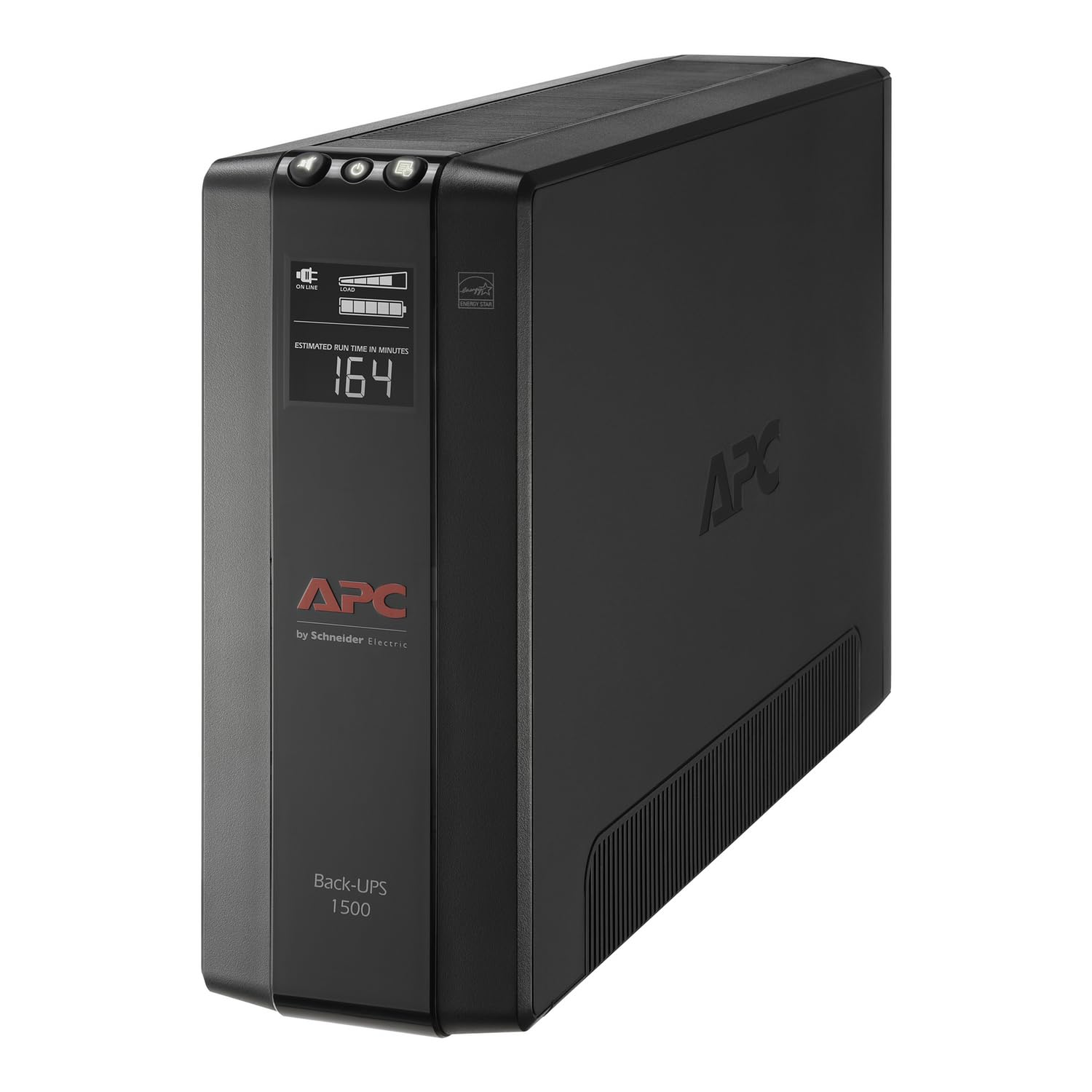
Capacity: 1500VA / 900W
Outlets: 10
Surge protection: 789 joule
Regulation: AVR
Runtime: 68 minutes @ 100W
Certification: UL certified
This is the value option in the group and the easiest one to justify for a household that mostly sees brief outages. The published runtime figure of 68 minutes at 100W gives a useful reference point: a pellet stove’s draw during startup and steady burn sits well above that load, so the real window is shorter, but it still covers the typical flicker and the first minutes of a longer event. AVR keeps the output steady through sags, and the joule rating on the surge side guards the control board from spikes when the grid comes back.
Ten outlets cover the stove and a few accessories without a power strip. The unit suits renters, cabin owners, and anyone who wants a low-cost safeguard on a stove that already has a generator as its long-term plan. It is also a sensible first purchase for a new pellet stove owner who has not yet decided on a bigger system.
Trade-off: The stepped output is not a pure sinewave, and some pellet stove control boards are fussy about that, so check the stove manual before committing.
Jackery HomePower 3600 Plus Power Station

Battery: LFP (lithium iron phosphate)
Capacity: 3584Wh
AC output: 3600W
Expandable: Up to 21kWh
Intended use: Home backup, emergencies, RV
Solar: Panel optional
The HomePower 3600 Plus is the pick for storms that stretch past a single evening. Its 3584Wh LFP battery and 3600W AC output can carry a pellet stove through a long outage and still leave headroom for a fridge, lights, and a router. LFP chemistry is the durable choice for a unit that sits idle for months and then works hard, and the expandable design means capacity can grow to 21kWh later by adding battery modules rather than replacing the whole station. Solar input is supported with an optional panel, which turns a sunny day after the storm into a recharge.
This is a serious investment aimed at homeowners who treat backup power as part of the house, not a gadget. It suits rural households on long feeders, owners who heat primarily with pellets, and anyone who wants one system to cover the stove and the refrigerator at the same time.
Trade-off: The price and the weight put it out of reach for apartment dwellers and for anyone who needs to move the unit between floors.
BLUETTI Elite 100 V2 Portable Power Station
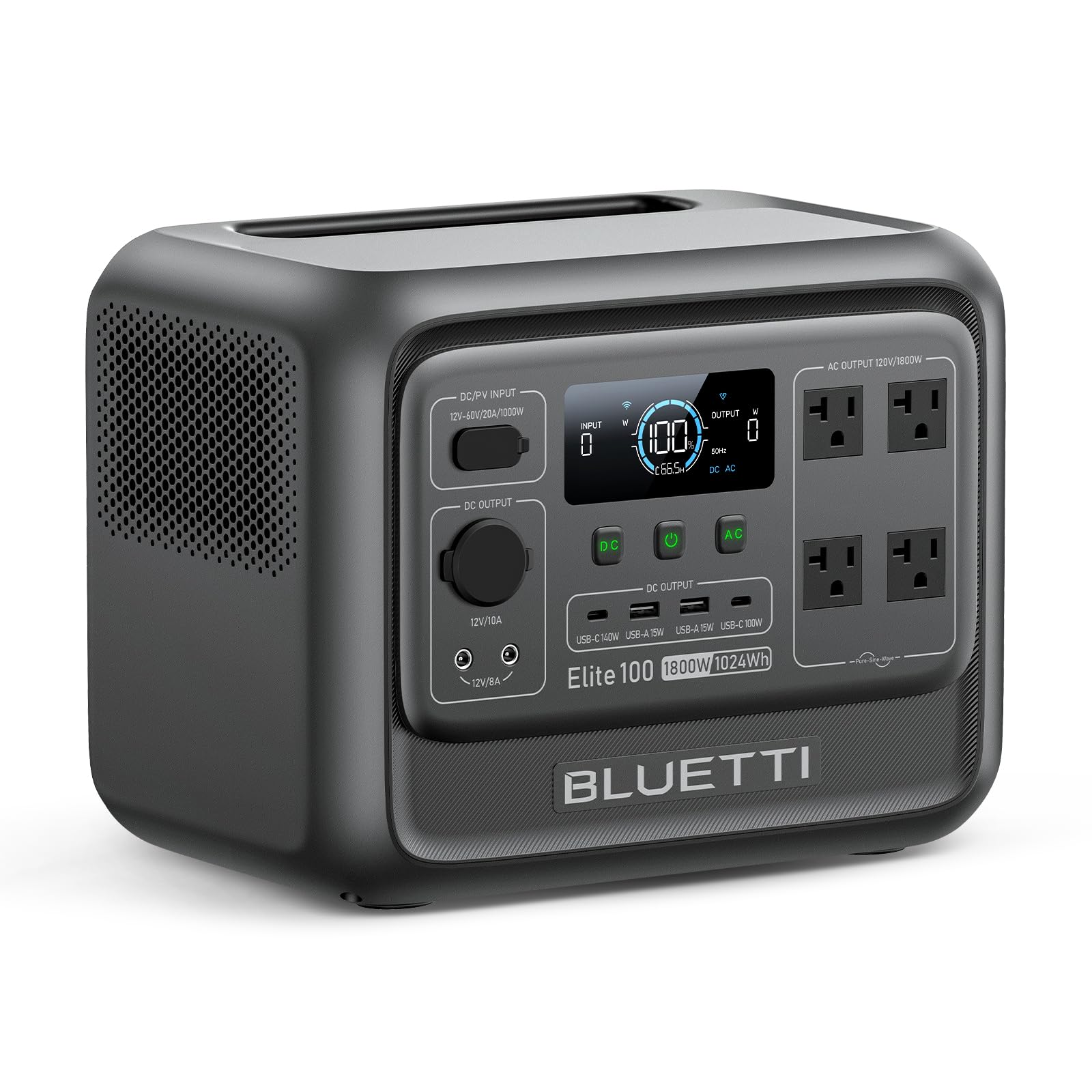
Capacity: 1024Wh
AC output: 1800W
Surge: 3600W
Battery: LiFePO4
UPS switchover: 10ms
Recharge: 0-80% in 45 min
Size: 35% smaller
The Elite 100 V2 sits in the middle of the range and covers the most common storm scenario: an outage of a few hours in one room. The 10ms UPS switchover means the stove’s control board barely notices the grid dropping, and the LiFePO4 battery holds up to repeated charge cycles over years of standby. The 1800W continuous output with a 3600W surge handles a stove’s startup draw, while the fast recharge brings the unit back to most of its capacity in well under an hour once the grid returns. The smaller chassis makes it easy to store on a shelf or carry to a cabin.
This pick suits homeowners who want a genuine multi-hour buffer without the cost and bulk of a whole-home station. It also works for campers and RV owners who want the same battery to serve the stove at home and the campsite in summer.
Trade-off: At roughly a kilowatt-hour, the battery covers hours rather than days, and a long cold snap will still need a generator or a larger station.
CyberPower CP1500AVRLCD3 Intelligent LCD UPS

Capacity: 1500VA / 900W
Outlets: 12
USB ports: 2
Regulation: AVR
Form factor: Mini tower
Certification: UL certified
This is the practical everyday choice for a stove that shares a room with other electronics. The intelligent LCD reports load level and battery status at a glance, which takes the guesswork out of knowing whether the stove is close to the unit’s limit. Twelve outlets and two USB ports mean the stove, a lamp, a router, and a phone can all sit on the same box. AVR handles the voltage swings that come with stormy weather, and the UL certification gives the unit a recognized safety baseline.
It suits budget-conscious households that want a recognizable brand and a display rather than a plain box. The unit is also a good fit for a stove in a finished basement or living room where the LCD is easy to read and the tower can sit out of the way.
Trade-off: The battery bridge is short and the output is not a pure sinewave, so it protects against flickers better than it carries a long outage.
Before You Buy
- Output type: A pellet stove’s control board and blower prefer a pure sinewave supply; confirm the stove manual’s requirement before choosing a stepped-wave UPS.
- Startup draw: Igniters and auger motors pull a surge at startup, so match the backup’s surge rating to the stove, not just its running wattage.
- Runtime: Estimate the burn time needed for a typical storm in the area and size capacity accordingly; a UPS bridges minutes, a power station covers hours.
- Transfer time: A UPS switches in milliseconds and keeps the stove running; a power station without UPS mode may require a manual restart of the stove.
- Vent safety: A stove that loses power mid-burn needs its exhaust fan to keep running briefly, so backup capacity should cover a controlled shutdown at minimum.
- Storage and temperature: Batteries lose capacity in cold rooms; store the backup where it stays within the manufacturer’s temperature range.
- Expansion path: Households facing multi-day outages should favor a unit that accepts extra battery modules or solar input.
Frequently Asked Questions
-
Can a pellet stove run on a standard computer UPS?
It can run for a short time if the UPS meets the stove’s startup surge and the control board tolerates its output waveform. Short bridging is realistic; all-night running is not. -
How many watts does a pellet stove need from a backup?
Running draw varies by model, but startup is the hard part, so the backup’s surge rating matters as much as its continuous output. Check the stove’s label and manual for the figures. -
Is a pure sinewave backup necessary for a pellet stove?
Many modern control boards run cleanest on sinewave power, and some manufacturers require it. The safe choice is a sinewave unit when the manual calls for one. -
How long will a power station run a pellet stove during a storm?
Runtime depends on the stove’s draw and the station’s capacity; a unit around 1kWh covers hours, while a 3.5kWh station stretches into a full storm. Expect less in cold conditions. -
Can a power station recharge from solar during an outage?
Yes, when the station supports solar input and a panel is available. That makes a sunny day after the storm a chance to refill for the next night. -
Should the backup stay plugged in all the time?
A UPS is designed to stay connected and charged, while a power station can sit on standby and be brought online when the grid drops. Follow the manufacturer’s guidance for each type.
Bottom Line
For most households, the best battery backup for a pellet stove during a storm is the CyberPower CP1500PFCLCD: its sinewave output, AVR, and twelve outlets handle the stove’s electronics properly and bridge the short outages that cause most shutdowns. Homes facing overnight or multi-day storms should step up to the Jackery HomePower 3600 Plus for the capacity and expansion to carry the stove and the fridge together.
