Why there are Amazon links here: Brave Review is paid a commission for qualifying Amazon purchases made through the links below. Your price does not change, and using our links is entirely optional. How this works
Best Battery Backup for a Sump Pump During a Storm: 5 Reliable Picks
A storm knocks out power at the exact moment the sump pit fills fastest, so the right battery backup matters more than any other pump accessory. This guide covers five systems that keep a sump pump running through an outage: all-in-one inverter chargers for large pumps, packaged backup systems for standard units, and a standalone AGM battery for buyers building their own setup. The picks below are organized by pump size and budget, and the overview table shows each option at a glance before the detailed reviews.
Overview of the Picks
| Product | Key Spec | Best Use | Price Tier |
|---|---|---|---|
| 5000W Peak Pure Sine Wave Inverter with Charger | 5000W peak, 2500W rated, auto transfer switch | Large pumps and whole-basement protection | Premium |
| PumpSpy 2000 Watt Battery Backup System | 2000W, purpose-built for sump pumps | Standard pumps in a packaged system | Premium |
| 2500 Watt Sump Pump Backup Battery System | 2500W pure sine wave, remote LCD controller | Mid-size pumps needing remote monitoring | Mid |
| 12V 75Ah AGM Battery for Sump Pumps | 75Ah capacity, maintenance-free AGM | DIY setups that already own an inverter | Mid |
| 2000W Sump Pump Battery Backup | 2000W pure sine wave, 10ms auto switch | Fast, budget-friendly outage protection | Budget |
1. 5000W Peak Pure Sine Wave Inverter with Charger

Peak Power: 5000W
Continuous Output: 2500W
Waveform: Pure sine wave
Charging: 25A fast charging
Switching: Auto transfer switch
Outputs: 3 AC outlets
This unit is an inverter and charger in one chassis, built to sit between the wall outlet and the pump and take over the moment utility power drops. The 2500W continuous rating is sized for a serious sump pump, and the 5000W peak covers the brief surge a motor draws at startup. Pure sine wave output keeps the pump motor running cool and quiet instead of straining on a modified waveform, and the 25A charger refills the connected battery quickly between storms. Three AC outputs let the same box run a second pump, a dehumidifier, or a basement freezer during an outage.
It suits homeowners with a high-capacity primary pump or a basement that floods fast, where the backup has to carry real load rather than just trickle. The auto transfer switch removes the manual step that ruins most DIY backup plans. The trade-off is that this is a power center, not a complete kit: it needs a deep-cycle battery wired in, and that battery is a separate purchase that adds cost and floor space.
2. PumpSpy 2000 Watt Battery Backup System for Sump Pumps

Rated Power: 2000W
Intended Use: Sump pump backup during power outages
Type: Packaged battery backup system
Application: Residential sump pits
Installation: Dedicated backup unit
PumpSpy builds this as a dedicated sump pump backup rather than a general-purpose inverter, so the controls and connections are aimed at one job. The 2000W rating matches the common residential pump class, and the packaged format means the buyer gets a system designed to work together instead of parts that have to be matched. It is the least fiddly option here for someone who wants a backup installed and forgotten until the next storm.
The pick earns its place for homeowners with a standard half-horsepower-class pump who value a purpose-built package over raw output. It is also the better fit for anyone who does not want to shop for a battery and an inverter separately. The caution is price and ceiling: at 2000W it leaves little headroom for a larger pump or a second load, and the premium over a bare inverter buys convenience rather than capacity.
3. 2500 Watt Sump Pump Backup Battery System

Rated Power: 2500W
Waveform: Pure sine wave
Switching: Automatic switch to battery inverter power
Controller: Remote controller with LCD screen
Intended Use: Professional-style sump pump backup
Application: Power failure protection
This system pairs a 2500W pure sine wave inverter with automatic switching, so the pump moves to battery power without anyone home to flip a switch. The remote controller and LCD screen are the standout feature: status and settings can be checked from a comfortable spot instead of kneeling at the pit. Pure sine wave output protects the pump motor, and the 2500W rating gives useful margin over a standard residential pump.
It fits homeowners with a mid-size pump who want visibility into the backup’s state without crawling into the basement corner. The remote display is genuinely useful in a storm, when knowing the battery is charged and the system is armed matters. The trade-off is complexity: a remote controller and LCD add electronics that can fail or need familiarizing, and the system still needs a battery, so total cost runs above the sticker.
4. 12V 75Ah AGM Battery for Sump Pumps
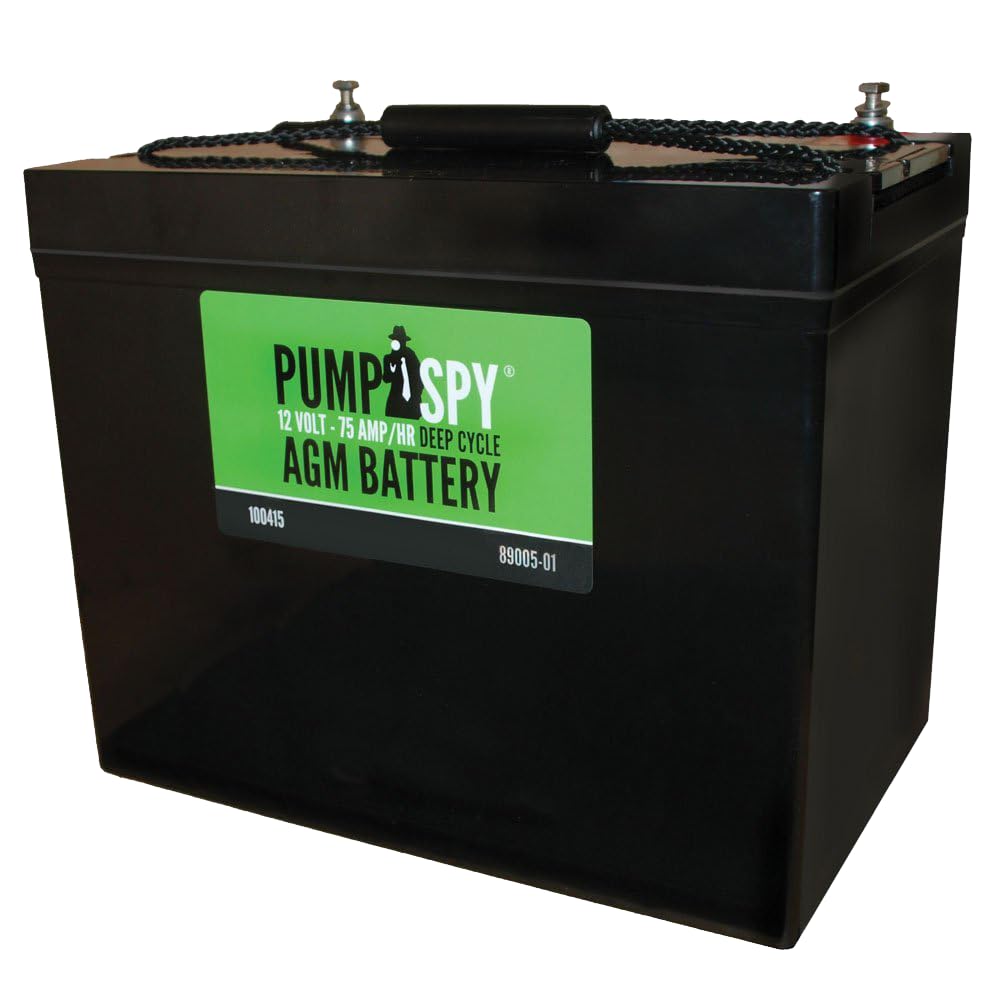
Voltage: 12V
Capacity: 75Ah
Chemistry: AGM
Maintenance: Maintenance-free
Intended Use: Sump pump backup power
Application: Deep-cycle backup battery
This is the power source rather than the switch: a 12V 75Ah AGM battery sized for sump pump backup duty. AGM construction is sealed and maintenance-free, so there is no water to top off and no acid fumes to vent, which makes it a reasonable fit for a basement shelf. The 75Ah capacity is the figure that decides runtime, and it is generous enough to carry a pump through a long outage when paired with a matching inverter.
It suits the buyer who already owns an inverter charger and needs the battery, or who prefers to assemble a system from known parts. It is also the pick for anyone replacing a dead battery in an existing setup. The trade-off is weight and the missing pieces: an AGM battery of this size is heavy to move, and on its own it does nothing until an inverter, charger, and wiring are added.
5. 2000W Sump Pump Battery Backup
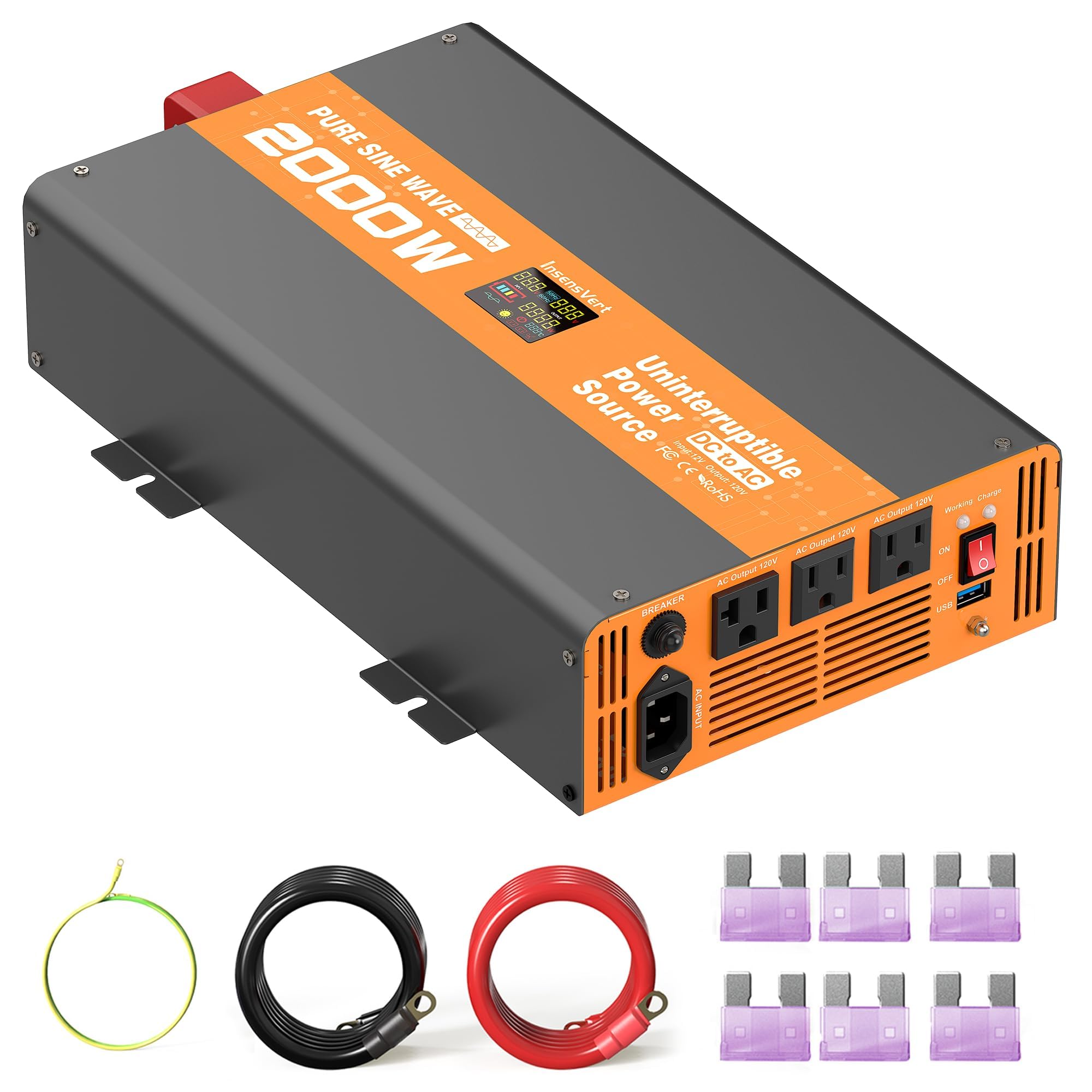
Rated Power: 2000W
Waveform: Pure sine wave
Switch Time: 10ms auto switch
Display: LCD
Type: Uninterruptible power source
Intended Use: Sump pump battery backup
This unit is the budget entry, and the 10ms auto switch is its headline claim: power transfers almost instantly, so the pump barely notices the grid has gone. Pure sine wave output and an LCD round out a feature set that looks like the pricier systems at a lower tier. It is an uninterruptible power source in the same sense as the others, switching the pump to battery and back without manual input.
It fits cost-conscious homeowners with a standard pump who want automatic protection without paying for a packaged brand system. The fast switch time is the reason it earns a spot, since a long gap can let the pit rise. The trade-off is the usual budget compromise: 2000W leaves little margin for a larger pump or extra loads, and a lower price tier often means lighter-duty internals that favor occasional outages over years of hard cycling.
Before You Buy
- Pump wattage: Match the backup’s continuous rating to the pump’s running watts, and leave headroom for the startup surge.
- Battery included or not: Some picks are complete systems, others are inverters or batteries alone; confirm what is in the box before comparing prices.
- Waveform: Pure sine wave is the safer choice for pump motors and anything else sharing the circuit.
- Switch time: Automatic transfer is the point of a backup; a fast switch keeps the pit from rising during the handoff.
- Runtime: Capacity in amp-hours and the pump’s draw together decide how long the basement stays dry, so size the battery for the longest outage expected.
- Maintenance: Sealed AGM batteries avoid watering and venting chores; flooded batteries need more attention.
- Placement: Plan for weight, ventilation, and a dry spot near the pit, since batteries and inverters both need stable footing.
Frequently Asked Questions
-
How long will a battery backup run a sump pump?
Runtime depends on the battery’s capacity and the pump’s draw. A larger amp-hour battery paired with an efficient pump lasts longer, and sizing for the longest typical storm outage is the safe approach. -
Can any inverter run a sump pump?
The inverter needs a continuous rating above the pump’s running watts and enough surge capacity for startup. Pure sine wave output is the better match for pump motors. -
Is a packaged system better than separate parts?
Packaged systems are simpler to install and matched by the maker. Separate parts cost less in some cases and allow larger batteries, but require the buyer to verify compatibility. -
Does the backup need its own battery?
Some picks include the switching electronics only, and the battery is bought separately. Checking the box contents avoids a surprise on installation day. -
Where should the battery and inverter be placed?
A dry, stable spot near the sump pit with room for ventilation works best. AGM batteries are sealed, but the equipment still needs to stay out of standing water. -
How often should the system be tested?
A periodic test before storm season confirms the battery holds a charge and the transfer works. Testing is the only way to know the backup will perform when the grid fails.
Bottom Line
For most homeowners, the 5000W Peak Pure Sine Wave Inverter with Charger is the top pick: its 2500W continuous rating, pure sine wave output, and auto transfer switch cover large pumps and extra loads with room to spare. Buyers who want a packaged, purpose-built system should look at the PumpSpy 2000 Watt, while the 2000W budget unit covers standard pumps at the lowest entry point. Whichever fits the pump, confirm the battery situation and test the system before the next storm arrives.
