Why there are Amazon links here: Brave Review is paid a commission for qualifying Amazon purchases made through the links below. Your price does not change, and using our links is entirely optional. How this works
Best Camera for Night Vision for Dark Conditions
Finding the best camera for night vision depends on where the darkness is. A homeowner watching a backyard, a wildlife enthusiast scouting deer, a parent monitoring a baby, and a vlogger filming after sunset all need very different hardware. The five picks below cover indoor security, outdoor trail scouting, true low-light imaging, and general video recording with IR support.
Each product section lists the verified specifications first, followed by who the pick suits and where it falls short. The overview table below summarizes the key spec, best use, and price tier for every option so a decision can be made in under a minute.
Overview of the Picks
| Product | Key Spec | Best Use | Price Tier |
|---|---|---|---|
| Tapo 1080P Indoor Security Camera | 1080P, motion detection, 2-way audio | Indoor monitoring and baby/dog watching | Budget |
| Webcam 16X Digital Zoom Camcorder | 2.7K, 64MP, 16G SD card included | Handheld night recording and vlogging | Budget |
| MAXDONE Solar Trail Camera | 4K 64MP, 6000mAh, 32GB included | Outdoor wildlife and backyard scouting | Mid-range |
| SiOnyx Aurora PRO | Dedicated low-light digital night vision | True dark-environment imaging | Premium |
| ZYDIIE 4K Video Camera Camcorder | 4K 64MP, 18x digital zoom, 32GB card | All-around video with night vision | Budget |
Tapo 1080P Indoor Security Camera
Resolution: 1080P
Night Vision: Yes
Audio: 2-way audio with siren
Storage: Cloud and SD card
Compatibility: Works with Alexa and Google Home
Power: Wired
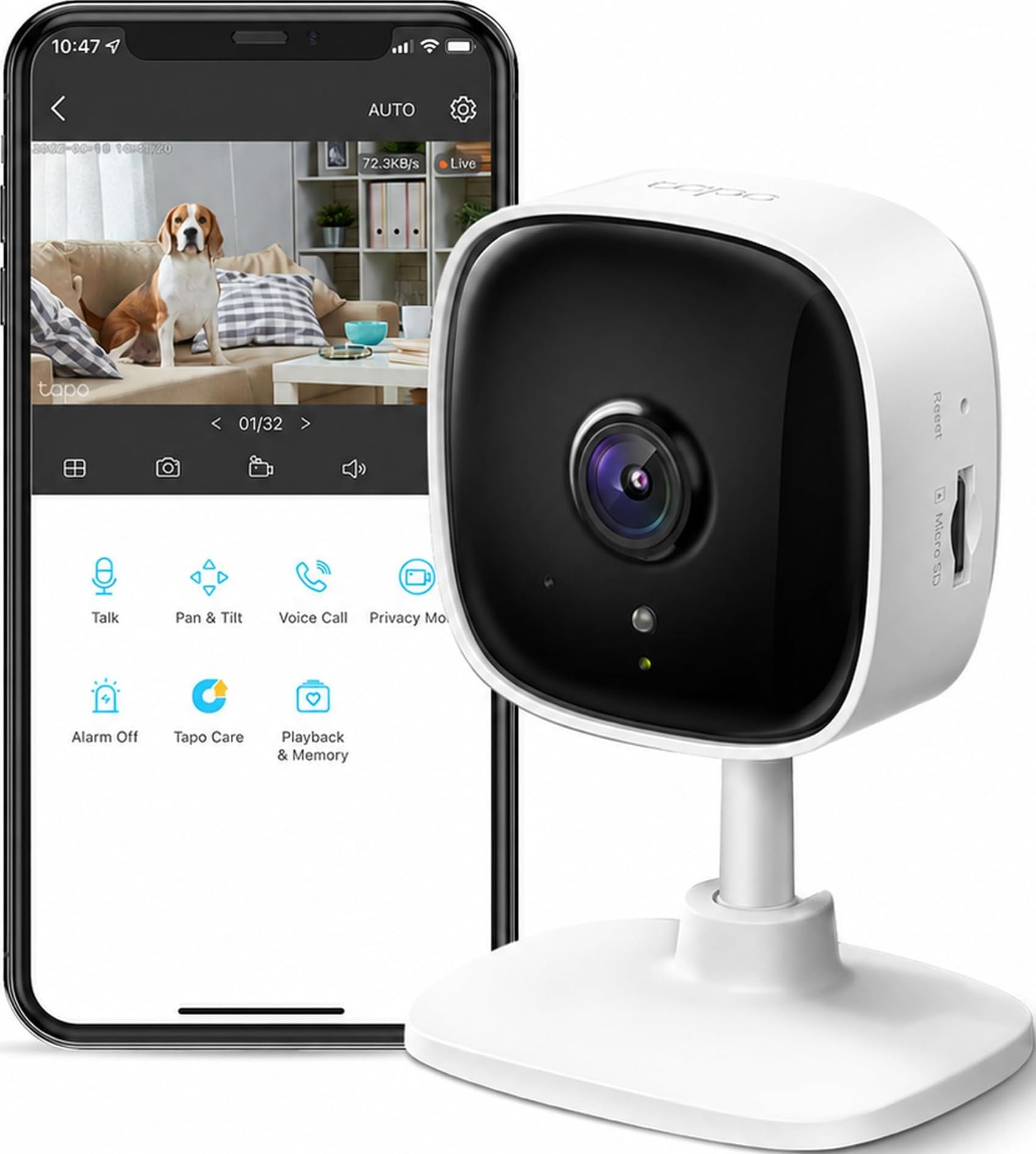
The Tapo C100 is a compact wired indoor camera built around a fixed 1080P sensor with infrared night vision. It combines motion detection, a built-in siren, and two-way audio in a small housing that sits on a shelf or mounts to a wall. Dual storage through the cloud or a microSD card gives buyers flexibility on how footage is kept.
This is the pick for indoor monitoring — a nursery, a pet room, or a front hallway after dark. It earns its place because it pairs night vision with smart-home integration and a siren at a budget tier. The wired power requirement means placement is limited to spots near an outlet.
Trade-off: The camera needs a constant power connection, so it cannot be placed in a remote corner without an extension cord, and it is strictly an indoor unit not built for weather exposure.
Webcam 16X Digital Zoom Camcorder
Resolution: 2.7K
Sensor: 64MP
Zoom: 16x digital
Screen: 270° rotation
Included: 16G SD card
Night Vision: IR
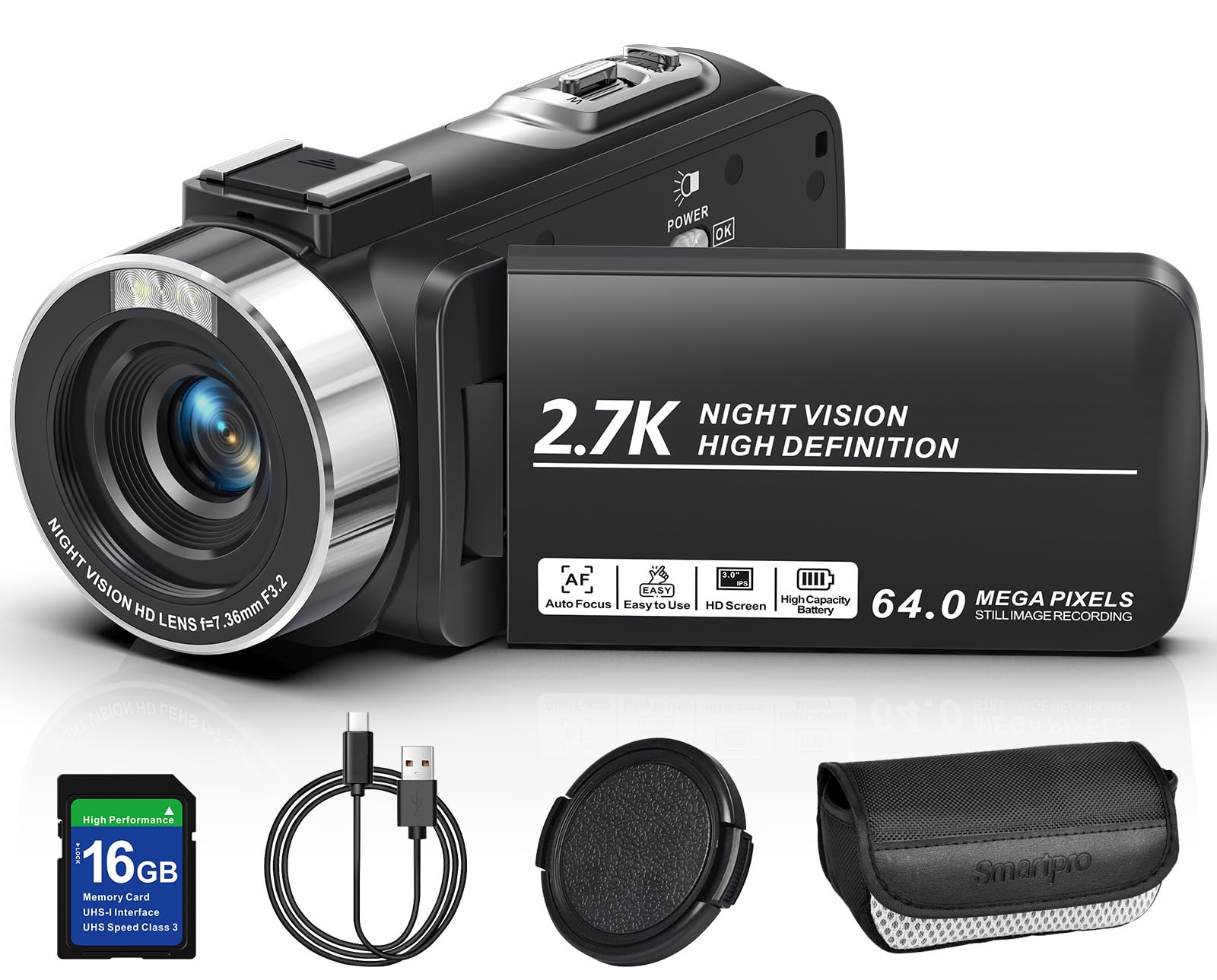
This handheld camcorder packs a 2.7K recording mode and a 64MP still sensor into a battery-powered body with a rotating screen. The 16x digital zoom and IR night vision make it usable in dim settings, and the bundled 16G SD card means it works out of the box. The rotating screen helps with self-recording and odd angles.
It suits vloggers and casual users who want a night-capable camcorder without spending much. Its place in the roundup comes from the combination of portability, included storage, and IR support at a budget price. The digital zoom is the weak point — at full extension, image quality softens noticeably.
Trade-off: Digital zoom magnifies pixels rather than optics, so long-range night shots will look grainy, and a 16G card fills quickly at 2.7K.
MAXDONE Solar Trail Camera
Resolution: 4K
Sensor: 64MP
Power: 6000mAh with solar charging
Included: 32GB card
Weather Rating: IP66
Connectivity: WiFi and Bluetooth
Night Vision: Motion-activated
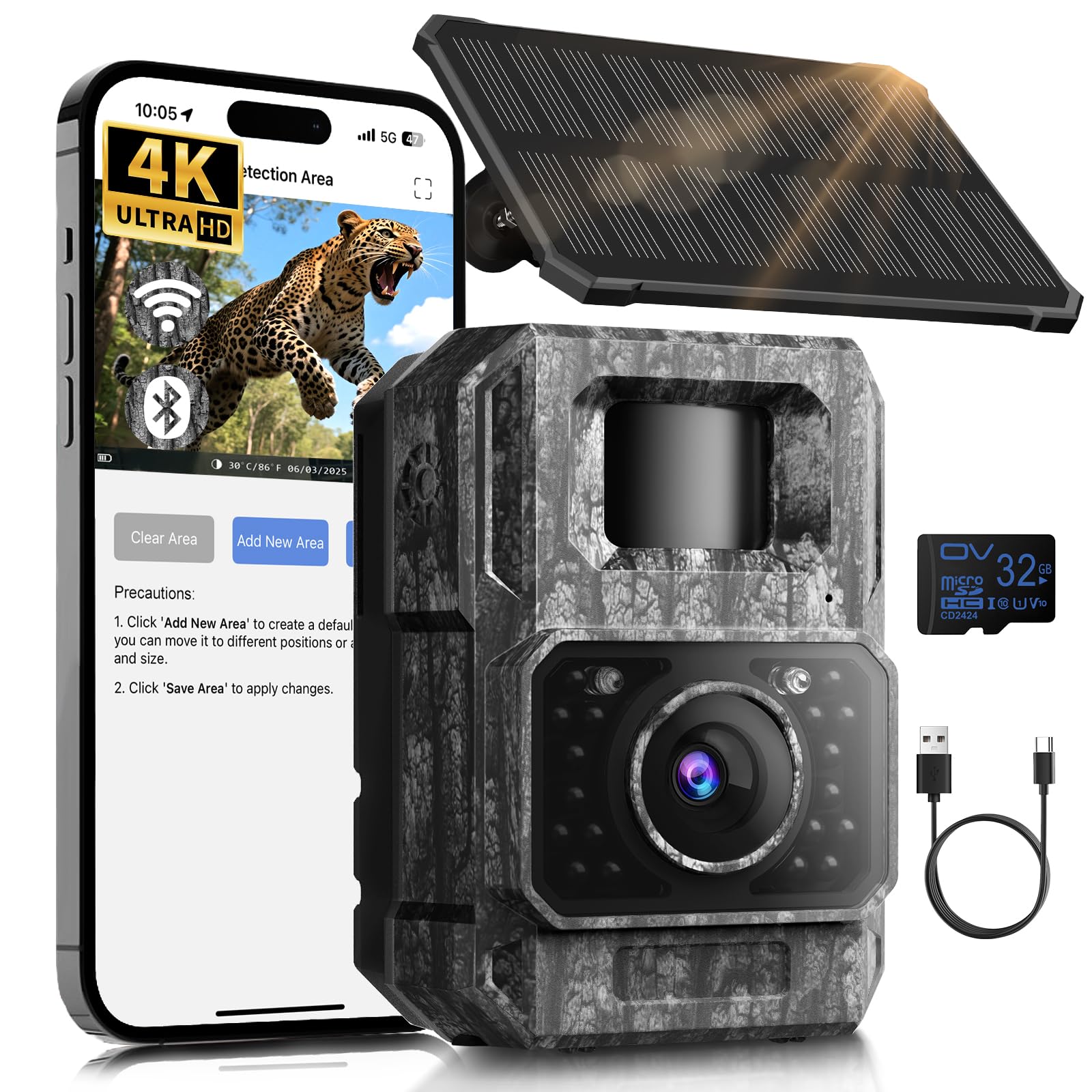
The MAXDONE trail camera is built for outdoor deployment, with an IP66 housing that resists dust and rain. A 6000mAh battery paired with solar charging keeps it running in the field, and the bundled 32GB card covers storage needs. WiFi and Bluetooth allow setup and file transfer from a phone.
This is the choice for backyard wildlife watching, deer scouting, and property monitoring in remote spots. Motion-activated night vision means it only records when something moves, which stretches battery life. Buyers who need constant live viewing rather than triggered clips should look elsewhere.
Trade-off: Trail cameras prioritize triggered captures over continuous streaming, so this is not a substitute for a live-view security camera, and solar performance depends on how much direct sun the mounting spot receives.
SiOnyx Aurora PRO
Resolution: Dedicated digital night vision
Type: Low-light digital camera
Use: True dark-environment imaging

The SiOnyx Aurora PRO is a dedicated digital night vision device rather than a standard camera with an IR mode bolted on. It is engineered for low-light imaging, capturing scenes that ordinary sensors render as black frames. The build is compact and handheld, aimed at field use.
This is the premium pick for buyers who need genuine night vision — night hikes, wildlife observation, or security work in near-total darkness. It earns its place because no budget camcorder matches its low-light capability. The trade-off is cost and specialization: it is not a general-purpose video camera.
Trade-off: The premium price buys night-vision performance, not everyday versatility, so a buyer who mostly films in daylight is paying for capability that rarely gets used.
ZYDIIE 4K Video Camera Camcorder
Resolution: 4K UHD
Sensor: 64MP
Zoom: 18x digital
Screen: 3" 270° IPS touchscreen
Included: 32GB card, 2 batteries
Extras: Remote control, night vision
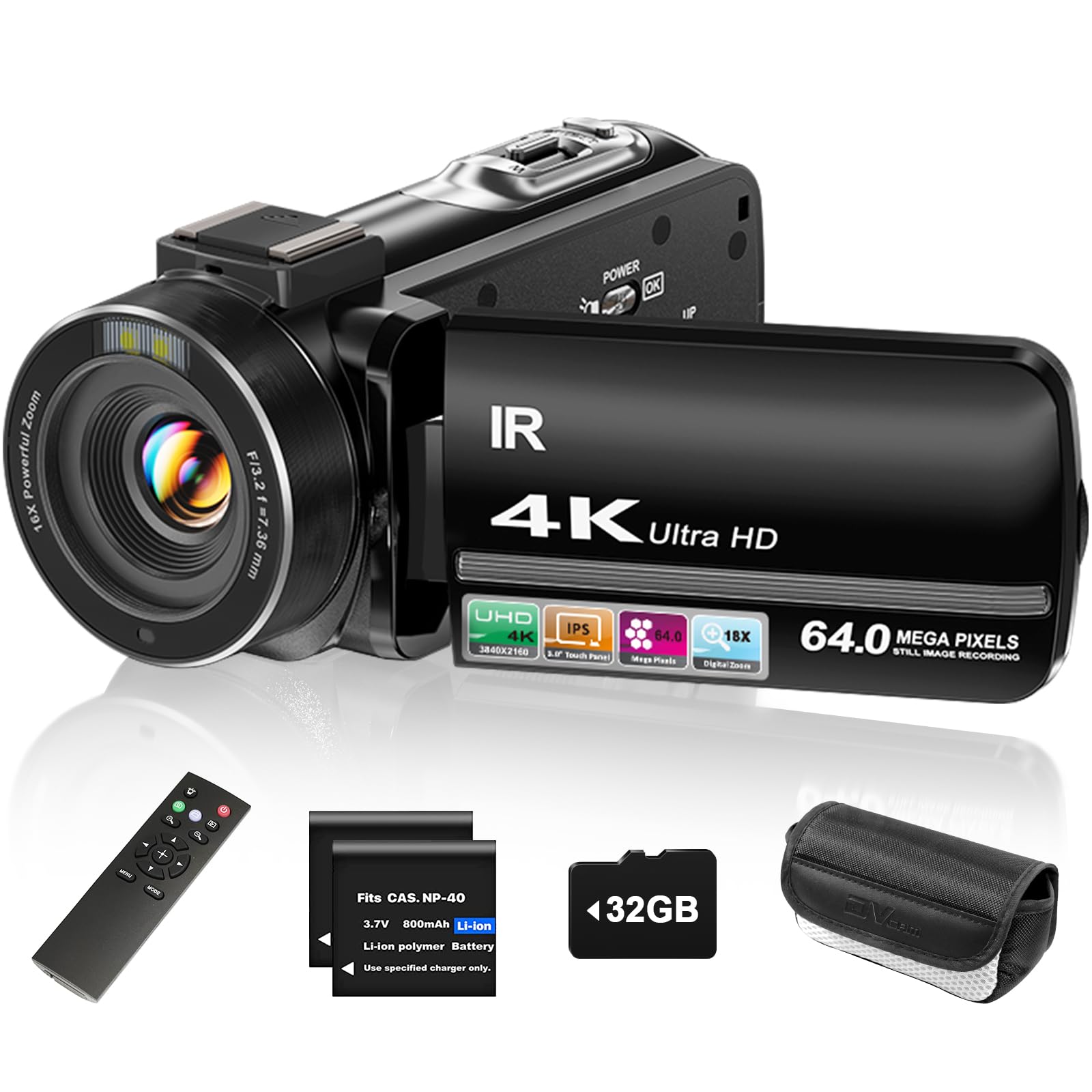
The ZYDIIE camcorder records in 4K UHD and captures 64MP stills, with an 18x digital zoom and a 3-inch touchscreen that rotates 270 degrees. Two batteries and a 32GB card are included, along with a remote control for hands-off shooting. Night vision mode extends usability into low light.
It suits content creators and families who want one camera for daytime and nighttime recording. The dual-battery setup is a practical touch for longer sessions away from an outlet. Buyers expecting optical zoom quality from an 18x figure will be disappointed — the zoom is digital.
Trade-off: The 18x zoom is digital, so image detail degrades at the long end, and the included 32GB card is modest for 4K footage over multiple sessions.
Before You Buy
- Light conditions: IR night vision works at short range, while dedicated low-light sensors like the Aurora PRO handle true darkness. Match the camera to how dark the scene actually gets.
- Power source: Wired indoor cameras need an outlet nearby; battery and solar models suit remote placement. Consider where the camera will live before choosing.
- Storage: Cloud storage adds a subscription; SD card storage is a one-time cost. Check whether a card is included and what capacity the footage format demands.
- Weather exposure: Only an IP-rated housing like the trail camera’s belongs outdoors. Indoor units will fail in rain or direct sun.
- Connectivity: WiFi and Bluetooth simplify setup and file transfer. A camera without them means manually moving the SD card.
- Zoom type: Digital zoom crops and enlarges pixels; optical zoom does not. Night footage suffers more from digital zoom than daytime footage.
- Included accessories: Bundled batteries, cards, and remotes change the real cost. Factor them in when comparing prices.
Frequently Asked Questions
-
What is the best camera for night vision overall?
It depends on the use case. The Tapo C100 suits indoor monitoring, the MAXDONE trail camera suits outdoor scouting, and the SiOnyx Aurora PRO suits true dark-environment imaging. -
Do these cameras see in complete darkness?
IR-based cameras need some ambient light or their own IR illumination, which has limited range. Dedicated low-light devices like the Aurora PRO are built specifically to pull detail from near-dark scenes. -
Is digital zoom good enough for night recording?
Digital zoom magnifies existing pixels, so night footage gets grainier as zoom increases. It is workable for casual use but not a substitute for optical zoom. -
Can a trail camera be used as a security camera?
It can monitor an area, but it records on motion triggers rather than streaming continuously, so it is better for scouting than live surveillance. -
Do these cameras require a subscription?
Only cloud storage features carry subscriptions. Local SD card recording works without one, and several picks include a card. -
Which pick is best for indoor use at night?
The Tapo C100 is the indoor specialist, with night vision, two-way audio, and a siren in a compact wired body.
Bottom Line
For most buyers, the Tapo 1080P Indoor Security Camera is the best camera for night vision indoors — it delivers IR night vision, motion alerts, and smart-home integration at a budget tier. Outdoor scouts should take the MAXDONE solar trail camera, while buyers needing genuine low-light imaging should invest in the SiOnyx Aurora PRO.
