Why there are Amazon links here: Brave Review is paid a commission for qualifying Amazon purchases made through the links below. Your price does not change, and using our links is entirely optional. How this works
Best Carbon Monoxide Alarm for a Back Boiler in a Living Room
A back boiler sits behind a fireplace or in a living-room alcove, which makes that room the first place a carbon monoxide alarm belongs. The five alarms below cover the realistic options: mains-style plug-ins with battery backup, simple battery units for wall mounting, and one model that also watches for gas leaks. Two buyer profiles matter here — households that want a fit-and-forget plug-in near the boiler, and renters or remodelers who need a battery alarm with no socket nearby. The overview table shows the differences at a glance before the full reviews.
Overview of the Picks
| Product | Key Spec | Best Use | Price Tier |
|---|---|---|---|
| Kidde Plug-in CO Detector with AA Backup | Plug-in, AA battery backup, 85 dB | Primary alarm near the boiler | Mid |
| First Alert CO400 Battery CO Alarm | Battery powered | Renter-friendly, no socket needed | Budget |
| First Alert CO606 Plug-in CO Alarm | Plug-in, 9V battery backup | Backup alarm on a second socket | Mid |
| Kidde AA Battery CO Alarm | AA battery powered, portable | Wall mount or room-to-room use | Budget |
| Kidde CO + Explosive Gas Alarm | Plug-in, 9V backup, digital display | Homes with gas appliances nearby | Premium |
1. Kidde Carbon Monoxide Detector, Plug-in with AA Battery Backup
Type: Plug-in carbon monoxide detector
Backup: AA battery backup
Alarm: 85 dB
Status indicators: LED status lights
Edition: 3rd Edition
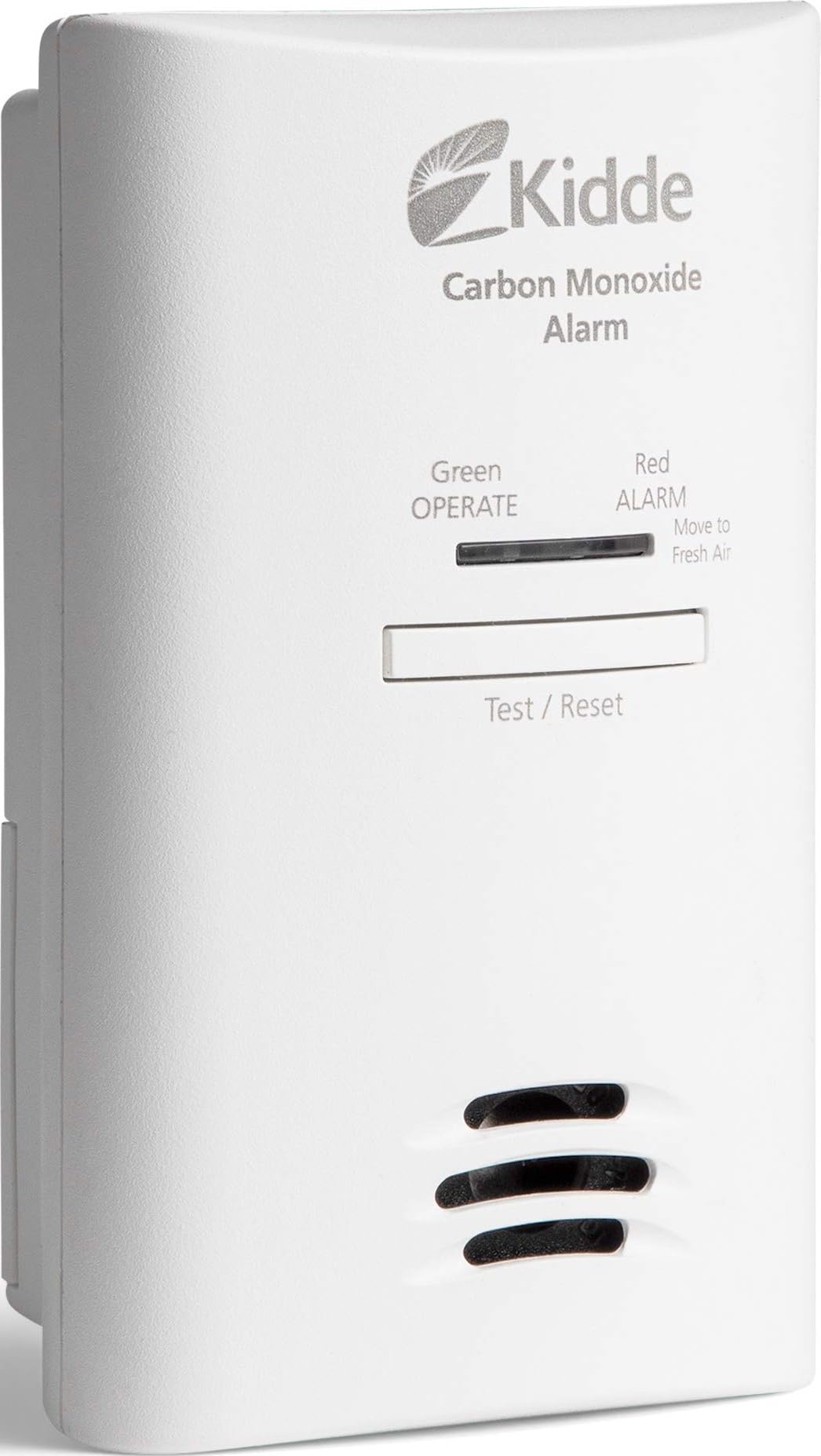
This is the straightforward choice for a living room with a back boiler: it plugs into a standard socket and keeps working through a power cut thanks to the AA battery backup. The 85 dB alarm is loud enough to carry through a closed door, and the LED status lights give a quick visual check without pressing anything. The third-edition build is the current generation of a long-running design, so replacement and siting follow familiar rules. It suits homeowners who want one alarm that is always powered and always backed up.
It earns its place as the default pick because plug-in power removes the battery-only worry while the backup covers outages. The trade-off is that it needs a free socket within reach of the boiler room, and a living room with limited outlets may force a compromise on placement.
2. CO400 First Alert Battery Carbon Monoxide Alarm
Type: Battery-powered carbon monoxide alarm
Power source: Battery
Mounting: Wall or ceiling, no socket required
Alarm type: Audible carbon monoxide alarm

CO400 First Alert Battery Carbon Monoxide Alarm
A pure battery alarm with no cord and no plug, the CO400 goes wherever the boiler room needs coverage — high on a wall, on a ceiling, or in a hallway just outside the living room. Installation is a mounting bracket and a battery, which makes it the easiest option for renters who cannot add sockets or hardwire anything. It is also the sensible second alarm for a bedroom corridor fed by the same flue.
It suits anyone who wants protection without touching the electrical supply, and it is the budget route into a known brand. The trade-off is the classic battery-alarm duty: the unit only protects while the battery is good, so the low-battery chirp has to be acted on rather than ignored.
3. CO606 First Alert Plug-in Carbon Monoxide Alarm with 9V Backup
Type: Plug-in carbon monoxide alarm
Backup: 9V battery backup
Power source: Mains socket with battery fallback
Alarm type: Audible carbon monoxide alarm
CO606, 9V Battery Backup First Alert Plug in Carbon Monoxide Alarm
The CO606 is the plug-in counterpart to the CO400: it draws power from a wall socket and falls back on a 9V battery if the power fails. That combination is what most guidance asks for in a room with a fuel-burning appliance, because a flue problem and a power cut can arrive together. The plug-in body sits flush against the socket, so it stays out of the way in a busy living room.
It fits households that already have a socket free near the boiler and want a second alarm without another battery-only unit. The trade-off is that a socket-mounted alarm can be blocked by furniture or switched off at the wall, so the outlet has to be chosen with care and left permanently live.
4. Kidde Carbon Monoxide Detector, AA Battery Powered, Portable
Type: Battery-powered carbon monoxide detector
Power source: AA batteries
Indicators: LEDs
Controls: Test-reset button, low battery indicator
Portability: Freestanding or wall mounted

This Kidde runs on AA batteries and is built to move: it can stand on a shelf or be wall mounted, and the test-reset button and low battery indicator keep checks simple. AA cells are the easiest battery to keep spares of, which matters in a house where the alarm is the only device using that size. The LED indicators show power and alarm state at a glance.
It suits renters, holiday lets and anyone who wants an alarm that can travel between the living room and a guest room. The trade-off is that portability invites misplacement — an alarm that gets moved to a drawer or taken on holiday leaves the boiler room unprotected, so it needs a fixed home.
5. Kidde Carbon Monoxide + Explosive Gas, Natural Gas & Propane Alarm
Type: Plug-in combination carbon monoxide and explosive gas alarm
Gases detected: Carbon monoxide, natural gas, propane
Backup: 9V battery backup
Display: Digital display
Alarm: 85 dB
Indicators: LED status lights
Edition: 3rd Edition

This is the premium pick because it watches two hazards at once: carbon monoxide from the back boiler and explosive gas from a hob, gas fire or cylinder. The digital display adds a readable layer that plain LED units lack, and the 9V backup keeps it live during an outage. Plug-in power means no battery swapping as the primary routine, and the 85 dB alarm matches the rest of the range.
It suits homes with a gas cooker or gas fire in or near the living room, where a single unit can cover both risks. The trade-off is price and complexity: it costs more than a CO-only alarm, and the extra gas sensor means the manual deserves a read before the unit is trusted.
Before You Buy
- Power source: A plug-in alarm with battery backup is the safest fit for a living room with a back boiler, provided a socket can be left permanently live.
- Backup battery: Check which cell the backup takes — AA and 9V are common, and spares should be kept in the house.
- Placement: The alarm belongs in the room containing the appliance, on a wall or ceiling where air circulates and nothing blocks the vents.
- Gas coverage: A CO-only alarm is the minimum; a combination unit adds natural gas and propane detection if a gas hob or fire shares the room.
- Portability: A freestanding battery unit is flexible but easy to misplace — decide on a fixed home before mounting.
- Display: A digital display makes readings easier to interpret than LED-only status lights, at a higher price.
- Testing routine: Whichever unit is chosen, the test button should be pressed on a regular schedule and the battery indicator watched.
Frequently Asked Questions
-
Where should a carbon monoxide alarm go in a room with a back boiler?
In the same room as the appliance, high on a wall or on the ceiling where air moves freely, and clear of furniture, curtains and vents. -
Is a plug-in or battery alarm better for a back boiler?
A plug-in unit with battery backup is the stronger choice where a socket is available, because it stays powered and keeps working through an outage. -
Does a back boiler need a special alarm?
No — a standard carbon monoxide alarm is the right device; the back boiler simply makes the living room the priority location for it. -
Can one alarm cover both the boiler and a gas fire?
A combination carbon monoxide and explosive gas alarm can watch for both hazards from a single plug-in point in the room. -
How often should the alarm be tested?
The test button should be pressed regularly, and the low battery indicator should never be ignored once it sounds. -
Should a battery alarm be moved between rooms?
It can be, but a portable unit that wanders leaves the boiler room uncovered — a fixed mounting point is safer.
Bottom Line
For most living rooms with a back boiler, the Kidde plug-in carbon monoxide detector with AA battery backup is the pick that balances power, backup and a loud 85 dB alarm without extra complexity. Households without a spare socket should take the First Alert CO400 instead, and anyone with a gas hob nearby should step up to the combination Kidde unit.
