Why there are Amazon links here: Brave Review is paid a commission for qualifying Amazon purchases made through the links below. Your price does not change, and using our links is entirely optional. How this works
Best Carbon Monoxide Alarm for a Caravan: 5 Picks That Travel Safely
A caravan puts a gas cooker, a heater, and a sealed sleeping space within a few feet of each other, so a carbon monoxide alarm belongs on the packing list alongside the wheel chocks. This guide covers five detectors that suit different caravan owners: the set-and-forget type, the touring type who wants one unit for the van and the awning, and the tech-minded buyer who wants a screen full of readings. The overview table below puts every pick side by side in a few seconds, and the full reviews explain the fit. One caution applies throughout: a CO alarm is the last line of defense, not a replacement for proper ventilation and appliance servicing.
The Picks at a Glance
| Product | Key Spec | Best Use | Price Tier |
|---|---|---|---|
| TOPTES CT-580 Portable Carbon Monoxide Detector | Rechargeable, TFT color display, vibration plus audible alarms | Touring and multi-use | Premium |
| CO400 First Alert Battery Carbon Monoxide Alarm | Battery-powered standalone alarm | Permanent van fitting | Budget |
| Kidde Carbon Monoxide Detector (COP) | Plug-in with AA battery backup, 85 dB alarm | Caravans with mains hookup | Mid-range |
| Kidde Carbon Monoxide Detector (COB) | AA battery-powered, lightweight and portable | Simple, no-hookup vans | Budget |
| Portable CO2 Detector, 4-in-1 | Carbon dioxide, temperature and humidity, magnetic back | Air quality checks and vehicle cabins | Mid-range |
1. TOPTES CT-580 Portable Carbon Monoxide Detector

Sensor: Carbon monoxide
Range: 0–1000 PPM
Alerts: Vibration, visual and audible
Display: TFT color
Power: Rechargeable
Intended use: Home, camping, travel, industrial
TOPTES CT-580 Portable Carbon Monoxide Detector
The TOPTES is the most instrument-like unit in this group. A TFT color display shows live CO concentration across a 0–1000 PPM range, which is far wider than a caravan owner will ever need but useful for spotting a slow buildup before it trips a threshold. Because it is rechargeable, there is no drawer of spare batteries to manage, and the vibration alert matters in a caravan where road noise or a running fan can mask a beeper.
For touring buyers, the appeal is portability: the same unit can sit on the van’s galley counter at night and move to a tent, awning, or boat the following weekend. The three alert types mean a hearing-impaired sleeper still gets a physical warning.
Trade-off: A rechargeable detector is only as good as its charge, so a flat battery after a week off-grid leaves the van unprotected until it is topped up.
2. CO400 First Alert Battery Carbon Monoxide Alarm

Type: Battery carbon monoxide alarm
Power source: Battery
Intended use: Standalone residential and mobile use
Installation: Wall or ceiling mount
CO400 First Alert Battery Carbon Monoxide Alarm
The First Alert CO400 is the simplest thing here: a battery-powered alarm with no mains lead, no screen, and no settings to learn. That is exactly what many caravan owners want — screw it to a bulkhead, fit the battery, and forget it until the low-battery chirp. It also removes any dependence on the van’s 12V circuit or a hookup pitch.
This is the pick for the owner who wants a permanent fixture in one van and does not care about readouts. It is also the cheapest route to protection, which makes it easy to add a second unit for a sleeping area.
Trade-off: A basic alarm gives a warning but no information — there is no display to show how close the level came to the trigger point, so a near miss leaves nothing to diagnose.
3. Kidde Carbon Monoxide Detector, Plug-in with Battery Backup (COP)
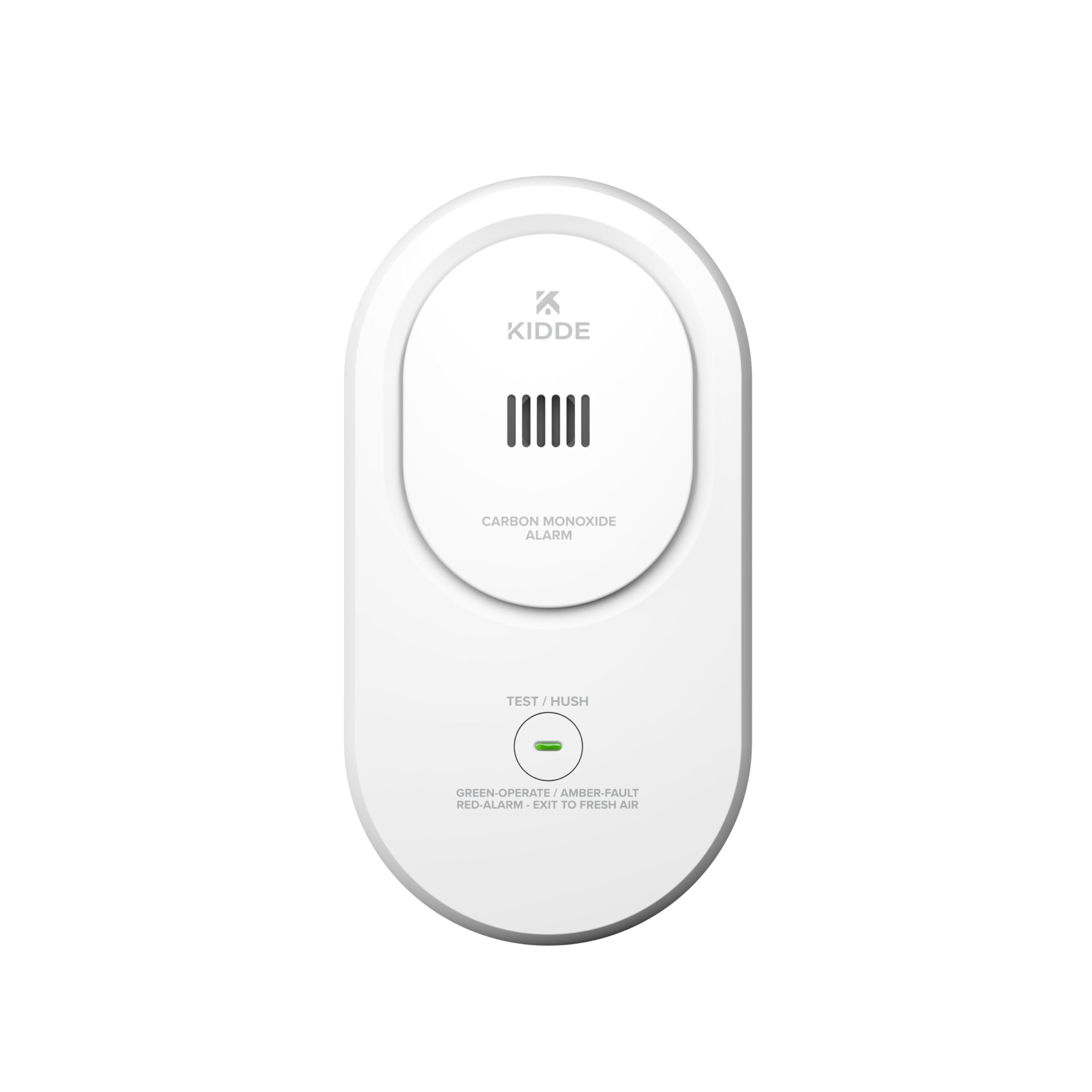
Alarm: 85 dB
Power source: Plug-in with AA battery backup
Plug: Rotating
Status indicators: LED lights
Surge protection: Power surge immunity
Intended use: Homes and apartments
Kidde Carbon Monoxide Detector, Plug-in with AA Battery Backup, COP
This Kidde unit runs from a mains socket and falls back to AA batteries if the power drops, which suits a caravan on a hookup pitch where the 230V circuit is live all evening. The rotating plug is the thoughtful detail: it lets the body sit upright in a tight socket rather than hanging sideways behind a cabinet. Surge immunity is a real benefit on campsite power, where voltage can be less polite than at home.
The 85 dB alarm is loud enough to wake a sleeping family in a confined van, and the LED status lights give a quick visual check that the unit is live.
Trade-off: Plug-in units are tied to a socket, so off-grid trips on battery alone leave this one running on its backup cells with no guarantee anyone remembers to check them.
4. Kidde Carbon Monoxide Detector, AA Battery-Powered (COB)
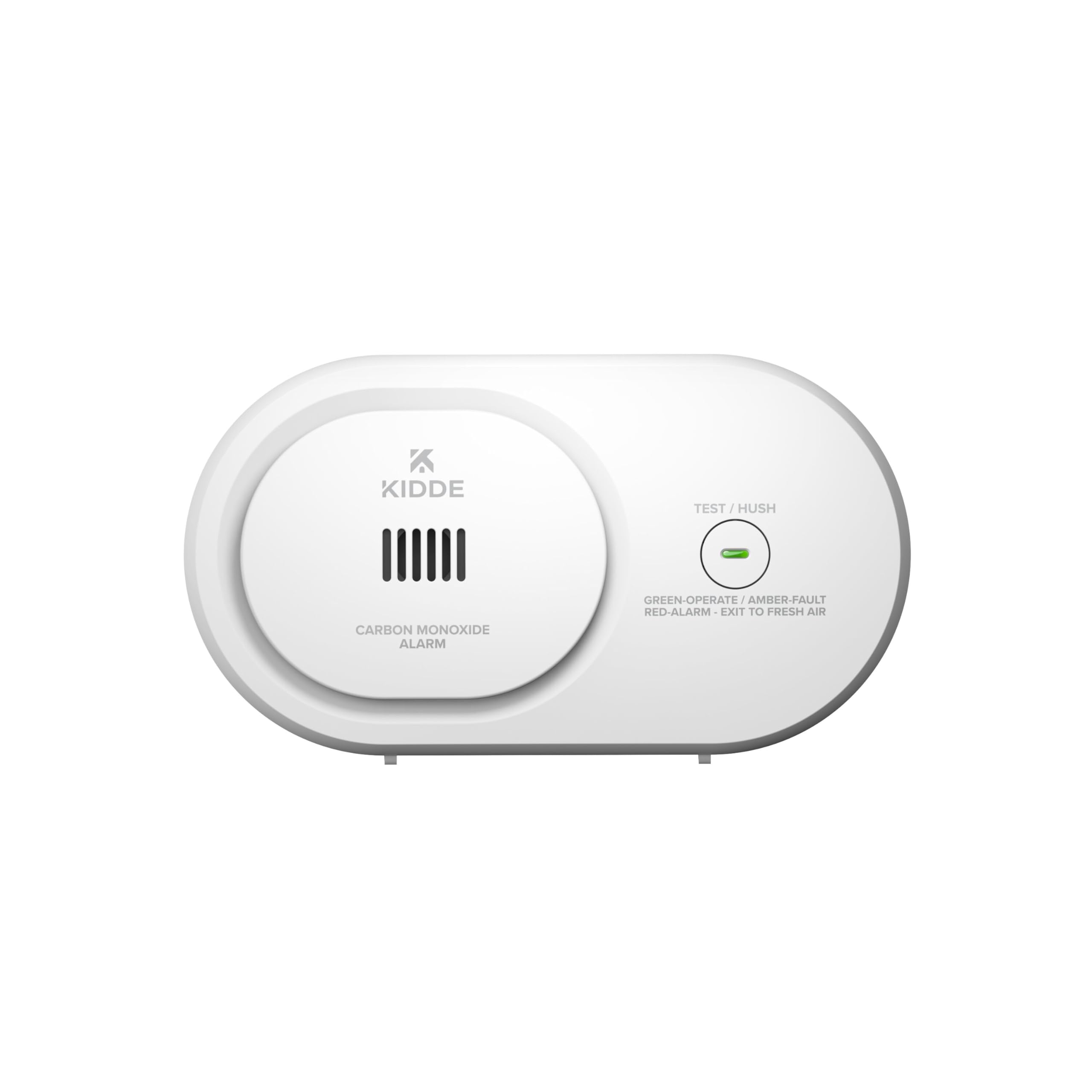
Alarm: 85 dB
Power source: AA batteries
Status indicators: LED lights
Build: Lightweight and portable
Intended use: Travel or home
Kidde Carbon Monoxide Detector, AA Battery-Powered, COB
The COB is the battery-only sibling of the plug-in Kidde above, and its lightweight body makes it the easiest unit here to move between a caravan, a motorhome, and a tent. It runs on AA cells, so replacements are available at any campsite shop, and the 85 dB alarm matches the plug-in model.
This is the pick for a van with no hookup routine, or for an owner who wants one detector that follows them between vehicles. The LED status lights keep the check simple.
Trade-off: Without a display or memory, the unit cannot tell an owner whether a reading was a brief spike or a sustained problem, which makes troubleshooting gas appliances harder.
5. Portable CO2 Detector, 4-in-1 with Temperature and Humidity
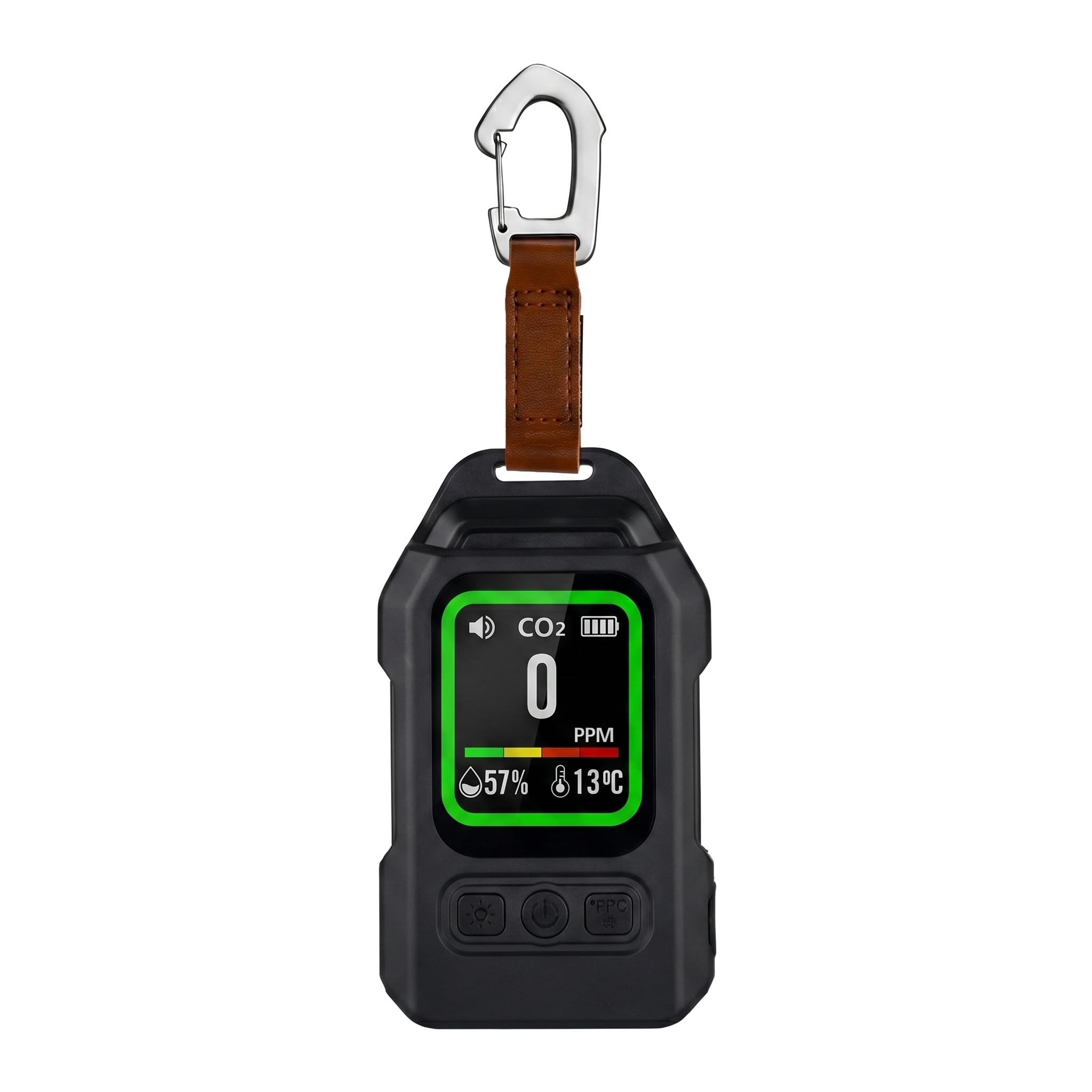
Measures: Carbon dioxide, temperature, humidity
Alerts: Audible and visual
Mounting: Magnetic back
Standby: 300 hours
Color: Black
Intended use: Home, RV, camping, car
Portable CO2 Detector, 4-in-1 Carbon Dioxide Detector
Important distinction first: this unit measures carbon dioxide, not carbon monoxide. It is included because caravan owners increasingly want air-quality feedback — CO2 climbs in a sealed van with several sleepers, and a high reading is a prompt to open a vent. The 4-in-1 package adds temperature and humidity, both useful for spotting condensation problems before they become damp.
The magnetic back sticks to a fridge or steel bulkhead, and the 300-hour standby suits a season of trips between charges.
Trade-off: This is a companion device, not a substitute — a caravan still needs a dedicated carbon monoxide alarm alongside it, which adds cost for buyers expecting one unit to do everything.
Before You Buy
- Gas targeted: Confirm the unit detects carbon monoxide; CO2 monitors are a different instrument and cannot replace a CO alarm.
- Power source: Match the detector to the van’s routine — battery-only for off-grid touring, plug-in with backup for hookup pitches.
- Alarm volume: A loud alarm matters in a small van with a road or fan noise background; 85 dB units are the safer choice for sleeping areas.
- Mounting: Check the fixing method suits a caravan wall or bulkhead, and keep the unit clear of drapes and locker doors.
- Placement: Fit the alarm near sleeping areas and the gas appliance, following the maker’s guidance rather than a guess.
- Maintenance: Battery units need a scheduled test and cell swap; rechargeable units need charging before each trip.
- Certification: Buy from a recognized alarm brand and check the listing states the applicable standard for the market.
Frequently Asked Questions
-
Can a home carbon monoxide alarm be used in a caravan?
Yes. A battery-powered CO alarm designed for a house works in a caravan, provided it is mounted securely and tested regularly. -
Where should a caravan CO alarm be fitted?
Near the sleeping area and the gas appliance, on a wall or bulkhead clear of vents, drapes, and locker doors, following the maker’s instructions. -
Is a CO2 monitor the same as a CO alarm?
No. A CO2 monitor tracks carbon dioxide and air quality; a CO alarm detects carbon monoxide, the gas that causes poisoning, so both serve different jobs. -
How often should a caravan alarm be tested?
A quick test before every trip is sensible, with a full check of the battery and alarm function at the start of each season. -
Does a plug-in alarm work off-grid?
Only through its battery backup. For touring without a hookup, a battery-only or rechargeable detector is the more dependable choice. -
Can one detector cover a whole caravan?
A single unit in a small van is often enough, but a second alarm near the sleeping area adds a margin of safety at modest cost.
Bottom Line
For most caravan owners, the CO400 First Alert Battery Carbon Monoxide Alarm is the sensible default: cheap, battery-powered, and simple enough to fit and forget. Buyers who want live readings and travel between vehicles should step up to the TOPTES CT-580, and anyone adding air-quality monitoring can pair a CO alarm with the 4-in-1 CO2 detector.
