Why there are Amazon links here: Brave Review is paid a commission for qualifying Amazon purchases made through the links below. Your price does not change, and using our links is entirely optional. How this works
Best Cold Alarm for a Holiday Let Between Guests
A holiday let sits empty for days at a time, and a freezer that fails quietly costs the owner a full restock plus a ruined guest arrival. This guide covers the best cold alarm for a holiday let between guests across five monitors — from a simple local fridge alarm to cellular units that report by app with no Wi-Fi at all. The picks suit three buyer types: owners on a tight budget who want a loud local alarm, hosts who clean and restock in person, and remote owners who need a phone notification the moment power drops. The overview table below sorts all five by key spec and best use so a decision takes under a minute.
Overview Of The Picks
| Product | Key Spec | Best Use | Price Tier |
|---|---|---|---|
| AcuRite Digital Wireless Fridge and Freezer Thermometer | Wireless fridge/freezer sensor with max/min and alarm | Cheap local alarm during a stay | Budget |
| Intermediate FreezeAlarm Custom Temperature and Power Outage Alarm | Voice call to up to three phone numbers | Owners without smartphones on site | Mid |
| Remote Silence WiFi Power Failure Alarm | Dual 15A outlets, 110dB, app alerts | Power-cut and GFCI trip detection | Mid |
| Cellular Remote Temp Monitoring System | No Wi-Fi required, app notifications | Remote lets with no broadband | Premium |
| GoveeLife WiFi Refrigerator Thermometer with Gateway | 230ft range, app alerts and buzzer | Everyday fridge/freezer watch | Mid |
AcuRite Digital Wireless Fridge and Freezer Thermometer

Type: Digital wireless fridge and freezer thermometer
Display: 4.25" x 3.75" head unit
Alert: Audible alarm with max/min temperature memory
Intended use: Home and restaurant cold storage
Best for: Local, in-property monitoring
This is the simplest and cheapest way to keep an eye on a let’s fridge and freezer. A wireless sensor sits inside the cold compartment and beams readings to a head unit that can be placed anywhere in the kitchen, and the max/min memory shows whether the temperature spiked while nobody was looking. The alarm sounds locally when the compartment drifts past the set range, which is exactly what a cleaner or a mid-stay guest needs to hear.
It earns its place as the budget pick because it needs no broadband, no account and no app — it just works out of the box. The trade-off is that the alarm is only useful if somebody is in the building to hear it, so it does nothing for an empty let between guests unless a cleaner happens to be on site.
Best for: Owners who want a low-cost, no-setup alarm and have staff or guests present.
Trade-off: The alert is local only, so an unattended property gets no notification when the freezer fails.
Check the current price on Amazon
Intermediate FreezeAlarm Custom Temperature and Power Outage Alarm

Type: Temperature and power outage alarm
Alert: Voice message to up to three phone numbers
Feature: Quick status check
Intended use: Freezer and property cold-storage monitoring
Best for: Owners who want a phone call, not an app
The FreeAlarm is the old-school answer to remote cold monitoring: when temperature or power goes out of range, it dials up to three phone numbers and plays a voice message. There is no app, no Wi-Fi and no account — just a landline or phone connection and a spoken warning. That makes it unusually robust for a rural let where broadband is patchy but a phone line is reliable.
It suits owners who want a plain phone call rather than a push notification, and the quick status check lets the owner ring in and hear the current state. The trade-off is that this category of device depends on a working phone connection and offers no history, so the owner gets a warning but no chart of what happened overnight.
Best for: Remote owners with a phone line and no appetite for apps or Wi-Fi setup.
Trade-off: Relies on a phone connection and gives no logged temperature history.
Check the current price on Amazon
Remote Silence WiFi Power Failure Alarm
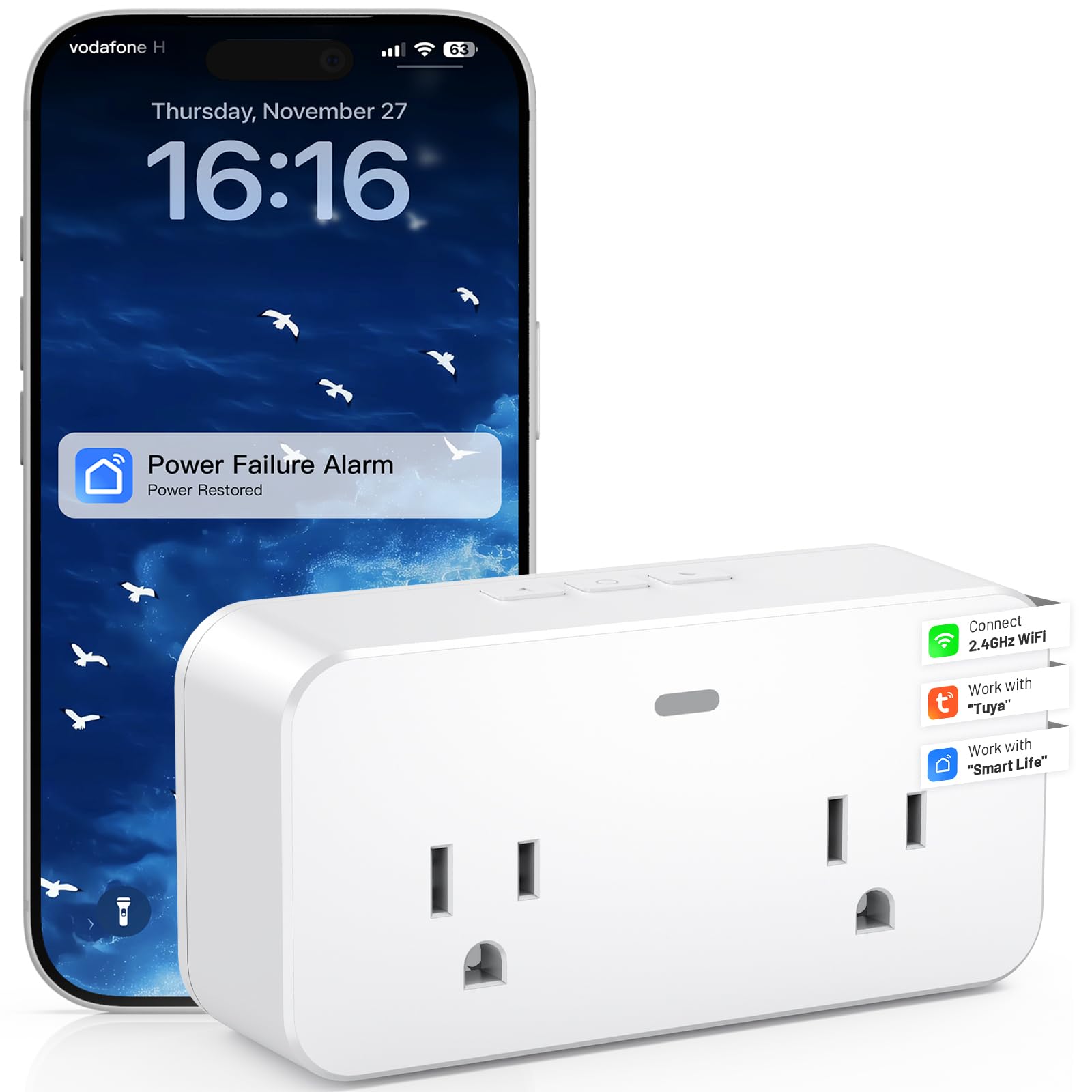
Type: Wi-Fi power failure alarm with outlet monitoring
Outlets: Dual 15A
Alarm: 110dB, three volume levels, three tones
Connectivity: 2.4GHz Wi-Fi only
Intended use: Outlet, freezer and GFCI trip monitoring
Best for: Catching power cuts and tripped circuits
This unit plugs into a socket and watches the power itself, which is a different job from watching temperature. If the circuit drops — a power cut, a tripped breaker, a GFCI that pops — the alarm sounds at up to 110dB and pushes an app alert, so the owner learns about the failure rather than discovering a warm freezer days later. The three volume levels and three tones let the alarm be tuned to the property rather than blaring at guests.
It suits hosts whose main worry is the supply failing, and the dual outlets mean the freezer can run through the device. The trade-off is that it flags power, not cold: a freezer that fails with the power still on will not trip this alarm.
Best for: Lets where power cuts or tripped circuits are the realistic risk.
Trade-off: Detects power and GFCI failure rather than the fridge temperature itself.
Check the current price on Amazon
Cellular Remote Temp Monitoring System
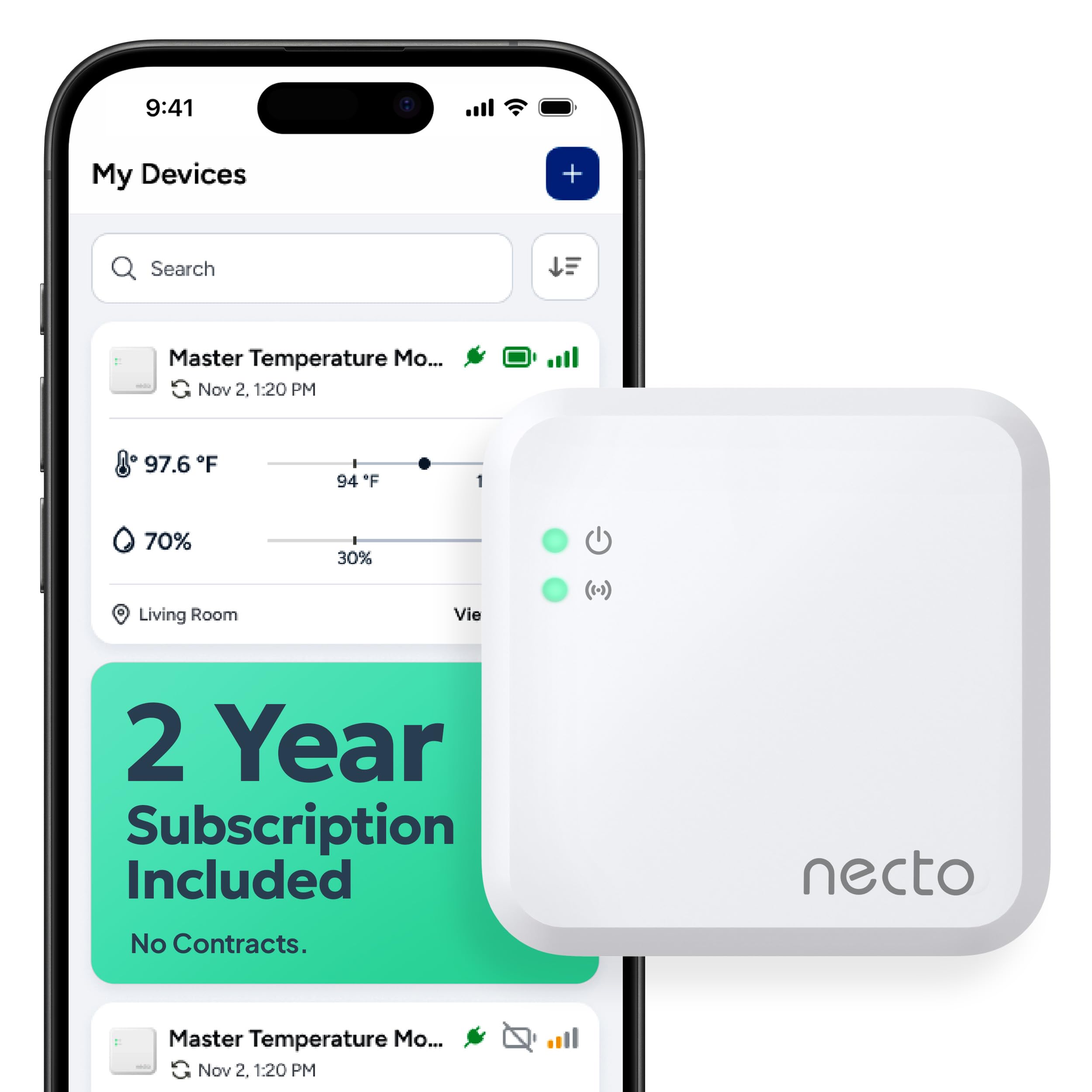
Type: Cellular temperature monitor
Connectivity: No Wi-Fi required
Alert: Real-time app notifications
Sensors: Temperature plus humidity
Intended use: RV, pet, car, vacation home and server room
Best for: Remote lets with no broadband
The cellular monitor is the premium answer for a let that has no reliable internet. It reports over a mobile network, so the owner gets real-time app notifications without depending on the property’s router, and it also watches humidity and power outages. That combination covers the three ways a cold store fails: it warms up, it gets damp, or the supply dies.
It suits owners of remote cottages, cabins and static caravans where Wi-Fi is absent or flaky, and it is the pick for anyone who cannot rely on a guest or cleaner to notice a problem. The trade-off is the running cost — cellular monitoring typically needs a data plan or subscription, so the upfront price is not the whole story.
Best for: Off-grid or broadband-free lets that need remote, real-time alerts.
Trade-off: Usually carries an ongoing cellular plan or subscription cost.
Check the current price on Amazon
GoveeLife WiFi Refrigerator Thermometer with Gateway
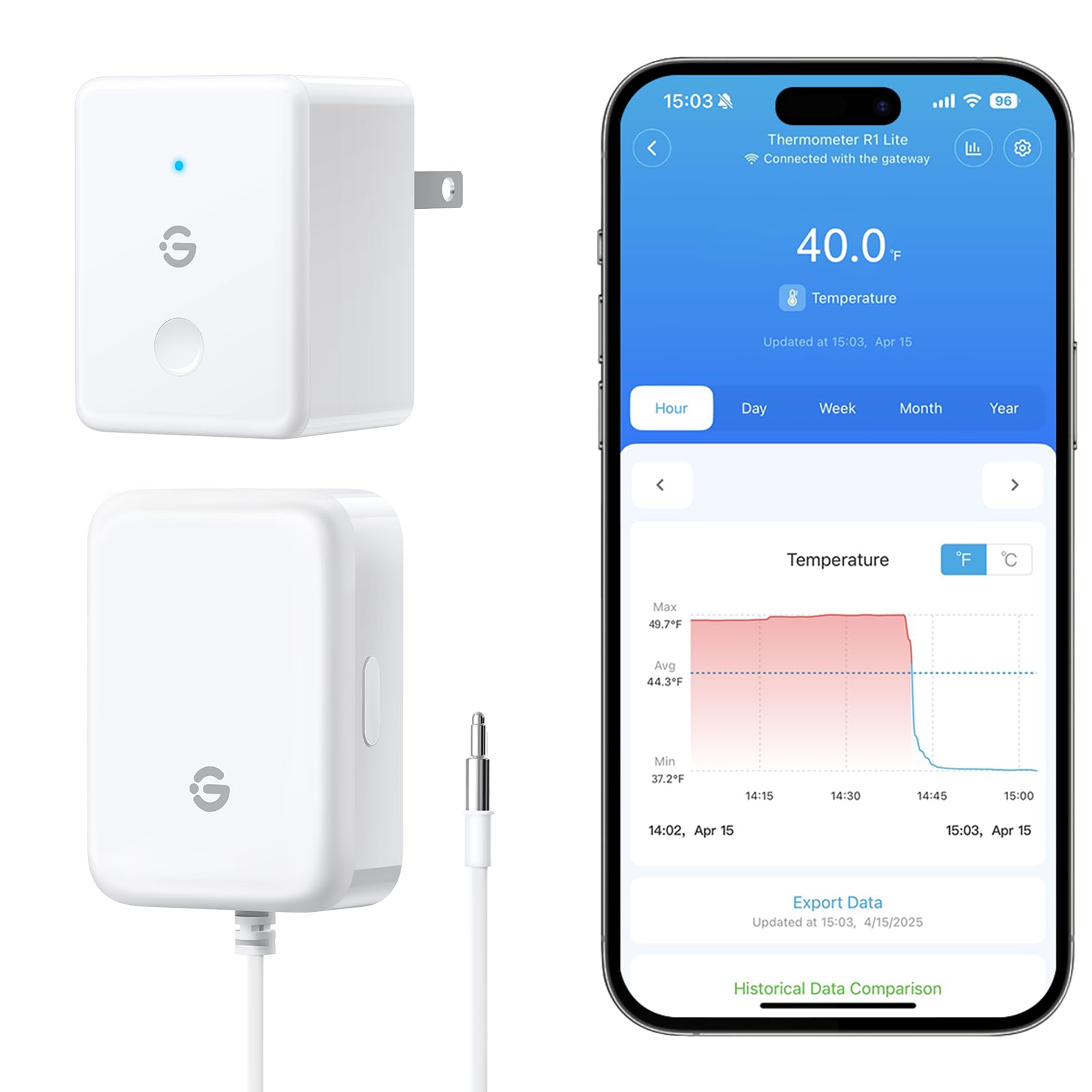
Type: Wi-Fi refrigerator thermometer with gateway
Range: 230ft
Alert: App alerts plus buzzer
Connectivity: 2.4G Wi-Fi only
Pack: 1-pack sensor with gateway
Best for: Everyday fridge and freezer watch
This is the mainstream choice for a let with working Wi-Fi: a sensor in the fridge or freezer reports through a gateway to the phone app, and the buzzer covers anyone in the property at the time. The 230ft range means the gateway can sit near the router while the sensor stays in the kitchen, and the app keeps a remote eye on the compartment between guest stays.
It suits hosts who already have broadband and want a straightforward app-based monitor without a subscription. The trade-off is the single sensor — a host who wants both the fridge and the freezer watched at once will need a second pack, since this listing is the one-sensor version.
Best for: Wi-Fi-equipped lets that want app alerts and a local buzzer in one.
Trade-off: One sensor only, so fridge and freezer cannot both be covered from this pack.
Check the current price on Amazon
Before You Buy
- Connectivity: Decide first whether the let has reliable Wi-Fi; if not, only the cellular unit or the phone-line alarm will reach the owner.
- Alert type: A local buzzer protects guests and cleaners, an app or voice call protects an empty property — most hosts need one of each.
- What is being watched: Temperature sensors catch a warming freezer; outlet alarms catch power cuts and GFCI trips, and the two are not interchangeable.
- Power backup: A monitor that dies with the mains cannot report a power cut, so check how the unit behaves when the supply fails.
- Range: The sensor-to-receiver distance matters in a large let, especially where the kitchen sits far from the router or head unit.
- Ongoing cost: Cellular monitoring usually needs a data plan, so factor the running cost against the upfront price.
- Placement: The sensor belongs in the coldest part of the compartment, not against a wall or the door, or the readings will mislead.
Frequently Asked Questions
-
What is the best cold alarm for a holiday let between guests?
For a let with Wi-Fi, the GoveeLife gateway kit gives app alerts plus a local buzzer; for a let with no broadband, the cellular monitor is the safer pick. -
Can a cold alarm work without Wi-Fi?
Yes — the FreeAlarm dials phone numbers and the cellular monitor uses a mobile network, so neither depends on the property’s router. -
Will a power failure alarm catch a broken freezer?
Not always. An outlet alarm detects lost power, but a freezer that fails while the power stays on needs a temperature sensor to catch it. -
Does a cold alarm need a subscription?
Local alarms and Wi-Fi monitors generally do not, while cellular monitoring usually needs a data plan — check before buying. -
Where should the sensor go in the freezer?
In the middle of the compartment, away from walls and the door, so it reads the air the food actually sits in. -
Is one sensor enough for a holiday let?
One covers a single fridge or freezer; a let with both needs either a second sensor or a monitor that supports multiple probes.
Bottom Line
The fastest safe choice for most holiday lets is the GoveeLife WiFi Refrigerator Thermometer with Gateway, which pairs app alerts with a local buzzer on ordinary Wi-Fi. Owners with no broadband should step up to the cellular monitor, and anyone on a tight budget can start with the AcuRite for in-property cover.
