Why there are Amazon links here: Brave Review is paid a commission for qualifying Amazon purchases made through the links below. Your price does not change, and using our links is entirely optional. How this works
Best Draught Excluder for a Period Front Door: 5 Picks That Respect Old Timber
Old front doors leak heat in ways modern doors never do — warped sills, uneven thresholds, shrinking timber and a gap that changes with the seasons. The best draught excluder for a period front door has to seal that gap without demanding a joiner, screws or a permanent change to the door. This shortlist covers five picks, from stick-on silicone strips to weighted fabric sausages, and each one suits a different kind of household and gap. The overview table below shows the key difference in one glance, then each pick is reviewed in turn. Prices are left to the Amazon listing so the reader always sees a live figure.
The Picks at a Glance
| Product | Key Spec | Best Use | Price Tier |
|---|---|---|---|
| Holikme Weighted Door Draft Stopper | 36 in, washable cover, hook-and-loop | Heavy gaps on uneven thresholds | Mid |
| Vellure Door Draft Stopper | Self-adhesive sweep | Cheap, fast fix on a flat gap | Budget |
| MAXTID Door Draft Stopper | 36 in, adjustable, black | Adjustable fit on a standard door | Budget |
| Weighted Gap Filler with Washable Cover | 38 in, weighted, washable cover | Larger thresholds, all-season use | Mid |
| Self-Adhesive Silicone Door Draft Stopper | 2-pack, silicone, stick-on | Low-profile seal under a tight door | Budget |
1. Holikme Weighted Door Draft Stopper
Type: Weighted fabric under-door seal
Length: 36 inch
Cover: Removable and washable
Fastening: Hook-and-loop fasteners included
Claimed benefits: Soundproofing, thermal insulation, energy saving
Colour: Black
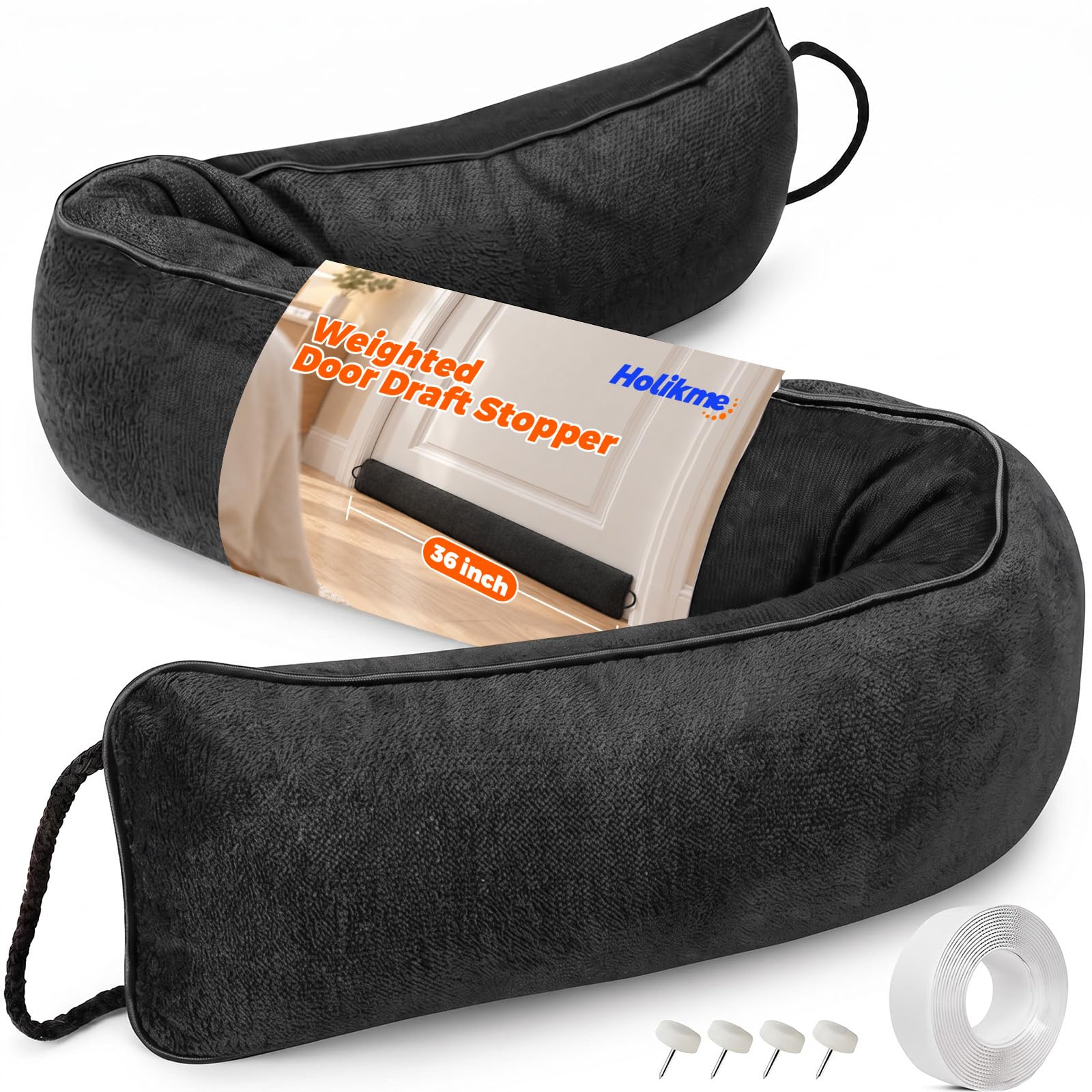
This is the heavyweight fabric answer to a draughty old door: a filled sausage that sits against the base of the door and relies on its own weight to stay put. The hook-and-loop fasteners are the practical touch — they let the stopper be fixed to the door itself so it moves with the door rather than being kicked aside. The removable cover is the other key detail, because a fabric seal on a period door will pick up dust and grit from a worn threshold and needs to go in the wash. It works best on doors where the gap is uneven or the threshold is worn into a hollow.
It earns its place for households that want a seal without drilling into old joinery, and the fabric finish is far kinder to a period hallway than a strip of plastic. It is not the right choice for a door that already scrapes the floor, because the extra thickness will only make that worse.
Trade-off: A fabric stopper that relies on weight can drag or ride up on a smooth threshold, and the cover will need washing more often on a door that opens straight onto a gritty path.
2. Vellure Door Draft Stopper
Type: Self-adhesive door sweep
Intended use: Bottom of door, weather stripping
Install method: Stick-on, quick and easy
Claimed benefits: Energy saving
Price tier: Entry level

The Vellure is the simplest idea on the list: a stick-on sweep that attaches to the bottom of the door and closes the gap with a flexible flap. It is the cheapest way into the category and the fastest to fit, which makes it a reasonable first attempt on a door where the gap is fairly even and flat. Because it fixes to the door rather than the floor, it suits a threshold that is already level and just needs a thin barrier against the wind.
It is the pick for renters and for anyone testing whether a sweep is enough before spending more. The caution is in the format itself — an adhesive sweep on a period door is only as good as the surface it sticks to, and old, dusty or uneven timber can make the bond short-lived.
Trade-off: The adhesive backing is the weak link on aged, uneven or dusty timber, so it can peel away sooner than a fitted or weighted option.
3. MAXTID Door Draft Stopper
Type: Adjustable under-door blocker
Length: 36 inch
Adjustability: Adjustable fit
Intended use: Front door, bottom of doors
Colour: Black

The MAXTID is the middle path: a 36 inch blocker that adjusts to the width of the door, so it can be trimmed and tuned rather than forced into place. The adjustable design is what makes it useful on a period front door, where the opening is rarely a clean standard width. It sits at the bottom of the door and acts as a draft guard, and the black finish keeps it visually quiet against dark timber.
It is the pick for a standard-width front door with a moderate gap and a buyer who wants a fit that can be adjusted rather than a one-size strip. It is not the answer for a door with a very deep or very irregular gap, where a weighted fabric stopper will seal better than an adjustable guard.
Trade-off: Adjustable blockers depend on a reasonably consistent gap and smooth floor, so they can leave a sliver of draft where the threshold dips.
4. Weighted Gap Filler with Removable Washable Cover
Type: Weighted under-door draft stopper
Length: 38 inch
Cover: Removable and washable
Claimed benefits: Blocks hot and cold air, all-season seal, noise and wind blocker
Install: Easy install

This weighted gap filler is the longer of the two fabric options, and the extra length matters on a period front door with a wide opening or a deep threshold. The weight is the point: it holds the seal down against the floor and resists being nudged aside every time the door swings. The removable washable cover is a genuine practical advantage in a hallway that sees muddy boots and road grit.
It suits a buyer who wants an all-season seal that also takes the edge off noise and wind, and who does not mind lifting the stopper aside when the door is used. It is a poor fit for a door that is in constant use or opened by children, because a weighted fabric sausage is something to be stepped over.
Trade-off: The extra length and weight make it more awkward to move aside, so it suits a door opened a few times a day rather than a busy main entrance.
5. Self-Adhesive Silicone Door Draft Stopper (2-Pack)
Type: Self-adhesive silicone strip
Pack size: 2 pack
Material: Silicone
Intended use: Bottom of door, under-door draft stopper
Claimed benefits: Blocks air loss, noise, dust and bugs; door gap reducer
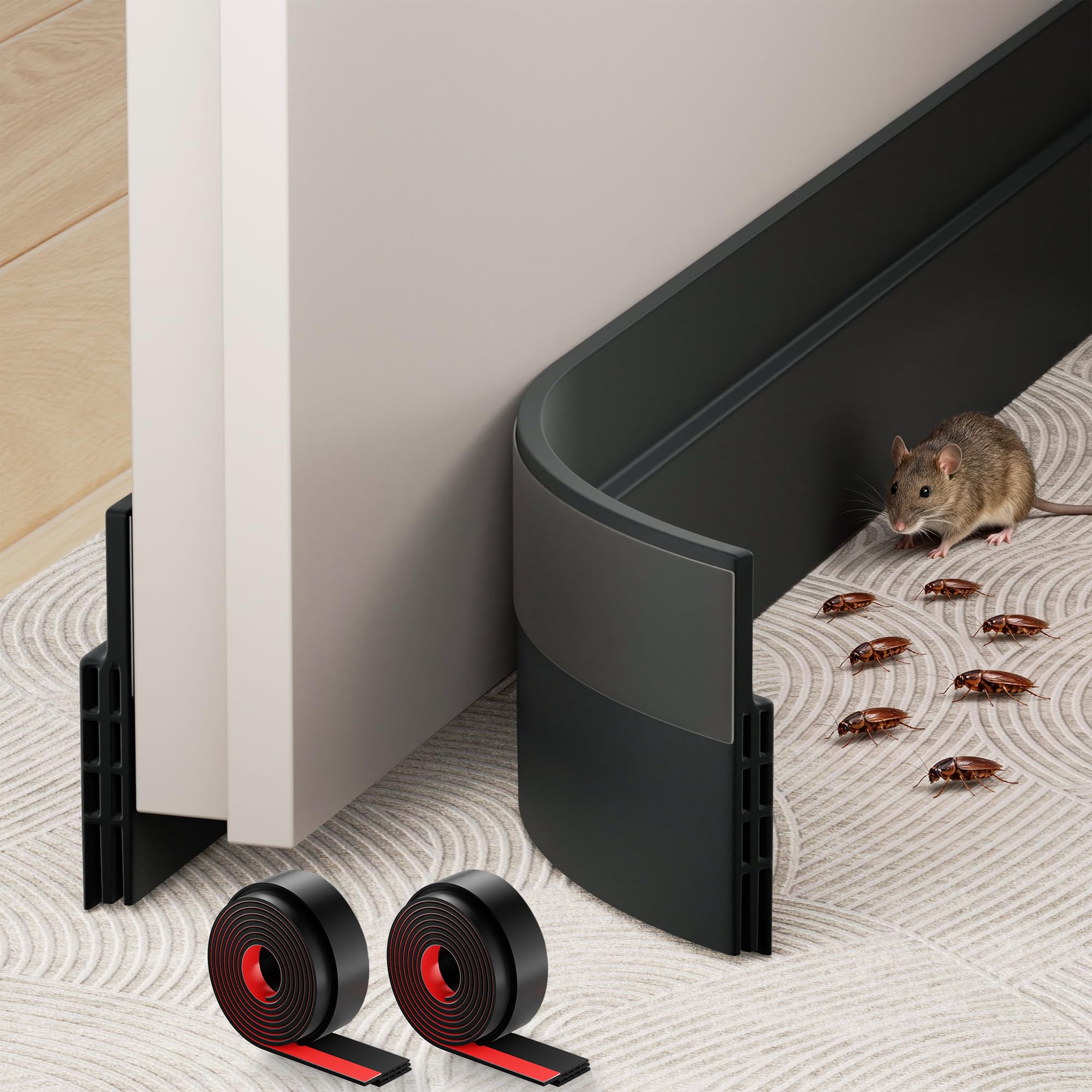
The silicone strip is the lowest-profile option here and the one that interferes least with the look of a period door, since it tucks under the leaf rather than sitting across the threshold. Silicone is a sensible material for the job: it stays flexible, shrugs off damp and resists the wear that a strip of foam would not. The two-pack means a spare strip for the back door or the shed, which is a fair bonus at this price.
It is the pick for a tight door where a fabric stopper would not clear the floor, and for a buyer who wants the seal invisible. The limitation is the same as any stick-on strip — it needs a clean, dry, flat surface, and a period door that has been repainted many times rarely offers one.
Trade-off: A slim silicone strip only closes a narrow gap, and on a warped or heavily painted door the adhesive may not hold where the surface is uneven.
Before You Buy
- Gap size: Measure the height of the gap at both ends and in the middle — period doors are rarely even, and the largest measurement decides the type of seal.
- Material: Silicone and adhesive sweeps suit tight, flat gaps; fabric and weighted stoppers suit deeper or irregular gaps.
- Compatibility: Check clearance under the door — a weighted stopper needs room to sit without being crushed, and a stick-on strip needs a flat surface.
- Care: A removable washable cover is worth the small extra cost on a hallway door that collects grit and dust.
- Storage: Weighted stoppers need somewhere to live when the door is open, so consider where it will be moved to.
- Included accessories: Hook-and-loop fasteners or adhesive backing save a separate trip for fixings.
- Door use: A door opened many times a day suits a fitted sweep; a door opened occasionally suits a weighted stopper.
Frequently Asked Questions
-
Will a draught excluder damage a period front door?
Stick-on strips can lift old paint or varnish when removed, while fabric and weighted stoppers leave no mark at all. A removable option is the safer choice on historic joinery. -
Which type works best on an uneven threshold?
A weighted fabric stopper copes best with a worn or hollow threshold, because it moulds to the floor instead of relying on a flat surface. -
Can a draught excluder help with noise as well as cold air?
The fabric and weighted options are the better bet, since their bulk takes the edge off wind and street noise as well as blocking air. -
How is the right length chosen?
Measure the width of the door and pick a stopper that matches or slightly exceeds it, trimming where the design allows. -
Do these need any tools to fit?
The stick-on and hook-and-loop options need no tools at all, which is why they suit period doors that should not be drilled. -
Will a stopper stop the door closing?
A thick weighted stopper can catch on a tight floor, so a low-profile silicone strip is the safer choice where clearance is limited.
Bottom Line
For most period front doors, the Holikme Weighted Door Draft Stopper is the best draught excluder for a period front door: it seals an uneven gap, fixes with hook-and-loop fasteners rather than screws, and the cover goes in the wash. Buyers who want the lowest-profile, least visible fix should look at the silicone two-pack instead.
