Why there are Amazon links here: Brave Review is paid a commission for qualifying Amazon purchases made through the links below. Your price does not change, and using our links is entirely optional. How this works
Best Emergency Power for a Rural House with a Well Pump
A well pump is the one load a rural household cannot do without, and it is also one of the hardest to back up: the motor draws a heavy surge at startup and runs unattended for years. The five picks below cover that job at three levels — a small battery station for short outages, two large battery systems for long ones, and three dual-fuel generators for multi-day events. Each entry states its specs, who it suits, and where it falls short, so the reader can match a unit to the pump and the house. The overview table shows the whole field at a glance.
The Picks at a Glance
| Product | Key Spec | Best Use | Price Tier |
|---|---|---|---|
| Jackery HomePower 3600 Plus | 3584Wh, 3600W AC, expandable to 21kWh | Long outages, indoor placement, no fuel | Premium |
| Westinghouse 12500 Watt Dual Fuel | 12500W, gas or propane, remote start | Whole-home backup with a transfer switch | Mid |
| DuroStar DS13000MX | 13000W, 500cc dual fuel, remote start | Large well pumps and whole-home loads | Budget |
| DuroMax XP13000HX | 13000W dual fuel, electric start | Whole-home backup with propane flexibility | Mid |
| Compact LiFePO4 Power Station | 640Wh, 1200W surge, 10ms UPS | Short outages, electronics, small loads | Budget |
Jackery HomePower 3600 Plus Power Station
Type: Battery power station with LiFePO4 cells
Capacity: 3584Wh, expandable to 21kWh
AC Output: 3600W
Fuel: None required; solar panel optional
Intended Use: Essential home backup, emergencies, RV

This unit is built around lithium iron phosphate cells, a chemistry chosen for long service life and stable output rather than raw lightness. The 3600W AC output and the ability to expand capacity up to 21kWh by stacking additional batteries make it the only pick here that can grow with a household instead of being replaced. It runs silently and produces no exhaust, so it can sit inside the house near the panel. That combination suits rural owners who want a well pump and a few circuits covered without storing fuel.
The trade-off: the entry capacity covers a well pump for hours, not days, and reaching the advertised 21kWh means buying extra battery modules that push the total cost well past the generators.
Check the current price on Amazon
Westinghouse 12500 Watt Dual Fuel Home Backup Portable Generator
Type: Dual-fuel portable generator
Output: 12500W
Fuel: Gasoline or propane
Starting: Remote electric start
Intended Use: Home backup, transfer switch ready

A dual-fuel generator at this output is the classic answer for a rural property: enough wattage to carry a deep-well pump alongside a furnace, refrigerator, and a few lights. Propane matters here because it stores indefinitely, which is the difference between a generator that starts in year three of an outage and one that does not. Remote electric start removes the walk to the unit in bad weather, and the transfer-switch-ready design means an electrician can wire it into the panel properly.
The trade-off: a unit this size is heavy and loud, needs to sit outdoors with clearance from windows, and requires a manual fuel connection before it will run.
Check the current price on Amazon
DuroStar DS13000MX Dual Fuel Portable Generator
Type: Dual-fuel portable generator, 500cc engine
Output: 13000W
Fuel: Gasoline or propane
Starting: Remote electric start
Intended Use: Whole-home backup, RV, emergency

The DS13000MX pairs a large 500cc engine with dual-fuel capability, giving it the headroom that a hard-starting well pump demands. The 13000W rating is aimed squarely at whole-home backup, and the remote start plus transfer-switch readiness put it in the same installation class as the pricier units here. It is the value pick for a buyer who wants maximum wattage per dollar and is willing to handle the fuel and maintenance routine personally.
The trade-off: the lowest price in the generator group usually shows up as a plainer control panel and less refined noise and fuel management, and a 500cc engine drinks fuel under load.
Check the current price on Amazon
DuroMax XP13000HX Dual Fuel Portable Generator
Type: Dual-fuel portable generator
Output: 13000W
Fuel: Gasoline or propane
Starting: Electric start
Intended Use: Whole-home backup, RV, emergency

The XP13000HX sits in the middle of the generator price range and matches the DuroStar on headline wattage, so the extra money buys refinement rather than capacity. Electric start and dual-fuel operation cover the same two essentials: push-button startup and a fuel that can be stored for years. Buyers who want propane as the primary fuel for a well pump and a whole-house panel will find this the most balanced option of the three generators.
The trade-off: it overlaps heavily with the cheaper DuroStar, so a buyer on a tight budget gains little from the upgrade beyond fit and finish.
Check the current price on Amazon
Compact 640Wh LiFePO4 Power Station
Type: LiFePO4 battery power station with UPS function
Capacity: 640Wh
Output: 1200W surge, four AC outlets
Charge Time: 1.5 hours
Switchover: 10ms UPS
Intended Use: RV camping, home backup, emergency
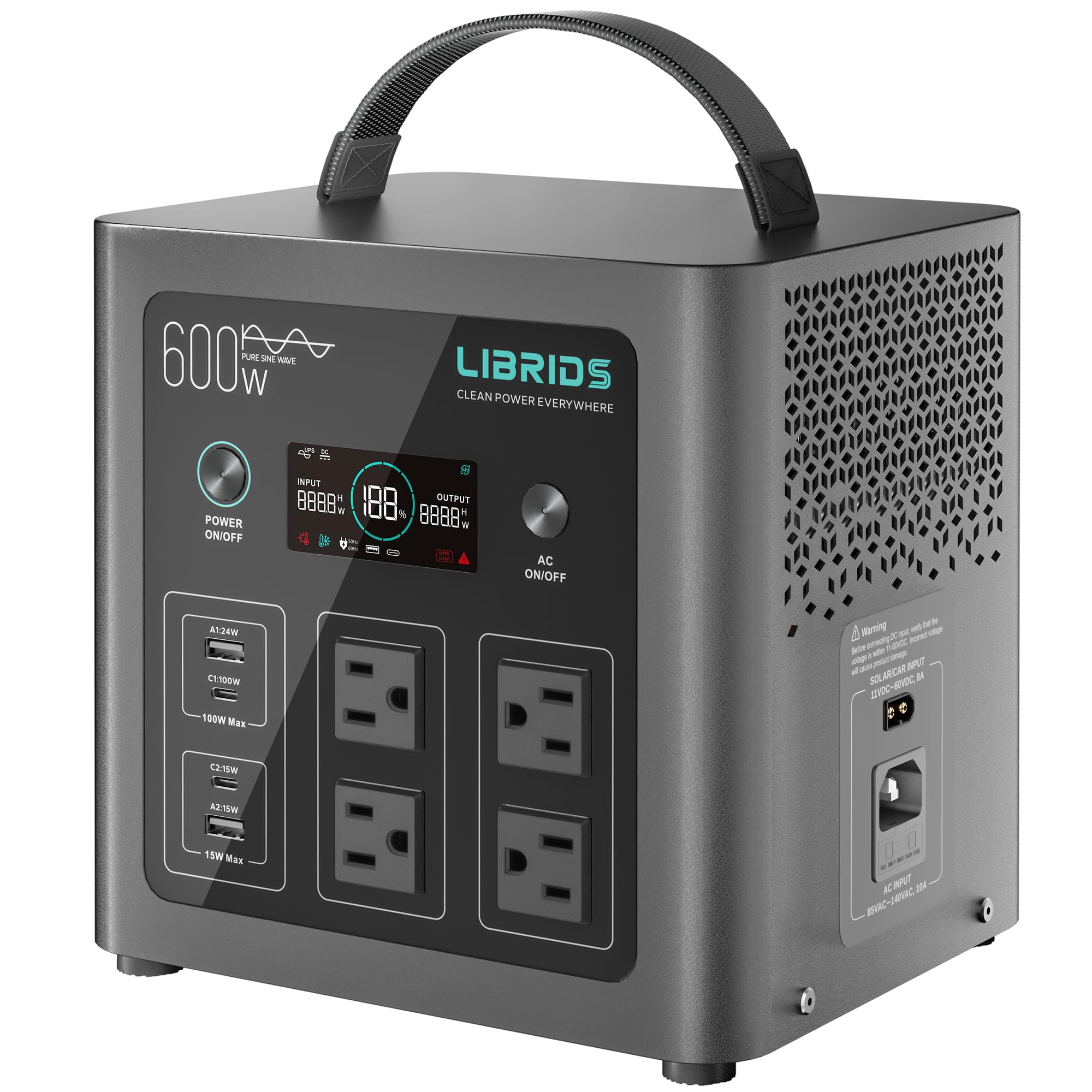
This is the small, fast-charging unit that keeps the router, freezer, and phone lines alive while a bigger system handles the pump. The 1.5-hour charge time and 10ms UPS switchover are the two features that matter: it can be topped up between outages quickly, and it takes over from wall power almost instantly. A pure sine wave output and metal housing make it a sensible companion unit rather than a primary backup.
The trade-off: 640Wh will not start most well pumps, and the 1200W figure is a surge rating rather than a steady output, so it belongs on small loads only.
Check the current price on Amazon
Before You Buy
- Pump surge: Well pumps draw several times their running wattage at startup, so match the generator or station to the surge figure, not the running figure.
- Fuel storage: Propane keeps for years; gasoline does not. A dual-fuel unit gives a rural household a fuel it can actually rely on after a long outage.
- Placement: Generators must run outdoors with clearance from doors and windows. Battery stations can sit indoors near the panel.
- Installation: Transfer-switch-ready generators still need an electrician and a proper switch before they can feed household circuits safely.
- Runtime: Battery capacity is measured in hours of a known load, not days. Plan for the pump plus essentials, and size up if the outage might run long.
- Maintenance: Generators need oil checks, fuel treatment, and periodic exercise. Battery systems need almost none, which is their main long-term advantage.
- Companion loads: A small station covers electronics and refrigeration; it should not be expected to carry the pump as well.
Frequently Asked Questions
- How much power does a well pump need? A typical deep-well pump needs a running wattage in the low thousands but a much higher surge at startup, so the backup unit’s surge rating is the number that decides whether it will start the pump.
- Can a battery power station run a well pump? Only a large one. The 3584Wh unit here has the output for many pumps; the compact 640Wh station does not and is meant for small loads.
- Is a generator or a battery better for a rural house? A generator runs for days on stored fuel and costs less per watt. A battery runs silently indoors with no fuel, but its runtime is fixed by its capacity.
- Why choose dual fuel? Propane stores indefinitely and does not degrade like gasoline, which makes a dual-fuel generator far more likely to start after a long gap between outages.
- Does a transfer switch matter? Yes. It is what lets a generator feed household wiring safely instead of through extension cords, and it is a licensed job.
- How long will a battery backup last? It depends entirely on the load. A pump plus essentials drains a battery far faster than lights and a router, so capacity should be sized to the circuits that must stay on.
Bottom Line
For most rural households, the Westinghouse 12500 Watt Dual Fuel generator is the pick that balances output, propane flexibility, and remote starting at a mid-range price, and it has the surge headroom a well pump needs. A buyer who wants silent, fuel-free operation and can budget for it should go with the Jackery HomePower 3600 Plus instead.
