Why there are Amazon links here: Brave Review is paid a commission for qualifying Amazon purchases made through the links below. Your price does not change, and using our links is entirely optional. How this works
Best Frost Protection Thermostat for an Empty House in Winter
An empty house in winter has one job: keep the pipes above freezing without heating the whole place. A plug-in frost protection thermostat does exactly that — it switches a heater, heat tape or deicer on when the air turns cold and off again once the danger passes. This roundup covers five thermostatically controlled outlets for three kinds of owners: the traveler leaving a house dark for weeks, the owner of a seasonal cabin with no smart home setup, and the landlord who wants a cheap, dumb, reliable switch. The overview table below shows the differences at a glance; the reviews explain what each one is actually for.
Overview Of The Picks
| Product | Key Spec | Best Use | Price Tier |
|---|---|---|---|
| For roof deicing and pipe heating cable, grounded outlet HEATIT ET-21 | 38°F on / 50°F off, indoor/outdoor housing | Pipe heat cable and roof deicing cable | Mid |
| 37°F On 50°F Off 20-Inch Extension Cord Thermostat | 37°F on / 50°F off, 20-inch cord, 15A 120V | Reaching a covered outdoor outlet | Budget |
| Farm Innovators TC-3 Cold Weather Thermo Cube | 35°F on / 45°F off, double outlet, 15A 120V | Two devices on one thermostat | Budget |
| 38°F On 50°F Off Heavy-Duty Plug Thermostat | 38°F on / 50°F off, heavy-duty plug, 120V | Pipe heat tape in a utility space | Mid |
| Freeze Thermostatically Controlled Outlet | On below 38°F, off over 50°F | Simple single-device freeze protection | Budget |
For Roof Deicing And Pipe Heating Cable HEATIT ET-21 Freeze Protection Thermostat Outlet

Type: Plug-in thermostatically controlled outlet
On Temperature: 38°F
Off Temperature: 50°F
Outlet: Grounded
Housing: Durable weather-resistant, indoor/outdoor use
Intended Use: Roof deicing cable and pipe heating cable
This is the pick for a house with heat cable already installed. The unit plugs into a wall outlet and the cable plugs into the unit, so the thermostat controls the load directly rather than through a hub or an app. The grounded outlet and weather-resistant housing mean it can sit in a garage, a crawlspace or an exposed outdoor position where a bare indoor timer would not survive. The 38°F on / 50°F off window is wide enough that the cable is not short-cycling every few minutes on a mild night.
It suits the owner of a vacant house with roof deicing cable on the eaves or heat tape wrapped around vulnerable pipes, and it suits anyone who wants the switching decision made by air temperature rather than by a schedule. Buyers who want remote monitoring should look elsewhere — this is a standalone device with no connectivity. The trade-off is that the weather-resistant housing is still a plug-in accessory, not a hardwired control, so it depends on a live outlet being within reach of the cable.
37°F On 50°F Off Auto Control 20-Inch Extension Cord Thermostat
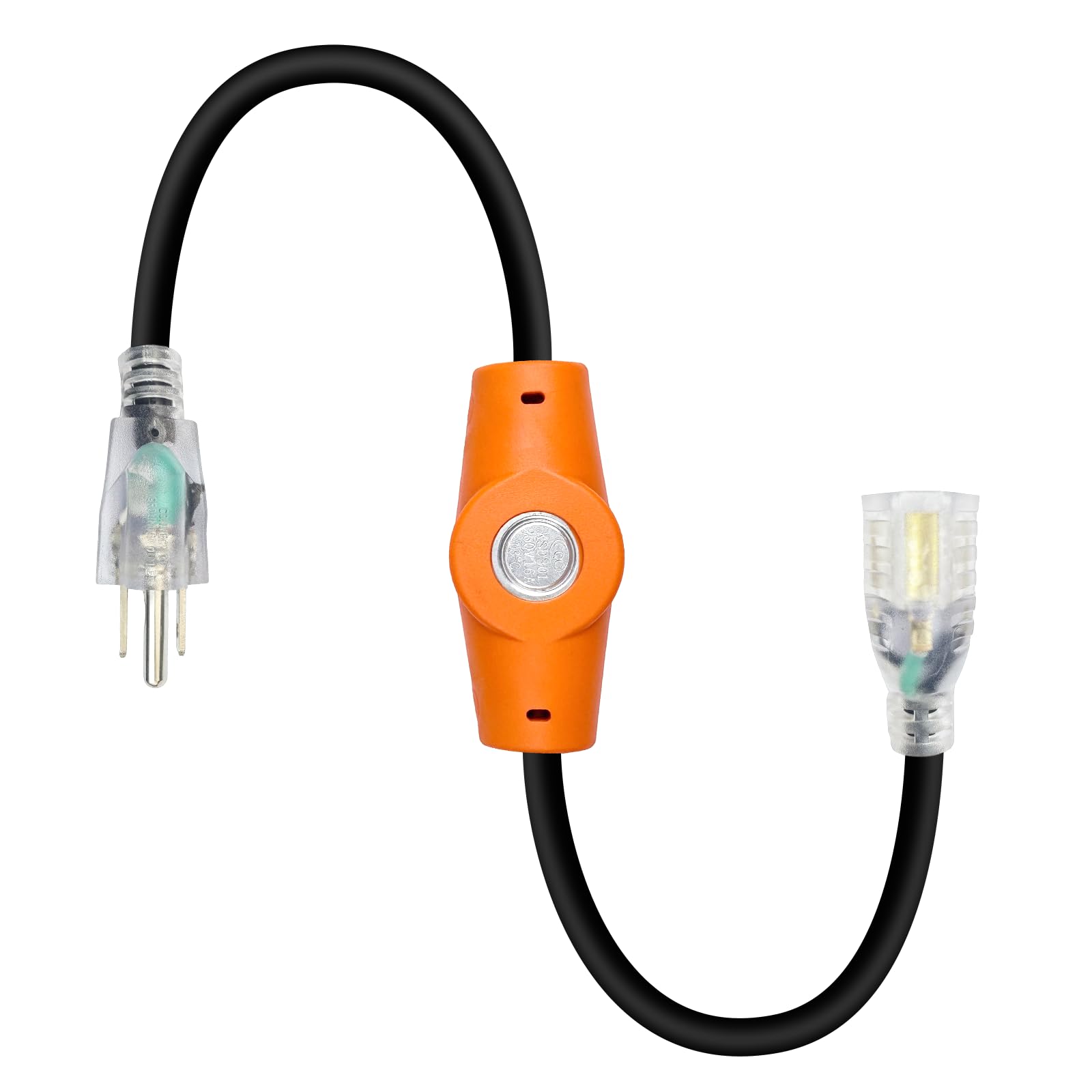
Type: Thermostatically controlled outlet extension cord
On Temperature: 37°F
Off Temperature: 50°F
Cord Length: 20 inches
Electrical Rating: 15A, 120V
Intended Use: Covered outdoor plug
The 20-inch cord is the whole point here. Most thermostatic outlets are bricks that sit flush against the receptacle, which is useless when the only outdoor outlet is inside a covered box or tucked behind a piece of siding. This one puts the thermostat body out where the cold air actually is while the plug stays in the covered outlet. The 37°F on / 50°F off window is slightly more conservative than the 38°F units, switching on a touch earlier.
It suits the owner whose vacant house has a covered outdoor receptacle and a device — a small heater, a heat lamp, a deicer — that needs to run only in freezing weather. It also works for a pump house or shed where the outlet is awkward to reach. The trade-off is the cord itself: 20 inches is enough to escape a cover but not enough to relocate the thermostat across a room, and a short cord concentrates the load at the plug.
Farm Innovators TC-3 Cold Weather Thermo Cube Double Outlet

Type: Plug-in thermostatic cube
On Temperature: 35°F
Off Temperature: 45°F
Outlets: Double
Electrical Rating: 15A, 120V
Intended Use: Deicers, heaters, pump houses, greenhouses
The double outlet is the feature that earns this cube its place. Two devices — a bucket deicer and a small space heater, or two heat lamps — can share one thermostat instead of requiring two separate units. The 35°F on / 45°F off window is the narrowest and lowest in this group, which means it waits longer before switching on and shuts off sooner, cutting runtime and power draw. It is a simple cube with no display and no settings to get wrong.
It suits the owner of a pump house, greenhouse or seasonal cabin who wants one cheap device to run two heaters, and it suits anyone who prefers a lower trigger point so the equipment only runs in genuine freezing conditions. It is not the right pick for a buyer who wants a 38°F trigger for pipe protection, since 35°F leaves less margin. The trade-off is that a double outlet at this price tier shares one 15A circuit between both devices, so two heavy loads cannot run together.
38°F On 50°F Off Heavy-Duty Plug Thermostatically Controlled Outlet

Type: Thermostatically controlled outlet switch
On Temperature: 38°F
Off Temperature: 50°F
Plug: Heavy-duty, 120V
Intended Use: Pipe heat tape freeze protection
This unit is built around the plug. A heavy-duty plug and a 120V rating point at a device that will carry a heat tape load continuously for weeks at a time, which is exactly what an empty house in a cold climate demands. The 38°F on / 50°F off window matches the most common pipe-protection trigger point, so it behaves the way a plumber would expect. Automatic control means no dial to bump and no schedule to reprogram after a power cut.
It suits the owner of a vacant property with heat tape on exposed supply lines in a basement, crawlspace or utility room, and it suits anyone who wants a set-and-forget switch rather than an app-connected thermostat. It is less suited to outdoor mounting, since the name describes a plug rather than a weather-resistant housing. The trade-off is that a heavy-duty plug usually means a chunkier body, which can block the second socket of a duplex receptacle.
Freeze Thermostatically Controlled Outlet

Type: Plug-in freeze protection outlet
On Temperature: Below 38°F
Off Temperature: Over 50°F
Intended Use: Heating cable
Control: Thermostatic, automatic
This is the straightforward option: one outlet, one trigger window, no extra features. The on-below-38°F and off-over-50°F behavior is the standard freeze-protection band, and the wording makes clear the switch reacts to air temperature around the unit rather than to a schedule. For a heating cable on a single run of pipe, that is all the control that is needed. The simplicity is also the appeal — there is nothing to configure and nothing to fail.
It suits the owner of a small vacant house or cabin with one heat cable to protect, and it suits the buyer who wants the cheapest reliable way to stop a pipe freezing while away. It is not for anyone running two separate devices or needing a weather-resistant outdoor housing. The trade-off is that a single-outlet unit at this price tier offers no margin for expansion — a second cable means a second thermostat.
Before You Buy
- Trigger temperature: Match the on/off window to the job. A 38°F on point gives pipe protection margin; a 35°F on point runs less but leaves less room for error.
- Outlet count: A single outlet covers one cable or heater; a double outlet runs two devices from one thermostat but splits the available current.
- Plug type: A grounded plug is the minimum for heat cable and outdoor equipment; a heavy-duty plug is worth having for continuous loads.
- Mounting location: Indoor-only units belong in a basement or utility room; weather-resistant housings are needed for garages, crawlspaces and exposed positions.
- Cord length: A short extension cord solves a covered outdoor outlet; a flush plug suits a standard indoor receptacle.
- Load rating: Check the 15A/120V rating against the device being controlled and confirm the circuit can carry it.
- Failure behavior: A standalone thermostat has no alerting, so a vacant house still benefits from a neighbor or a periodic check.
Frequently Asked Questions
-
What temperature should a frost protection thermostat switch on at?
38°F is the common trigger for pipe protection, giving a few degrees of margin before water in an exposed pipe is at risk. Lower trigger points such as 35°F save runtime but leave less buffer. -
Can a plug-in thermostat protect an entire empty house?
No — it controls one device, such as a heat cable or a small heater. Whole-house freeze protection still depends on the home’s heating system or a dedicated low-temperature alarm. -
Does a thermostatic outlet work in an unheated garage or crawlspace?
Only if the unit is rated for it. Models with weather-resistant or indoor/outdoor housings are the ones to choose for damp or exposed locations. -
What is the difference between a single and double outlet thermostat?
A double outlet runs two devices from one temperature reading, which is convenient for a pump house with two heaters. The catch is that both devices share the same current rating. -
Will these thermostats work after a power outage?
Yes — the mechanical and automatic units in this group have no schedule to lose, so they resume normal on/off behavior once power returns. -
Do these thermostats need Wi-Fi or an app?
No. All five are standalone plug-in devices controlled by air temperature alone, which is why they suit a vacant house with no network.
Bottom Line
For most empty houses, the safest choice is the HEATIT ET-21: a 38°F on / 50°F off window, a grounded outlet and a weather-resistant housing that covers both pipe heat cable and roof deicing cable in one unit. Buyers who only need to reach a covered outdoor outlet should take the 20-inch extension cord model, and anyone running two heaters in a pump house gets more value from the double-outlet Thermo Cube. Pick the trigger window first, then the outlet count — the rest follows.
