Why there are Amazon links here: Brave Review is paid a commission for qualifying Amazon purchases made through the links below. Your price does not change, and using our links is entirely optional. How this works
Best Heat Alarm for a Utility Room with a Dryer: 5 Picks That Handle Lint and Heat
A utility room with a dryer is one of the trickiest spots in a home for a standard smoke alarm. Lint, humidity, and normal dryer exhaust can trigger false alarms, which is why a heat alarm is often the smarter choice for that space. This guide covers five alarm options for a laundry or utility room, from dedicated hardwired heat alarms to compact and combo units. Buyers who want a simple hardwired replacement, renters who need a battery-only fix, and anyone adding carbon monoxide coverage will each find a fit below. The overview table comes first so a decision can be made in under a minute.
Overview of the Picks
| Product | Key Spec | Best Use | Price Tier |
|---|---|---|---|
| First Alert BRK HD6135FB | Hardwired heat alarm, 9V backup | Straight swap for an existing hardwired unit | Budget |
| Kidde Heat Detector | Hardwired, 2 LEDs, interconnect | Garages and utility rooms on a shared circuit | Mid-range |
| First Alert Heat Alarm 120V | Thermistor sensor, 50 ft detection | Large utility rooms needing wide coverage | Mid-range |
| Kidde Compact Smoke Detector | 4-inch, AA battery, 85 dB | Small spaces and quick battery-only installs | Budget |
| Heiman Smoke & CO Combo | Sealed 10-year battery, smoke plus CO | Whole-room protection with no wiring | Mid-range |
1. First Alert BRK Hardwired Heat Alarm with Battery Backup (HD6135FB)

Type: Hardwired heat alarm
Power Source: 120V hardwired with 9V battery backup
Sensor: Heat detection
Model: HD6135FB
Backup: 9V battery
HD6135FB, 9V Battery Backup First Alert BRK Hardwired Heat Alarm with Battery Backup, HD6135FB
Check Price on Amazon: https://www.amazon.com/dp/B000Q6LXW2/?tag=wdowd-20
This is the straightforward pick for a utility room that already has a hardwired alarm base. The HD6135FB is a heat alarm rather than a smoke alarm, so it responds to a rapid temperature rise instead of airborne lint and dust. The 9V battery backup keeps it live during a power cut, and the hardwired design means no battery swapping for day-to-day operation. It suits homeowners replacing an aging hardwired unit who want heat detection without rewiring.
The unit earns its place as the budget entry because it does one job without extras. Buyers who want interconnect capability or status LEDs should look at the Kidde below instead. The trade-off is that a hardwired install needs an existing junction box and mains wiring, so it is not a fit for renters or anyone without a spare circuit.
Trade-off: Installation depends on existing hardwired infrastructure, which rules out quick battery-only setups.
2. Kidde Heat Detector, Hardwired with Battery Backup and 2 LEDs

Type: Hardwired heat detector
Power Source: Hardwired with battery backup
Indicators: 2 LEDs
Feature: Interconnect capability
Intended Use: Garages and utility spaces
Check Price on Amazon: https://www.amazon.com/dp/B000P4YY8K/?tag=wdowd-20
The Kidde heat detector is built for exactly the kind of space a dryer lives in: garages, utility rooms, and other areas where smoke alarms misbehave. Two LEDs give a visible status read at a glance, and the interconnect capability means it can link to compatible alarms on the same circuit so one alarm sounds the rest. That is a real advantage in a utility room tucked away from living areas.
This mid-range pick suits homeowners building out a linked alarm system who want the utility room tied into the rest of the house. The battery backup covers outages, and the heat-only sensor avoids the lint-triggered false alarms that plague smoke units in laundry rooms. The caution is that interconnect only works with compatible Kidde models, so the existing system needs checking before purchase.
Trade-off: Interconnect pairing is limited to compatible Kidde alarms, so a mixed-brand setup may not link.
3. First Alert Heat Alarm Hard Wired 120V with Thermistor Sensor
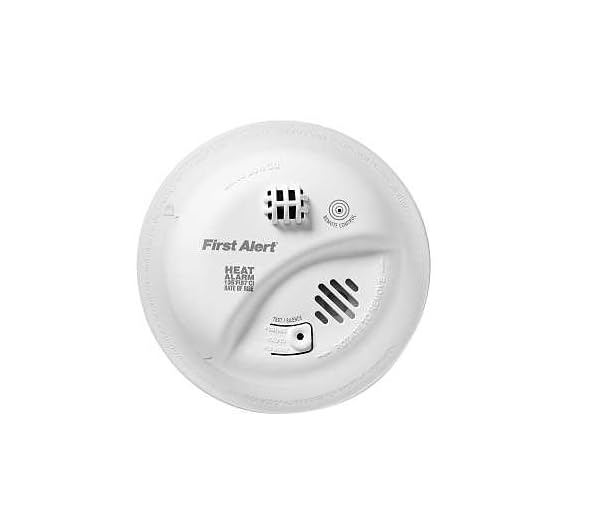
Type: Hardwired heat alarm
Power Source: 120V hardwired with battery backup
Sensor: Thermistor
Detection Range: 50 ft
Alarm Sound: 85 dB
Check Price on Amazon: https://www.amazon.com/dp/B0C8Z4DTTH/?tag=wdowd-20
This First Alert unit leans on a thermistor sensor and a stated 50 ft detection range, which makes it the pick for larger utility rooms or laundry areas where one alarm needs to cover more ground. The 85 dB alarm is loud enough to carry through a closed door, and the 120V hardwiring with battery backup keeps it running through outages. It is a heat alarm, so dryer lint and steam are less likely to set it off.
The mid-range price reflects the wider detection range and thermistor sensing. It suits homeowners with a big utility space or an open laundry area who want one alarm to do more work. The trade-off is that the 50 ft figure is a detection claim, not a guarantee across walls and doors, so a large or partitioned room may still need a second unit.
Trade-off: The stated detection range assumes open space, so divided or closed-off rooms may need extra coverage.
4. Kidde Compact Smoke Detector, 4-Inch, AA Battery-Powered (10SDR)
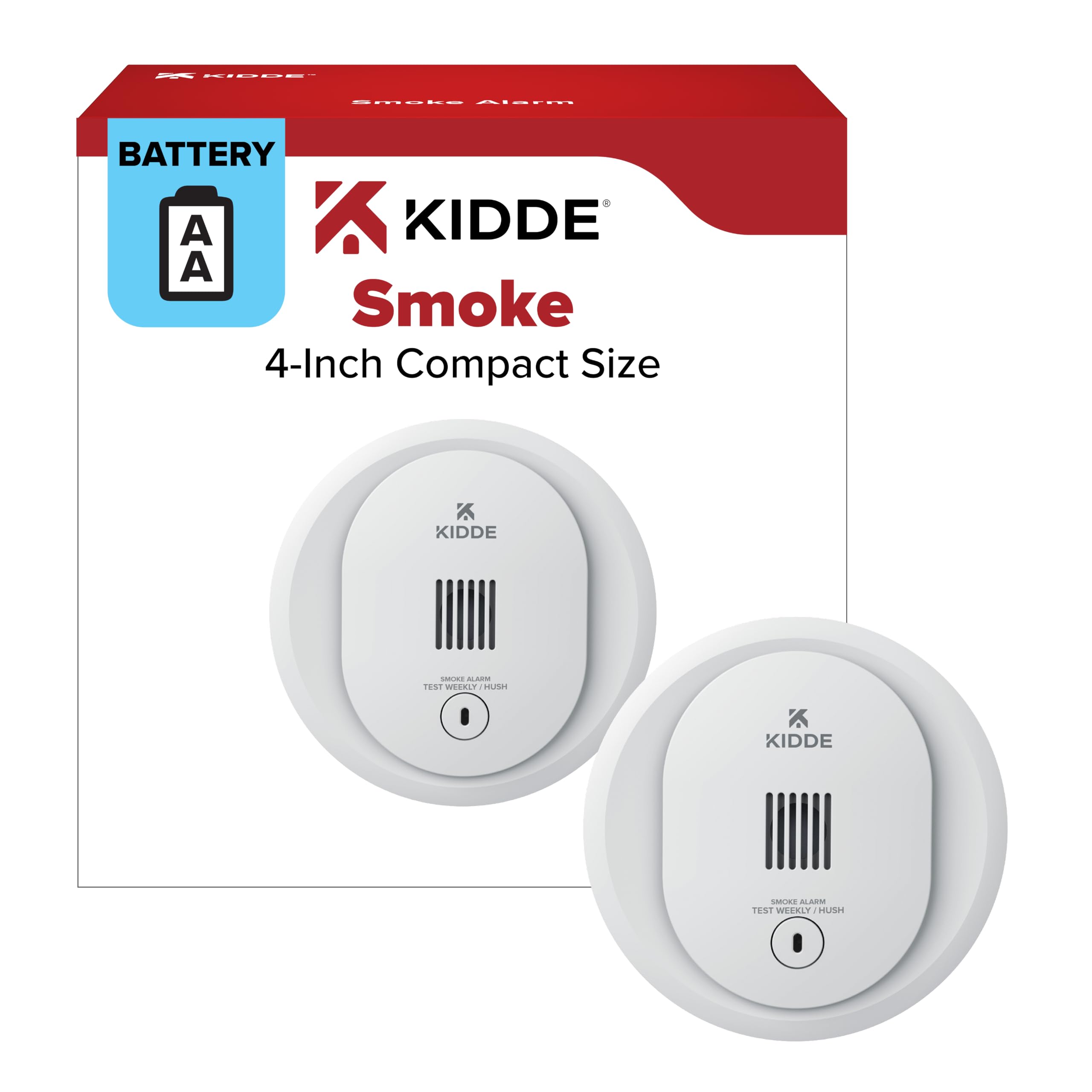
Type: Battery-powered smoke alarm
Size: 4-inch
Power Source: AA battery
Alarm Sound: 85 dB
Indicators: LED status lights
Model: 10SDR
Check Price on Amazon: https://www.amazon.com/dp/B0CX6BHZJR/?tag=wdowd-20
The Kidde compact unit is the smallest and simplest option here, and it is a smoke alarm rather than a heat alarm. That matters: in a utility room with a dryer, a smoke alarm is more prone to nuisance trips from lint and humidity. It earns its place for small spaces, closets, or a secondary spot where a quick battery-powered install is the priority and the dryer is well vented.
At 4 inches it fits tight ceilings, and AA batteries mean no wiring at all. It suits renters or anyone who cannot hardwire a new alarm. The trade-off is the core one for this category: a smoke sensor in a laundry room is the wrong tool for lint-heavy air, so this is a pick only for well-ventilated spaces or as a supplement.
Trade-off: As a smoke alarm, it is more likely to false-alarm on dryer lint than a dedicated heat alarm.
5. Heiman Smoke and Carbon Monoxide Detector Combo, 10-Year Sealed Battery
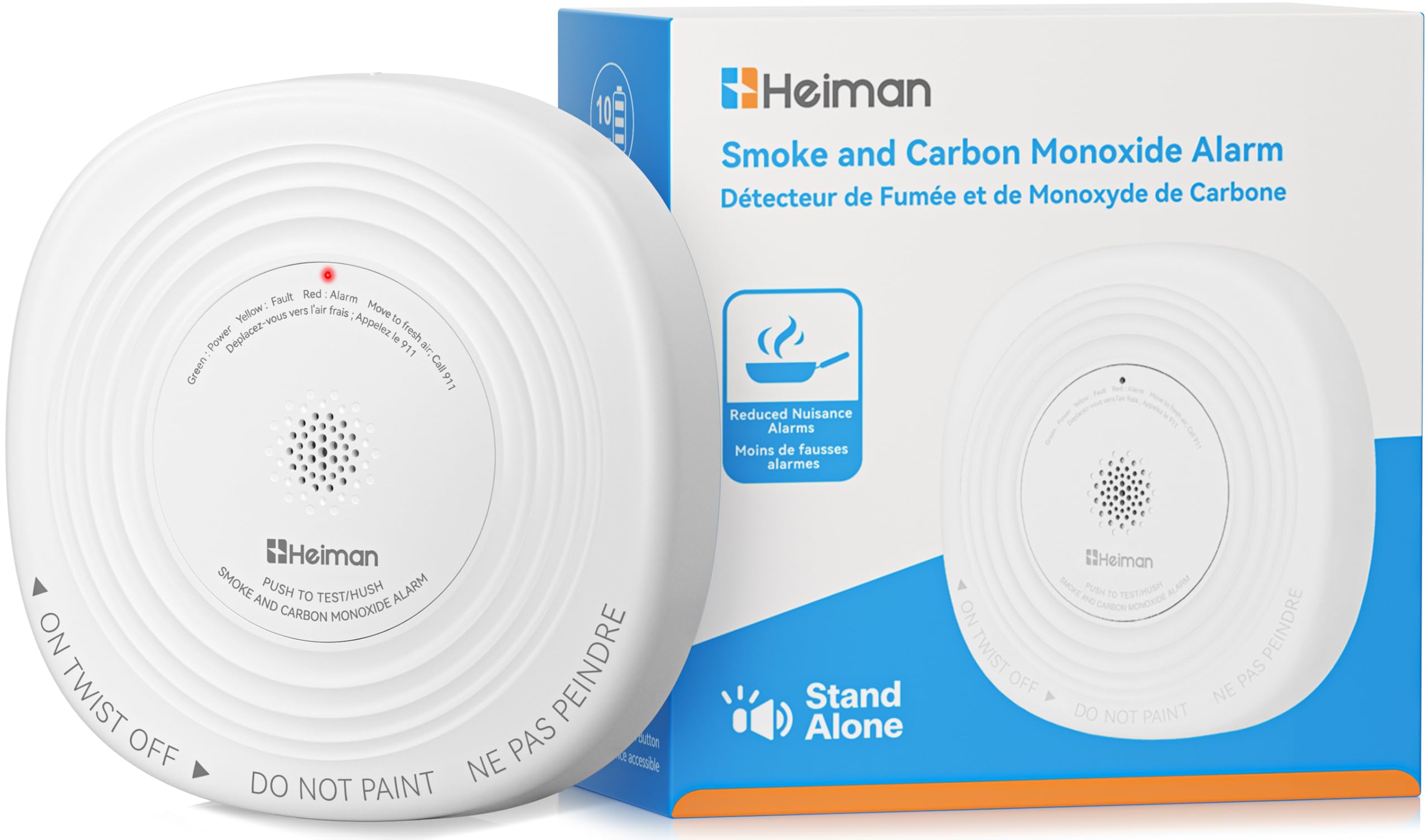
Type: Smoke and CO combination detector
Power Source: 10-year sealed battery
Certifications: UL 217 10th edition, UL 2034 5th edition
Sensor: Photoelectric
Alarm Sound: 85 dB
Battery Life: 10-year sealed
Check Price on Amazon: https://www.amazon.com/dp/B0GQH1R9KH/?tag=wdowd-20
This Heiman combo adds carbon monoxide detection to a photoelectric smoke sensor, which is a meaningful extra for a utility room with a gas dryer. The 10-year sealed battery removes the annual battery swap, and the stated UL certifications give a clear compliance marker. It is a battery-only unit, so no wiring is needed, and the photoelectric sensor is generally better than ionization at catching smoldering fires.
It suits households with a gas appliance or an attached garage who want one device covering both smoke and CO. The trade-off is the same lint problem: a photoelectric smoke sensor in a dryer room can still nuisance-trip, so good venting matters. It is also a combo unit, so buyers wanting pure heat detection should choose one of the hardwired picks above.
Trade-off: The smoke sensor can still react to heavy lint and steam, so ventilation is essential.
Before You Buy
- Sensor type: A heat alarm avoids lint-triggered false alarms; a smoke alarm is more sensitive but more prone to nuisance trips in a laundry room.
- Power source: Hardwired units need an existing circuit and junction box; battery units install anywhere but demand battery checks.
- Interconnect: If the home has a linked alarm system, confirm the new unit pairs with the existing brand before buying.
- Coverage: A stated detection range assumes open space; large or partitioned utility rooms may need two alarms.
- Gas appliances: A gas dryer makes carbon monoxide coverage worth considering, which points to a combo unit.
- Certifications: Check for recognized safety listings on the packaging, especially for combo smoke and CO devices.
- Placement: Keep the alarm clear of the dryer exhaust path and direct steam to reduce false triggers.
Frequently Asked Questions
-
Is a heat alarm better than a smoke alarm for a utility room with a dryer?
Yes, generally. A heat alarm responds to temperature rise rather than airborne particles, so lint and steam are far less likely to set it off. -
Can a heat alarm be hardwired into an existing alarm circuit?
Many heat alarms, including the hardwired picks here, are designed to replace an existing hardwired unit, but the base and wiring need to match. -
Do I need carbon monoxide detection in a laundry room?
It is worth considering if the dryer or any nearby appliance runs on gas, since CO is invisible and odorless. -
How many alarms does a utility room need?
A single alarm covers a small, open room; a large or divided space may need two for full coverage. -
Will dryer lint set off a smoke alarm?
It can. Lint and humidity are common causes of nuisance alarms, which is the main reason heat alarms are recommended for laundry spaces. -
Can renters install these alarms?
Battery-powered units install without wiring, while hardwired models need an existing circuit and are better suited to homeowners.
Bottom Line
For most utility rooms with a dryer, the Kidde Heat Detector is the best heat alarm for a utility room with a dryer: heat-only sensing avoids lint false alarms, the two LEDs and interconnect capability add real value, and the battery backup covers outages. Buyers on a tight budget with existing wiring can drop to the First Alert HD6135FB, while households with a gas dryer should weigh the Heiman combo for carbon monoxide coverage.
