Why there are Amazon links here: Brave Review is paid a commission for qualifying Amazon purchases made through the links below. Your price does not change, and using our links is entirely optional. How this works
Best Heat Alarm for a Utility Room: 5 Picks for Laundry and Boiler Rooms
A utility room packs a water heater, a dryer, and often a furnace into a small, dusty space where a standard smoke alarm will nuisance-trip. The best heat alarm for a utility room watches for a fast temperature rise instead of smoke, so it stays quiet through lint and steam while still catching a real fire. This guide covers five picks for three buyer types: the budget-minded homeowner wiring a single alarm, the owner replacing an interconnected system, and the renter or DIYer who wants a simple, code-friendly add-on. The overview table below ranks each pick by key spec and best use so a decision can be made in under a minute.
Overview of the Picks
| Product | Key Spec | Best Use | Price Tier |
|---|---|---|---|
| First Alert BRK HD6135FB | 9V battery backup, hardwired | Budget single-alarm install | Budget |
| Kidde Heat Detector (Hardwired) | 2 LEDs, interconnect capability | Garage or utility room with existing Kidde wiring | Mid |
| First Alert Heat Alarm 120V | Thermistor sensor, 50 ft detection | Wide-coverage utility spaces | Mid |
| Kidde HD135F | 135-degree rating, interconnectable | Replacing an old interconnected unit | Premium |
| Zircon Leak Alert Water Detector | 90 dB water alarm, no setup | Water-heater leak protection (not fire) | Budget |
1. First Alert BRK HD6135FB Hardwired Heat Alarm

Type: Hardwired heat alarm with battery backup
Power Source: 120V AC with 9V battery backup
Sensor: Heat detection (fixed-temperature style)
Mounting: Ceiling or wall, hardwired base
Best For: Budget utility-room installs
HD6135FB, 9V Battery Backup First Alert BRK Hardwired Heat Alarm with Battery Backup, HD6135FB
This is the entry point into hardwired heat detection, and it earns that spot by keeping the feature list tight. The unit runs on household AC with a 9V battery as backup, so it keeps watching the room during an outage, and the BRK name means it slots into a standard hardwired base. It is built for a single standalone alarm rather than a whole-home interconnected loop, which keeps the install simple for a first-time buyer. The price tier makes it the natural pick when one utility room needs coverage and the budget is the deciding factor.
It suits the homeowner who already has a hardwired base in the ceiling and wants to swap in a heat sensor without rewiring. It is not for someone chasing interconnect with an existing multi-alarm system, and it is not a smoke detector — it will not catch a slow smoldering fire in the same way. The 9V backup is a consumable, so it needs a yearly check like any battery-backed alarm.
Trade-off: The standalone design means it will not talk to the rest of the house’s alarms, and the 9V backup adds a battery to track.
2. Kidde Heat Detector, Hardwired with Battery Backup

Type: Hardwired heat detector
Power Source: 120V AC with battery backup
Indicators: 2 LEDs
Interconnect: Capable with compatible Kidde units
Best For: Garages and utility rooms already on Kidde wiring
The two LEDs are the practical upgrade here: one shows power, the other shows alarm state, so a quick glance from a doorway confirms the unit is live. Interconnect capability means this detector can join a compatible Kidde network, so an alarm in the utility room can trigger the rest of the house. Kidde markets it for garages, and the same dusty, fume-heavy logic applies to a boiler or laundry room. It is a mid-tier pick that buys connectivity without the premium price of a full replacement-grade unit.
This one fits the homeowner who already runs Kidde alarms and wants the utility room to join the loop. It is not for a house wired with another brand’s interconnect system, since cross-brand linking is not guaranteed, and it is not a substitute for a smoke alarm in a living space. The battery backup still needs periodic replacement.
Trade-off: Interconnect only works within the same brand family, so a mixed-brand home loses the main advantage.
3. First Alert Heat Alarm, 120V Thermistor Sensor
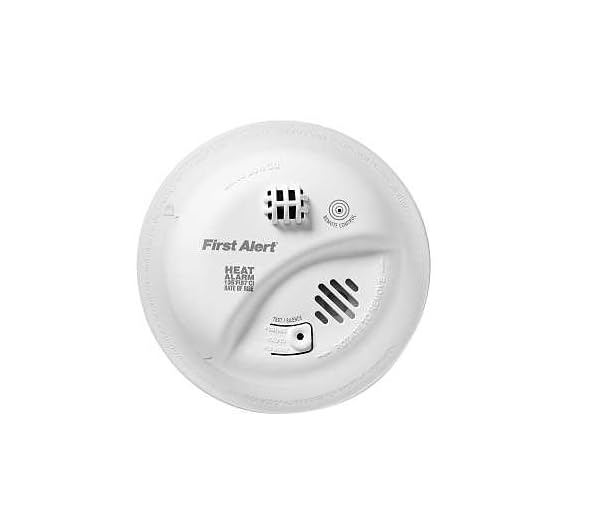
Type: Hardwired heat alarm
Power Source: 120V AC with battery backup
Sensor: Thermistor
Coverage: 50 ft detection
Alarm: 85 dB
Best For: Large or open utility spaces
The thermistor sensor is the technical differentiator: it responds to a rapid rate of temperature rise rather than a single fixed threshold, which is the right logic for a room that can spike fast when a dryer vent clogs. The 50 ft detection figure points to a wide-coverage unit suited to a long utility room or an open basement corner. An 85 dB alarm is loud enough to carry through a closed door into the living space. It runs on 120V with battery backup, so the install follows standard hardwired practice.
This pick suits the owner of a bigger utility room or a combined laundry-and-mechanical space where one alarm needs to cover more floor. It is not for a small closet where a cheaper fixed-temperature unit does the job, and it is not a networked alarm unless the existing system is compatible. The thermistor design trades a little simplicity for faster response.
Trade-off: The wider coverage and rate-of-rise sensing come at a mid-tier price, and the unit is overkill for a tight single-purpose closet.
4. Kidde HD135F Hardwire Interconnectable Heat Alarm

Type: Hardwired heat alarm
Power Source: 120V AC hardwired
Rating: 135-degree activation
Interconnect: Interconnectable with compatible Kidde alarms
Best For: Replacing an old interconnected unit
Kidde Hardwire Interconnectable 135-Degree Heat Alarm HD135F
The 135-degree rating is the headline: this unit activates at a higher fixed temperature, which is the classic choice for attics, garages, and utility rooms where normal heat and dust would trip a lower-threshold device. Interconnectable design means it can be tied into a compatible Kidde loop so the whole house hears the alarm. It is a hardwired-only unit, so the install depends on an existing AC feed. This is the premium pick for someone replacing a failed alarm in a system that was already wired for it.
It fits the homeowner doing a like-for-like replacement in an interconnected Kidde system, especially where the old unit was rated for a hot, dusty space. It is not for a first-time install without an AC feed, and it is not the right choice for a cool, clean room where a standard smoke alarm belongs. The hardwired-only design means no battery backup path on this model.
Trade-off: No battery backup and a premium price make this a replacement part, not a first alarm for a new install.
5. Zircon Leak Alert Water Detector
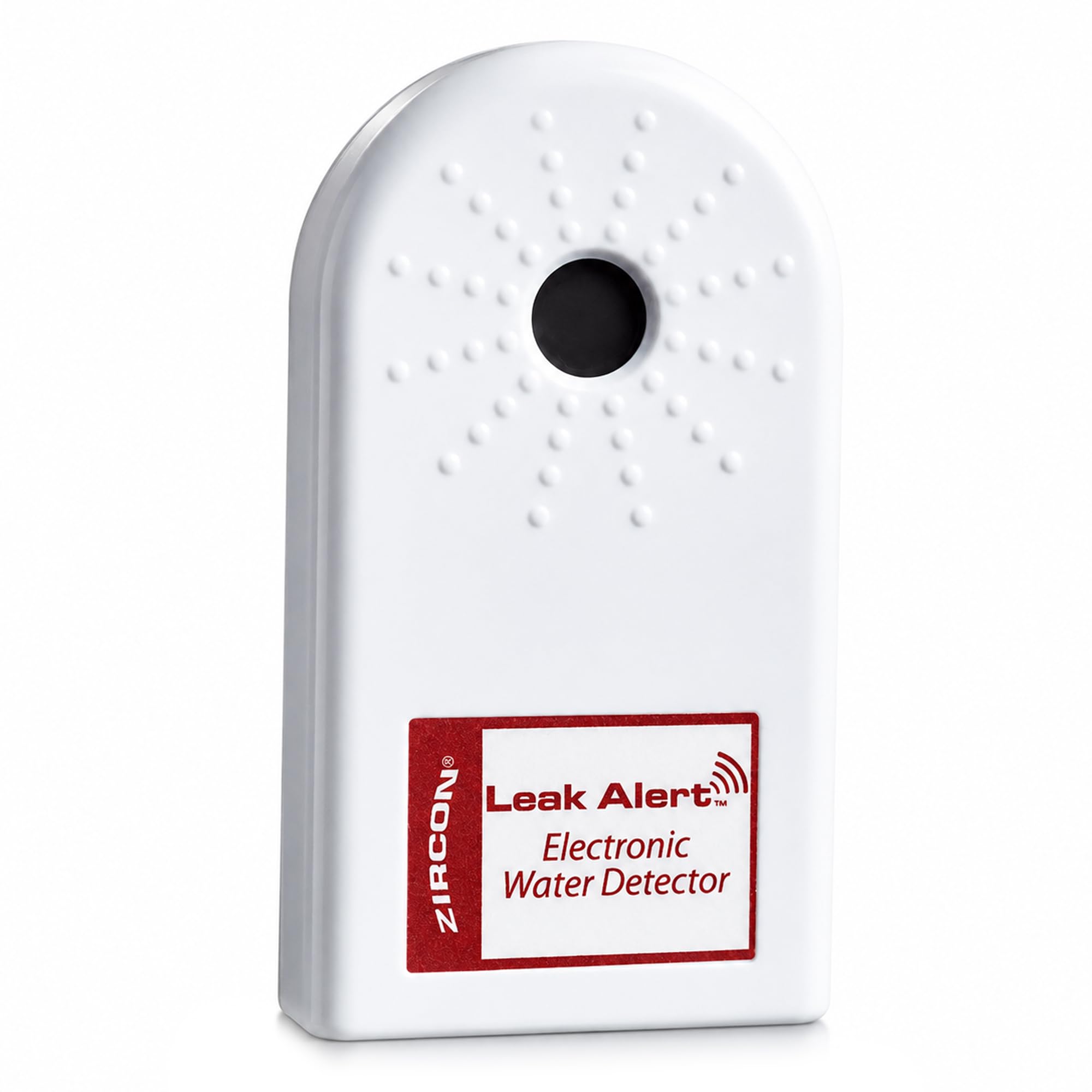
Type: Water leak detector (not a heat or smoke alarm)
Power Source: Battery
Alarm: 90 dB
Setup: No setup required
Best For: Water-heater and appliance leak protection
This is the odd one out and it earns its place as a companion, not a replacement. A utility room’s most common disaster is a leaking water heater or supply line, not a fire, and this puck-shaped detector sits on the floor and sounds a 90 dB alarm when water bridges its contacts. No setup means it goes down and works, which suits a renter or a homeowner who wants protection without touching the wiring. It is the cheapest item on the list and the easiest to deploy.
It suits anyone who wants leak coverage next to a water heater, washer, or boiler, and it pairs well with a heat alarm higher on the wall. It is not a fire alarm and should never be counted as one, and it is not a smart detector that sends a phone alert. The battery is the only maintenance item.
Trade-off: It protects against water, not fire, so it supplements a heat alarm rather than replacing one.
Before You Buy
- Power source: Confirm whether the ceiling has a 120V AC feed for a hardwired unit or whether a battery-only device is the realistic option.
- Interconnect compatibility: Match the brand to the existing alarm system, since cross-brand linking is not reliable.
- Activation rating: A higher fixed-temperature rating suits hot, dusty utility rooms; a rate-of-rise thermistor suits rooms that can spike fast.
- Coverage: Match the detection range to the room’s size, and add a second unit for long or divided spaces.
- Backup battery: Check whether the model carries a battery backup and factor the yearly replacement into the routine.
- Placement: Mount heat alarms on the ceiling or high on the wall, away from dryer vents and direct steam.
- Companion protection: Add a water leak detector near the water heater and washer, since fire is not the only risk in a utility room.
Frequently Asked Questions
-
Can a heat alarm replace a smoke alarm in a utility room?
No. A heat alarm is designed for spaces where smoke alarms nuisance-trip, such as garages and boiler rooms; living areas still need smoke detection. -
Why use a heat alarm instead of a smoke alarm in a laundry room?
Lint, dust, and steam from a dryer can set off a smoke alarm repeatedly. A heat alarm ignores those and responds only to a real temperature rise. -
Do hardwired heat alarms need a battery?
Most hardwired models include a battery backup so the unit keeps working during a power outage, and that battery needs periodic replacement. -
What does interconnectable mean?
It means the alarm can be wired to compatible units so that when one sounds, the others do too, giving the whole house warning. -
Is a water leak detector a substitute for a heat alarm?
No. The Zircon Leak Alert covers water damage only; it should be used alongside, not instead of, a heat alarm. -
Where should a heat alarm be mounted in a utility room?
On the ceiling or high on a wall, away from vents, and positioned so the sensor is exposed to the room’s air rather than trapped in a corner.
Bottom Line
For most utility rooms, the best heat alarm for a utility room is the First Alert BRK HD6135FB: it is the lowest-cost hardwired option with battery backup, and it covers a single room without extra complexity. Buyers who already run a Kidde system should step up to the interconnectable Kidde Heat Detector, and anyone with a water heater in the room should add the Zircon Leak Alert as a companion.
