Why there are Amazon links here: Brave Review is paid a commission for qualifying Amazon purchases made through the links below. Your price does not change, and using our links is entirely optional. How this works
Best Heating Controls for a House With No Thermostat Wiring
A house with no thermostat wiring is not a dead end. Several heating controls work without a low-voltage cable running through the wall, and the right one depends on the heat source. This roundup covers five picks for three buyer profiles: the homeowner replacing a broken wall thermostat on an existing two-wire setup, the renter or garage owner controlling a plug-in heater, and the DIYer adding smart scheduling to electric baseboard heat. The overview table below shows the key spec and best use for each, and the reviews that follow explain the trade-offs.
Overview of the Picks
| Product | Key Spec | Best Use | Price Tier |
|---|---|---|---|
| RTH20B Honeywell Home X2P | 5-2 day schedule, 1 heat/1 cool | Direct replacement on existing two-wire systems | Budget |
| Suuwer Non-Programmable Thermostat | 1 heat/1 cool, conventional single-stage | Simple dial-style control, no programming | Budget |
| SENSTREE Wireless Thermostat | Plug-in temperature controller, heating/cooling mode | Space heaters, window A/C, attic and garage | Budget |
| meross Matter Smart Thermostat | 120-240V, HomeKit/Alexa/Google/SmartThings | Electric baseboard heaters, line-voltage | Mid-range |
| Sensi Smart Thermostat ST55 | Wi-Fi, Alexa, Energy Star certified | Whole-home smart control with app scheduling | Premium |
RTH20B Honeywell Home X2P Programmable Thermostat
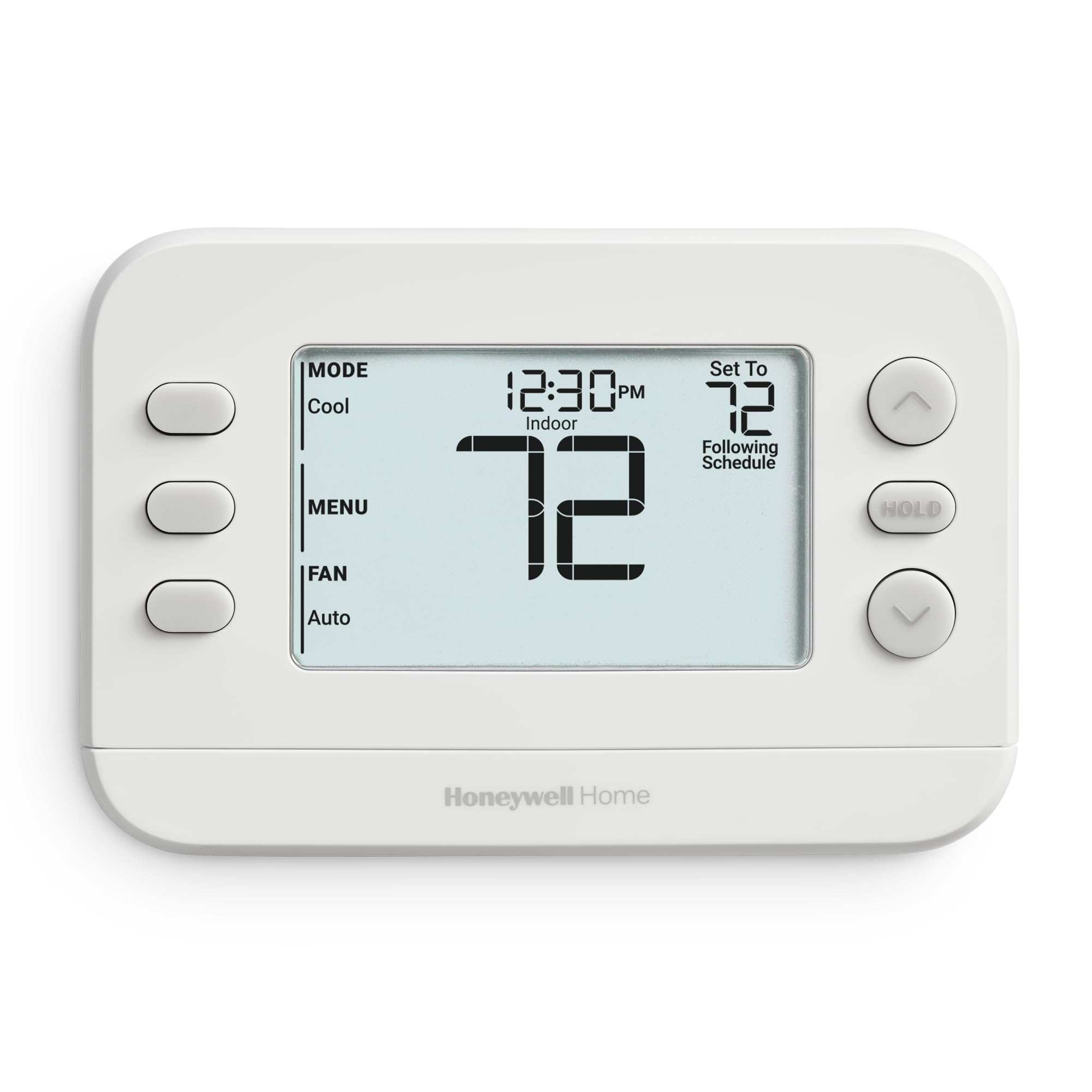
Type: Programmable single-stage thermostat
Compatibility: 1 heat / 1 cool conventional systems
Schedule: 5-2 day programming
Color: White
Power: Battery-style wall thermostat (no C-wire expectation stated)
RTH20B Honeywell Home X2P Programmable Thermostat
The X2P is the closest thing to a straight swap for a house with an old two-wire thermostat. It handles one heat and one cool stage, which covers most forced-air furnaces and basic central A/C setups, and the 5-2 day schedule lets a household set different weekday and weekend programs. Honeywell Home builds this class of thermostat around a simple button interface rather than a touchscreen, so setup is a matter of following the on-screen prompts rather than pairing a phone.
This pick suits homeowners who already have a thermostat cable in the wall and just want a modern programmable unit without paying for Wi-Fi. It earns its place because the price tier is low and the compatibility list is broad for conventional systems. The caution is that 5-2 scheduling is coarser than a 7-day model, so households with irregular weekday routines will feel the limit.
Trade-off: The 5-2 schedule cannot give every day its own program, which frustrates shift workers and anyone with a variable weekly routine.
Suuwer Non-Programmable Thermostat

Type: Non-programmable thermostat
Compatibility: 1 heat / 1 cool conventional single-stage
Display: Blue backlight
Control: Manual setpoint
Best for: Simple replacement, rental units
Suuwer Non-Programmable Thermostat
The Suuwer is the no-frills option: a manual setpoint thermostat with a blue backlit display and single-stage compatibility. There is no schedule to learn and no app to pair, which makes it a practical replacement for a rental unit or a secondary zone where nobody wants to manage a program. The backlight helps in a hallway or basement where the wall gets little natural light.
This pick suits landlords, renters replacing a dead unit, and anyone who wants heat control that works exactly like the old dial. The blue backlight and low price tier are the whole pitch. The drawback is the obvious one: no programming means no automatic setback, so energy savings depend entirely on someone remembering to turn it down.
Trade-off: Without any scheduling, the unit offers no automatic setback and no way to trim heating costs while the house is empty.
SENSTREE Wireless Thermostat

Type: Plug-in wireless temperature controller
Modes: Heating and cooling
Works with: Window A/C, fan, space heater
Placement: Home, baby room, attic, garage
Wiring: None — plugs into an outlet
This is the pick for a house where the heat comes from a plug-in appliance rather than a wired system. The SENSTREE unit sits between the outlet and the heater, reads room temperature, and switches the appliance on and off to hold a setpoint. It supports both heating and cooling mode, so the same plug can run a space heater in winter and a window A/C or fan in summer.
This pick suits garage owners, attic conversions, nursery monitoring, and renters who cannot touch the building’s wiring at all. It earned its place because it solves the no-wiring problem completely: there is no cable, no wall box, and no electrician. The caution is capacity — a plug-in controller is built for appliance-level loads, so it is not a substitute for a whole-house heating system.
Trade-off: A plug-in controller only manages one appliance, so it cannot regulate a furnace or a full central system.
meross Matter Smart Thermostat
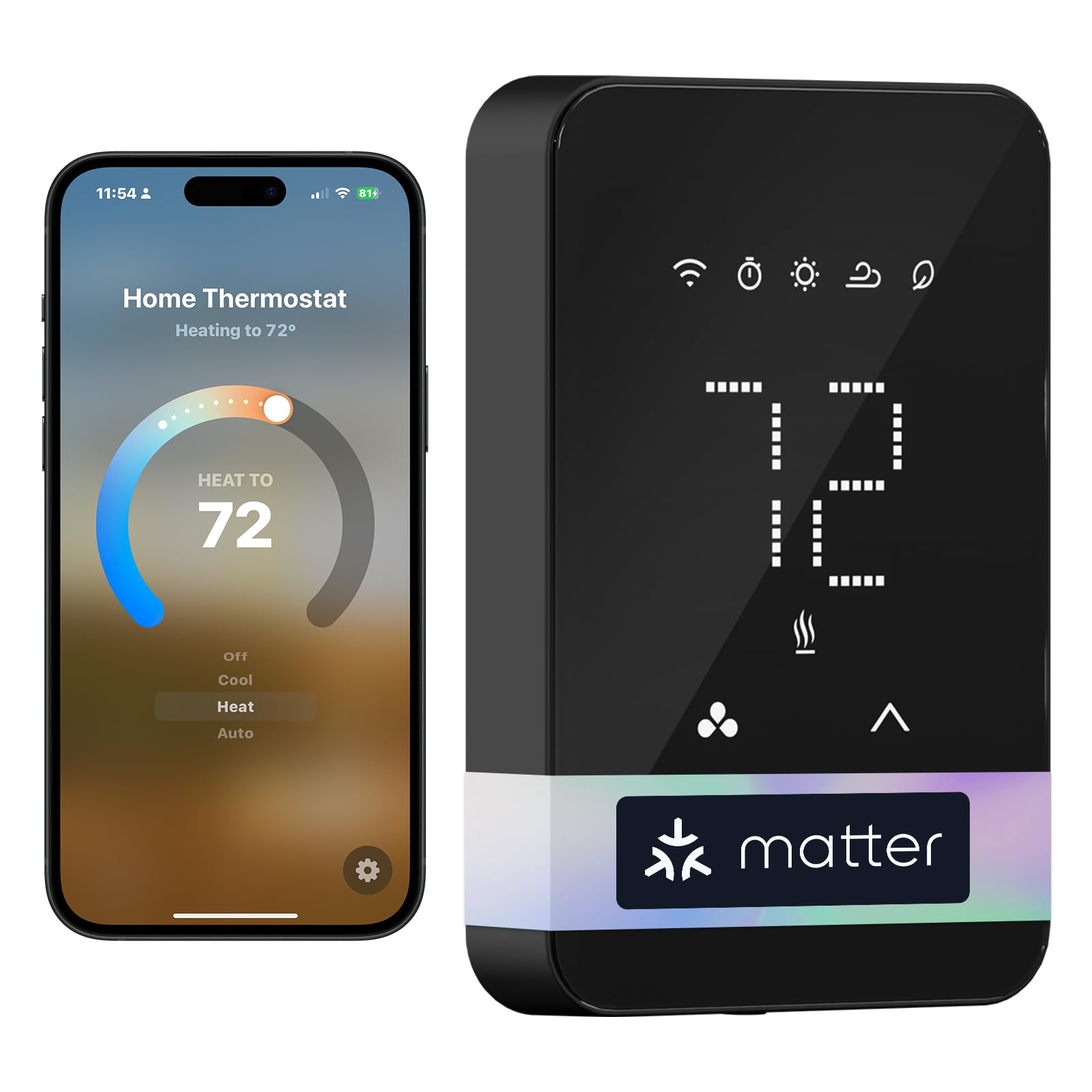
Type: Wi-Fi smart thermostat, line-voltage
Voltage: 120-240V
Platforms: HomeKit, Alexa, Google Home, SmartThings
Best for: Electric baseboard heaters
Color: Black
meross Matter Smart Thermostat
The meross unit is the line-voltage answer for homes heated by electric baseboard. It runs on 120-240V, which is the voltage those heaters use, and it speaks Matter, so it pairs with HomeKit, Alexa, Google Home and SmartThings without a proprietary hub. Scheduling and remote control happen in the app or the voice assistant, and the black finish suits a modern wall.
This pick suits DIYers with electric baseboard heat and a smart-home setup already in place. It earned its place because line-voltage control is exactly the gap most no-wiring houses fall into when the heat is resistive rather than forced-air. The caution is installation: line-voltage work means shutting off the breaker and handling mains wiring, which is a job for someone comfortable with electrical work.
Trade-off: The 120-240V line-voltage connection means a breaker-off install with mains wiring, which is not a beginner-friendly swap.
Sensi Smart Thermostat ST55
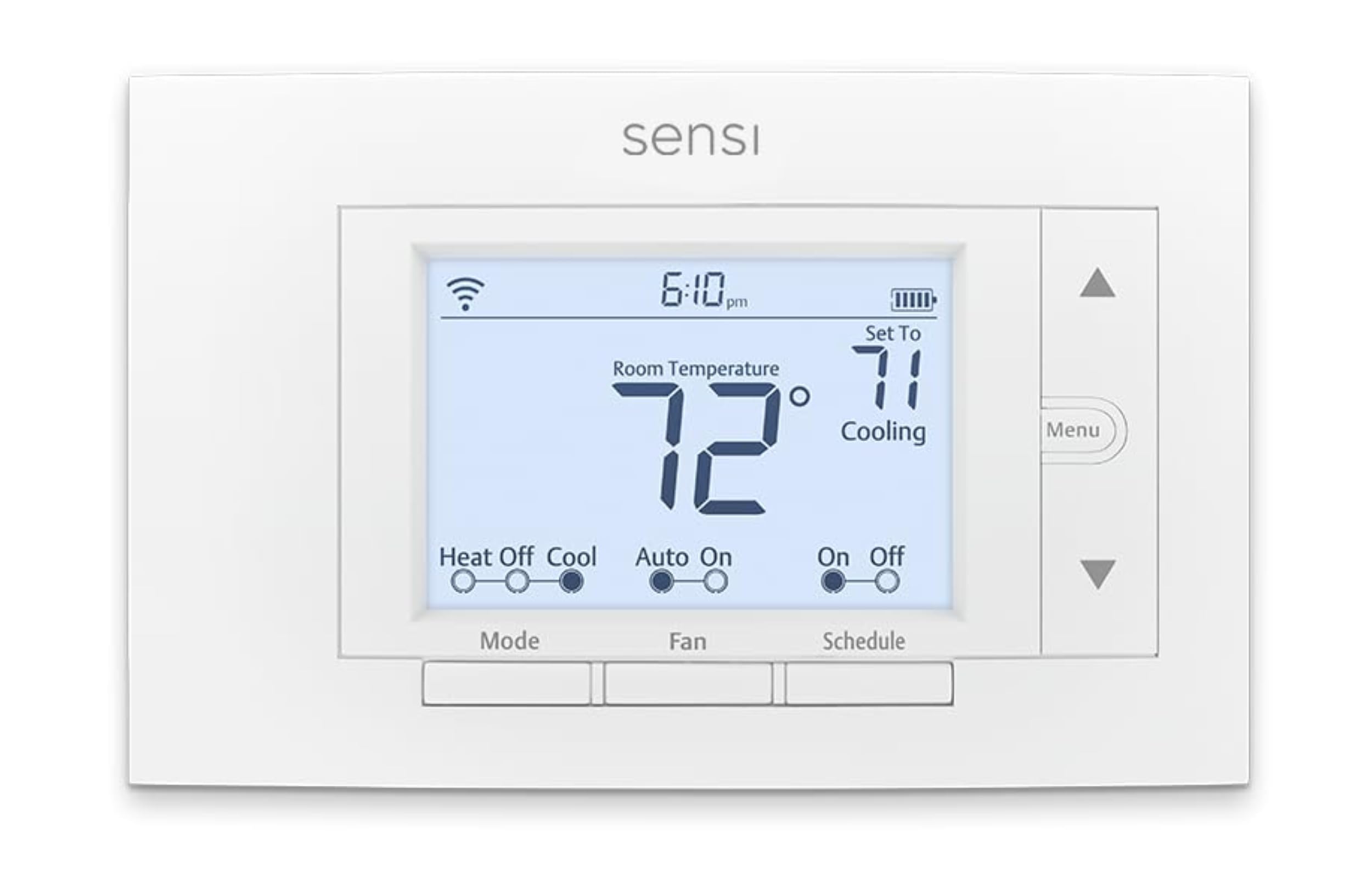
Type: Wi-Fi smart thermostat
Assistant: Alexa
Certification: Energy Star certified
Install: DIY
Best for: App-based scheduling and remote control
The Sensi ST55 is the premium pick here: a Wi-Fi thermostat built for DIY installation, with Alexa voice control and an Energy Star certification. The app handles scheduling and remote adjustment, so a household can set back the heat from the couch or from work. The design is plain and wall-friendly, which helps in a house where the thermostat sits in a visible hallway.
This pick suits homeowners who want smart scheduling without paying a premium installer or committing to a proprietary ecosystem. It earned its place because the DIY framing and the Energy Star rating make it the easiest smart unit to justify on savings. The drawback is the price tier — it costs meaningfully more than a basic programmable model, so the payback depends on actually using the schedule.
Trade-off: The premium price tier only pays back if the household uses the app scheduling consistently, which many people set once and forget.
Before You Buy
- Compatibility: Confirm whether the heat source is conventional low-voltage, line-voltage baseboard, or a plug-in appliance — each needs a different control type.
- Wiring: A wall thermostat replacement needs an existing thermostat cable; a house with no cable at all needs a plug-in or wireless controller instead.
- Voltage: Electric baseboard heaters require a line-voltage thermostat rated for 120-240V, not a standard low-voltage unit.
- Scheduling: Decide between non-programmable, 5-2 day, and full app-based scheduling before comparing prices.
- Smart platform: Check that the thermostat works with the assistant already in the house — HomeKit, Alexa, Google Home or SmartThings.
- Installation comfort: Line-voltage work involves mains wiring and a breaker shutoff; low-voltage swaps are far simpler.
- Placement: Plug-in controllers need an outlet near the appliance and a spot where room temperature reads accurately, away from direct heat.
Frequently Asked Questions
-
Can a house with no thermostat wiring still get a programmable thermostat?
Yes. Options include plug-in controllers for space heaters, line-voltage units for electric baseboard, and wireless controllers that do not need a cable run to the wall. -
What is the difference between low-voltage and line-voltage thermostats?
Low-voltage units switch a furnace or central A/C control circuit, while line-voltage units switch the full 120-240V power feeding electric baseboard heaters. They are not interchangeable. -
Does a plug-in thermostat work with a window A/C unit?
The SENSTREE controller supports both heating and cooling modes, so it can switch a window A/C or fan as well as a space heater. -
Is a smart thermostat worth it without existing wiring?
It can be, provided the house has a compatible heat source. The value comes from scheduling and remote control, so a household that will not use the app gets less from the premium tier. -
Can renters install any of these controls?
Plug-in controllers are the renter-friendly option because they require no wiring changes. Wall thermostats and line-voltage units generally need landlord approval. -
Do these controls need a hub?
Not always. The meross unit uses Matter for direct platform pairing, and the Sensi ST55 connects over Wi-Fi, while plug-in controllers need no hub at all.
Bottom Line
For most houses with no thermostat wiring, the choice comes down to the heat source rather than the brand. The RTH20B Honeywell Home X2P Programmable Thermostat is the top pick for a conventional system with an existing two-wire cable, while the SENSTREE plug-in controller is the practical answer for space heaters and garages, and the meross unit covers electric baseboard. Check the current price before deciding.
