Why there are Amazon links here: Brave Review is paid a commission for qualifying Amazon purchases made through the links below. Your price does not change, and using our links is entirely optional. How this works
Best Heating Schedule Setup for a Household That Works Nights
A household that works nights lives on an inverted clock: sleep happens in daylight, the house empties after dark, and the coldest hours arrive while everyone is awake. A standard 9-to-5 thermostat program fights that rhythm, heating an empty house at dawn and letting the temperature sag right when the night crew gets home. The five thermostats below are the practical tools for building a schedule around that inverted day, split between simple Honeywell Home models and flexible smart units. The overview table sorts them by key spec and best use, and each review covers who the pick suits and who should look elsewhere.
Overview of the Picks
| Product | Key Spec | Best Use | Price Tier |
|---|---|---|---|
| RTH20B Honeywell Home X2P | 5-2 day schedule, 1 heat/1 cool | Simple weekday/weekend night-shift setup | Budget |
| RTH22B Honeywell Home X2P | Conventional/heat pump, flexible schedule | Homes with a heat pump system | Mid-range |
| RTH21B Honeywell Home X2P | Flexible schedule, 1 heat/1 cool | Single-stage systems needing day-by-day control | Mid-range |
| GLOGLOW Smart Thermostat | 7-day weekly schedule, 6 time periods | Budget seven-day programming | Budget |
| Vine Smart Thermostat | 7-day x 8-period, WiFi, voice control | Smart-home households wanting fine control | Mid-range |
RTH20B Honeywell Home X2P Programmable Thermostat
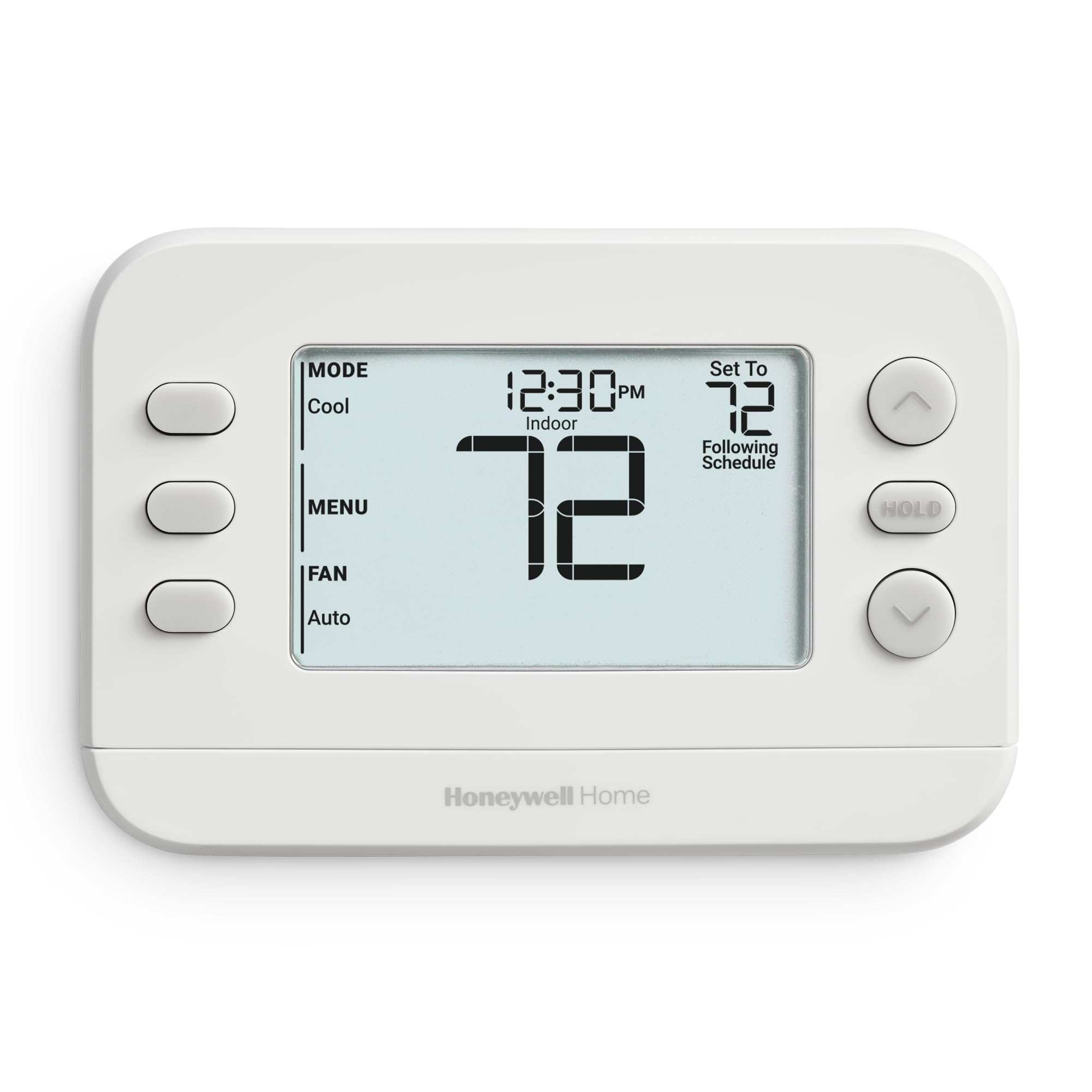
Type: Programmable thermostat
Compatibility: Single-stage, 1 heat/1 cool
Schedule: 5-2 day
Color: White
Brand: Honeywell Home
This is the straightforward pick for a household that wants a set-and-forget program without paying for smart features. The 5-2 day schedule lets a night-shift home set one pattern for the five workdays and a separate one for the weekend, which maps neatly onto a fixed weekly shift. The single-stage, one-heat/one-cool compatibility covers the most common furnace-and-AC setups, and the white housing blends into a hallway wall. It is a good fit for renters and owners who want reliable scheduling and nothing more.
The 5-2 format is the limitation as much as the appeal: a household with rotating shifts or a schedule that changes midweek cannot program each day separately. Buyers with a heat pump or a multi-stage system should skip it, since it is built for conventional single-stage equipment.
Trade-off: The fixed five-and-two structure is simple to set but locks out households whose night shifts rotate across the week.
RTH22B Honeywell Home X2P Programmable Thermostat

Type: Programmable thermostat
Compatibility: Conventional and heat pump
Schedule: Flexible
Color: White
Brand: Honeywell Home
The RTH22B is the version to pick when the house runs a heat pump, since it is rated for both conventional and heat pump equipment. The flexible schedule is the real draw for night workers: instead of a rigid five-and-two split, the program can be shaped around whatever the household’s week actually looks like. It keeps the same clean white Honeywell Home housing and simple button layout as the rest of the X2P line. For a heat-pump home with an unusual weekly rhythm, this is the most sensible match in the group.
Buyers on a plain single-stage furnace pay a little more than the RTH20B for compatibility they may never use. And a household that wants app control, remote adjustment, or voice commands will find this model strictly local — programming happens at the wall.
Trade-off: The extra heat-pump compatibility raises the cost for conventional-system homes that cannot use it.
RTH21B Honeywell Home X2P Programmable Thermostat
Type: Programmable thermostat
Compatibility: Single-stage, 1 heat/1 cool
Schedule: Flexible
Color: White
Brand: Honeywell Home
The RTH21B pairs the flexible schedule with standard single-stage, one-heat/one-cool compatibility, which makes it the middle ground of the Honeywell Home trio. A night-shift household on a conventional furnace gets day-by-day programming without paying for heat-pump support it does not need. The white case and physical controls keep it familiar to anyone who has used a programmable thermostat before. It suits owners who want more scheduling freedom than a 5-2 unit allows but still prefer a wall-mounted, no-app setup.
Homes with a heat pump should step up to the RTH22B, and smart-home households that expect remote control will be disappointed. The programming also happens entirely at the unit, so changing the schedule means standing at the wall.
Trade-off: The flexible schedule is welcome, but the unit offers no remote or app access for adjusting it from bed or work.
GLOGLOW Smart Thermostat Wireless 7 Day Programmable Thermostat
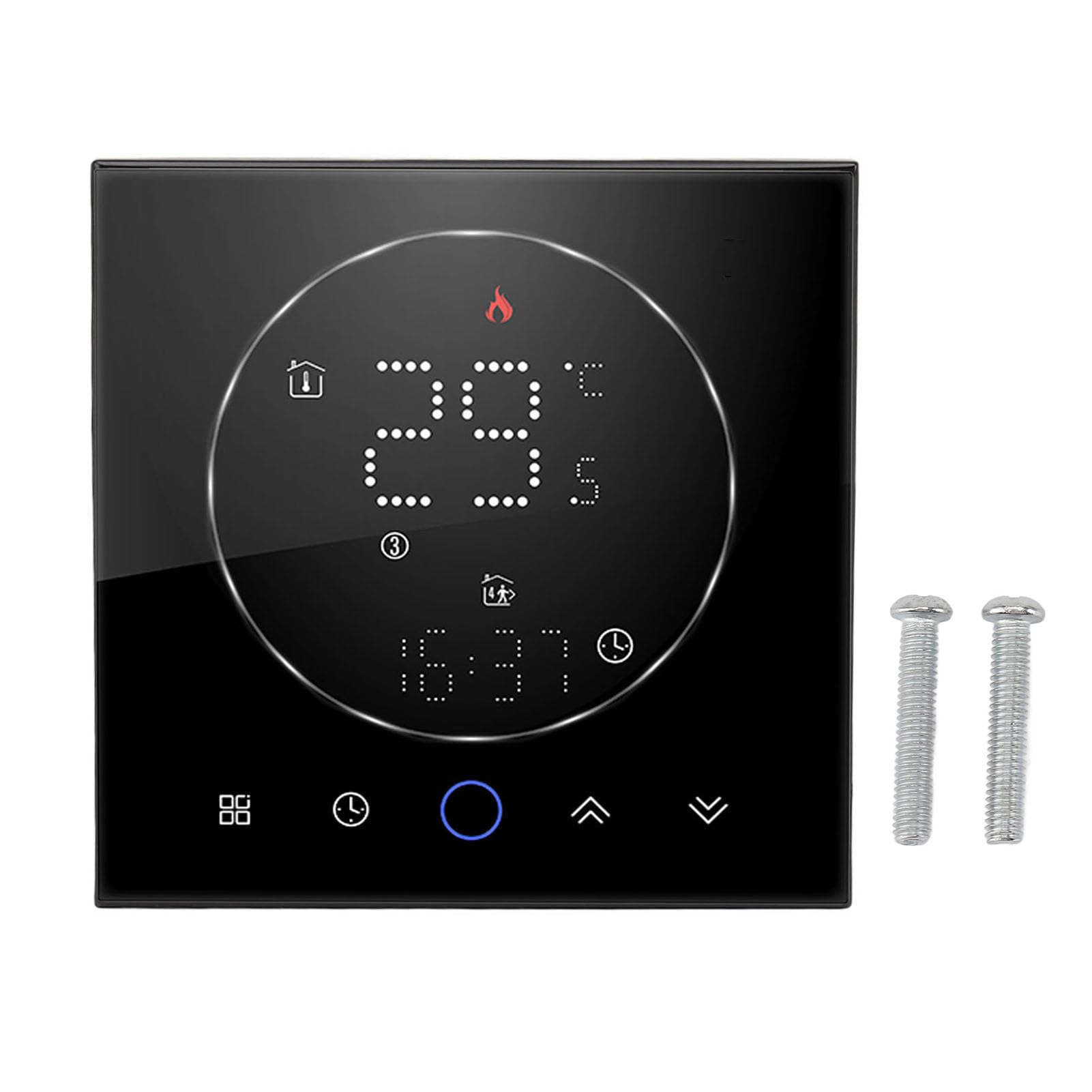
Type: Wireless programmable thermostat
Schedule: 7-day weekly, 6 time periods
Functions: Heating and cooling
Display: LED light
Color: Black
This is the budget route to full seven-day programming. Each day of the week can be set independently across six time periods, which is more granularity than the Honeywell Home 5-2 models offer and enough to cover a rotating shift pattern. The wireless design and LED-lit display make it easy to read in a dark hallway, and the black finish is a change from the usual white plastic. It handles both heating and cooling, so one unit covers the whole year.
At this price tier, buyers should expect basic construction and a simpler interface than premium smart thermostats. The "smart" label here refers to programmable scheduling rather than app or voice integration, so a household expecting phone control should look at the Vine unit instead.
Trade-off: The low price comes with a basic build and no app or voice control, so scheduling stays a manual, at-the-wall job.
Vine Smart Thermostat for House with Nightlight

Type: WiFi smart thermostat
Schedule: 7-day x 8-period programmable
Voice Control: Alexa and Google Assistant
Display: 4.3-inch screen with nightlight
Requirement: C-wire required
The Vine unit is the most capable pick for a connected home. The seven-day, eight-period schedule gives the finest control in this group, and WiFi plus Alexa and Google Assistant support means the schedule can be adjusted by voice or phone without leaving the couch. The 4.3-inch screen is large and readable, and the built-in nightlight is a genuinely useful touch for a household moving around the house at 3 a.m.
The main hurdle is installation: a C-wire is required, so older homes without a spare low-voltage wire will need an adapter or a pro install. Buyers who want a drop-in replacement for a battery-powered thermostat should weigh that extra step carefully.
Trade-off: The C-wire requirement can turn a simple swap into a wiring project in older homes.
Before You Buy
- Compatibility: Match the thermostat to the HVAC equipment — single-stage, heat pump, or conventional — before anything else.
- Schedule Format: A 5-2 day program suits a fixed weekly shift; rotating shifts need seven-day or flexible programming.
- Control Method: Decide whether scheduling at the wall is acceptable or whether app and voice control are required.
- Wiring: Check for a C-wire before choosing a WiFi model that depends on one.
- Display: A lit or backlit screen matters for a household adjusting settings in the dark.
- Price Tier: Budget units trade build quality and connectivity for price; mid-range units add compatibility and flexibility.
Frequently Asked Questions
-
What is the best heating schedule for a night-shift household?
Set the warm period to cover daytime sleep and the evening hours when the household is awake, and let the temperature drop while the house is empty overnight. -
Can a 5-2 day thermostat work for night shifts?
Yes, if the shift is fixed Monday through Friday. Rotating or irregular shifts need a seven-day or flexible schedule. -
Do night-shift homes need a smart thermostat?
Not necessarily, but WiFi and voice control make it far easier to adjust a schedule around an inverted day without walking to the wall. -
What does C-wire required mean?
The thermostat needs a continuous power wire from the HVAC system; homes without one may need an adapter or professional installation. -
Is a heat-pump-compatible thermostat worth it?
Only for homes with a heat pump. Conventional single-stage systems can use a cheaper model and get the same scheduling. -
How many time periods should a night-shift schedule use?
Four to six periods usually cover sleep, wake, away, and home blocks; eight periods suit households with more varied daily routines.
Bottom Line
For most night-shift households, the RTH22B Honeywell Home X2P Programmable Thermostat is the safest pick: flexible scheduling shaped around an inverted week, plus heat pump compatibility for broader system coverage. Households on a conventional single-stage furnace can save with the RTH20B, while connected homes should go straight to the Vine Smart Thermostat for app and voice control.
