Why there are Amazon links here: Brave Review is paid a commission for qualifying Amazon purchases made through the links below. Your price does not change, and using our links is entirely optional. How this works
Best Home Battery for a House with a Heat Pump
A heat pump is one of the heaviest electrical loads in a modern home, and keeping it running through an outage takes more stored energy and more surge output than a typical backup battery delivers. This guide covers five LFP battery systems that can carry a heat pump’s startup draw and its multi-hour runtime, sorted by budget, capacity and expandability. It suits homeowners building a first backup setup, families replacing a gas furnace with a heat pump, and anyone sizing a system that can grow later. The overview table below shows every pick side by side before the individual reviews.
Overview of the Picks
| Product | Key Spec | Best Use | Price Tier |
|---|---|---|---|
| 10ms UPS Battery Backup, 2400W Portable Power Station, 2150Wh | 2150Wh, 2400W output | Budget whole-home backup and camping | Budget |
| Jackery HomePower 3600 Plus and Extra Battery | 7168Wh, 3600W AC output, expandable to 21kWh | Large homes with long outages | Premium |
| GROWATT HELIOS 3600 Home Battery Backup Combo | 7200W, 7200Wh, 120V/240V | Heat pumps and 240V appliances | Premium |
| EF ECOFLOW DELTA 3 Max Portable Power Station | 2048Wh, 2400W, 3400W X-Boost | Fast-charging everyday backup | Mid-range |
| Jackery HomePower 3000 and 2x200W Solar Panels | 3072Wh, 3600W AC output | Solar-ready home backup | Mid-range |
1. 10ms UPS Battery Backup, 2400W Portable Power Station, 2150Wh
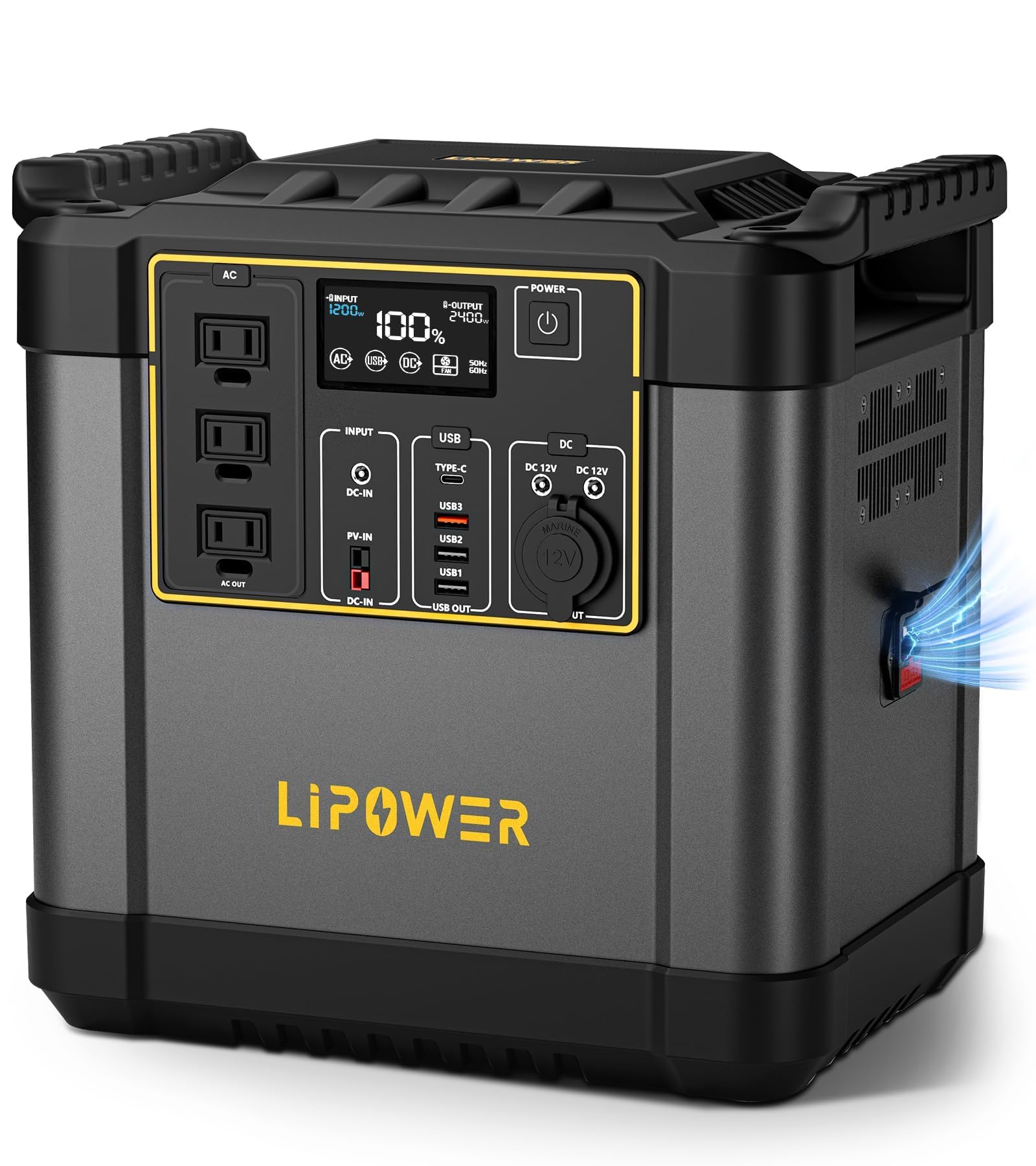
Battery Chemistry: LiFePO4
Cycle Life: 3500+ cycles
Capacity: 2150Wh
AC Output: 2400W
Recharge Time: 1.5 hours via AC
Switchover: 10ms UPS
10ms UPS Battery Backup, 2400W Portable Power Station, 2150Wh
The LiFePO4 cells are rated for 3500+ cycles, which is the chemistry that makes a battery last through years of daily cycling rather than a few hundred charge events. The 2150Wh capacity and 2400W output put it in the range where a modern inverter-driven heat pump can start and run for a few hours in mild weather. The 10ms UPS switchover means the unit takes over almost instantly, so sensitive electronics and a running compressor do not see a long gap. A full AC recharge in 1.5 hours is fast for this class and matters when a second outage follows the first.
This is the pick for a household that wants backup power without a permanent installation, or that needs one unit to serve both the house and a camping trip. It is not for a large home running a heat pump through a multi-day cold snap, because 2150Wh drains quickly under that load.
Trade-off: Capacity is the limiting factor here, so a heat pump plus a few household circuits will exhaust it faster than the bigger systems below.
2. Jackery HomePower 3600 Plus and Extra Battery, 7168Wh
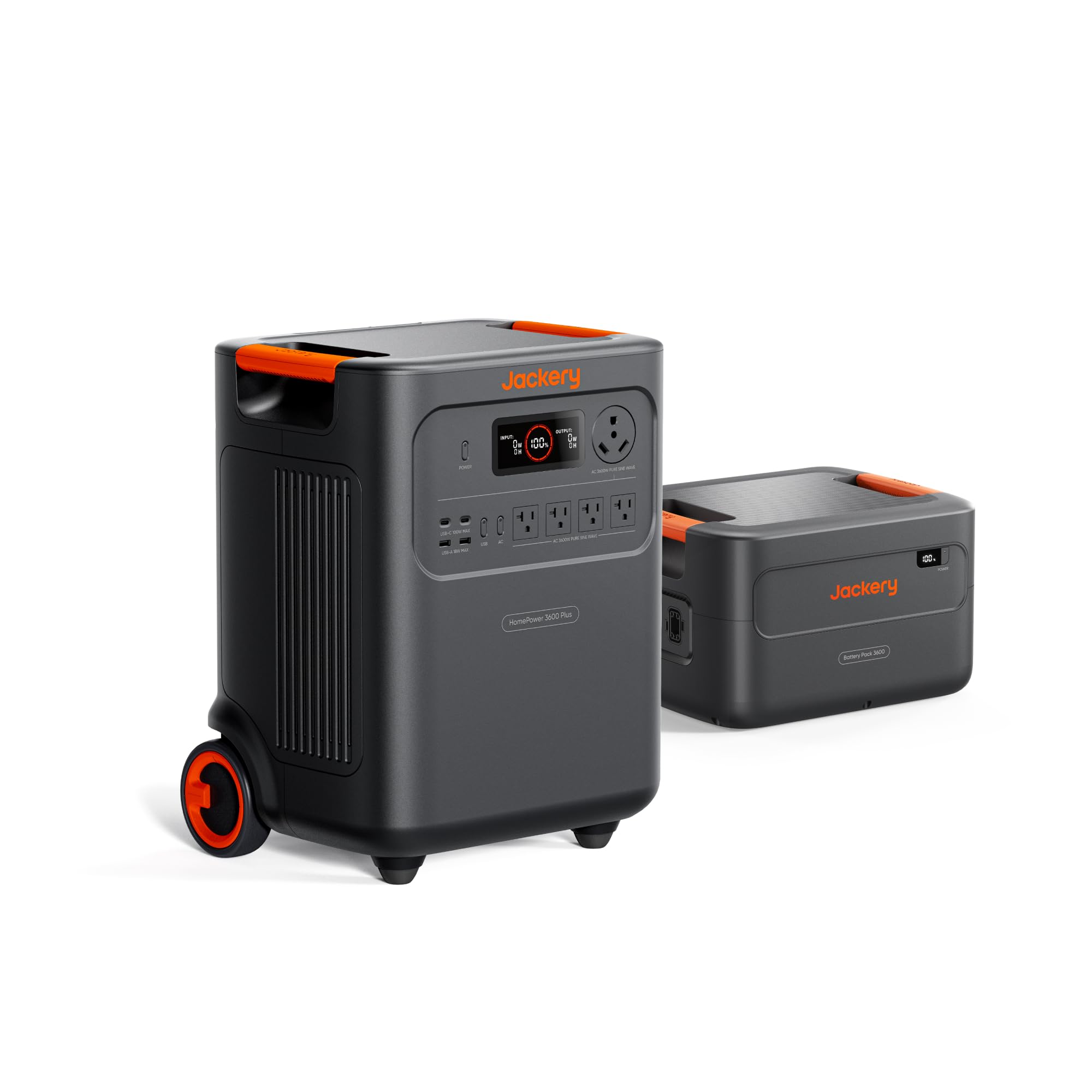
Battery Chemistry: LFP
Capacity: 7168Wh (with extra battery)
AC Output: 3600W
Expandable Capacity: Up to 21kWh
Intended Use: Home backup and emergencies
The LFP chemistry and 7168Wh bundled capacity make this a serious whole-home reserve, and the 3600W AC output gives a heat pump enough headroom to start without tripping the inverter. The expandable design is the real feature: the system scales to 21kWh, so a household can start with one battery and add capacity as the load grows or as budget allows. That modularity suits a home that is still deciding how much of its heating to put on backup.
This is the right pick for a large house with a heat pump and a history of multi-day outages, where the goal is keeping the compressor and the essentials running rather than a few lights. It is not for a buyer who wants a single portable box to carry between the garage and a campsite, since the combined unit is heavy and meant to stay put.
Trade-off: The premium price and the space the stacked batteries occupy make this a commitment, and the full 21kWh expansion pushes the cost well past the base bundle.
3. GROWATT HELIOS 3600 Home Battery Backup Combo
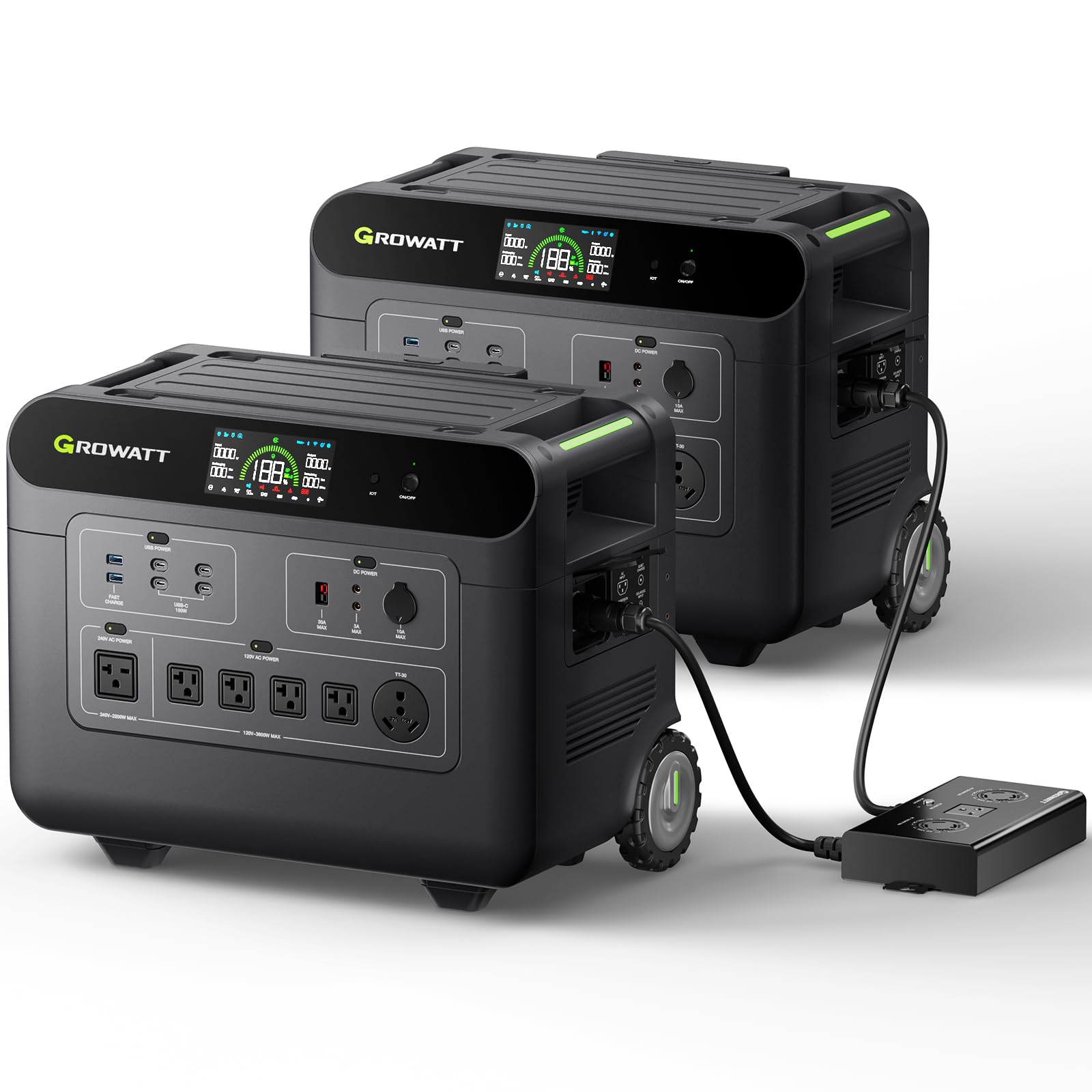
Battery Chemistry: LFP
Capacity: 7200Wh
AC Output: 7200W
Voltage: 120V/240V
Expandable Capacity: Up to 36kWh
Included: Double Voltage Hub
The 120V/240V output is the standout spec for heat pump owners, because most heat pumps and many well pumps and dryers need 240V, and a 120V-only battery cannot serve them without a workaround. The 7200W output and 7200Wh capacity give this combo the muscle to start a compressor and keep it running, and the double voltage hub in the box handles the split-phase supply. Expansion to 36kWh is the largest ceiling in this group, which matters for a household that wants to ride out a long winter outage on stored energy.
This is the pick for a home with a 240V heat pump and a plan to add capacity over time, and it doubles as an RV or camping power source. It is not for a renter or anyone who cannot dedicate floor space and a permanent spot to a large combo unit.
Trade-off: The system is bulky and the highest-output hardware here costs accordingly, so a buyer with a small 120V load profile is paying for capability they will not use.
4. EF ECOFLOW DELTA 3 Max Portable Power Station, 2048Wh
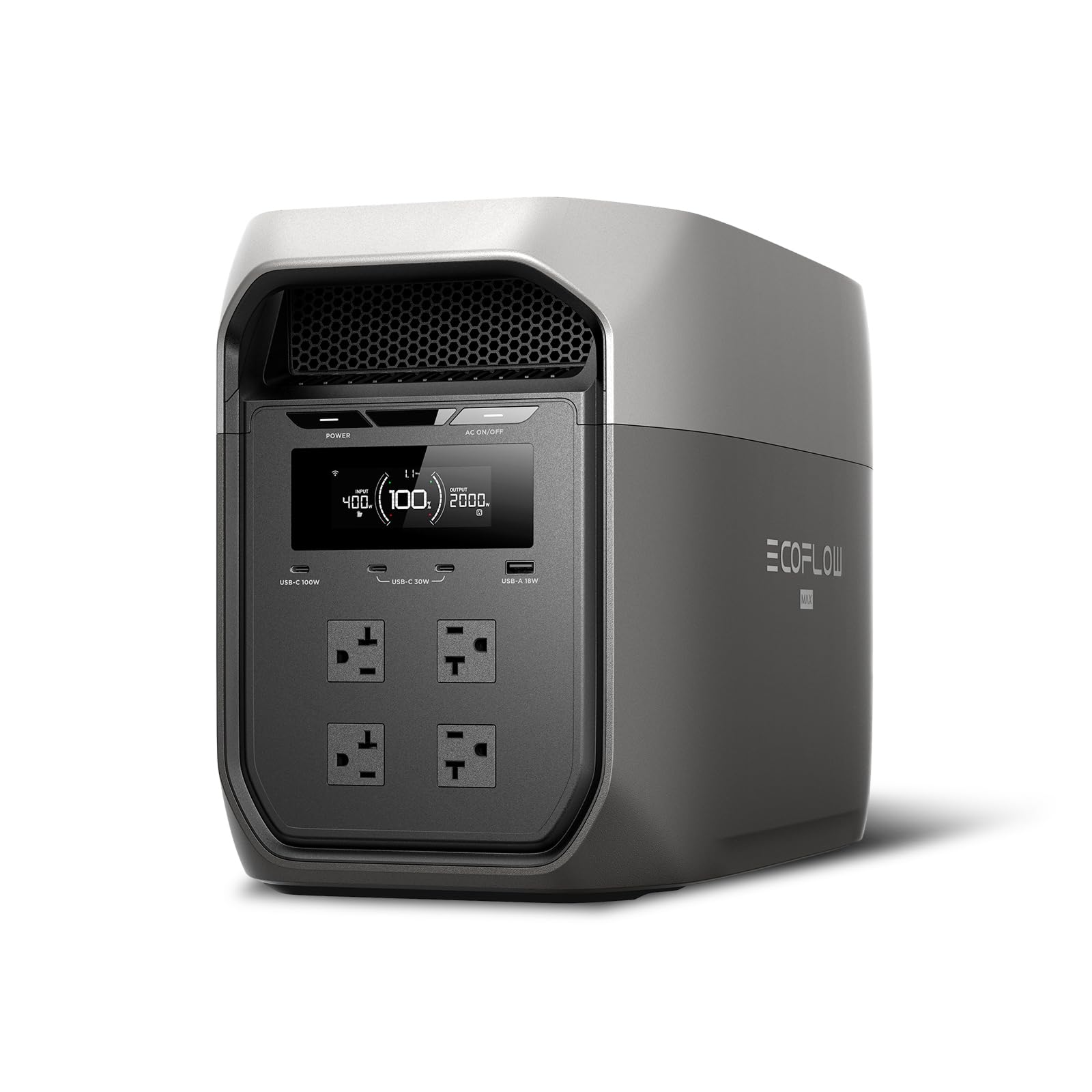
Battery Chemistry: LFP
Capacity: 2048Wh
Rated AC Output: 2400W
X-Boost Output: 3400W
Recharge: 0-80% in 1.13 hours
Solar: Panel optional
The 2048Wh LFP battery and 2400W rated output are backed by a 3400W X-Boost mode that lets the unit run some appliances rated above its continuous output. Charging from empty to 80% in 1.13 hours is among the fastest in this group, which makes it practical to top up between outages or during a short grid window. The LFP cells suit frequent cycling, and the solar input option means the unit can recharge off-grid when the grid stays down.
This is the pick for a household that wants a portable unit for a heat pump’s auxiliary loads, a fridge, and electronics, and that values fast recharge over maximum capacity. It is not for a buyer expecting to run a heat pump compressor for many hours, since the capacity is the smallest here.
Trade-off: The 2048Wh capacity limits runtime under a heat pump load, and the X-Boost headroom is a short-term assist rather than a substitute for a higher continuous rating.
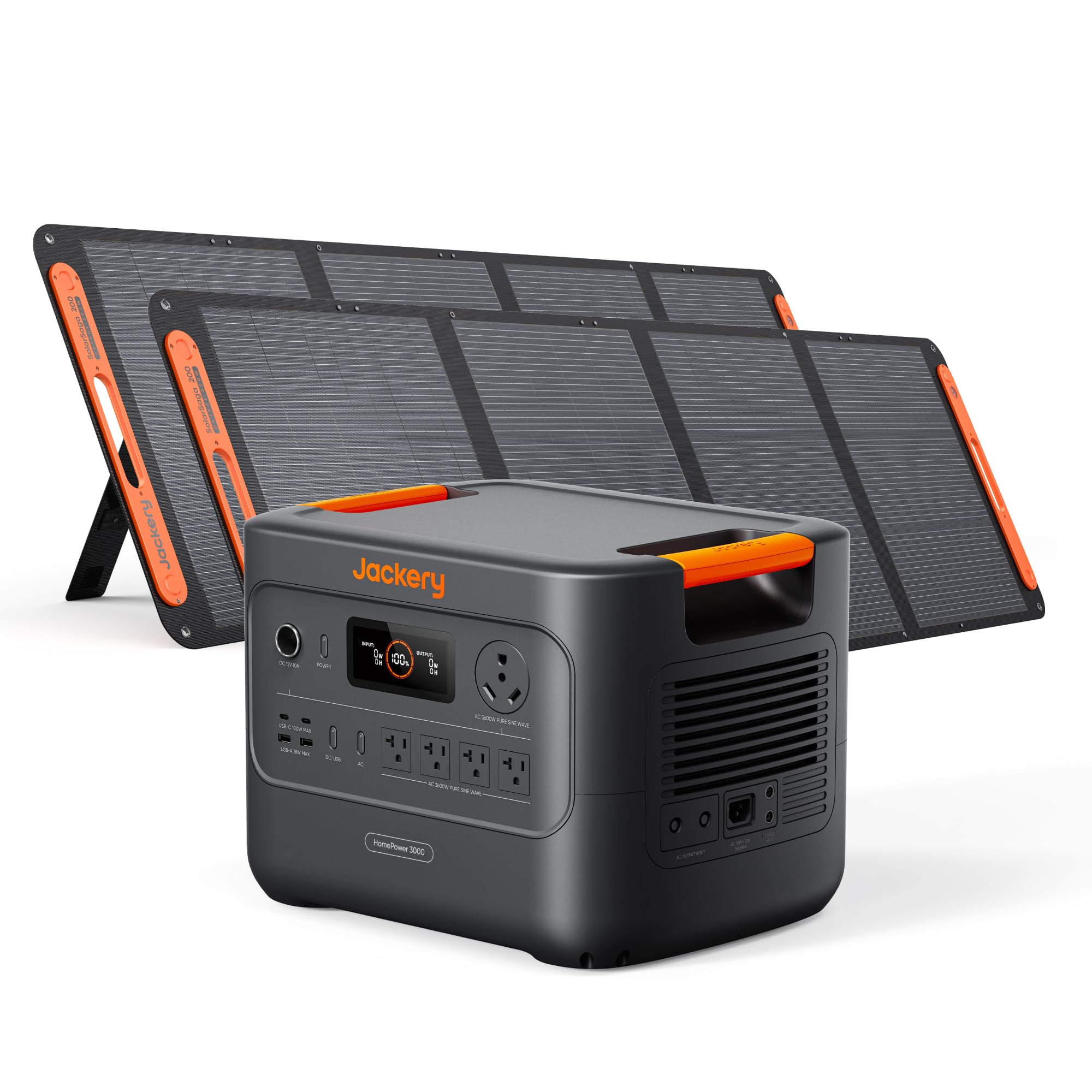
5. Jackery HomePower 3000 and 2x200W Solar Panels, 3072Wh
Battery Chemistry: LFP
Capacity: 3072Wh
AC Output: 3600W
Surge Output: 7200W
Included Solar: 2x200W panels
Intended Use: Home backup, outages, RV, emergencies
The 7200W surge rating is the number that matters for a heat pump, because compressor startup draws far more than steady-state running, and this unit is built to absorb that spike. The 3600W continuous output and 3072Wh LFP capacity cover a heat pump plus essential circuits for a useful stretch, and the two included 200W solar panels mean the system can recharge without the grid. Bundling the panels removes a separate purchase and makes the setup self-sufficient in a long outage.
This is the pick for a homeowner who wants solar recharge built into the package and needs surge headroom for a compressor, without stepping up to the largest systems. It is not for a household that needs to run a heat pump and most of the house for days, since 3072Wh is a mid-size reserve.
Trade-off: The included panels recharge slowly relative to the battery size, so solar alone will not keep pace with heavy heat pump use during a prolonged outage.
Before You Buy
- Voltage: Confirm whether the heat pump needs 240V. A 120V-only battery cannot run it directly, so a 120V/240V unit or a voltage hub is required.
- Surge output: Check the surge rating, not just the continuous wattage, because compressor startup is the load that trips undersized inverters.
- Capacity vs. runtime: Match watt-hours to the heat pump’s draw and the expected outage length; a bigger battery buys hours, not efficiency.
- Expandability: A system that scales later protects against buying too small now, but confirm the expansion batteries are available and compatible.
- Recharge options: Grid recharge speed matters between outages, and solar input matters during a long one; check both before committing.
- Installation and space: Large combo units need a permanent spot and possibly an electrician, while portable stations can be moved but carry less capacity.
- Included accessories: Panels, transfer hubs and cables add real cost when bought separately, so compare bundles rather than base units.
Frequently Asked Questions
-
Can a home battery run a heat pump during an outage?
Yes, if the battery’s continuous and surge output exceed the heat pump’s draw and startup current. A 240V-capable unit with a high surge rating is the safest match. -
How much battery capacity does a heat pump need?
It depends on the heat pump’s power draw and the outage length. A larger reserve covers a longer run, while a smaller unit may only carry the compressor for a few hours. -
Does a heat pump need 240V backup power?
Many heat pumps run on 240V, so a 120V-only battery cannot serve them without a voltage adapter or hub. Check the unit’s voltage before buying. -
Is LFP the right battery chemistry for home backup?
LFP is a durable chemistry suited to frequent cycling and long service life, which makes it a common choice for home backup systems. -
Can solar panels recharge a home battery during an outage?
Yes, when the system accepts solar input and the panels are included or added. Solar recharge extends runtime but depends on sunlight and panel wattage. -
Can a portable power station replace a permanent home battery?
A portable station works for essential loads and shorter outages, while a permanent or expandable system handles larger loads and longer durations.
Bottom Line
For a house with a heat pump, the GROWATT HELIOS 3600 Home Battery Backup Combo is the strongest match: its 120V/240V output, 7200W rating and expansion to 36kWh cover the compressor’s startup draw and a long outage. Buyers who want a lower entry point should look at the 10ms UPS unit for portability, while the Jackery HomePower 3600 Plus is the pick for maximum capacity in a large home.
