Why there are Amazon links here: Brave Review is paid a commission for qualifying Amazon purchases made through the links below. Your price does not change, and using our links is entirely optional. How this works
Best Home Battery for a House with Electric Panel Heaters
Panel heaters are a brutal load for any battery: they run for hours, they pull a steady high draw, and they tend to run exactly when solar production is low. The five picks below cover the realistic spread — a whole-home LFP system on the premium end, mid-size power stations for room-by-room backup, and compact units for a single heater circuit. Buyers who want one room warm through an outage, buyers who want to keep a whole panel-heated home alive, and buyers building off-grid should each find a match in the overview table. Check the price on Amazon before committing, since the snapshot numbers move.
The Picks at a Glance
| Product | Key Spec | Best Use | Price Tier |
|---|---|---|---|
| Jackery Solar Generator 1000 v2 + 200W Panel | 1070Wh, 1500W AC, 100W USB-C | Small panel heater plus essentials | Mid |
| Jackery HomePower 3600 Plus | 3584Wh, 3600W AC, expandable to 21kWh | Whole-home backup, scalable | Premium |
| EF ECOFLOW DELTA 3 Max | 2048Wh, 2400W AC, 3400W X-Boost | Multi-room heating backup | Mid |
| ECO-WORTHY Powermega 48V 314Ah System | 48V 314Ah LFP, 10kW hybrid inverter | Permanent off-grid / whole-home | Premium |
| Jackery Solar Generator 300 + 40W Panel | 292Wh, 300W AC, pure sine wave | One small heater, travel | Budget |
1. Jackery Solar Generator 1000 v2 and 200W Solar Panel

Capacity: 1070Wh
AC Output: 1500W
Battery Type: LiFePO4
Charge Time: 1 hour fast charge
USB-C Output: 100W
Included: 200W solar panel
The LiFePO4 chemistry is the headline here — it holds up to repeated deep cycles far better than older lithium blends, which matters when a panel heater drains the pack nightly. The 1500W AC output runs a modest panel heater and a few small loads at once, and the 1-hour fast charge means the unit can be topped up between outages rather than sitting flat. The bundled 200W panel adds a genuine recharge path for off-grid or extended cuts.
This is the pick for a single room or a small heater circuit where the goal is comfort plus phone and light backup, not whole-home survival. The 1070Wh ceiling is the honest limit: a high-wattage panel heater will empty it in a couple of hours, so it suits low-draw or intermittent heating.
Trade-off: The 1070Wh capacity is small for sustained heating, so this unit covers short outages and one heater rather than a full cold-weather stretch.
2. Jackery HomePower 3600 Plus Power Station

Capacity: 3584Wh
AC Output: 3600W
Battery Type: LFP (LiFePO4)
Expandable: Up to 21kWh
Intended Use: Home backup, emergencies, RV
Solar: Panel optional
The 3584Wh base capacity and 3600W output put this in genuine whole-home backup territory, and the expandability to 21kWh is what separates it from the portable crowd — a panel-heated house can add capacity as the load grows instead of replacing the unit. LFP cells are built for the long, repeated discharge cycles that heating demand creates. The 3600W ceiling runs a real heater alongside fridge, lights and router.
This is the pick for a home with multiple electric panel heaters and a buyer who wants one system that scales. It also suits RV and emergency use, so the spend is not locked to one scenario.
Trade-off: At this capacity and price, the unit is heavy and expensive, and the high output only pays off if the home’s heating load genuinely needs it — a single small heater is over-served here.
3. EF ECOFLOW DELTA 3 Max Portable Power Station
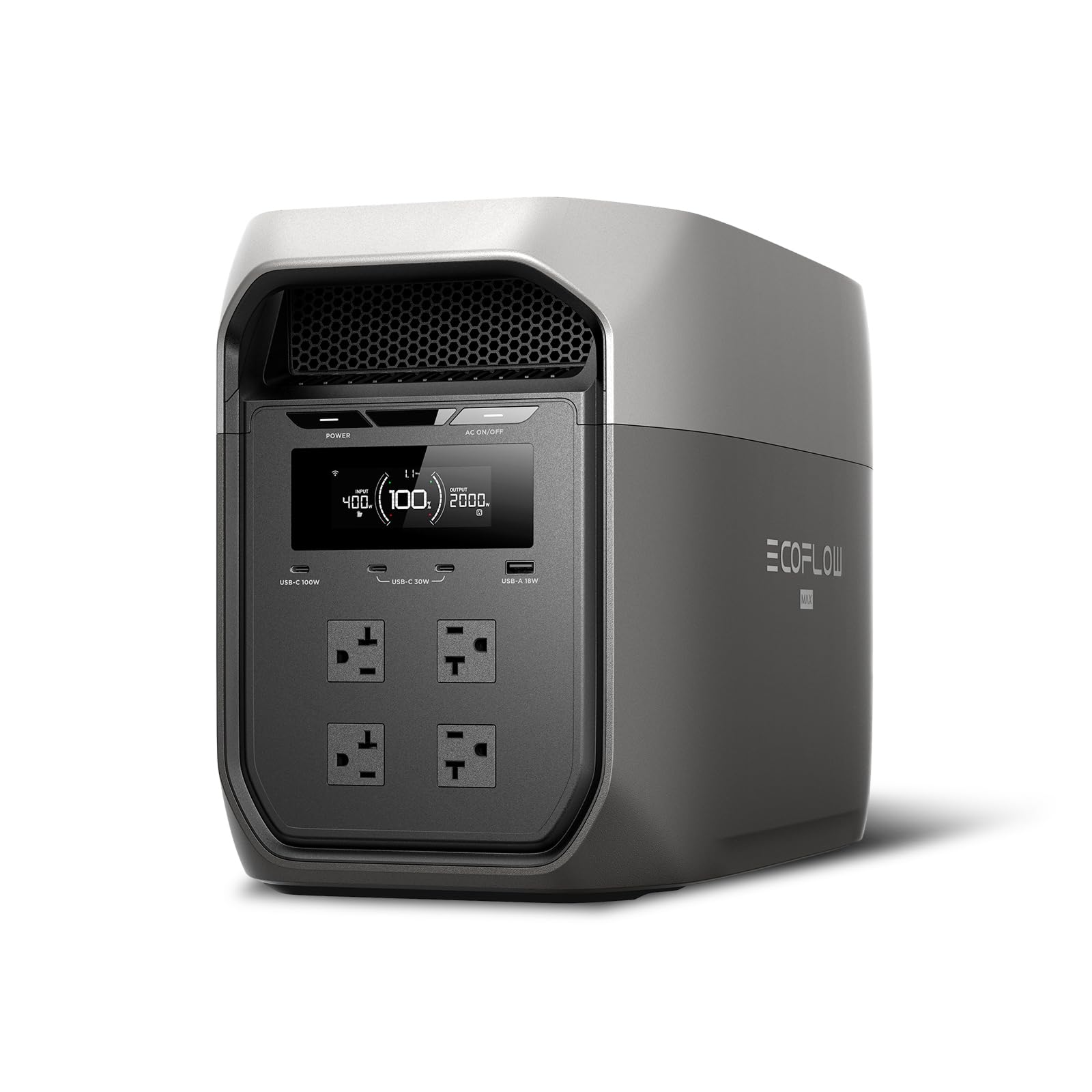
Capacity: 2048Wh
AC Output: 2400W
X-Boost Output: 3400W
Battery Type: LFP (LiFePO4)
Recharge: 0-80% in 1.13 hr
Intended Use: Home backup, RV camping
Solar: Panel optional
The 2048Wh LFP pack is the sweet spot for a house with a couple of panel heaters — enough to run one heater for a useful stretch plus the fridge and lights, without the weight and cost of the big whole-home units. X-Boost pushes output to 3400W, which lets it start or run appliances that would otherwise trip a 2400W ceiling. The 0-80% recharge in just over an hour is a real advantage when outages are short and frequent.
This suits a buyer who wants meaningful backup for a panel-heated home but does not need permanent, whole-house scale. It also travels well for RV use.
Trade-off: 2048Wh still caps how long a high-wattage panel heater can run, and the optional solar panel is an extra cost on top of the unit.
4. ECO-WORTHY Powermega 48V 314Ah Energy Storage System
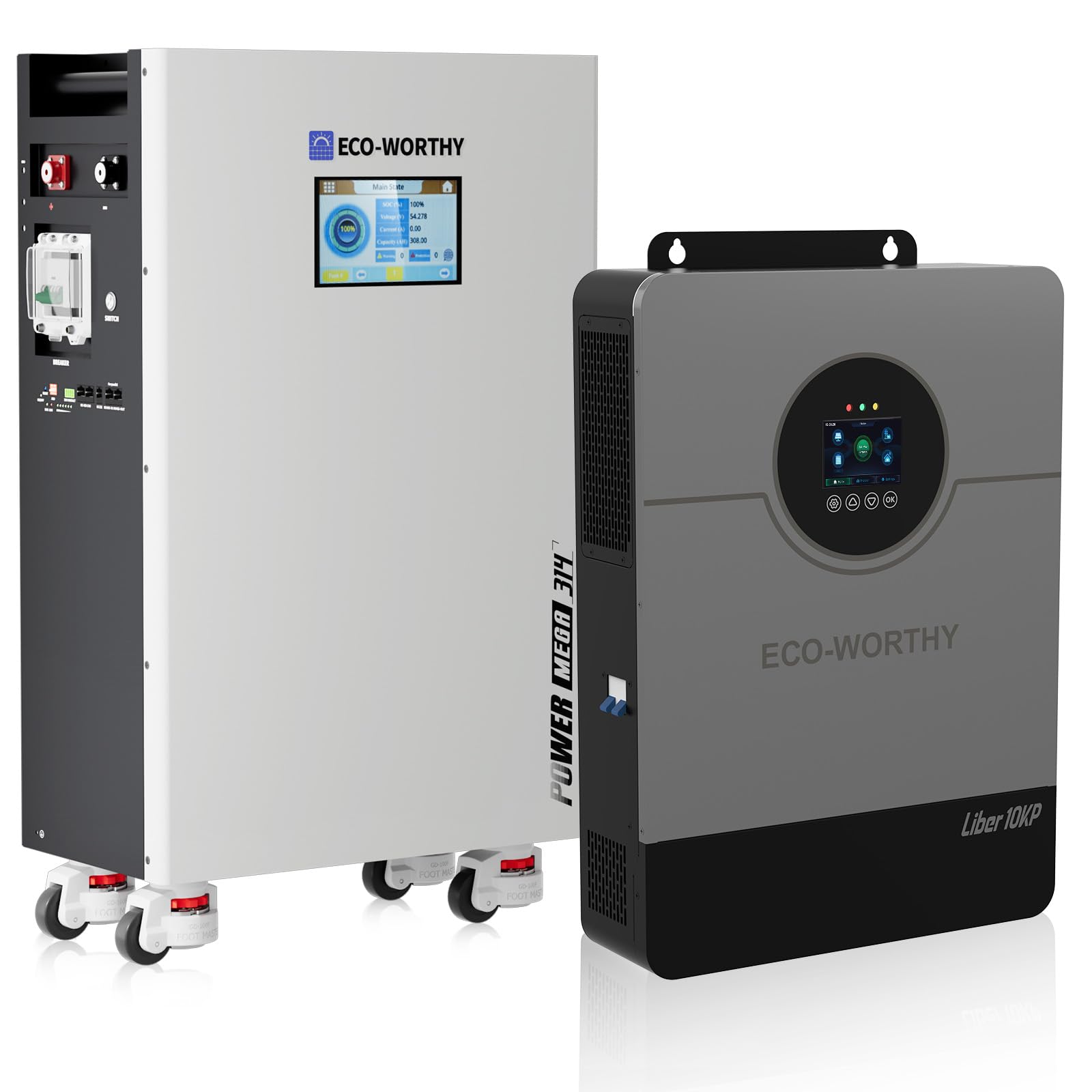
System Voltage: 48V
Capacity: 314Ah
Battery Type: LiFePO4 (UL1973)
Inverter: 10kW hybrid inverter included
BMS: Active balancing
Connectivity: Built-in Bluetooth & WiFi
Intended Use: Home backup, off-grid
This is the only true fixed-installation system on the list: a 48V 314Ah LFP bank paired with a 10kW hybrid inverter, which is the kind of output a house full of panel heaters actually needs. The active balancing BMS and Bluetooth/WiFi monitoring make it a managed system rather than a plug-in box. UL1973 listing on the battery speaks to the safety and cell-quality standard expected for permanent home storage.
This pick is for the buyer treating the battery as home infrastructure — off-grid living, a permanent backup circuit, or a whole-home setup where a 10kW inverter and a large LFP bank are the right scale.
Trade-off: This is an installation-grade system, not a portable appliance — it needs proper mounting, wiring and likely an electrician, so the true cost and effort sit above the sticker.
5. Jackery Solar Generator 300 and 40W Solar Panel
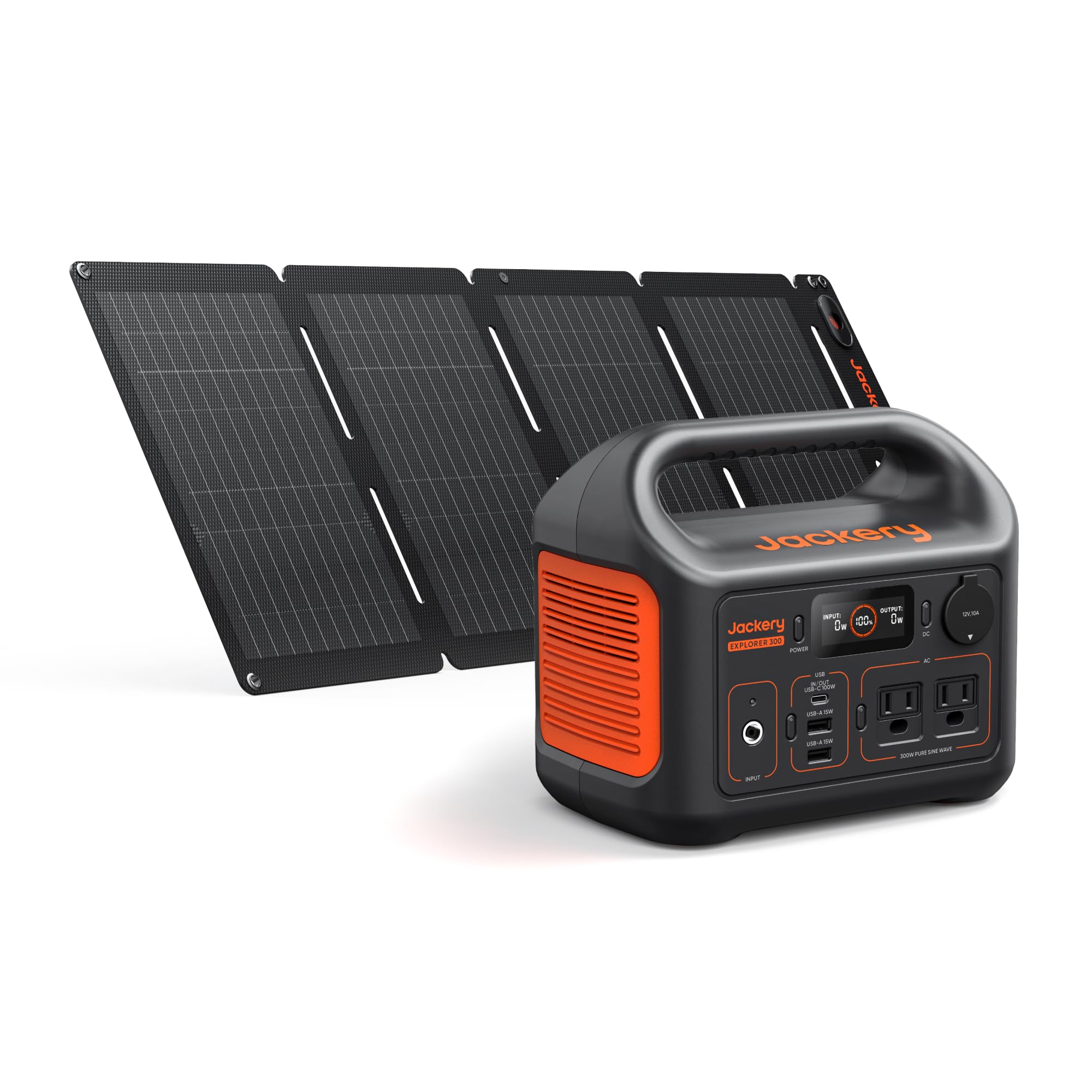
Capacity: 292Wh
AC Output: 300W
Waveform: Pure sine wave
Included: 40W solar panel
Intended Use: RV, outdoors, camping, travel, blackout
The 292Wh pack and 300W pure sine wave output make this a compact, clean-power unit for small loads — a low-wattage panel heater, a fan, a lamp, a charged phone. Pure sine wave output is the right call for anything with a motor or sensitive electronics. The included 40W panel gives a slow but real solar top-up for travel and short blackouts.
This is the budget entry point for a buyer who needs one small heater or a single circuit covered, or who wants a travel-friendly unit that doubles as emergency backup.
Trade-off: 292Wh is very small for heating — expect a short run time on any real heater, so this is a stopgap rather than an outage solution.
Before You Buy
- Capacity vs. heater draw: Match watt-hours to the heater’s rated draw and how many hours of run time are needed; heating is the hungriest load in the house.
- Output ceiling: Confirm the battery’s continuous AC output exceeds the heater’s draw, and check whether an X-Boost-style mode is needed for startup surges.
- Battery chemistry: LiFePO4 (LFP) is the standard for repeated deep cycling; it outlasts older lithium blends under heavy heating demand.
- Installation type: Portable units plug in; the 48V hybrid-inverter systems need mounting, wiring and likely an electrician.
- Solar compatibility: Solar panels are optional on most picks and add cost — factor them in if off-grid recharge matters.
- Expandability: A scalable system (like the 21kWh-capable unit) protects the investment as heating loads grow.
- Monitoring and BMS: Bluetooth/WiFi and active balancing make a large bank easier to manage and safer to run long-term.
Frequently Asked Questions
-
Can a home battery run electric panel heaters?
Yes, provided the battery’s continuous AC output meets the heater’s draw and its capacity covers the run time needed. Heating is the most demanding household load, so capacity matters more here than for lights or electronics. -
How much capacity is needed for panel heaters?
It depends on heater wattage and hours of use. A single room heater is served by a mid-size unit; a whole panel-heated home needs a large LFP bank or a scalable system. -
Is LiFePO4 better than other lithium for heating loads?
LFP handles repeated deep discharge better, which suits the long, steady draw of panel heaters and extends usable life. -
Do these systems need a solar panel?
No — solar is optional on most picks and mainly matters for off-grid or extended outages. Grid charging covers short cuts. -
Can a portable unit back up a whole house?
Only the large, expandable systems approach whole-home scale. Portable units are best for one circuit or a few rooms. -
Does a fixed system need an electrician?
The 48V hybrid-inverter system is installation-grade and should be wired by a qualified professional; portable units are plug-and-play.
Bottom Line
For a house with electric panel heaters, the Jackery HomePower 3600 Plus is the strongest all-round pick — 3584Wh of LFP capacity, 3600W output and expansion to 21kWh give it the headroom heating demand requires, and it scales instead of being replaced. Buyers with a single heater or a tight budget can drop to the DELTA 3 Max or the compact Jackery 300, while off-grid and permanent-install buyers should look at the ECO-WORTHY system. Check the current price on Amazon before deciding.
