Why there are Amazon links here: Brave Review is paid a commission for qualifying Amazon purchases made through the links below. Your price does not change, and using our links is entirely optional. How this works
Best Home Battery for a House With No South Facing Roof
A house without a south facing roof can still run a home battery. Panels on an east or west pitch, a ground mount, or plain grid charging all fill the same battery bank, and these five systems are built for exactly that arrangement. The picks here cover a plug-in portable option, two large 48V storage banks, a whole-home expandable unit, and a complete off-grid kit. Buyers who want a simple emergency backup, buyers building a full 48V system, and buyers going off-grid entirely will each find a fit below. The overview table shows the differences first, so a decision can be made in under a minute.
Overview of the Picks
| Product | Key Spec | Best Use | Price Tier |
|---|---|---|---|
| Jackery HomePower 3600 Plus & 2x200W Solar Panels | 3584Wh, 3600W AC output | Plug-in emergency backup | Mid |
| ECO-WORTHY Powermega 48V 314Ah with Liber 10KP Inverter | 48V 314Ah LiFePO4, 10kW hybrid inverter | Whole-home backup and off-grid | Upper mid |
| 48V 314Ah LiFePO4 with 200A BMS | 16.08kWh, RS485/CAN/RS232 | DIY 48V system builders | Mid |
| Jackery HomePower 3600 Pro Max and 2x200W | 3584Wh, 2000W 120V/4000W 240V | Whole-home outage backup | Mid |
| ECO-WORTHY 10000W Complete Off-Grid Solar Kit | 10KW split phase, 16.1kWh storage, 2950W PV | Full off-grid installation | Premium |
Jackery HomePower 3600 Plus & 2x200W Solar Panels
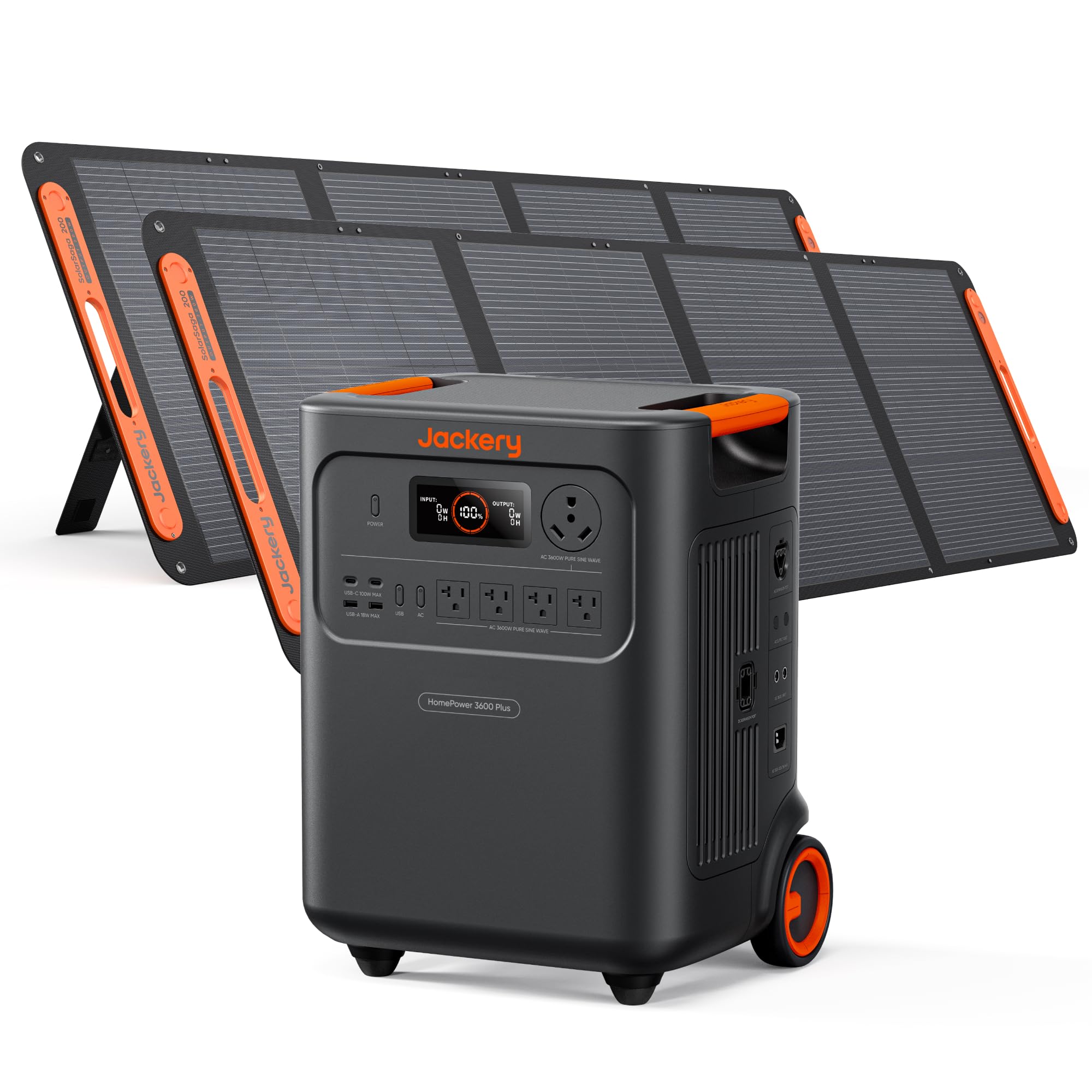
Battery Type: LiFePO4 (LFP)
Capacity: 3584Wh
AC Output: 3600W
Expansion: Up to 21kWh
Included Solar: 2x200W panels
Intended Use: Home backup, emergencies, RV
This is a self-contained LFP power station rather than a wall-mounted bank, which makes it the least invasive way to add storage to a home with an awkward roof. The 3600W AC output runs refrigerators, lights, routers and a few small appliances at once, and the bundled 200W panels can top it up from any pitch that catches a few hours of sun. Expansion to 21kWh means the same unit can grow with the household instead of being replaced.
The pick suits renters, apartment dwellers and anyone who wants backup power without an electrician or a permit. It also earns its place for RV owners who want one battery that serves the house and the road. The panels included are modest for the capacity, so a house relying on solar alone will want more input than the box provides.
Trade-off: Portable stations at this capacity cost more per kilowatt-hour than a bare 48V battery, and the included panels are a starting point rather than a full array.
Check the current price on Amazon
ECO-WORTHY Powermega 48V 314Ah with Liber 10KP Inverter
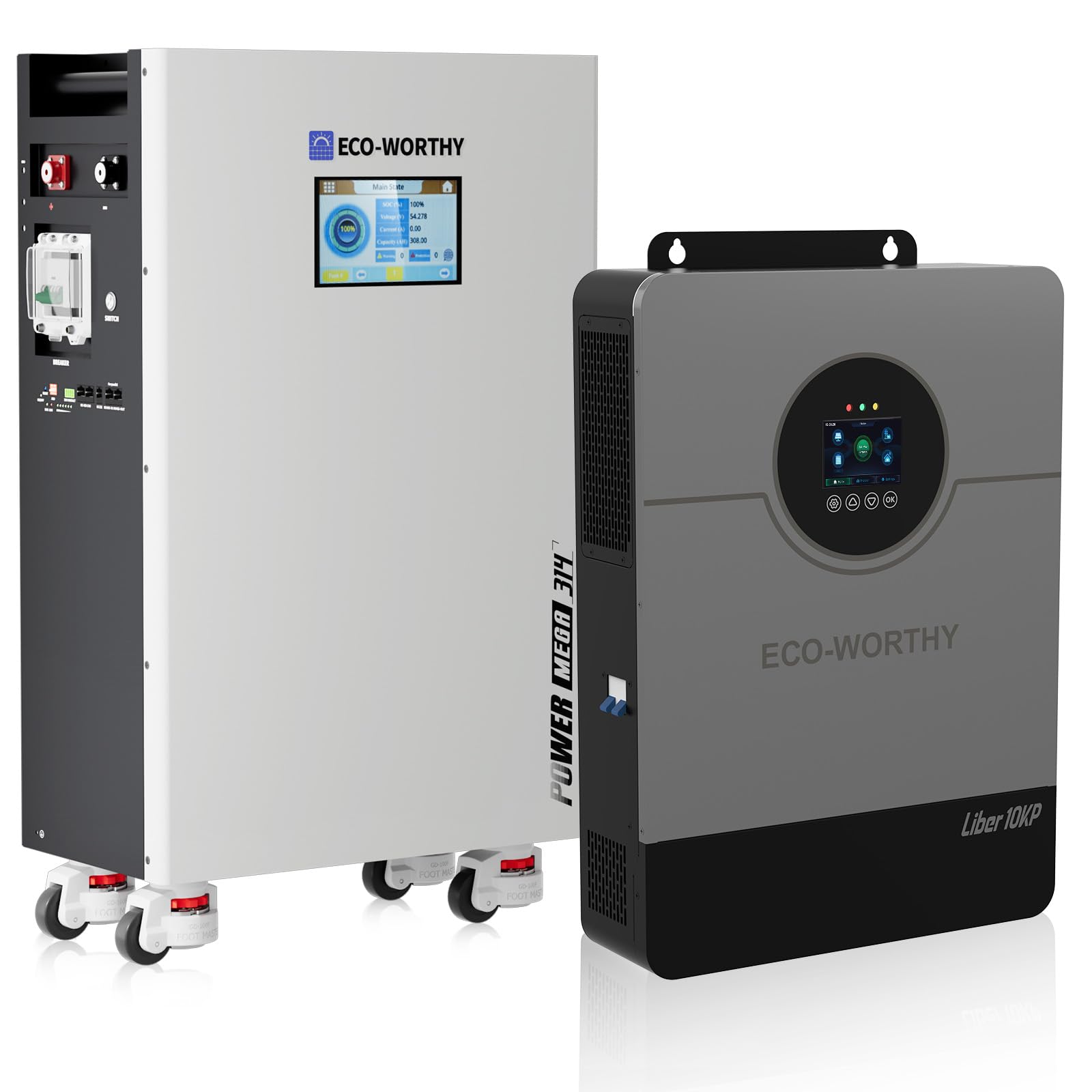
Chemistry: LiFePO4
Configuration: 48V 314Ah
Inverter: Liber 10KP 10kW hybrid
BMS: Active balancing, built-in Bluetooth and WiFi
Standard: UL1973 energy storage
Intended Use: Home backup, off-grid
This package pairs a large 48V 314Ah LiFePO4 bank with a 10kW hybrid inverter, so storage and conversion arrive as one matched system instead of two separate purchases. The active balancing BMS keeps the cells level over years of cycling, and Bluetooth and WiFi put monitoring on a phone. UL1973 is the energy-storage standard, which matters for insurance and inspection conversations.
The pick suits homeowners who want whole-home backup and are comfortable with a permanent 48V installation. It is also the natural choice for an off-grid build where the inverter has to carry well pumps, compressors and other hard-starting loads. The hybrid inverter accepts solar input from any array orientation, which is precisely what a roof without southern exposure needs.
Trade-off: A permanent 48V system at this level normally needs a qualified installer, and the upfront cost is several times a portable station’s.
Check the current price on Amazon
48V 314Ah LiFePO4 with 200A BMS
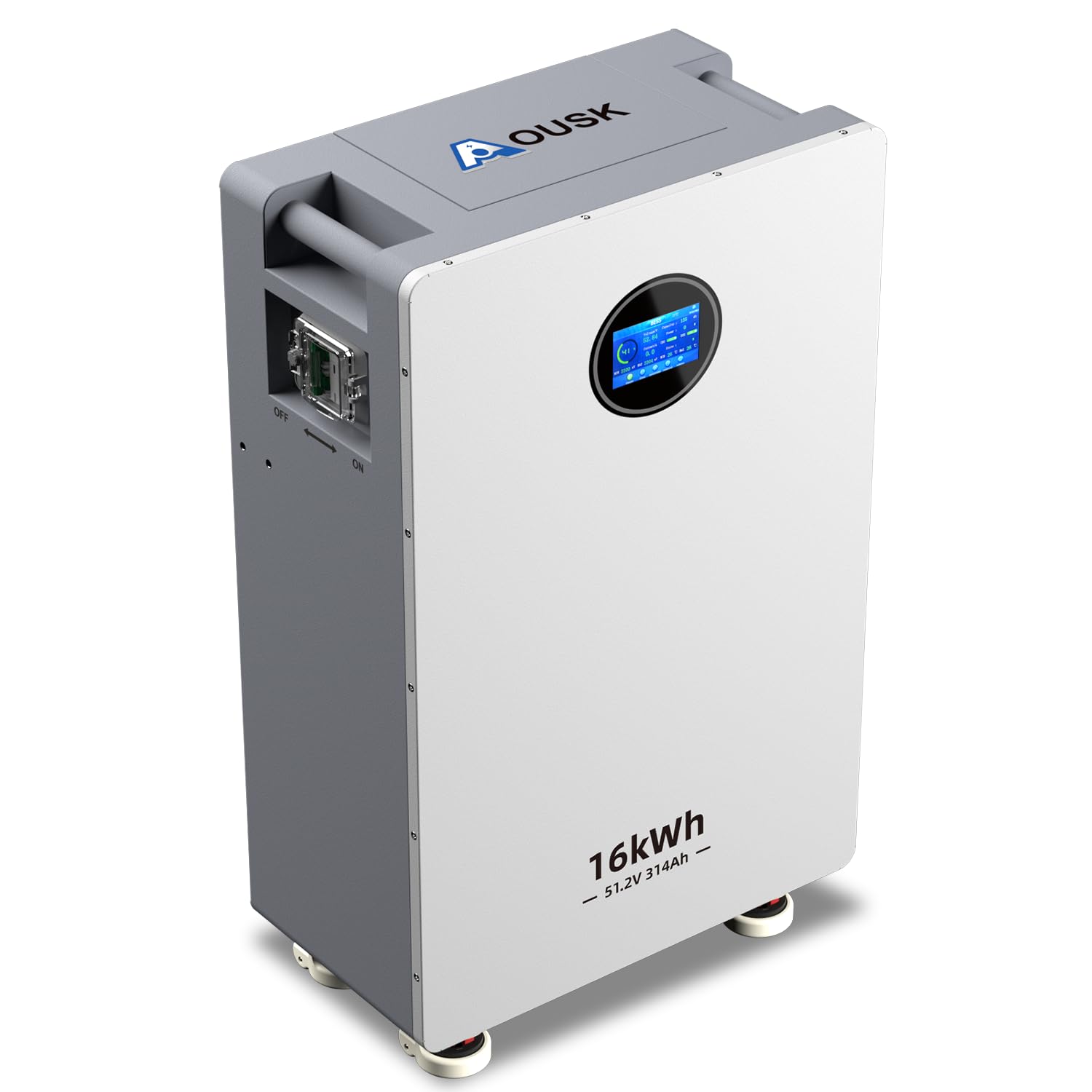
Chemistry: LiFePO4
Configuration: 48V 314Ah
Capacity: 16.08kWh
BMS: Built-in 200A
Communications: RS485, CAN, RS232
Included: Breakers
Intended Use: Home backup, off-grid, solar
This is the bare battery of the group: a 16.08kWh LiFePO4 bank with an integrated 200A BMS, breakers and the three common communication protocols. RS485, CAN and RS232 mean it can talk to a wide range of hybrid inverters rather than being locked to one brand. Buyers who already own an inverter get the most from it.
The pick suits DIY system builders and anyone assembling a 48V bank around existing equipment. It also makes sense for a household that wants maximum stored energy per dollar and is willing to source the inverter separately. The 200A BMS sets the ceiling on discharge current, so very large whole-home loads need a plan for that limit.
Trade-off: There is no inverter, no monitoring app and no installation help in the box, so the total project cost and effort land well above the sticker.
Check the current price on Amazon
Jackery HomePower 3600 Pro Max and 2x200W
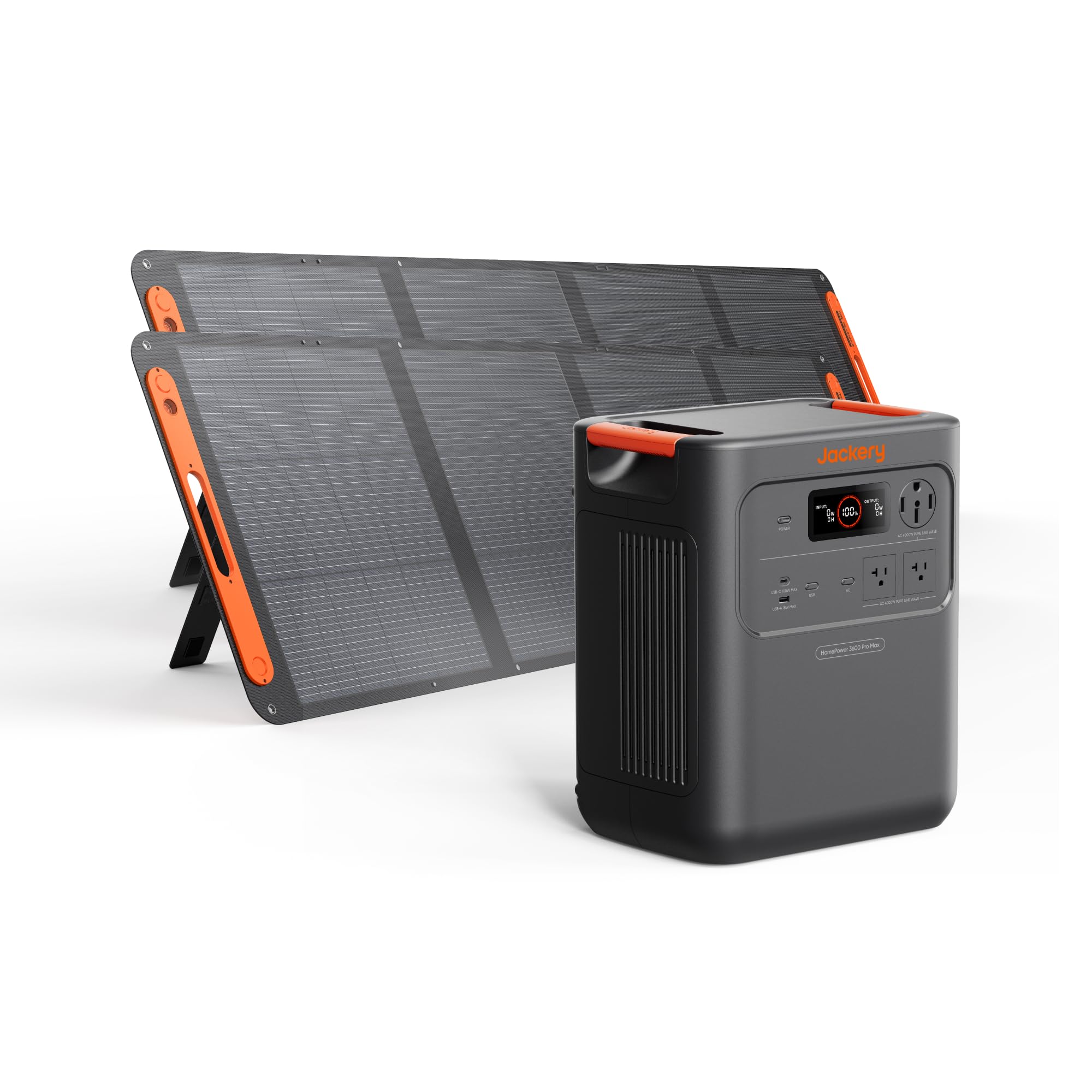
Battery Type: LiFePO4 (LFP)
Capacity: 3584Wh
Output: 2000W 120V / 4000W 240V
Expansion: Up to 43kWh
Included Solar: 2x200W
Intended Use: Whole-home backup, power outages, emergencies
The Pro Max version adds 240V split-phase output, which is the difference between backing up a few circuits and backing up a house with a well pump or a 240V appliance. Expansion to 43kWh is the largest ceiling in this roundup, so the same base unit can scale from outage cover to near-whole-home storage. The two 200W panels provide a trickle of solar input for top-ups between events.
The pick suits homeowners who want whole-home outage protection without a permanent install, and who value the ability to add capacity later. It fits houses where the roof is shaded or wrongly oriented because the panels can be placed wherever sun is available. The 120V output is lower than the Plus model’s, so 120V-only loads get less headroom.
Trade-off: The unit is heavy and the expansion batteries are a recurring cost, so building out to the full ceiling becomes a serious investment.
Check the current price on Amazon
ECO-WORTHY 10000W Complete Off-Grid Solar Kit
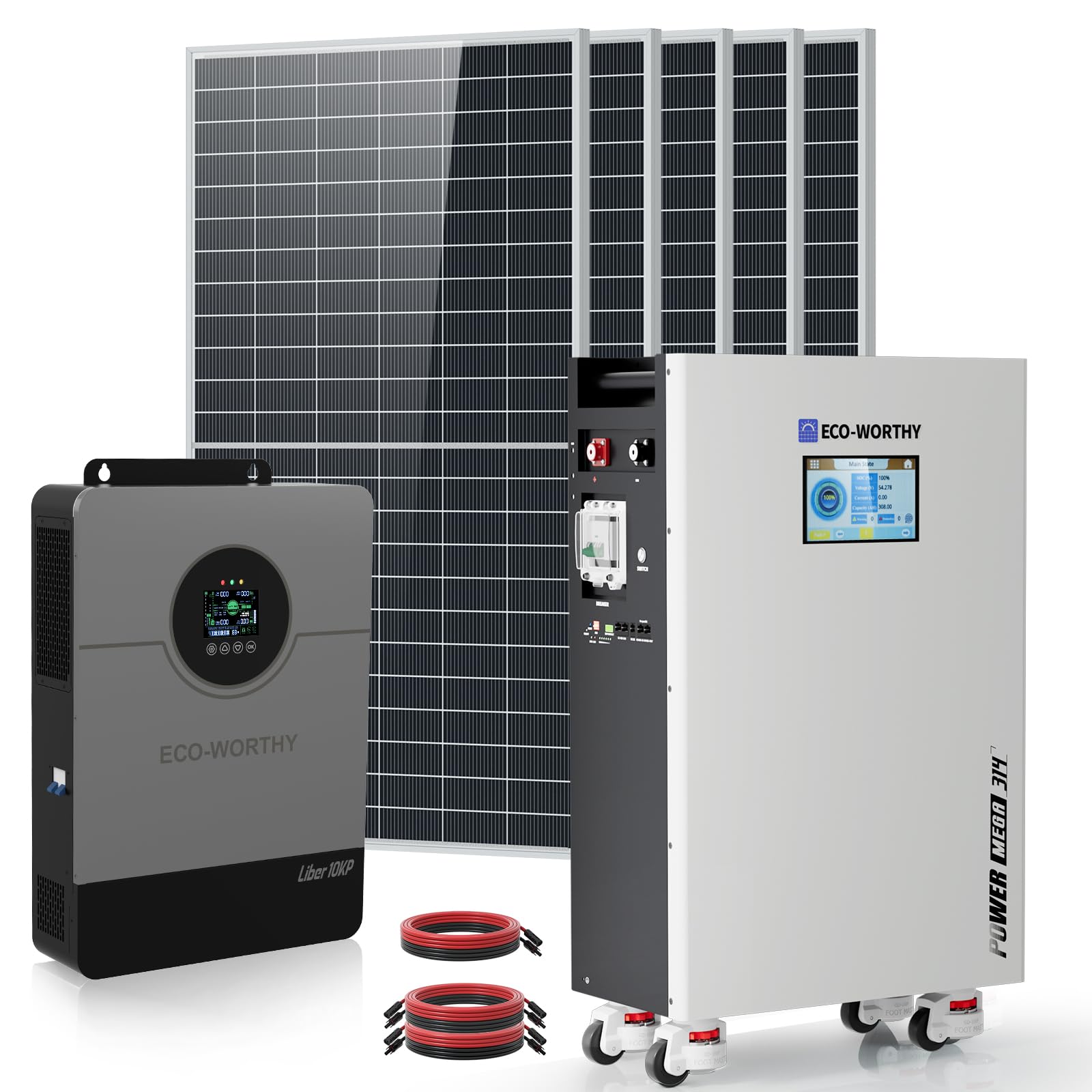
Output: 10KW, 120V/240V split phase
Storage: 48V 314Ah, 16.1kWh
Solar Input: 2950W PV
Chemistry: LiFePO4
System Type: Complete off-grid
Intended Use: Whole house
This is the only pick that arrives as a complete system: panels, storage, split-phase inverter and the mounting hardware to tie them together. The 2950W PV array can be laid out on a ground mount or split across several roof planes, which sidesteps the south-facing problem entirely. The 10KW split-phase inverter carries 240V loads, so a whole house can run from it.
The pick suits buyers building a new off-grid home or taking a rural property off the grid completely. It also suits anyone who wants one order, one warranty conversation and a documented bill of materials. The array size is modest relative to the storage, so winter generation in northern latitudes will need a generator or grid tie as backup.
Trade-off: This is a major installation project with permits, wiring and mounting work, and the premium price reflects the completeness rather than any single component.
Check the current price on Amazon
Before You Buy
- Roof orientation: A south facing roof is ideal but not required; east, west and split arrays all charge a battery, and ground mounts remove the constraint entirely.
- Capacity: Match stored kilowatt-hours to the circuits that must run during an outage, not to the whole house’s daily use.
- Output and voltage: 120V covers lights and small appliances; 240V split phase is needed for well pumps, dryers and EV charging.
- Compatibility: Bare 48V batteries need an inverter that speaks the same protocol, so check RS485, CAN or RS232 support before ordering.
- Installation: Portable stations plug in; permanent 48V banks and off-grid kits need an electrician, permits and inspection.
- Expansion path: A unit that grows to a higher capacity ceiling protects the initial purchase from becoming obsolete.
- Included accessories: Panels, breakers and mounting hardware are sometimes bundled and sometimes not, and the difference changes the real project cost.
Frequently Asked Questions
-
Can a home battery work without any solar panels?
Yes. Every battery in this roundup can charge from the grid and hold that energy for an outage, which is the standard arrangement for homes with poor roof orientation. -
Is a south facing roof required for solar charging?
No. East and west arrays produce less total energy but still charge a battery, and ground-mounted or wall-mounted panels can be aimed wherever the sun is available. -
What size battery is needed for whole-home backup?
It depends on which circuits must stay live. A portable station covers essentials, while a 16kWh 48V bank or a system expandable to 43kWh can carry most or all of a house. -
Do these systems require a professional installer?
The portable Jackery units plug into a transfer switch or wall outlet. The 48V banks and the complete off-grid kit involve permanent wiring and normally need a licensed electrician. -
What is the difference between 120V and 240V output?
120V runs standard outlets, lights and small appliances. 240V split-phase output is required for heavy loads such as well pumps, electric dryers and EV chargers. -
Can capacity be added later?
The Jackery units expand to 21kWh and 43kWh respectively, and the 48V banks can be paralleled with matching batteries, so starting small is a viable strategy.
Bottom Line
For most homes without a south facing roof, the Jackery HomePower 3600 Pro Max and 2x200W is the pick that balances effort and coverage: 240V output for real whole-home loads, expansion to 43kWh, and no permanent installation. Buyers building a fixed 48V system should look at the ECO-WORTHY Powermega bundle instead, and anyone going fully off-grid will find the complete ECO-WORTHY kit the shortest path from order to power.
