Why there are Amazon links here: Brave Review is paid a commission for qualifying Amazon purchases made through the links below. Your price does not change, and using our links is entirely optional. How this works
Best Hub for a House That Loses Power Often
A house that loses power often needs more than a flashlight and a drawer of batteries. The right hub — whether a small smart-home gateway or a full whole-home backup unit — keeps the router, lights, fridge, and medical devices alive through an outage. This guide covers five verified picks, from a low-draw gateway that alerts the household to a solar generator that can run major appliances. Three buyer types are served here: the smart-home owner who wants alerts and remote control, the apartment or RV user who needs compact portable power, and the homeowner who wants serious whole-home backup. The overview below shows which pick fits which job before the detailed reviews.
Overview of the Picks
| Product | Key Spec | Best Use | Price Tier |
|---|---|---|---|
| YoLink X3 Hub Smart Home Gateway | Up to 8-hour battery backup, LoRa up to 2034 ft | Smart-home monitoring that survives outages | Budget |
| Anker SOLIX F3800 Plus Power Station | 7,680Wh LiFePO4, 12,000W AC output | Whole-home emergency power | Premium |
| 640Wh Portable Power Station | 1.5-hr charge, 10ms UPS, 8 ports | Compact backup for essentials | Budget |
| EF ECOFLOW Delta 3 Classic | 1024Wh, 1800W AC, 3600W surge | Mid-size home backup and camping | Mid-range |
| Jackery HomePower 3600 Plus | 3584Wh, 3600W AC, expandable to 21kWh | Scalable home backup | Premium |
YoLink X3 Hub Smart Home Gateway

Battery backup: Up to 8 hours
Alerts: Power-loss alerts
Connectivity: Wi-Fi or Ethernet
Protocol: LoRa YoLink, up to 2034 feet
Control: Remote app control
The YoLink X3 is not a power source for appliances — it is the hub that keeps a smart home talking when the grid drops. Its built-in battery holds the gateway up for hours, so sensors and alerts keep working through an outage instead of going dark with the router. LoRa is a long-range, low-power radio protocol, which means sensors can sit far from the hub and still report in. Wi-Fi or Ethernet gives the household two ways to keep it online, and the app allows remote checks from anywhere. It suits the connected home that wants early warning and control, not raw wattage.
This pick earns its place because power-loss alerts are the first line of defense for a house that trips often — knowing the outage started is what triggers the backup plan. It is best for smart-home owners already running sensors or planning to add them. The trade-off is that it provides no AC power at all, so it cannot run a fridge or a heater and only makes sense paired with a generator or power station.
Anker SOLIX F3800 Plus Power Station and Double Power Hub

Battery: 7,680Wh LiFePO4
AC output: 12,000W
Solar input: 3,200W
Setup: Generator-ready, double power hub
Use: Home and emergency backup
The SOLIX F3800 Plus is the heavyweight of this group. A 7,680Wh LiFePO4 battery paired with 12,000W of AC output puts it in whole-home territory, capable of carrying major appliances rather than just a few lights. LiFePO4 chemistry is the durable, long-cycle type, which matters for a unit that may sit idle for months between outages. The 3,200W solar input allows a serious panel array to recharge it, and the generator-ready design means it can also be topped up from a fuel generator. The double power hub setup points at permanent home wiring rather than extension cords.
This is the pick for the homeowner who loses power for days at a time and wants the fridge, well pump, and heating system to keep running. It earns its place on capacity and output alone. The trade-off is the obvious one: this is a premium, heavy, high-cost unit that only pays off for households with genuine whole-home needs — apartment dwellers and casual campers are over-served by it.
640Wh Portable Power Station
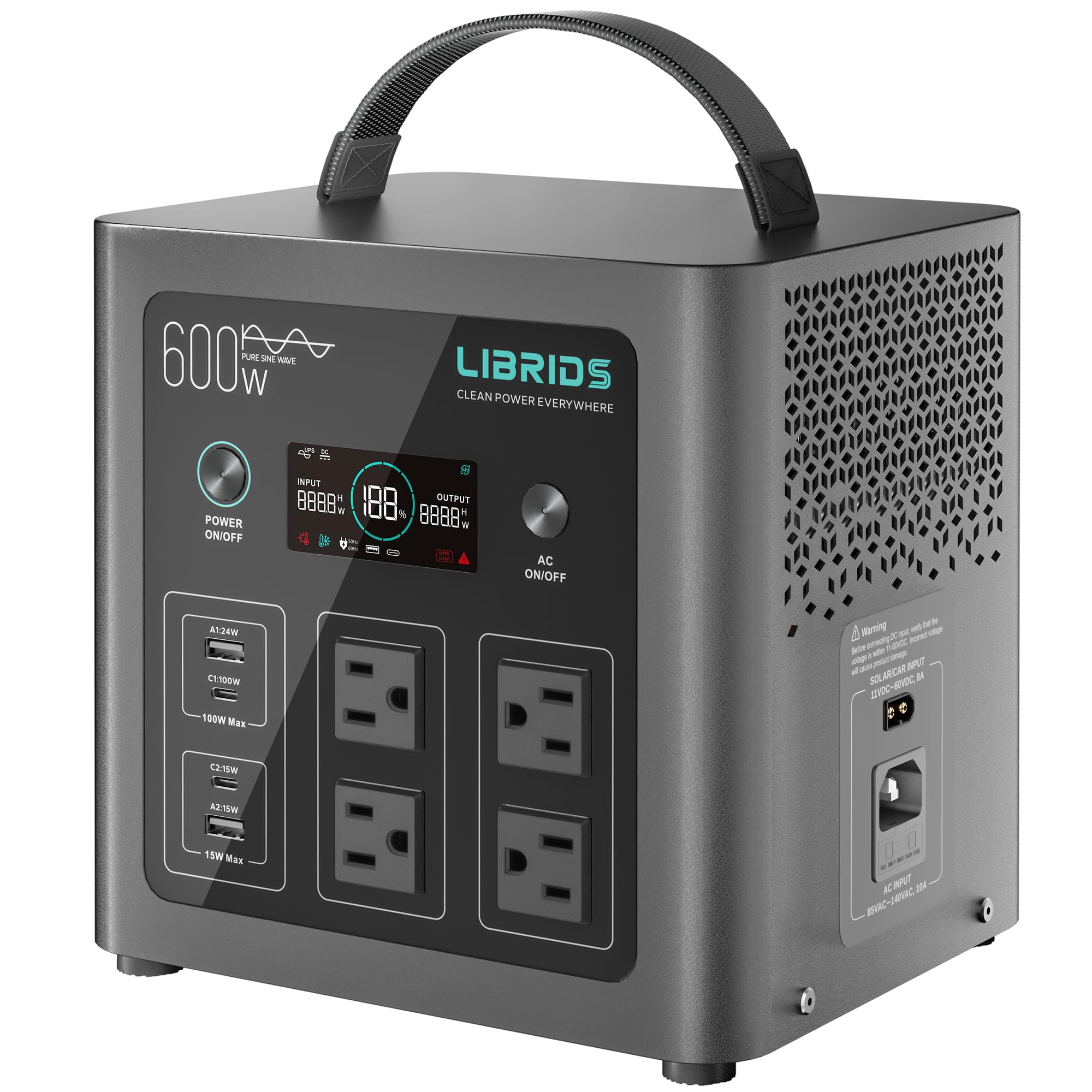
Battery: 640Wh LiFePO4
AC output: 1200W surge
Recharge: 1.5-hour charge
UPS switchover: 10ms
Ports: 8, including 4 AC
Build: Pure sine wave, metal design
This compact unit is the practical middle ground for short, frequent outages. The 10ms UPS switchover means it can sit between the wall and a device — a router, a CPAP, a desktop — and take over almost instantly when power drops. Pure sine wave output is the clean power type that sensitive electronics prefer, and the metal housing suggests a sturdier build than plastic budget boxes. The 1.5-hour charge time is quick enough to top it up between storms, and eight ports cover a mix of AC and USB gear. The 640Wh capacity and 1200W surge keep it firmly in the essentials category.
It suits renters, RV owners, and anyone who needs a grab-and-go box for router, lights, and phone charging. It earns its place as the value pick with UPS behavior usually reserved for pricier units. The trade-off is capacity: 640Wh will not run a fridge or a space heater for long, so households planning multi-day outages should size up.
EF ECOFLOW Delta 3 Classic
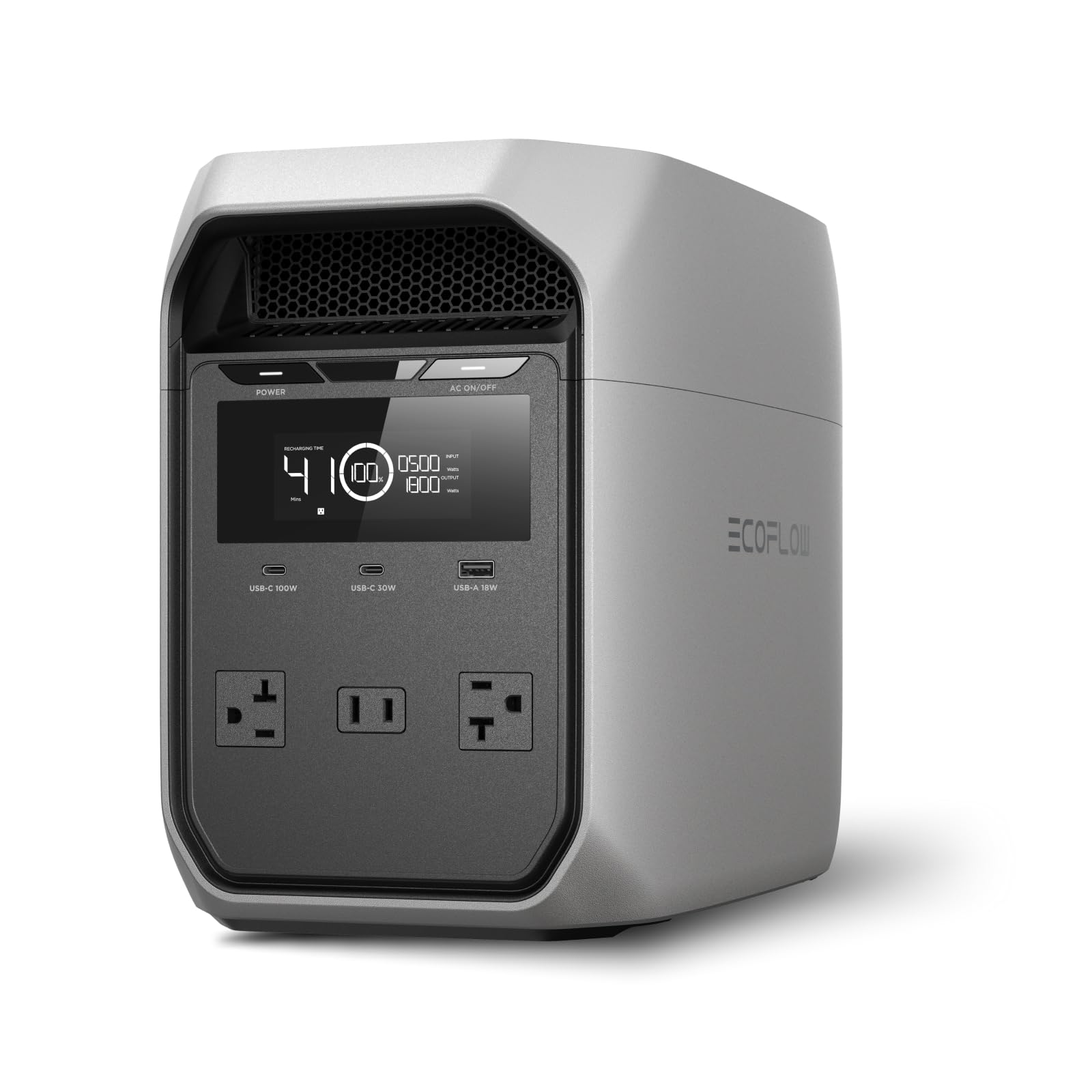
Battery: 1024Wh LiFePO4
AC output: 1800W, 3600W surge
Recharge: 1-hour fast charge
UPS switchover: 10ms
USB-C output: 100W
Use: Home backup, camping, RVs
The Delta 3 Classic sits squarely in the sweet spot for most households that lose power a few times a year. A 1024Wh LiFePO4 battery with 1800W continuous and 3600W surge output can run a fridge, a few lights, and electronics at once. The 10ms UPS mode turns it into a standby for critical devices, and the one-hour fast charge means it recovers quickly once the grid returns. The 100W USB-C output is enough to charge a laptop directly, and the LiFePO4 cells are built for a long service life. It is equally at home in a garage or a campsite.
This pick suits families who want real appliance backup without whole-home pricing — it is the most versatile unit here. It earns its place on the balance of capacity, fast charging, and portability. The trade-off is that 1024Wh is a one-to-two-day buffer for essentials only; a multi-day outage with heavy loads will drain it, and larger homes should look at the premium picks.
Jackery HomePower 3600 Plus

Battery: 3584Wh LFP
AC output: 3600W
Expansion: Expandable to 21kWh
Use: Essential home backup, emergencies, RV
Solar: Panel optional
The HomePower 3600 Plus is the scalable option. A 3584Wh LFP battery with 3600W AC output covers essential circuits — fridge, lights, internet, medical gear — and the expansion capability up to 21kWh means the system can grow with the household’s needs over time. LFP chemistry gives it the durability expected of a long-term home backup investment. It is designed for permanent or semi-permanent home use as well as RV travel, and solar panels are optional rather than bundled, which keeps the entry price lower for buyers who already have panels. This is a system built around essentials-first planning.
It suits homeowners who want a modular path to bigger backup without buying a whole-home unit on day one. It earns its place on expandability and output. The trade-off is that the base capacity is modest next to its expansion ceiling, so the real cost climbs as buyers add batteries — and solar panels sold separately add another line item.
Before You Buy
- Capacity: Match watt-hours to the loads that must survive an outage — router and lights need far less than a fridge or well pump.
- Output and surge: Check continuous watts against appliance draw and surge watts against motor startup on fridges and pumps.
- UPS switchover: A low millisecond switchover protects electronics; units without it are not true standby power.
- Recharge method: Wall, solar, and generator inputs all matter — a house that loses power often benefits from more than one way to refill.
- Expandability: A modular system costs more upfront but avoids replacing the whole unit as needs grow.
- Placement and weight: Large batteries are heavy and need ventilation; plan where the unit will live before buying.
- Compatibility: Confirm the hub or station works with existing smart-home sensors, panels, or transfer equipment.
Frequently Asked Questions
-
What is the best hub for a house that loses power often?
It depends on the job: the YoLink X3 for smart-home alerts, the Delta 3 Classic for general appliance backup, and the Anker SOLIX F3800 Plus for whole-home needs. -
Do these hubs replace a generator?
The larger power stations can carry major loads for a time, but multi-day outages with heavy heating or cooling still favor a fuel generator paired with a battery. -
What does UPS switchover mean?
It is how fast the unit takes over when grid power drops; a 10ms switchover is fast enough that most electronics will not notice. -
Can a power station run a fridge?
Yes, if its continuous and surge output exceed the fridge’s draw — check both figures before buying. -
Is LiFePO4 better than other battery types?
LiFePO4 is known for long cycle life and stable chemistry, which suits units that sit idle between outages. -
Can solar panels recharge these units?
The larger stations accept solar input, though panels are sometimes sold separately — confirm what is included.
Bottom Line
For most households that lose power often, the EF ECOFLOW Delta 3 Classic is the best all-round hub — enough capacity for essentials, fast charging, and true UPS behavior at a mid-range price. Homes facing multi-day outages should step up to the Anker SOLIX F3800 Plus, while smart-home owners should start with the YoLink X3 for alerts and pair it with a power station.
