Why there are Amazon links here: Brave Review is paid a commission for qualifying Amazon purchases made through the links below. Your price does not change, and using our links is entirely optional. How this works
Best Monitoring for a Second Home for Peace of Mind Between Visits
A second home sits empty more than it sits full, and that gap is where trouble hides: a failed furnace, a burst pipe, a door that should be shut, a power outage nobody notices for a week. The five monitors below cover every angle of remote watchkeeping, from a cellular sensor that needs no internet to a full camera system with its own screen. The picks split into three buyer profiles: the owner of a truly remote cabin with no Wi-Fi, the owner of a suburban rental with broadband, and the owner who wants to track what the house is costing while it sits empty. The overview table below puts all five side by side.
The Picks at a Glance
| Product | Key Spec | Best Use | Price Tier |
|---|---|---|---|
| MarCELL Cellular Temperature, Humidity & Power Monitor (Verizon) | Cellular connection, no Wi-Fi needed | Remote cabins and off-grid properties | Mid |
| Tapo 1080P Indoor Security Camera (C100) | 1080P wired indoor cam | Cheap visual check-ins | Budget |
| VTimes Smart Home Security Camera System Wireless Outdoor with Monitor | 5G & 2.4G WiFi, IPX6, 1000ft range | Whole-property outdoor coverage | Upper mid |
| GALAYOU 5G&2.4G Dual-Band Indoor Cameras (G2 4Pack) | 2K, PTZ, four cameras | Multi-room interior coverage | Budget |
| Emporia Vue 3 Home Energy Monitor | Real-time electricity usage | Tracking power draw and solar | Premium |
MarCELL Cellular Temperature, Humidity & Power Monitor (Verizon)

Connection: Cellular (Verizon)
Measures: Temperature, humidity, power
Alerts: Instant, 24/7
Origin: Made in the USA
Best for: Homes without reliable internet
MarCELL Cellular Temperature, Humidity & Power Monitor (Verizon)
Check Price on Amazon: https://www.amazon.com/dp/B00QRMFEAQ/?tag=wdowd-20
This is the pick for the property that has no broadband at all. The MarCELL reports over a cellular connection, so a dead router or an unplugged modem never blinds it — it keeps sending temperature, humidity and power readings and fires an instant alert when something crosses a threshold. The build is simple and purpose-built, made in the USA, and it is designed to sit quietly in a utility room or kitchen and work for years. It suits the owner of a rural cabin, a lake house or a property in a region where internet service is unreliable or simply not worth the monthly bill.
The unit earns its place because it solves the one problem Wi-Fi monitors cannot: connectivity that fails exactly when the house needs watching. A power cut knocks out the router, and a Wi-Fi sensor goes silent at the worst possible moment, while a cellular device keeps reporting. Owners who want genuinely independent monitoring should start here.
Trade-off: The cellular design depends on Verizon coverage at the property, and the ongoing service cost is a real budget line that a Wi-Fi sensor avoids entirely.
Tapo 1080P Indoor Security Camera (C100)
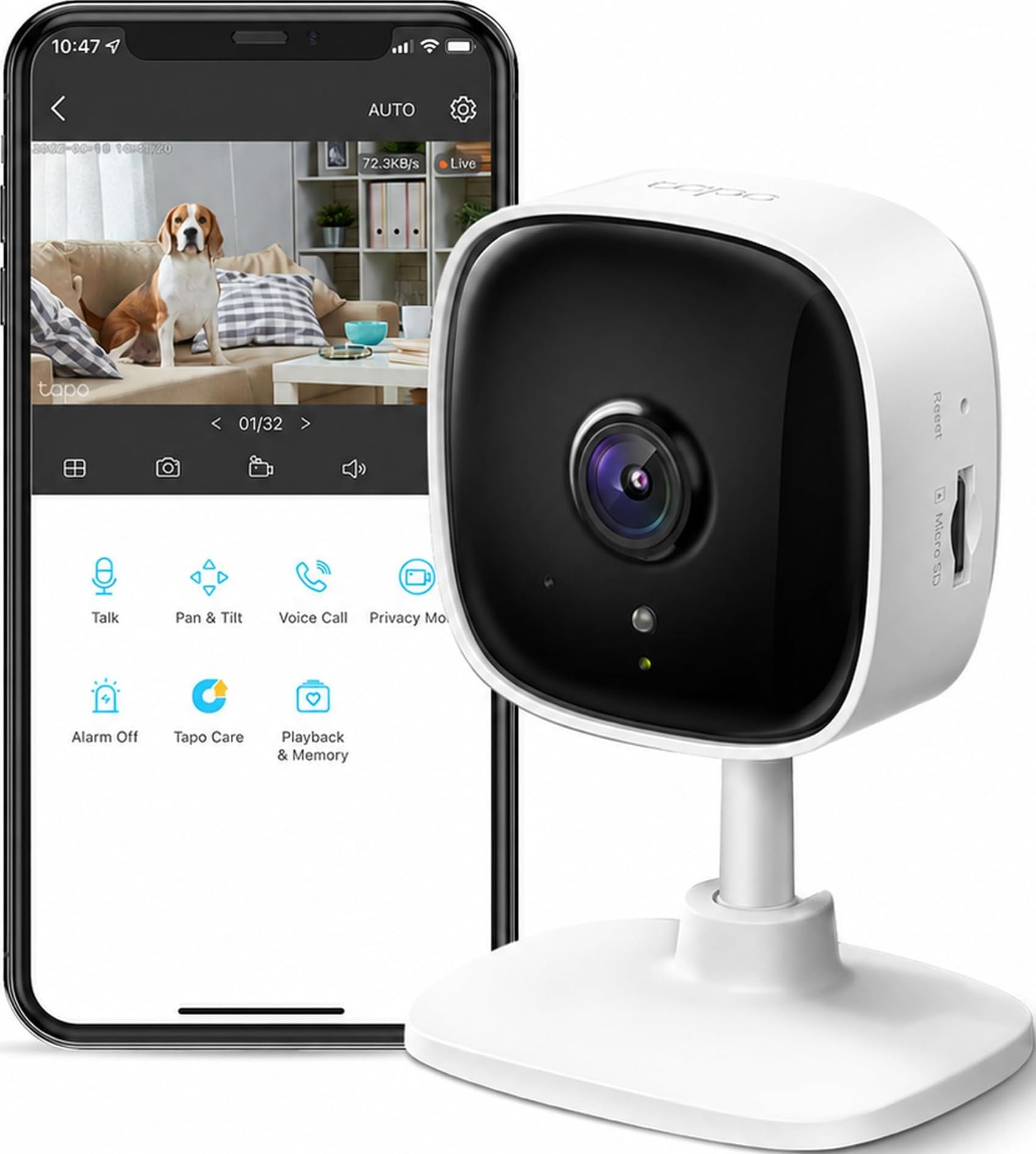
Resolution: 1080P
Power: Wired
Features: Motion detection, 2-way audio, siren, night vision
Storage: Cloud and SD card
Smart Home: Works with Alexa and Google Home
Tapo 1080P Indoor Security Camera (C100)
Check Price on Amazon: https://www.amazon.com/dp/B0866S3D82/?tag=wdowd-20
The C100 is the cheapest way to actually see inside a second home. It is a compact wired indoor camera with 1080P video, night vision, motion detection, two-way audio and a built-in siren, so an owner can check a room from a phone, talk to a contractor standing in the hallway, or scare off someone who should not be there. Storage runs to either a microSD card or the cloud, and it ties into Alexa and Google Home for voice control. At this price it is the natural first camera for a property that already has internet.
It suits the owner who wants a quick visual confirmation that the pipes are fine and the doors are closed, and it doubles as a pet or baby monitor when family stays over. The wired power means it never needs charging, though it also means placement is limited to spots near an outlet.
Trade-off: A single fixed-view indoor camera covers one room only, and the very low price reflects a plastic body and a lens that will not match premium 2K models in low light.
VTimes Smart Home Security Camera System Wireless Outdoor with Monitor
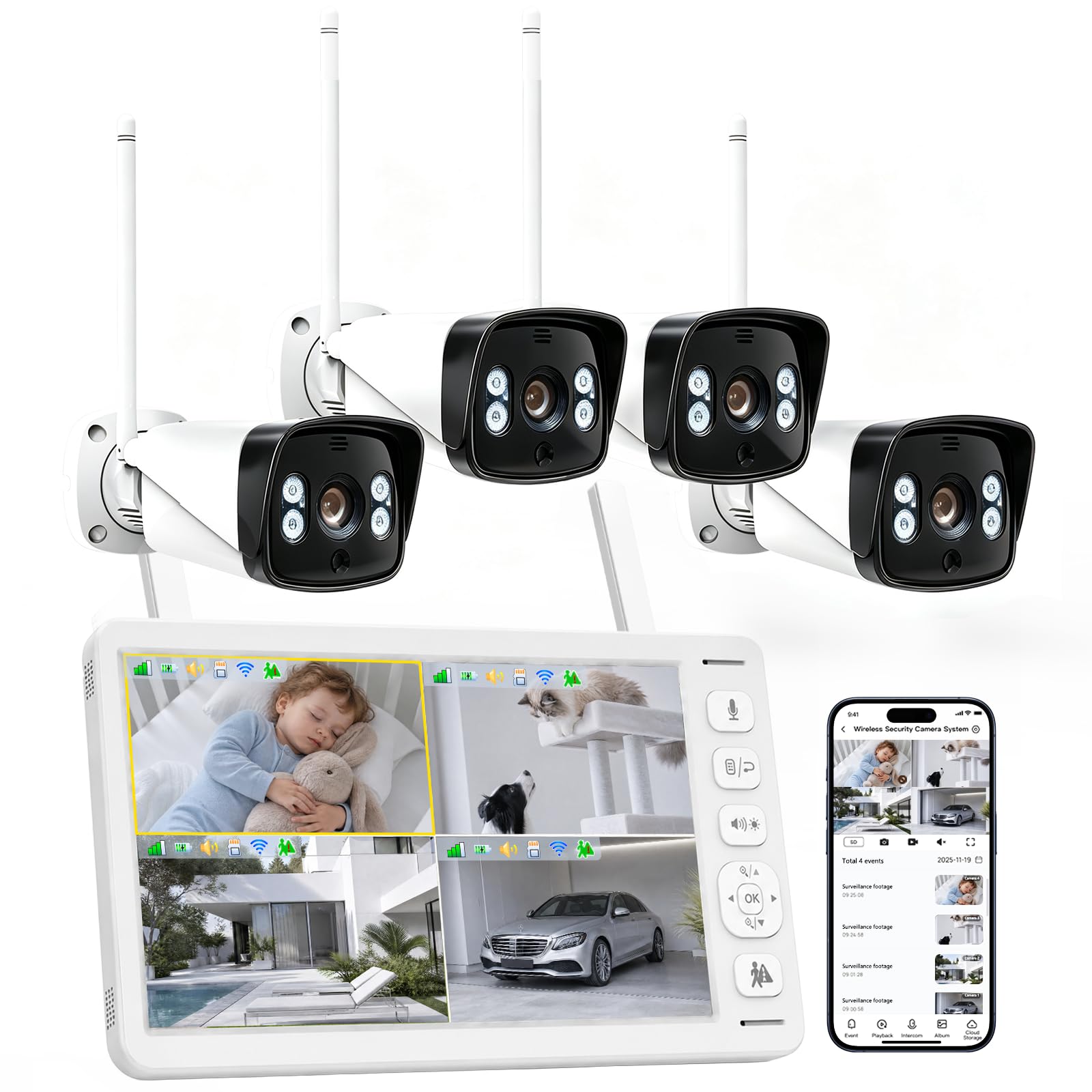
Connectivity: 5G & 2.4G WiFi
Range: 1000ft
Weather Rating: IPX6
Features: AI human detection, 24/7 recording, 2-way audio, night vision
Setup: Plug & Play
Display: Included monitor
VTimes Smart Home Security Camera System Wireless Outdoor with Monitor
Check Price on Amazon: https://www.amazon.com/dp/B0HDSFSNYY/?tag=wdowd-20
This system is built for watching the outside of a property, not just one room. The kit pairs wireless outdoor cameras with a dedicated monitor, so an owner can glance at the perimeter without opening a phone app, and the 1000ft range plus FHSS signaling keeps the link stable across a yard, driveway or detached garage. AI human detection cuts down on alerts triggered by moving branches, 24/7 recording keeps a continuous record, and the IPX6 rating means the cameras handle rain and hose spray. Two-way audio and night vision round out the package.
It suits the owner of a larger property who wants outdoor coverage plus a always-on viewing screen, and the plug-and-play setup means a local handyman can install it without a specialist. The 5G and 2.4G WiFi support makes it flexible across router types.
Trade-off: The dedicated monitor is convenient at home but adds nothing when the owner is hundreds of miles away, and the system costs several times what a single indoor camera does.
GALAYOU 5G&2.4G Dual-Band Indoor Cameras for Home Security in 2K (G2 4Pack)
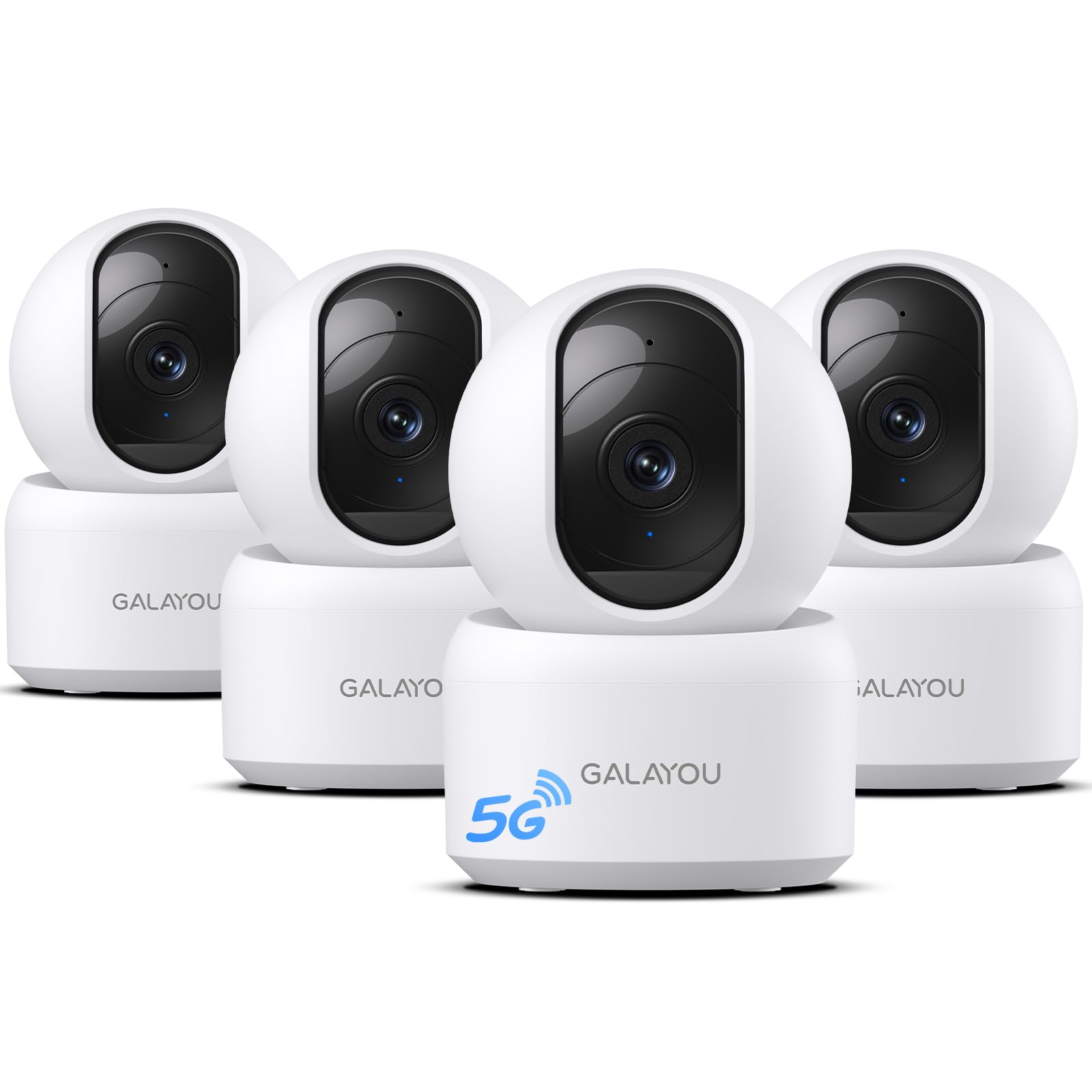
Resolution: 2K
Connectivity: 5G & 2.4G dual-band
Cameras: 4-pack
Features: PTZ, night vision, 2-way talk, siren
Storage: 24/7 TF card and cloud
Power: Plug-in
GALAYOU 5G&2.4G Dual-Band Indoor Cameras for Home Security in 2K (G2 4Pack)
Check Price on Amazon: https://www.amazon.com/dp/B0GR2GNFGT/?tag=wdowd-20
Four 2K cameras for roughly the price of one premium unit is the pitch here, and for a second home with several rooms to watch it is a strong one. Each camera pans and tilts, so a single unit can sweep a living room or hallway rather than staring at one corner, and the dual-band WiFi support means the set works on modern 5G routers as well as older 2.4G ones. Night vision, two-way talk, a siren and 24/7 recording to a TF card or the cloud are all included, and the phone app ties the four feeds together.
This pack suits the owner who wants broad interior coverage — entry hall, kitchen, basement, garage — without buying four separate devices. It is also a sensible choice for a property that hosts renters, since the cameras can be checked between bookings.
Trade-off: Four cameras on one plug-in power scheme means four outlets occupied and four cables to route, and the budget price tier suggests the app and image processing will feel basic next to premium brands.
Emporia Vue 3 Home Energy Monitor
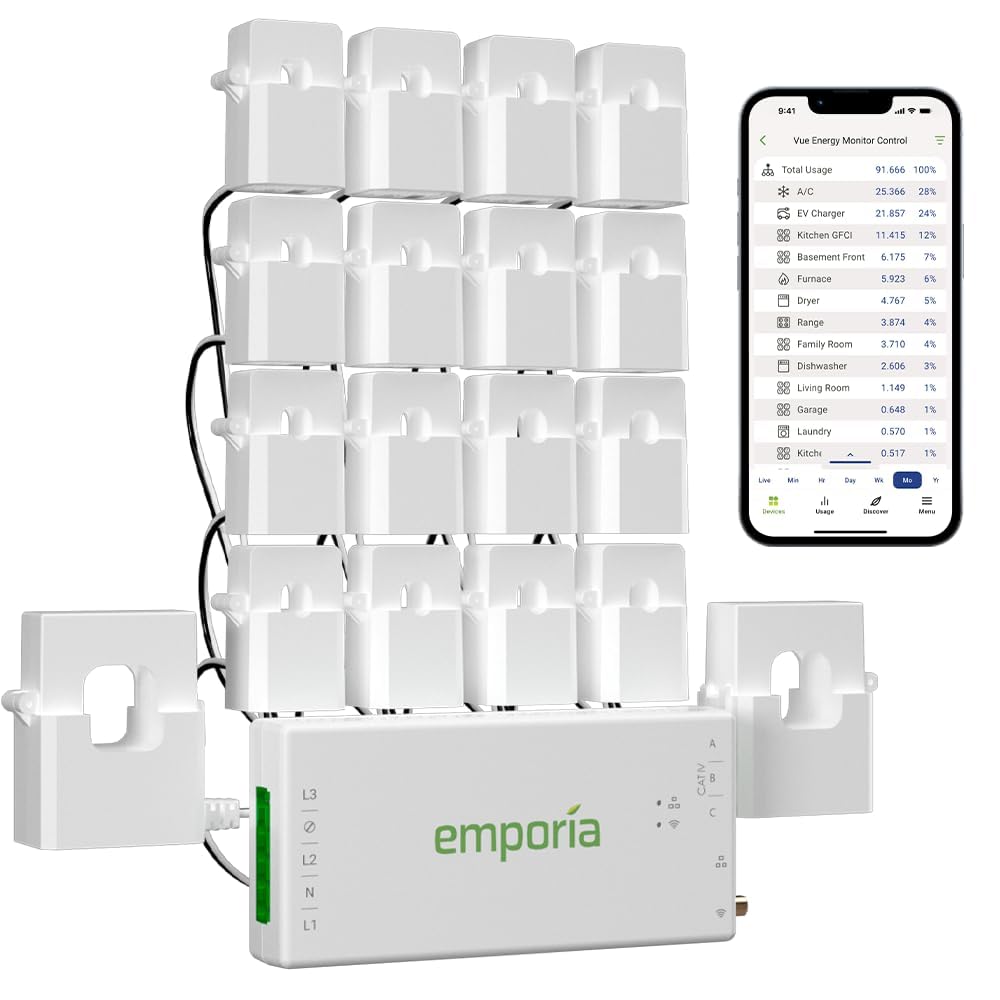
Function: Real-time electricity usage monitoring
Features: Smart home automation module, solar and net metering
Certification: UL Certified
Best for: Tracking power draw and solar production
Emporia Vue 3 Home Energy Monitor
Check Price on Amazon: https://www.amazon.com/dp/B0C79PNK84/?tag=wdowd-20
The Vue 3 answers a different question from the cameras: not "is someone there?" but "what is this house doing while nobody is?" It monitors real-time electricity usage, supports solar and net metering, and doubles as a smart home automation module, so an owner can see whether a water heater is cycling, whether a sump pump is running, or whether the solar array is producing as expected. The UL certification is the reassurance a permanently installed electrical device needs.
It suits the owner of a second home with high utility bills, a solar installation, or a suspicion that something is drawing power it should not. For a property that sits empty for months, the data turns guesswork about energy costs into a clear picture.
Trade-off: This is an electrical panel device, so installation is not a plug-in job for most owners, and it reports energy rather than temperature, motion or intrusion — it complements the other picks rather than replacing them.
Before You Buy
- Connectivity: Confirm whether the property has reliable broadband. A cellular monitor such as the MarCELL is the only safe choice when internet is absent or flaky.
- Power: Wired and plug-in cameras never need charging but need outlets; check where those outlets sit before committing to a camera.
- Coverage: One camera watches one view. Count the rooms and exterior walls that need eyes before choosing a single unit over a multi-camera pack.
- Weather rating: Only outdoor-rated hardware such as the IPX6 VTimes cameras should go outside; indoor units will not survive rain.
- Storage: Decide between local SD or TF cards and cloud plans, since subscription costs add up over a year of ownership.
- Installation skill: An energy monitor ties into the electrical panel, while plug-and-play camera kits can be set up by a handyman.
- Ongoing costs: Cellular service and cloud storage are recurring bills; factor them into the budget alongside the purchase price.
Frequently Asked Questions
-
What is the best monitoring for a second home with no internet?
A cellular monitor such as the MarCELL, because it reports over the mobile network and keeps working when there is no router or broadband service at the property. -
Can one camera cover a whole second home?
No. A single camera covers one view, so a multi-room property usually needs a multi-camera pack like the GALAYOU four-pack or a system with several outdoor units. -
Do these monitors require a subscription?
Not always. Several support local SD or TF card storage, but cloud storage and cellular service typically carry recurring fees that should be budgeted for. -
Is an energy monitor useful in an empty house?
Yes. It reveals what is drawing power while the property is vacant, which helps catch a running water heater, a failing pump or an underperforming solar array. -
How hard is installation?
Camera kits are largely plug-and-play, while the Emporia Vue 3 involves the electrical panel and is best handled by someone comfortable with that work. -
Can these devices alert an owner instantly?
Yes. The cellular monitor sends instant alerts around the clock, and the camera systems push motion and human-detection notifications to a phone app.
Bottom Line
For most second-home owners the safest single purchase is the MarCELL Cellular Temperature, Humidity & Power Monitor (Verizon), because it keeps reporting when the internet and the power do not. Owners with solid broadband can pair it with the budget Tapo C100 for a visual check-in, or step up to the VTimes system for outdoor coverage and the GALAYOU four-pack for interior rooms.
