Why there are Amazon links here: Brave Review is paid a commission for qualifying Amazon purchases made through the links below. Your price does not change, and using our links is entirely optional. How this works
Best Network for a Boat for Reliable Marine Electronics
A boat’s electronics only work as well as the network that ties them together. This guide covers five marine networking components — expansion hubs, a starter N2K network, and a replacement Ethernet cable — each suited to a different setup. Boat owners building a first electronics backbone, skippers expanding an existing helm, and refitters chasing a single loose cable will all find a match. The overview table below shows the short version before the detailed reviews.
Overview of the Picks
| Product | Key Spec | Best Use | Price Tier |
|---|---|---|---|
| Small Boat 8 Way Self-Contained Boat Network N2K | 8-way self-contained N2K network | First-time NMEA 2000 backbone on a small boat | Budget |
| NEP-2 Network Expansion Port for Simrad | 5-port marine Ethernet hub | Expanding a Simrad or Lowrance helm | Mid-range |
| Garmin GMS 10 Network Port Expander | 10-port network expander | Large Garmin multi-display setups | Mid-range |
| 000-10029-001 NEP-2 with 6 ft Ethernet Crossover Cable | 5-port hub plus crossover cable | Plug-and-play Lowrance expansion | Premium |
| 20 Foot Marine Network Cable for Garmin | 20 ft RJ45 male-to-male cable | Replacing a damaged Garmin network run | Budget |
Small Boat 8 Way Self-Contained Boat Network N2K

Type: Self-contained NMEA 2000 network
Ports: 8-way
Intended use: Small boat electronics backbone
Included: Network backbone components
Price tier: Budget
Small Boat 8 Way Self-Contained Boat Network N2K
This is the simplest way to give a small boat a proper NMEA 2000 backbone without buying every piece separately. The self-contained design bundles the trunk and drop connections into one 8-way package, so a GPS, a display, and a couple of sensors can share data on a single bus. It suits trailer boats and compact cruisers where the electronics list is short but growing.
The 8-way layout leaves room for expansion, though a boat with a dense instrument suite will outgrow it. Installation is straightforward for anyone comfortable running cable and terminating a backbone.
Who it suits: Owners of small boats building a first electronics network who want one box instead of a parts list.
Trade-off: The compact backbone limits total device count, so a larger helm with radar, autopilot, and multiple displays will need a bigger network.
NEP-2 Network Expansion Port for Simrad

Type: Marine Ethernet hub
Ports: 5-port
Compatibility: Simrad and Lowrance
Intended use: Connecting displays, radar, and echosounders
Model reference: 000-10029-001
Price tier: Mid-range
NEP-2 Network Expansion Port for Simrad
The NEP-2 is the Ethernet side of a modern helm, letting displays, radar, and echosounders talk over a shared marine network. Five ports cover a typical dual-display setup with room for a radar and a sonar module, and the housing is built for the marine environment rather than a cabin shelf. It is the natural upgrade when a boat already runs Simrad or Lowrance gear.
Buyers with a mixed-brand helm should confirm compatibility before committing, since this hub is aimed squarely at the Simrad and Lowrance ecosystem.
Who it suits: Skippers running Simrad or Lowrance electronics who need to network more than two devices.
Trade-off: The five-port ceiling fills quickly on a fully loaded boat, and the brand focus makes it a poor fit for mixed-brand helms.
Garmin GMS 10 Network Port Expander

Type: Network port expander
Ports: 10-port
Compatibility: Garmin marine network
Intended use: Expanding a multi-display network
Model reference: 010-00351-00
Price tier: Mid-range
Garmin GMS 10 Network Port Expander
The GMS 10 is the hub for a serious Garmin helm, with enough ports to tie together several displays, radar, sonar, and other network devices at once. Ten ports give genuine headroom, so a boat can grow its electronics without another hub. It is built for permanent below-deck mounting and a long service life.
This is the pick for a Garmin-first boat that expects to add hardware over time. Owners of other brands should look elsewhere, as the expander is designed around Garmin’s marine network.
Who it suits: Garmin boat owners with multiple displays and plans to add radar or sonar later.
Trade-off: It is a premium-priced hub aimed at one brand, so a mixed-brand or budget helm gets little value from it.
000-10029-001 NEP-2 Network Expansion Port with 6 ft Ethernet Crossover Cable

Type: Marine Ethernet hub kit
Ports: 5-port
Compatibility: Lowrance
Included: 6 ft (1.82 m) Ethernet crossover cable
Intended use: Connecting displays, radar, and echosounders
Price tier: Premium
000-10029-001 NEP-2 Network Expansion Port with 6 ft Ethernet Crossover Cable
This is the same NEP-2 hub bundled with a 6 ft Ethernet crossover cable, which removes a separate purchase from the job. The kit suits a Lowrance helm where the installer wants everything in one box, and the included cable is sized for connecting two nearby devices such as a display and a sonar module. Five ports handle a typical display-and-radar combination.
The bundle costs more than the hub alone, so buyers who already own the right cable are paying for something they do not need.
Who it suits: Lowrance owners who want a hub and the connecting cable in a single order.
Trade-off: The bundled cable is short and the kit carries a premium over the standalone hub, making it poor value for anyone with cable already on hand.
20 Foot Marine Network Cable for Garmin
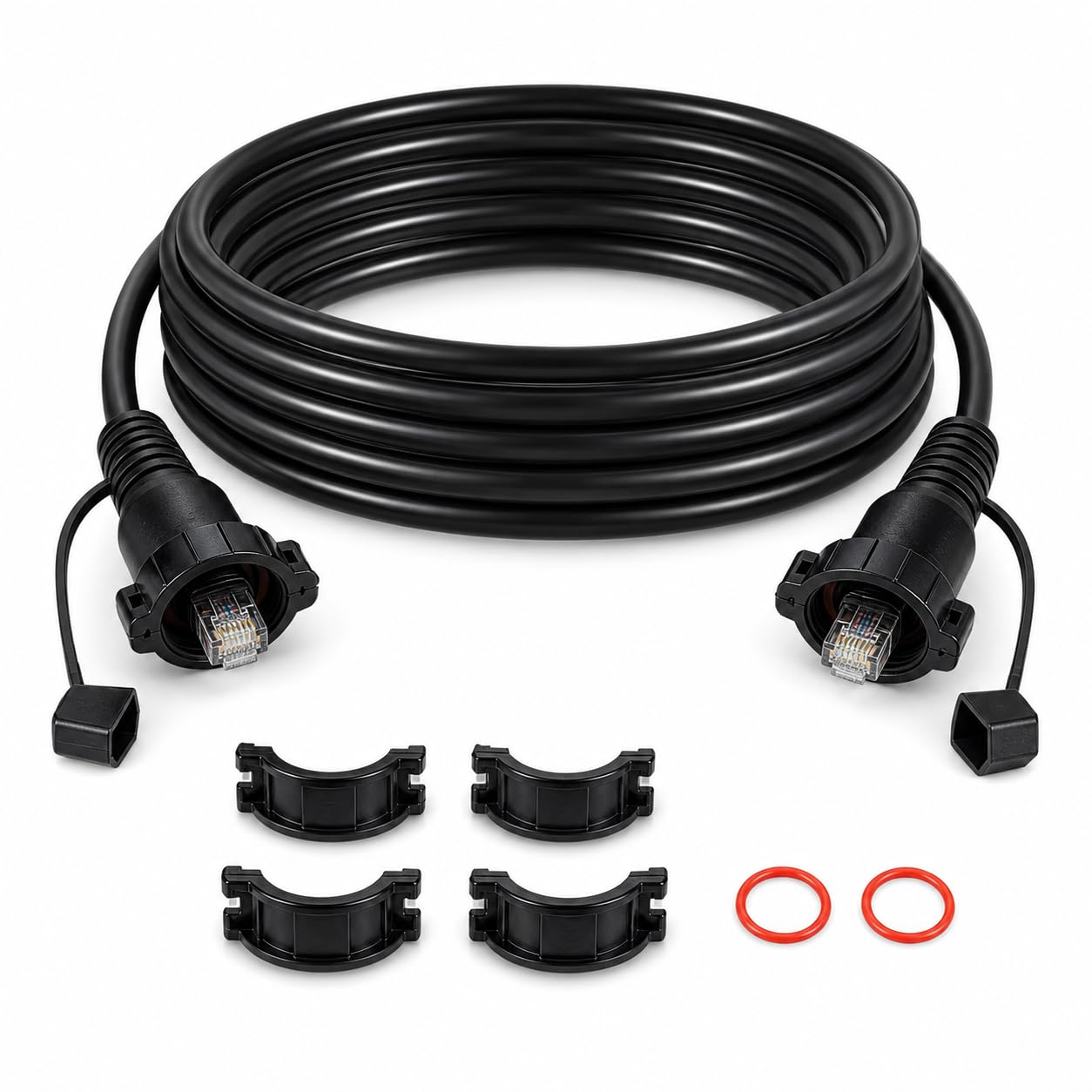
Type: Marine network Ethernet cable
Length: 20 ft
Connectors: RJ45 male to male
Compatibility: Garmin GPSMAP, ECHOMAP UHD/Ultra, fish finder, radar, GMR, GMS 10, GCV, GSD
Replacement for: 010-10551-00
Price tier: Budget
20 Foot Marine Network Cable for Garmin
A 20 ft run is the practical fix when a Garmin network cable is damaged or a new display needs a longer reach across the boat. The RJ45 male-to-male ends match the Garmin marine network style, and the length covers most console-to-helm runs on mid-size boats. It is a direct replacement for the 010-10551-00 part.
The cable is a consumable, not an upgrade, so buyers should confirm the connectors match their device before ordering.
Who it suits: Garmin owners replacing a failed cable or extending a network run to a new display.
Trade-off: Twenty feet is fixed, so very large boats or long routed runs may need a different length.
Before You Buy
- Compatibility: Match the hub or cable to the brand of the displays already on board; Simrad, Lowrance, and Garmin each have their own network conventions.
- Port count: Count every device that needs a connection, then add one or two spare ports for future electronics.
- Cable length: Measure the actual route from device to hub, allowing for bends and bulkheads, before ordering a cable.
- Mounting location: Plan a dry, accessible spot below deck for the hub, clear of bilge water and spray.
- Included accessories: Check whether the hub comes with a crossover cable or needs one bought separately.
- Network type: NMEA 2000 handles sensors and instruments; Ethernet hubs carry displays, radar, and sonar data, so a boat may need both.
Frequently Asked Questions
-
What is the best network for a boat with a small electronics setup?
A self-contained NMEA 2000 backbone such as the 8-way kit is the simplest starting point, since it connects instruments and a display without a separate hub. -
Do I need an Ethernet hub or an NMEA 2000 network?
NMEA 2000 carries sensor and instrument data, while an Ethernet hub links displays, radar, and echosounders. Many boats need both working together. -
Can a Simrad hub be used with Garmin displays?
No. Marine Ethernet hubs are built around one brand’s network, so the hub should match the displays on board. -
How long should a marine network cable be?
Long enough to follow the actual cable route with slack for bends, but not so long that excess cable coils in a locker. -
Is a bundled hub and cable kit worth it?
It saves a separate order when the included cable matches the installation, but costs more for buyers who already have the right cable.
Bottom Line
For most small boats, the Small Boat 8 Way Self-Contained Boat Network N2K is the best network for a boat starting from scratch, bundling the backbone into one affordable package. Boats with a Garmin helm and multiple displays should step up to the GMS 10 for its ten ports and long-term headroom.
