Why there are Amazon links here: Brave Review is paid a commission for qualifying Amazon purchases made through the links below. Your price does not change, and using our links is entirely optional. How this works
8 Best Off Grid Battery for an Outbuilding – Power a Shed or Cabin Without the Grid
An outbuilding battery has to do more than store energy. It has to survive cold nights, run tools and lights far from the main panel, and hold up to years of charge-and-discharge cycles with little supervision. This guide compares eight batteries that suit that job, from small 12V units for a garden shed to full 48V storage banks that can carry a cabin or workshop.
The top pick for most buyers is the Build in 200A BMS 48V 314Ah LiFePO4 battery, a high-capacity 48V unit that pairs a large reserve with a smart BMS and multiple communication ports. It is the closest thing here to a set-and-forget power wall for a detached building.
Picks were judged on voltage and capacity, battery chemistry, built-in management and safety features, expandability, and how well each unit fits a real outbuilding setup. Below is an overview table, then a full review of each battery, a buying guide and an FAQ.
At a Glance
| Product | Key Spec | Best Use | Price Tier |
|---|---|---|---|
| Build in 200A BMS 48V 314Ah LiFePO4 | 48V, 314Ah, 16.08kWh, 200A BMS | Large cabin or workshop bank | Premium |
| ECO-WORTHY 48V 100Ah 2 Pack Server Rack | 48V, 100Ah x2, 10,240Wh, 10kW inverter | All-in-one backup with inverter | Premium |
| ECO-WORTHY EnergyRock 12V 280Ah | 12V, 280Ah, 200A BMS, Bluetooth | Shed and RV power | Mid-range |
| Renogy 12V 200Ah AGM | 12V, 200Ah, AGM lead acid | Budget basic storage | Budget |
| ECO-WORTHY Powermega 48V 314Ah 2 Pack | 48V, 314Ah x2, fire protection | Serious off-grid bank | Premium |
| 48V 100Ah 3U Server Rack | 48V, 100Ah, 5,120Wh, 100A BMS | Compact rack storage | Mid-range |
| ECO-WORTHY Powermega 48V 314Ah 2 Pack + Inverter | 48V, 314Ah x2, 10kW hybrid inverter | Full turnkey system | Premium |
| 24V 100Ah Metal Shell LiFePO4 | 24V, 100Ah, 100A BMS, APP monitoring | Mid-voltage shed setup | Mid-range |
Top 8 Best Off Grid Battery for an Outbuilding Reviews
Build in 200A BMS Energy Storage 48V 314Ah LiFePO4
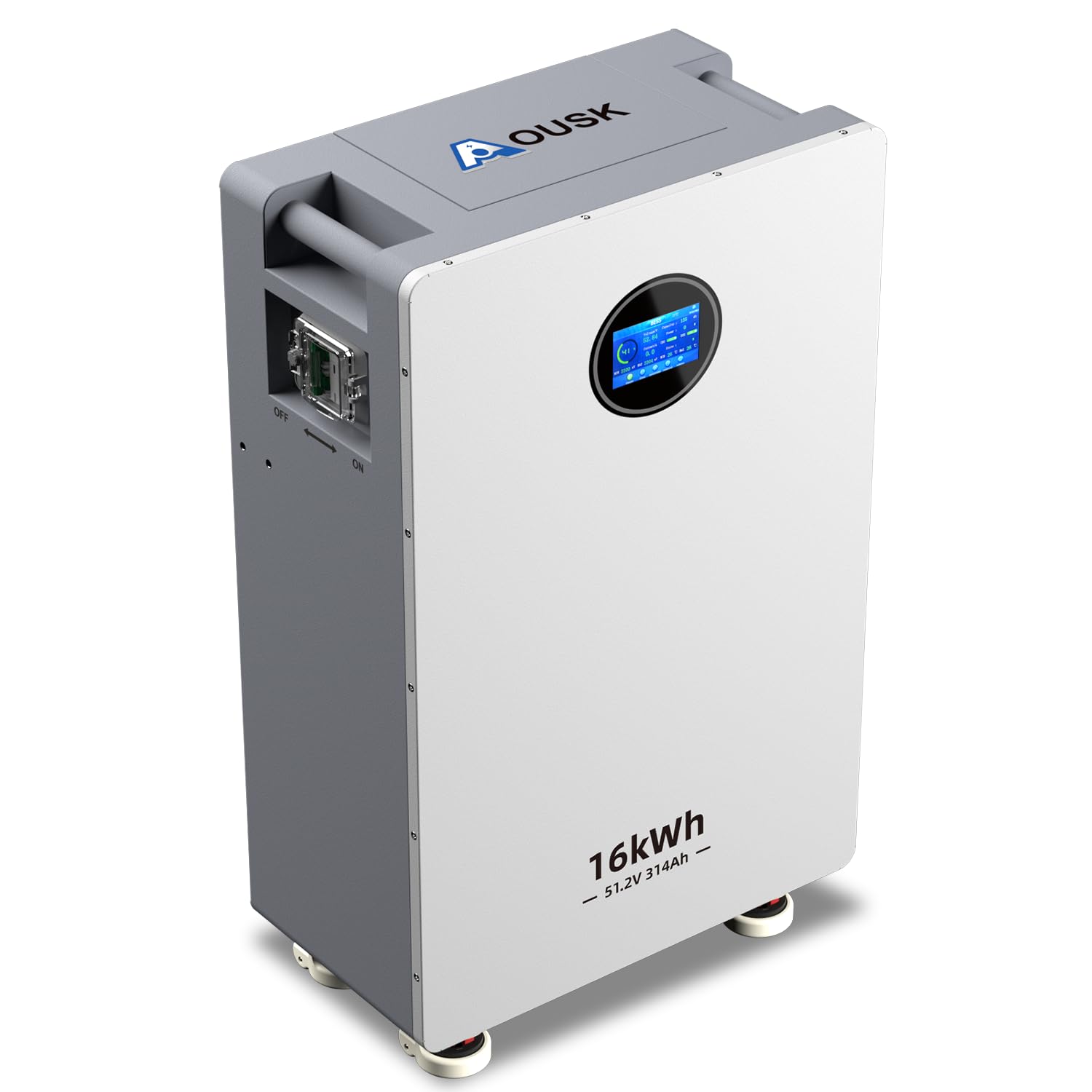
Voltage: 48V
Capacity: 314Ah
Stored Energy: 16.08kWh
Chemistry: LiFePO4
BMS Rating: 200A
Communication: RS485 / CAN / RS232
This is the largest single-unit battery in the roundup, and it is built for buyers who want one big reserve rather than a stack of small packs. The 48V, 314Ah configuration puts it in the energy-storage class, and the 16.08kWh figure reflects a bank sized for real loads over a full night or a cloudy day.
The 200A BMS is the headline feature for outbuilding use. It allows a substantial continuous draw, so a workshop running a saw, a compressor or a welder-style load has headroom without tripping protection. The RS485, CAN and RS232 ports let the battery talk to inverters and monitoring gear, which matters when the building sits away from the house and needs remote visibility. Integrated breakers add a layer of safety that many bare cells lack.
The trade-off is that this is a heavy, premium battery that needs a proper 48V inverter and a real installation plan. Buyers running a small 12V shed light setup would be paying for capacity they will never use.
Trade-off: A large premium 48V bank demands a matching inverter and installation, so it is overkill and over-budget for light-duty sheds.
Check the current price on Amazon
ECO-WORTHY 48V 100Ah 2 Pack Server Rack Battery with Liber 10KP Inverter
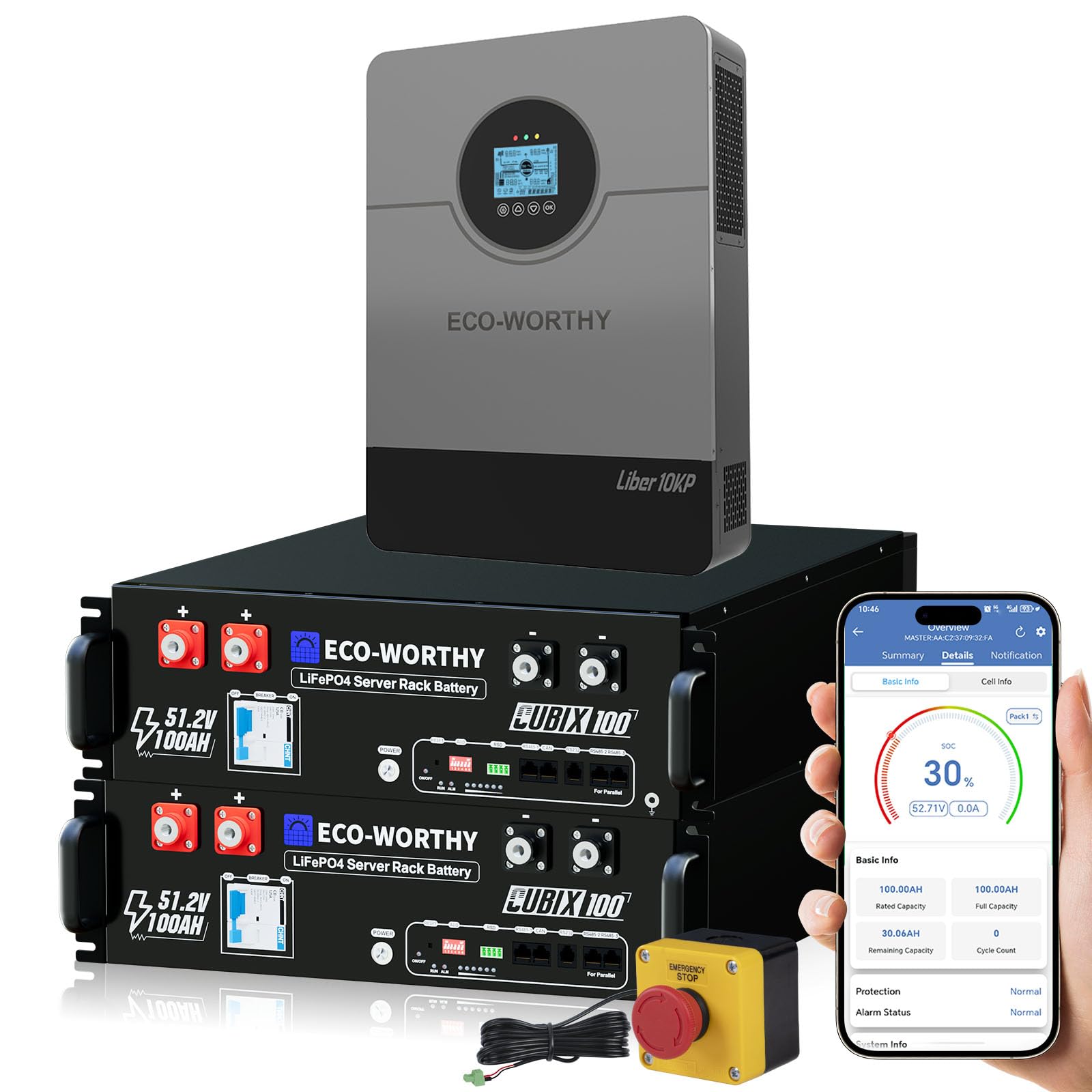
Voltage: 48V
Capacity: 100Ah (2 pack)
Stored Energy: 10,240Wh
Chemistry: LiFePO4
Certification: ETL UL1973 and UL1741
Output: 120V / 240V
Included Inverter: Liber 10KP 10kW
This bundle solves the outbuilding problem in one box. Two 48V 100Ah server-rack batteries pair with a Liber 10KP 10kW inverter, and the result supports both 120V and 240V output, which covers everything from lights and chargers to a 240V tool or well pump. The ETL UL1973 and UL1741 listings give buyers documented safety and grid-interaction standards to point to.
Server-rack format is a practical choice for an outbuilding because the batteries slide into a standard rack and stay organized, ventilated and easy to service. The 10,240Wh total is a solid day-to-day reserve for a cabin or workshop, and the included inverter removes the guesswork of matching components.
The trade-off is that a 10kW inverter and rack setup is a serious install that wants a dedicated space, proper wiring and likely an electrician. Buyers who only need to run a few lights and a fan will find it more system than the job requires.
Trade-off: A full inverter-plus-rack bundle is a bigger, more complex install than a simple battery swap and suits buyers ready to wire a real system.
Check the current price on Amazon
ECO-WORTHY EnergyRock 12V 280Ah Metal Case LiFePO4
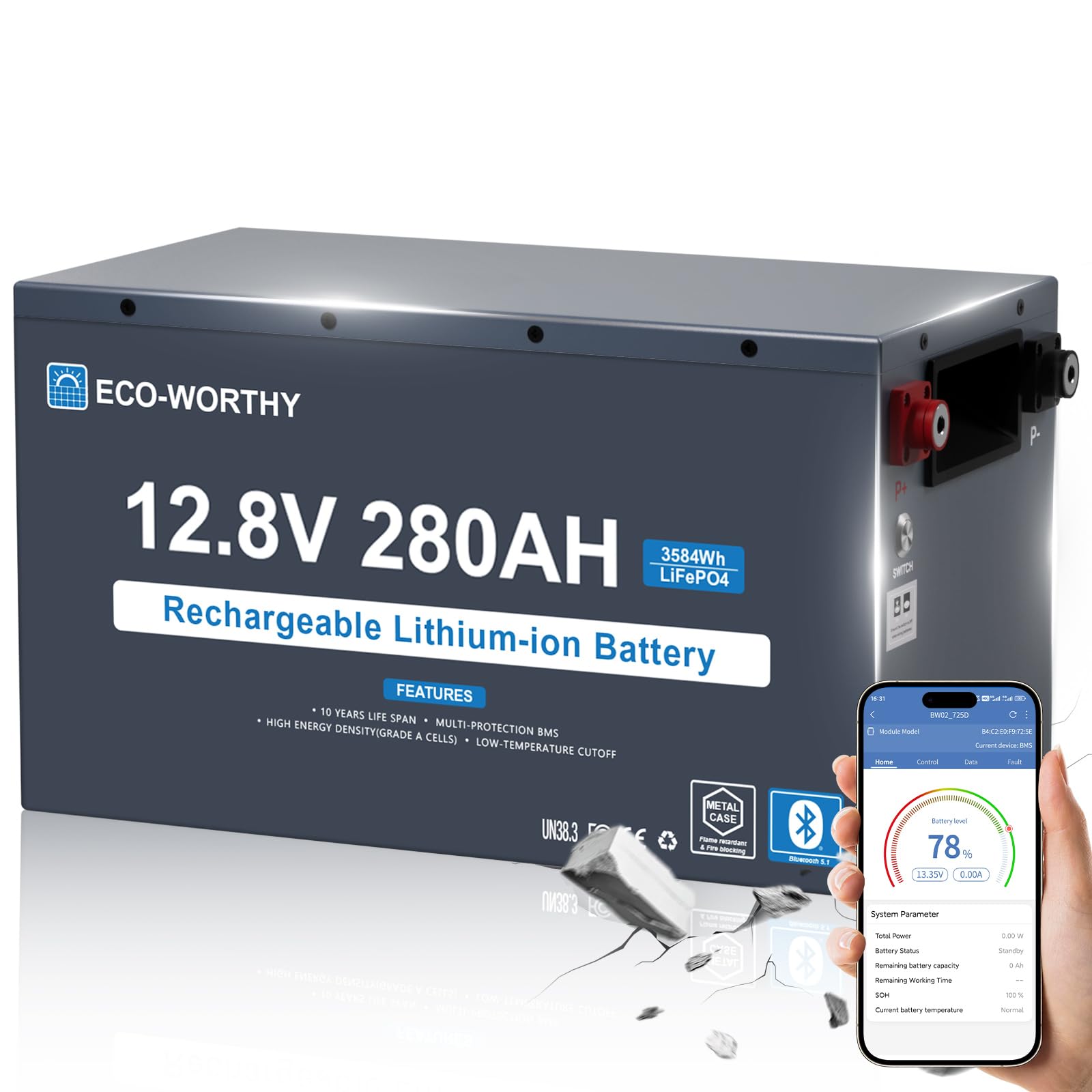
Voltage: 12V
Capacity: 280Ah
Stored Energy: Up to 3,584Wh
Chemistry: LiFePO4
BMS Rating: 200A
Features: Bluetooth, safety switch, low-temp protection
Case: Metal
This is the pick for the buyer who wants a simple 12V battery that behaves like a much bigger one. At 12V and 280Ah it stores up to 3,584Wh, enough for shed lighting, a small fridge, fans and tool charging across a weekend. The metal case is a practical upgrade for an outbuilding, where plastic-shell batteries can take a beating.
The feature set is unusually complete for a 12V unit. A built-in 200A BMS handles high current, low-temperature protection guards against charging in cold weather, and Bluetooth lets the owner check state of charge from a phone without opening the box. The safety switch is a small but welcome detail for anyone who wants to isolate the battery quickly.
The trade-off is that 12V systems need thicker cable and higher current to deliver the same power as a 48V bank, so this suits modest loads rather than heavy tools. Buyers planning to run a big inverter should step up to a higher-voltage battery.
Trade-off: A 12V design keeps wiring simple but limits how much power an outbuilding can pull through one battery.
Check the current price on Amazon
Renogy 12V 200Ah Deep Cycle AGM Battery
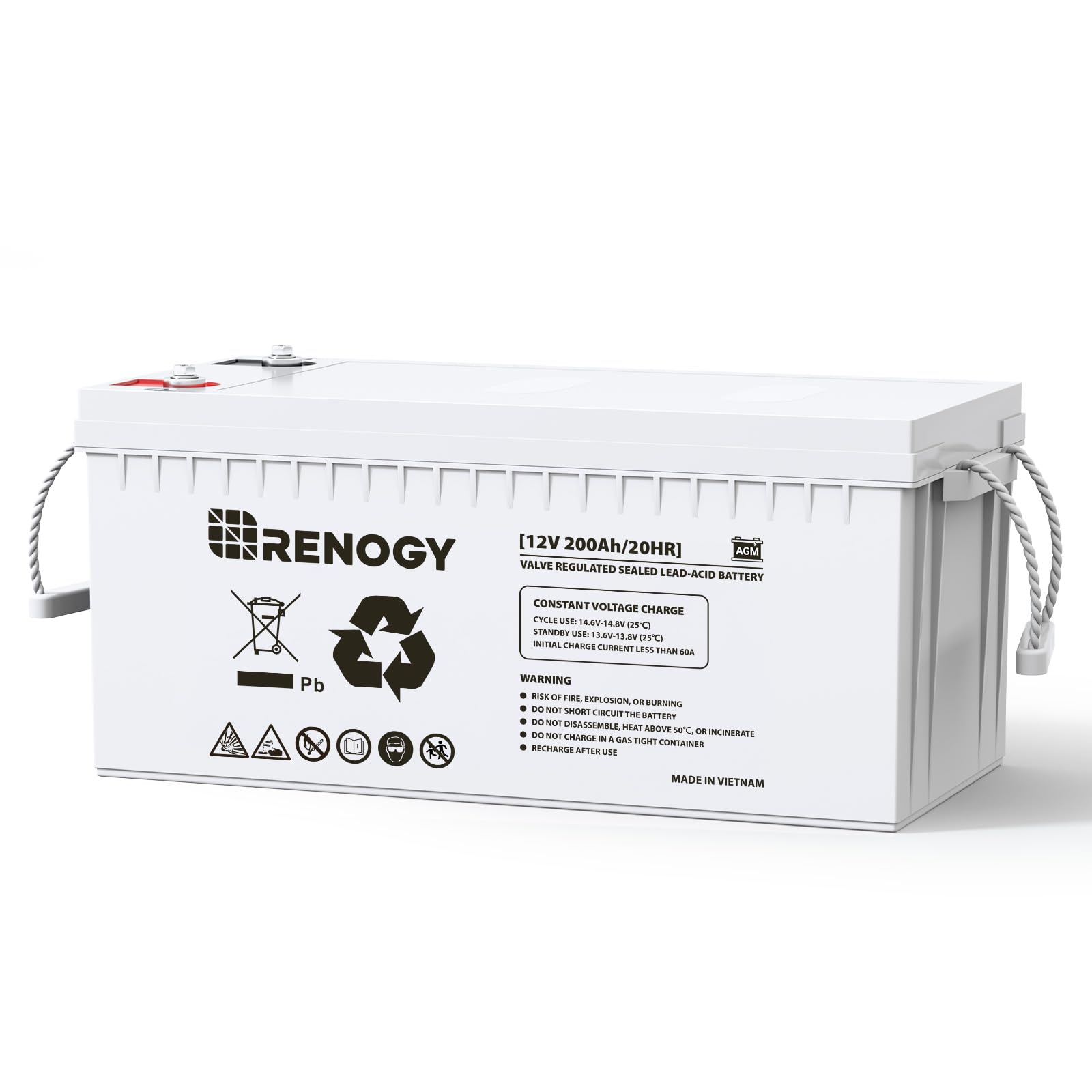
Voltage: 12V
Capacity: 200Ah
Chemistry: AGM lead acid
Self-Discharge: 3%
Max Discharge Current: 2000A
Intended Use: RV, camper, cabin, marine, off-grid
This is the budget entry in the roundup and the one to consider when the outbuilding needs dependable basic storage without a lithium price tag. Renogy’s AGM battery is a sealed lead-acid design, so it needs no water maintenance and can sit in a shed or cabin without the venting concerns of flooded lead acid.
The 3% self-discharge rate is genuinely useful for an outbuilding that sits unused for weeks at a time, since the battery holds its charge longer between visits. The 2000A max discharge current figure speaks to its ability to deliver a strong burst for starting-style loads. It is a familiar, well-understood chemistry that most rural owners and installers already know how to charge.
The trade-off is the chemistry itself. AGM delivers fewer usable cycles than LiFePO4, weighs more for the same capacity and is less tolerant of deep discharges, so buyers who cycle daily should expect a shorter service life.
Trade-off: Lead-acid chemistry costs less up front but gives up cycle life and usable capacity compared with lithium.
Check the current price on Amazon
ECO-WORTHY Powermega 48V 314Ah (2 Pack) LiFePO4
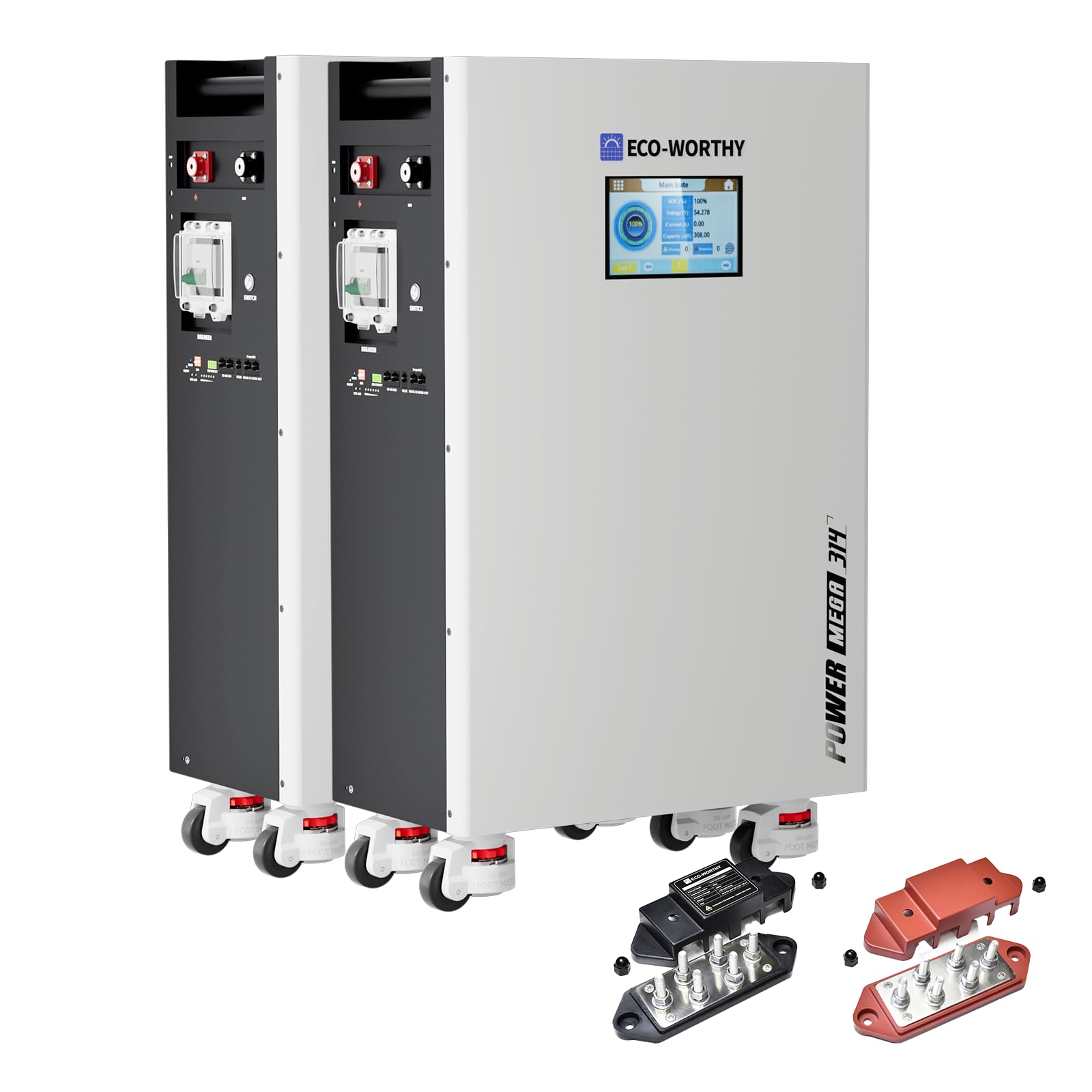
Voltage: 48V
Capacity: 314Ah (2 pack)
Chemistry: LiFePO4
Certification: UL1973
BMS Rating: 200A with active balancing
Safety: Aerosol fire protection
Monitoring: LCD, Bluetooth, WiFi
Communication: RS485 / CAN / RS232
This is the battery bank for the buyer who wants capacity and safety engineering in equal measure. Two 48V 314Ah packs deliver a very large reserve, and the active balancing BMS keeps the cells in step over years of service, which is exactly the kind of long-term care an unattended outbuilding needs.
The safety package stands out. Aerosol fire protection is a meaningful addition for a building that may sit far from the house, and the LCD with Bluetooth and WiFi gives on-unit and remote visibility without extra gear. The RS485, CAN and RS232 ports keep it compatible with common inverter and monitoring ecosystems, and the UL1973 listing gives buyers a recognized standard to point to.
The trade-off is cost and scale. This is a premium two-pack that needs a substantial 48V system around it, and buyers with a small shed will never tap its capacity.
Trade-off: A premium, high-capacity bank that rewards large off-grid systems but is far more than a small outbuilding needs.
Check the current price on Amazon
48V 100Ah 3U Server Rack LiFePO4 Battery

Voltage: 48V
Capacity: 100Ah
Stored Energy: 5,120Wh
Chemistry: LiFePO4
Format: 3U server rack
BMS Rating: 100A smart BMS
Controls: Touch screen, app control
This is the sensible middle ground for an outbuilding that needs 48V storage without the cost of a multi-pack bank. A single 3U rack unit stores 5,120Wh, which is a realistic reserve for a cabin’s lights, router, fridge and device charging. The server-rack format keeps it tidy and expandable.
The touch screen is a nice touch for a building without a networked monitoring setup, since state of charge and basic data are visible on the unit itself. App control adds remote checks for owners who want them, and the 100A smart BMS is matched to the single-unit capacity. It is the kind of battery that can start small and grow as the outbuilding’s needs do.
The trade-off is that 100A of BMS headroom limits how much continuous load one unit can carry, so heavy tools may call for a second battery in parallel. Buyers with big loads should plan for expansion from the start.
Trade-off: A single rack unit is tidy and affordable but its 100A limit means large loads need a second battery.
Check the current price on Amazon
ECO-WORTHY Powermega 48V 314Ah (2 Pack) with Liber 10KP Inverter
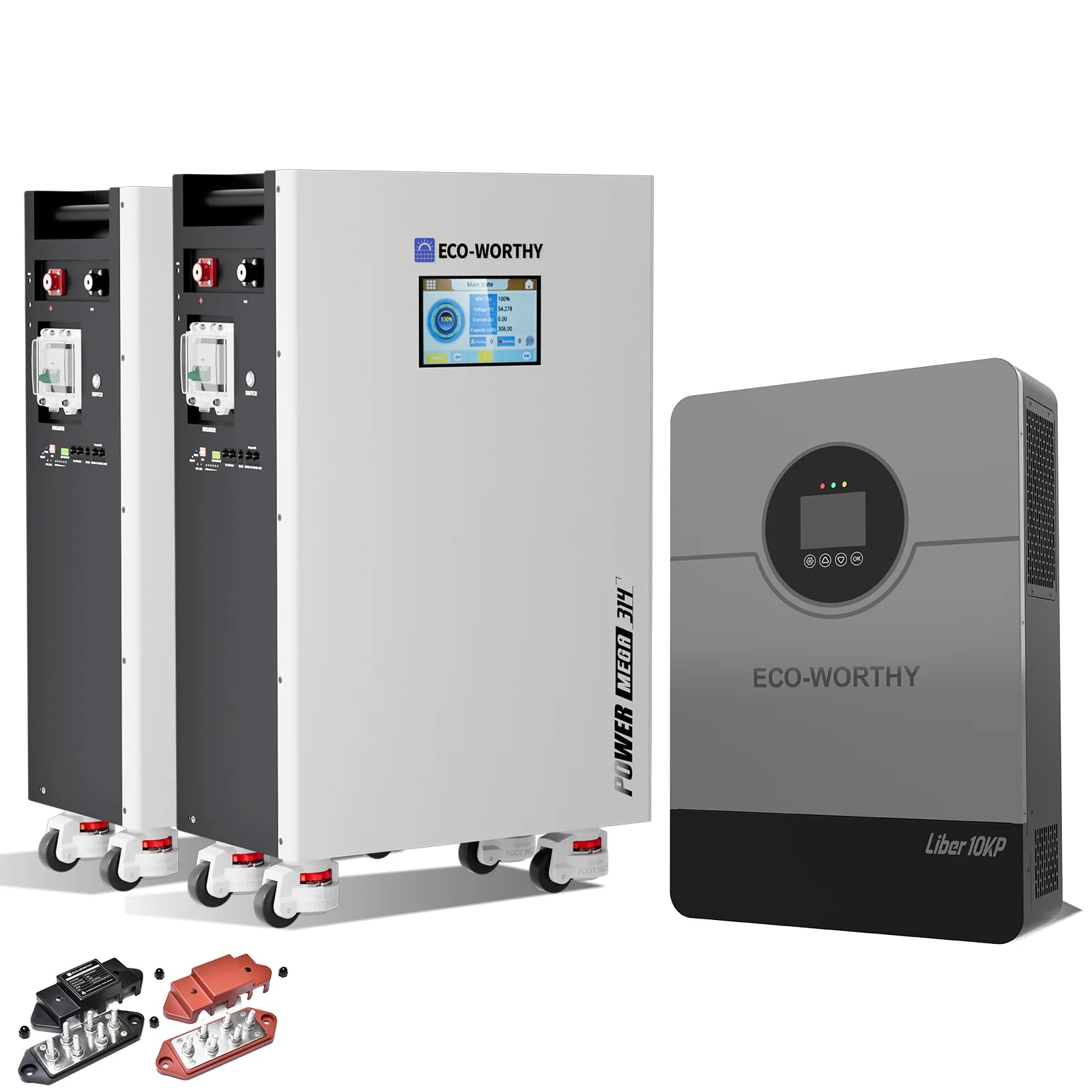
Voltage: 48V
Capacity: 314Ah (2 pack)
Chemistry: LiFePO4
Certification: UL1973
Included Inverter: Liber 10KP 10kW hybrid
BMS: Active balancing
Monitoring: Bluetooth, WiFi
Communication: Inverter communication supported
This is the most complete system in the roundup: a large two-pack battery bank paired with a 10kW hybrid inverter, sold as one package. For an outbuilding that needs to run real loads and accept solar input, it removes the biggest headache of off-grid builds, which is matching the battery to the inverter.
The active balancing BMS and the built-in Bluetooth and WiFi give the owner both long-term cell health and remote monitoring. Inverter communication means the battery and inverter share data rather than fighting each other. The UL1973 listing adds a recognized safety standard. For a cabin or workshop meant to run largely on its own, this is close to a turnkey answer.
The trade-off is price and installation scope. This is a premium package that assumes a dedicated equipment area and professional wiring, and a small garden shed cannot justify it.
Trade-off: A turnkey high-capacity system that demands serious budget and a proper installation, making it wrong for small or light-duty buildings.
Check the current price on Amazon
24V 100Ah Metal Shell LiFePO4 Battery
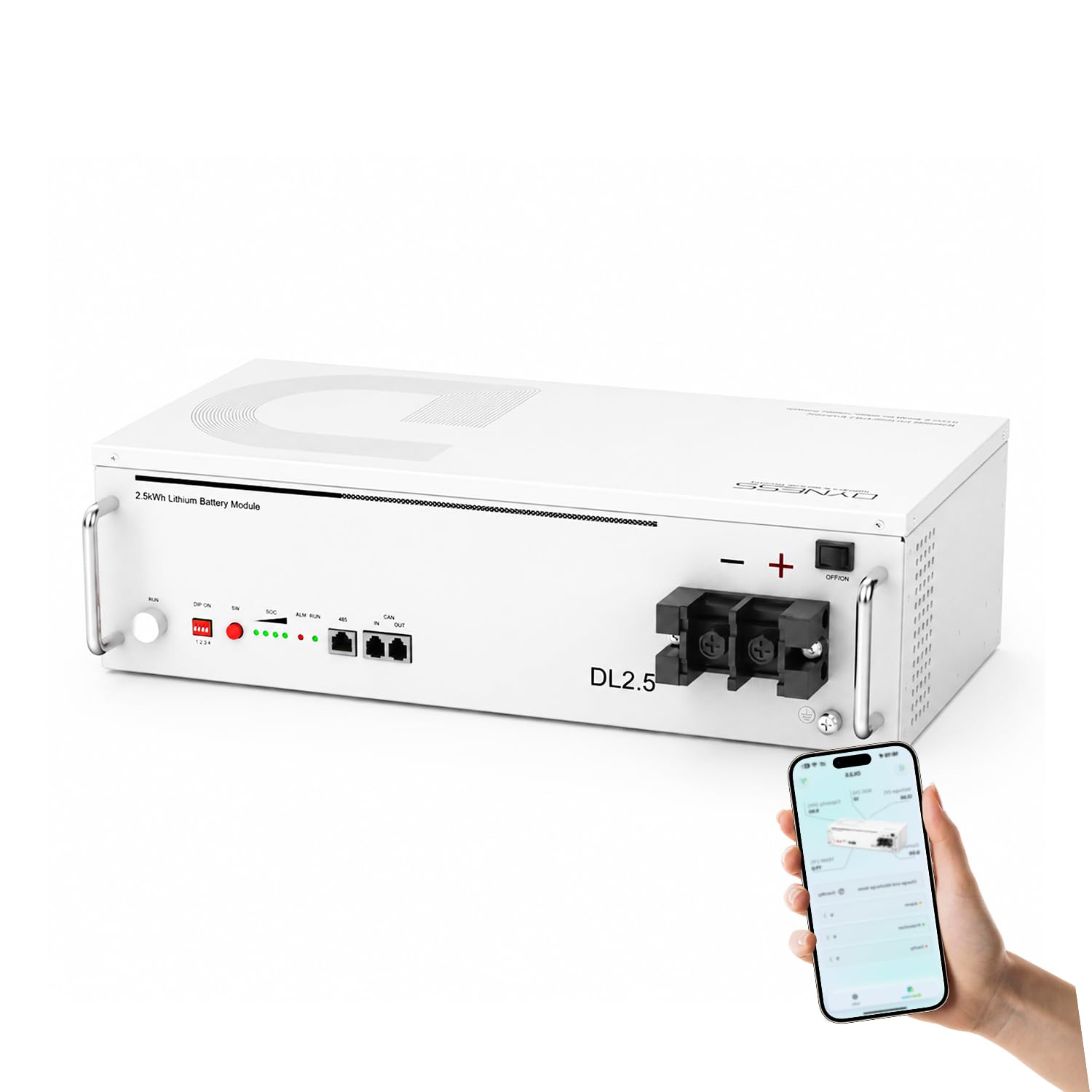
Voltage: 24V
Capacity: 100Ah
Chemistry: LiFePO4 (Grade A+ cells)
BMS Rating: 100A smart BMS
Max Discharge: Up to 130A
Cycles: 6,000+ deep cycles
Shell: Metal
Monitoring: App, RS485
Mounting: 3 flexible installation options
This is the pick for the buyer who wants a middle voltage between a simple 12V shed battery and a full 48V bank. At 24V and 100Ah it delivers a useful reserve while halving the current needed compared with 12V for the same load, which means thinner cable and less loss in a building set some distance from the panels.
The 6,000+ deep cycle rating and Grade A+ cells point to a battery built for daily use over a long service life. A 100A smart BMS with up to 130A max discharge gives decent headroom, and app monitoring plus RS485 keeps the owner informed. Three flexible installation options and a metal shell make it adaptable to a shed wall or cabinet.
The trade-off is that 24V sits between two common system voltages, so buyers should confirm their inverter and charge controller support it before committing. It is also a single unit, so larger loads mean adding a second battery.
Trade-off: A 24V battery is efficient but less universal than 12V or 48V, so buyers must check compatibility with their inverter and controller first.
Check the current price on Amazon
Before You Decide
The right battery comes down to three things: the voltage the outbuilding’s inverter and charge controller expect, the total energy the building uses between charges, and how much installation work the owner is prepared to take on. Matching voltage first avoids the most expensive mistakes.
What It Changes
- A dedicated battery lets an outbuilding run lights, tools and appliances without trenching a line to the main panel.
- Lithium options such as the 48V rack units deliver more usable capacity and longer cycle life than lead acid for daily use.
- Built-in BMS and monitoring features allow remote checks, so an unattended building stays visible.
- Server-rack formats keep a growing bank organized and easy to expand.
- Low-temperature protection and fire-protection features add safety for buildings far from the house.
- A bundled inverter package removes the guesswork of matching components.
The Buying Guide
Voltage and System Compatibility
Voltage is the first filter. A 12V battery suits modest loads and simple wiring, while 48V units like the Build in 200A BMS 48V 314Ah carry far more power at lower current. The inverter and charge controller must match the battery’s voltage, so buyers should choose the battery around the rest of the system, not the other way around.
Capacity and Real Loads
Capacity should be sized to actual use, not to the biggest number on the page. A single 48V 100Ah rack unit such as the 3U Server Rack battery covers a cabin’s daily basics, while a two-pack bank suits heavier or longer draws. Estimating daily watt-hours first prevents both undersizing and overspending.
Chemistry and Cycle Life
LiFePO4 offers more usable capacity, lighter weight and longer cycle life than AGM lead acid. The Renogy 12V 200Ah AGM remains a low-cost entry point, but buyers who cycle daily should weigh the shorter service life against the lower up-front price.
BMS, Safety and Monitoring
A quality BMS protects against overcharge, over-discharge and extreme temperatures, and monitoring features make an outbuilding’s system visible from afar. Features like active balancing, low-temperature protection and fire protection matter more when the building is unattended.
Installation and Expandability
Some buyers want a battery; others want a system. Bundles such as the ECO-WORTHY 48V 2 Pack with Liber 10KP inverter remove matching work, while single batteries let a system grow over time. Rack formats make later expansion straightforward.
FAQ
-
What size battery does an outbuilding need?
Size depends on daily energy use. A shed running lights and a charger needs far less than a workshop running tools, so estimate watt-hours per day first, then choose capacity with headroom for cloudy or low-sun days. -
Is lithium better than lead acid for an outbuilding?
LiFePO4 generally offers more usable capacity, longer cycle life and lighter weight. AGM lead acid costs less up front and suits occasional, light use, but it gives up cycle life and deep-discharge tolerance. -
Can an off grid battery run power tools?
Yes, if the BMS and inverter are rated for the load. High-current batteries with a 200A BMS and a matching inverter can run tools, while a single 100A unit may need a second battery in parallel for heavy draws. -
Do I need an inverter with the battery?
Only if the building runs standard AC appliances. Some bundles include an inverter, while bare batteries require a separate unit matched to the battery’s voltage and the building’s loads. -
How do I keep a battery safe in a cold outbuilding?
Look for low-temperature charge protection and, for premium banks, fire-protection features. Keeping the battery in an insulated, ventilated space and following the manufacturer’s temperature guidance protects both performance and safety.
Bottom Line
For most outbuildings, the Build in 200A BMS 48V 314Ah LiFePO4 battery is the strongest single choice, pairing a large 48V reserve with a high-current BMS and full communication ports. Buyers who want a smaller, simpler 12V setup should look at the ECO-WORTHY EnergyRock 12V 280Ah as the runner-up.