Why there are Amazon links here: Brave Review is paid a commission for qualifying Amazon purchases made through the links below. Your price does not change, and using our links is entirely optional. How this works
Best Plug In Smart Doorbell for a Solid Wall: 5 Power and Chime Picks
A solid wall — brick, stone, or a rental where drilling is off the table — makes a battery doorbell awkward and a hardwired one impossible. The practical route is a plug-in setup: an adapter that feeds power through an existing cable, and a plug-in chime that carries the alert without any wall surgery. This roundup covers five products that solve that problem from different angles, and the overview below tells readers which one fits their situation before they read a single review.
Three buyer profiles matter here. Renters who cannot drill and want an audible alert inside the home. Owners with an old doorbell transformer that no longer delivers enough juice. And anyone upgrading to a wired camera doorbell who needs a chime that works over Wi-Fi instead of old wiring.
The Picks at a Glance
| Product | Key Spec | Best Use | Price Tier |
|---|---|---|---|
| 24VAC 40VA Plug in Transformer | 24VAC, 40VA output | Replacing a weak doorbell or thermostat transformer | Budget |
| Ring Chime | Plug-in Wi-Fi and Bluetooth chime | Adding audible alerts anywhere in the home | Budget |
| Ring Wired Doorbell 2K | 2K wide-angle video, two-way talk | The main doorbell camera for a solid-wall entry | Mid-range |
| Alarm.com W114C Plug-in Chime | Plug-in Wi-Fi digital chime | Alarm.com households wanting a second chime | Premium |
| 8M Long Cable C Wire Adapter | 26 ft cable, 24V 500mA output | Long cable runs to a doorbell or thermostat | Budget |
1. 24VAC 40VA Plug in Transformer

Type: Plug-in AC transformer
Output: 24VAC, 40VA
Compatibility: Doorbells, Nest, Ecobee, Sensi, Honeywell thermostats
Mounting: Wall outlet
Price Tier: Budget
This is the quiet workhorse of the group. It takes household current and steps it down to the 24VAC that doorbells and smart thermostats expect, delivering a 40VA output that comfortably covers a single doorbell circuit. The plug-in body means no electrician and no breaker work — it goes into a standard outlet and feeds the low-voltage side through its leads. It is the right pick for a solid-wall entry where the existing transformer is buried behind plaster or simply too weak for a modern camera doorbell.
It suits owners who already have doorbell wiring in place but no reliable power at the end of it, and thermostat installers who need a C-wire source without opening a wall. The caution is that this is a power component, not a doorbell: it makes no sound and takes no video, so it only helps if a chime or camera is already part of the plan.
Trade-off: It solves the power side only, so buyers expecting an all-in-one doorbell will still need a separate chime and camera.
2. Ring Chime

Type: Plug-in smart chime
Connectivity: Wi-Fi and Bluetooth
Audio: Enhanced, real-time alerts
Setup: Plug-in
Color: White
Price Tier: Budget
The Ring Chime is the simplest answer to a solid wall: it plugs into any indoor outlet and turns a doorbell press into an audible alert anywhere in the house. Wi-Fi handles the network connection and Bluetooth speeds up pairing during setup, so the whole install is a matter of plugging in and adding it in the app. The white housing is compact enough to sit in a hallway outlet without drawing attention, and the enhanced audio is loud enough to carry across a floor.
It fits renters and solid-wall homes where the doorbell camera is mounted outside but the alert needs to land inside, and it works well as a second chime for a back room or upstairs landing. The limitation is that it is a chime, not a doorbell — it needs a compatible Ring doorbell or camera to trigger it, so it is an add-on rather than a standalone purchase.
Trade-off: It only works inside the Ring ecosystem, so buyers with a different brand of doorbell get no use from it.
3. Ring Wired Doorbell 2K

Type: Wired video doorbell
Video: Retinal 2K, wide-angle
Zoom: Up to 6x Enhanced Zoom
Audio: Two-way talk
Color: Speckled Gray
Price Tier: Mid-range
This is the camera the rest of the setup exists to support. The wired design draws continuous power, which means no battery swaps and no missed events while a unit is recharging, and the Retinal 2K sensor with wide-angle framing captures a full porch rather than a narrow slice. Up to 6x Enhanced Zoom lets a viewer pull detail out of a face or a parcel at the edge of frame, and two-way talk handles deliveries and visitors without opening the door.
It is the pick for a solid-wall entry where drilling for a camera is acceptable but a battery doorbell is not — the wired connection pairs naturally with the plug-in transformer above. The speckled gray finish hides fingerprints and weather marks better than a gloss white body. The caution is that the wired label is literal: it needs a low-voltage supply at the mounting point, so a home with no doorbell wiring at all will need an adapter or a different approach.
Trade-off: The wired requirement is a hard limit, so entries without any existing low-voltage cable cannot use it without extra hardware.
4. Alarm.com W114C Plug-in Wi-Fi Digital Doorbell Chime
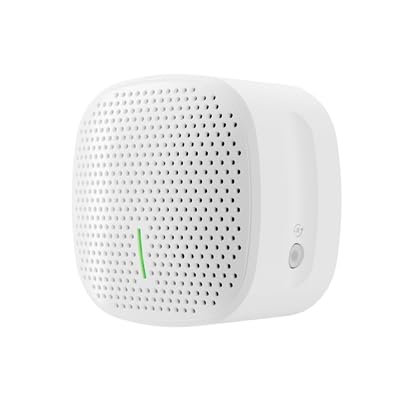
Type: Plug-in digital chime
Connectivity: Wi-Fi
Brand ecosystem: Alarm.com
Mounting: Wall outlet
Price Tier: Premium
Alarm.com W114C Plug-in Wi-Fi Digital Doorbell Chime
The W114C is the specialist option: a plug-in Wi-Fi chime built for homes already running an Alarm.com system. Because it joins the existing network rather than a doorbell manufacturer’s app, it slots into a broader smart-home setup where doorbell events, cameras, and security alerts all land in one place. The digital chime plays a selectable tone through a plug-in unit, so no wiring runs to the door and no wall is opened.
It suits Alarm.com households that want an indoor alert on a solid-wall entry without adding a second app or a second ecosystem. The premium price is the trade for that integration, and it is a poor fit for anyone outside Alarm.com — the chime depends on that platform to be useful, and buyers on Ring, Nest, or a standalone doorbell will pay more for less.
Trade-off: It is priced for a specific ecosystem, so the value collapses for households not already on Alarm.com.
5. 8M Long Cable C Wire Adapter

Type: Plug-in C-wire power adapter
Cable Length: 26 ft (8M)
Output: 24V, 500mA, 12W
Compatibility: Ring doorbell, Nest, Ecobee, Honeywell, Sensi thermostats
Color: White
Price Tier: Budget
The long cable is the whole point here. A 26 ft run means the adapter can sit in an outlet in one room while the device it powers sits at a door or a thermostat on the other side of a hallway, which is exactly the problem a solid wall creates. The 24V, 500mA output is sized for doorbells and C-wire thermostats, and the white cable blends into trim and skirting better than a black lead would.
It fits owners whose doorbell or thermostat is far from the nearest outlet, and it is the cheapest way to get low-voltage power to a wired doorbell without an electrician. The caution is the output rating: 500mA is enough for a doorbell or a thermostat C-wire, but it is not a general-purpose supply, and buyers powering anything hungrier will need a stronger transformer.
Trade-off: The modest current rating limits it to doorbells and thermostats, so it cannot be repurposed for heavier low-voltage gear.
Before You Buy
- Power source: A plug-in setup needs an outlet within reach of the cable run, so measure the distance from outlet to door before choosing an adapter.
- Compatibility: Chimes and adapters are often tied to one ecosystem, so match the brand to the doorbell already installed or planned.
- Cable length: The 26 ft adapter covers most hallway runs, but a longer path needs a different solution entirely.
- Wiring at the door: A wired doorbell still needs low-voltage cable at the mounting point, even if the transformer plugs into a wall.
- Output rating: Check the voltage and current the doorbell or thermostat expects before pairing it with an adapter.
- Indoor vs outdoor: Plug-in chimes and transformers live indoors; only the doorbell itself is built for weather.
- Ecosystem lock-in: A chime from one brand will not trigger a doorbell from another, so plan the whole set together.
Frequently Asked Questions
-
Can a plug-in doorbell work on a solid brick wall?
Yes, provided the camera is wired and fed by a plug-in transformer. The chime and power components sit indoors, so no cable has to pass through the wall itself. -
Does a plug-in transformer replace a doorbell chime?
No. The transformer supplies low-voltage power only; an audible alert still needs a chime, either a plug-in unit or the doorbell’s own speaker. -
Will a Ring Chime work with a non-Ring doorbell?
No. The chime pairs with Ring doorbells and cameras, so it is only worth buying if the rest of the setup is Ring. -
How long a cable run does the C-wire adapter support?
The adapter includes a 26 ft cable, which covers most indoor routes from outlet to door or thermostat. -
Is a wired doorbell better than a battery one for a solid wall?
A wired unit avoids battery swaps and never misses events while charging, but it needs low-voltage cable at the door. A battery doorbell is simpler to mount but needs regular charging. -
Can the plug-in transformer power a smart thermostat too?
Yes. The 24VAC 40VA unit is listed for doorbells and for Nest, Ecobee, Sensi, and Honeywell thermostats, so it can serve either role.
Bottom Line
For a solid-wall entry, the cleanest setup pairs the Ring Wired Doorbell 2K at the door with a plug-in transformer and a Ring Chime indoors — continuous power outside, a loud alert inside, and no drilling beyond the door frame. Buyers on a tighter budget or outside the Ring ecosystem should start with the 24VAC transformer and build the rest of the setup around whatever doorbell is already installed.
