Why there are Amazon links here: Brave Review is paid a commission for qualifying Amazon purchases made through the links below. Your price does not change, and using our links is entirely optional. How this works
Best Pool Safety Alarm for Kids and Pets
A pool safety alarm adds a layer of warning between a quiet backyard and the water. The five alarms below cover two jobs: floating units that detect ripples and movement on the surface, and a gate-and-door alarm that guards the entry points instead. The picks suit three kinds of buyers — parents of young swimmers, pet owners with a pond-sized pool, and renters or caregivers who want a fast, tool-free install. The overview table below lines up every pick so a decision takes under a minute; the reviews explain the trade-offs.
Overview of the Picks
| Product | Key Spec | Best Use | Price Tier |
|---|---|---|---|
| Pool Alarm for Inground & Above Ground Pools (Blue) | 110dB siren, covers up to 20′ x 40′ | Large pools, no app needed | Mid |
| Pool Alarm with Indoor Receiver (Navy-Black) | 110dB siren, indoor receiver | Hearing the alarm inside the house | Mid |
| Smart Pool Safety Alerts with App Control | App control, Swim & DND modes | App users and scheduled swim times | Premium |
| Pool Alarm with Indoor Receiver and App Remote | 110dB siren, receiver plus app | Remote checks on a mid-size pool | Premium |
| Safe Pool Alarm for Gates, Doors, Windows, Sliding Doors | Door and gate contact alarm | Barrier protection at entry points | Budget |
1. Pool Alarm for Inground & Above Ground Pools (Blue)
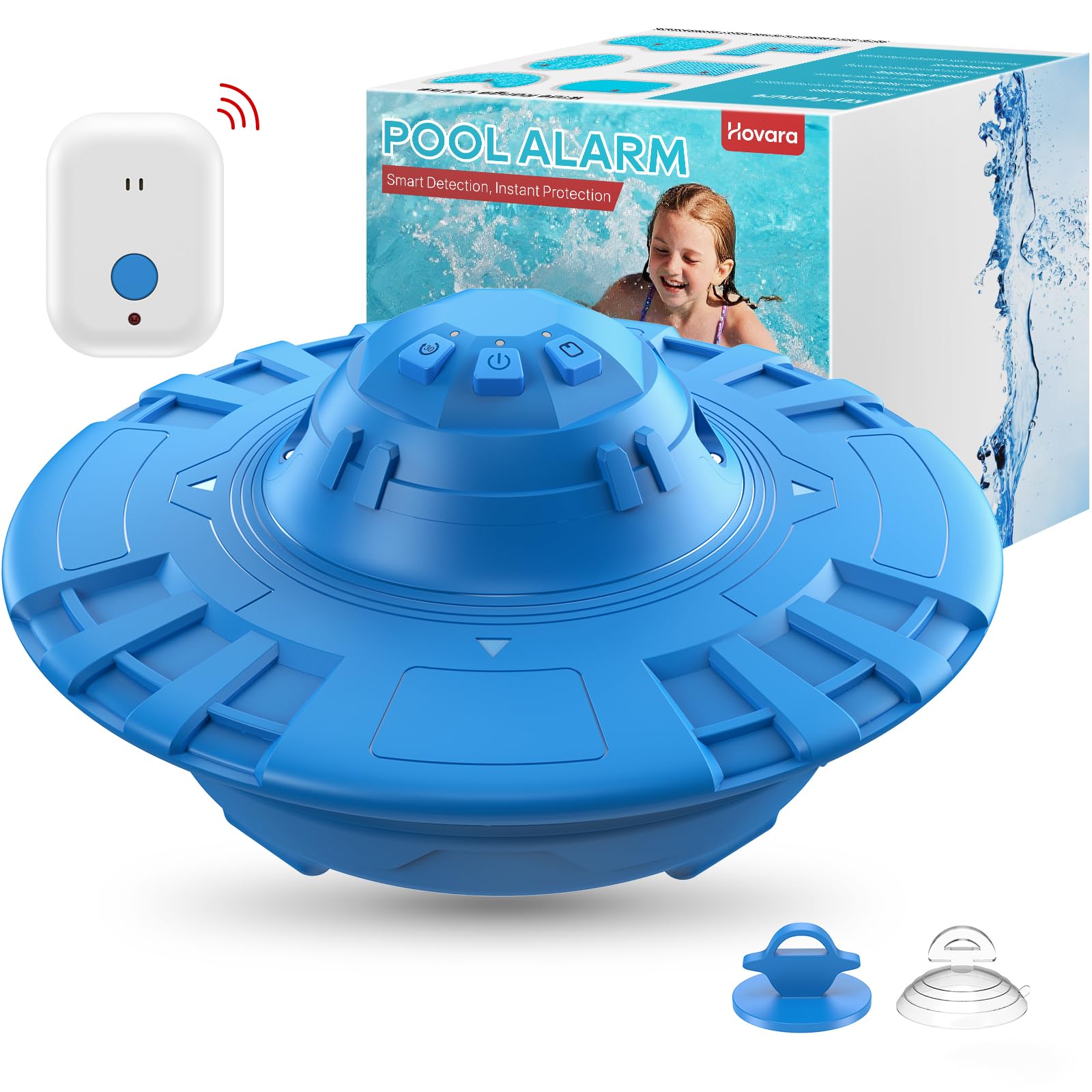
Type: Floating surface alarm
Siren: 110dB
Coverage: Up to 20′ x 40′
Sensitivity: Adjustable
Weather resistance: Weatherproof
Color: Blue
This is the straightforward floating alarm: a weatherproof hull that sits on the water and a 110dB siren that fires when something disturbs the surface. The adjustable sensitivity matters because wind and rain cause small ripples that a fixed trigger would read as an entry. The stated 20′ x 40′ coverage fits most residential inground pools and large above-ground models. It is a self-contained unit, so there is no receiver to plug in and no app to set up.
It suits a household that wants a simple, always-on surface alarm and does not want to manage an app. The caution is the siren itself: at 110dB it is loud, and there is no indoor receiver in the box, so a closed door or a running HVAC system can muffle it. Buyers who need to hear the alert from inside the house should look at the receiver models below.
Trade-off: A loud standalone siren is only useful if someone is close enough to hear it, so it fits outdoor-supervision households better than deep-sleepers.
2. Pool Alarm with Indoor Receiver (Navy-Black)
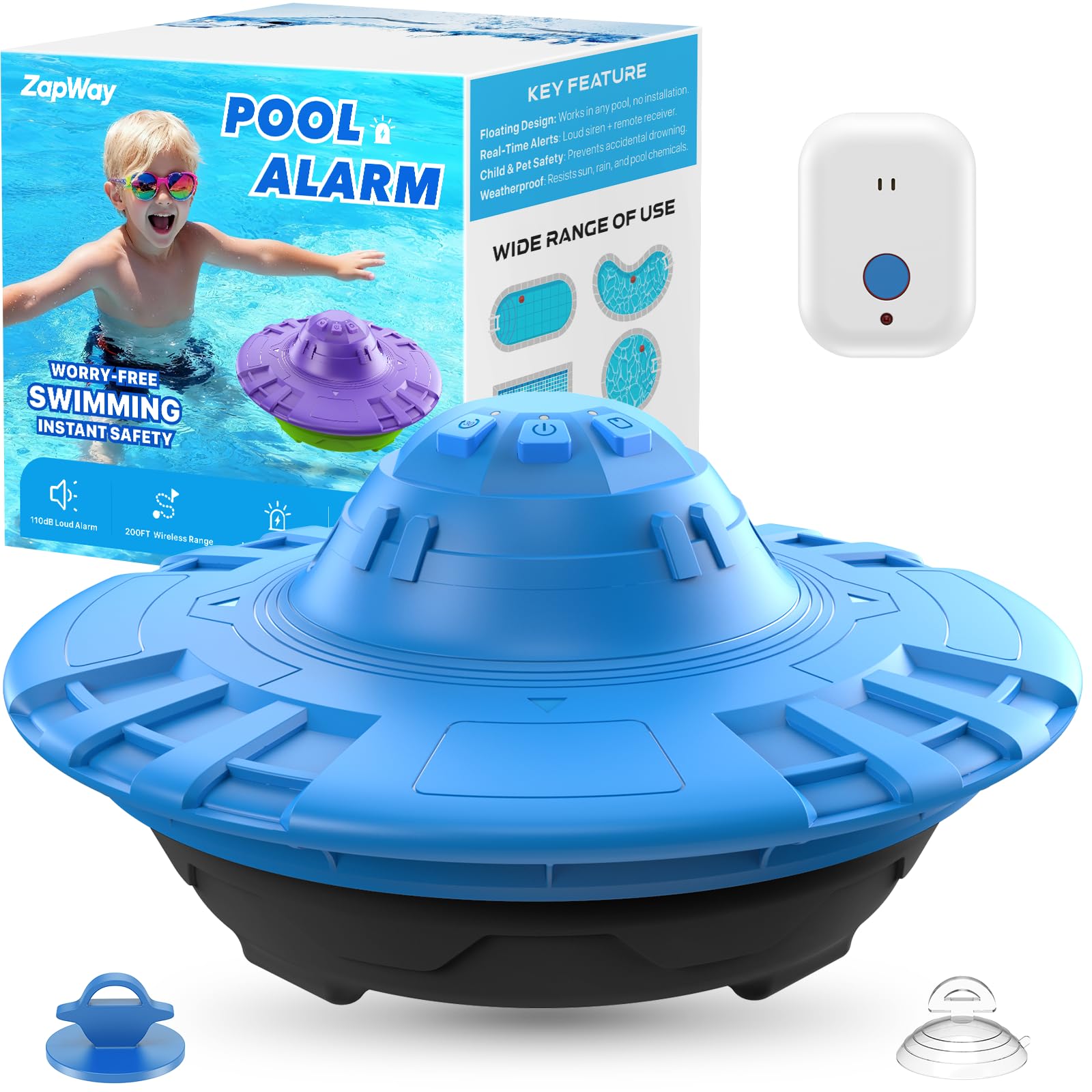
Type: Floating surface alarm with indoor receiver
Siren: 110dB
Coverage: Inground and above-ground pools
Sensitivity: Adjustable
Color: Navy-Black
The indoor receiver is the reason this pick earns its place. The float sits in the pool and sends the alert to a plug-in unit inside, so the alarm is audible from the kitchen or bedroom rather than only at the back door. The 110dB siren and adjustable sensitivity work the same way as the standalone model, and the unit is built for both inground and above-ground installations. It is the most-bought pick in this group, which fits its middle-of-the-road price and the practical receiver.
It suits families who spend time indoors while the pool sits empty, and pet owners who want a warning from inside the house. The limitation is range — a receiver-based system depends on the signal reaching the indoor unit, and a large property with a detached pool house may stretch that link. Buyers with an unusually long distance between pool and house should plan the receiver placement before committing.
Trade-off: The receiver adds indoor coverage but adds a second device to power and place, and signal distance is the weak link on big properties.
3. Smart Pool Safety Alerts with App Control
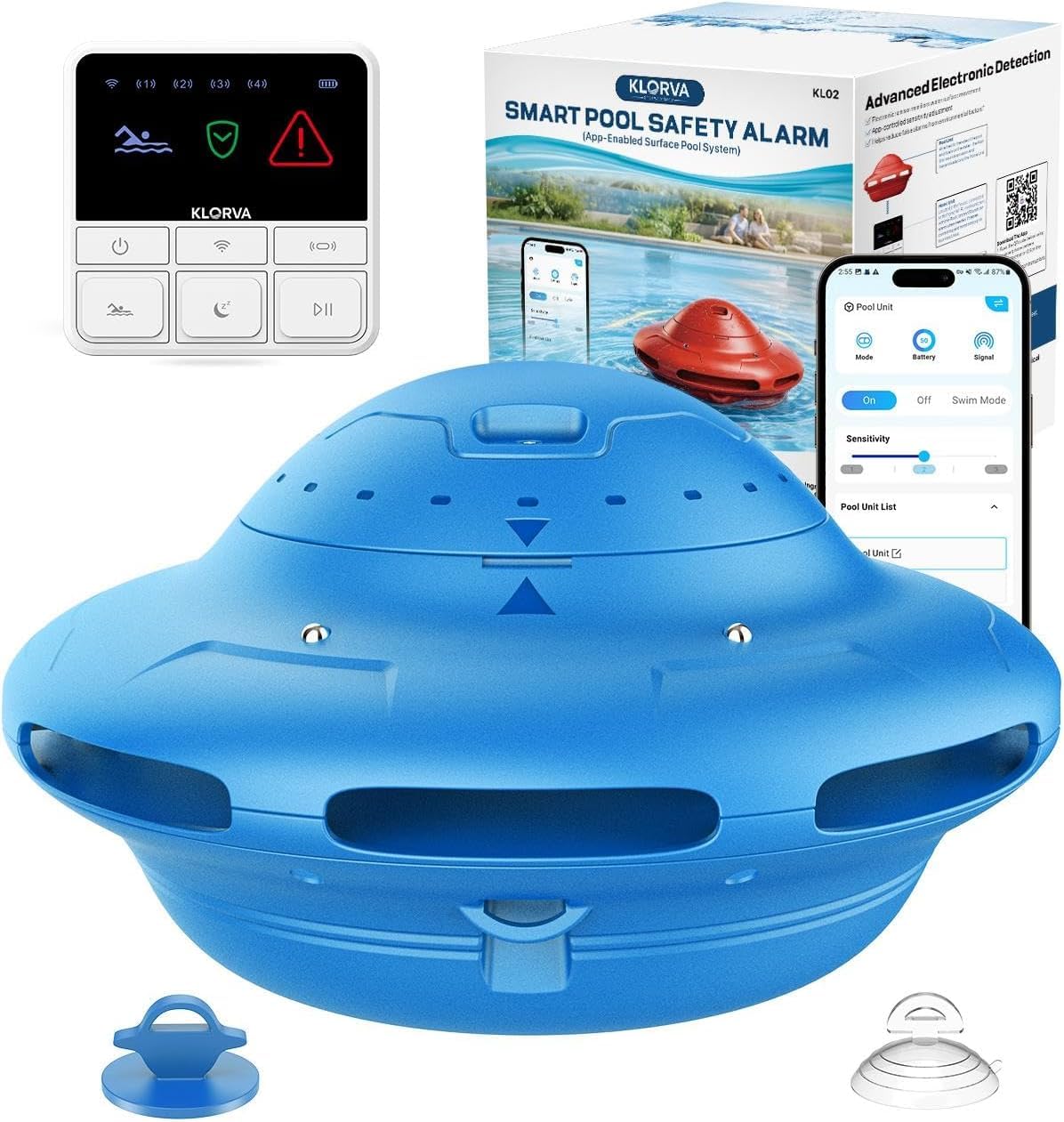
Type: Smart floating alarm with app control
Coverage: Up to 20×40 ft
Sensitivity: Adjustable
Modes: Swim and DND
Siren: Audible alert (app and device)
This is the pick for buyers who want the alarm on a phone. The app control lets the owner arm, disarm, and check status remotely, and the Swim and DND modes are the practical feature: Swim mode suspends the alarm during supervised pool time, and DND mode silences notifications without turning the system off. Adjustable sensitivity and 20×40 ft coverage match the floating units above, so the smart layer is the differentiator rather than the sensing.
It suits tech-comfortable households, second-home owners, and anyone who wants a log of when the pool was armed. The caution is dependence on the app and its connection: a smart alarm is only as reliable as the Wi-Fi at the pool’s edge, and a weak signal there undercuts the whole point. Buyers with spotty backyard coverage should confirm the connection before relying on app-only alerts.
Trade-off: App control adds remote visibility but ties the alarm’s usefulness to a stable Wi-Fi signal at the pool.
4. Pool Alarm with Indoor Receiver and App Remote
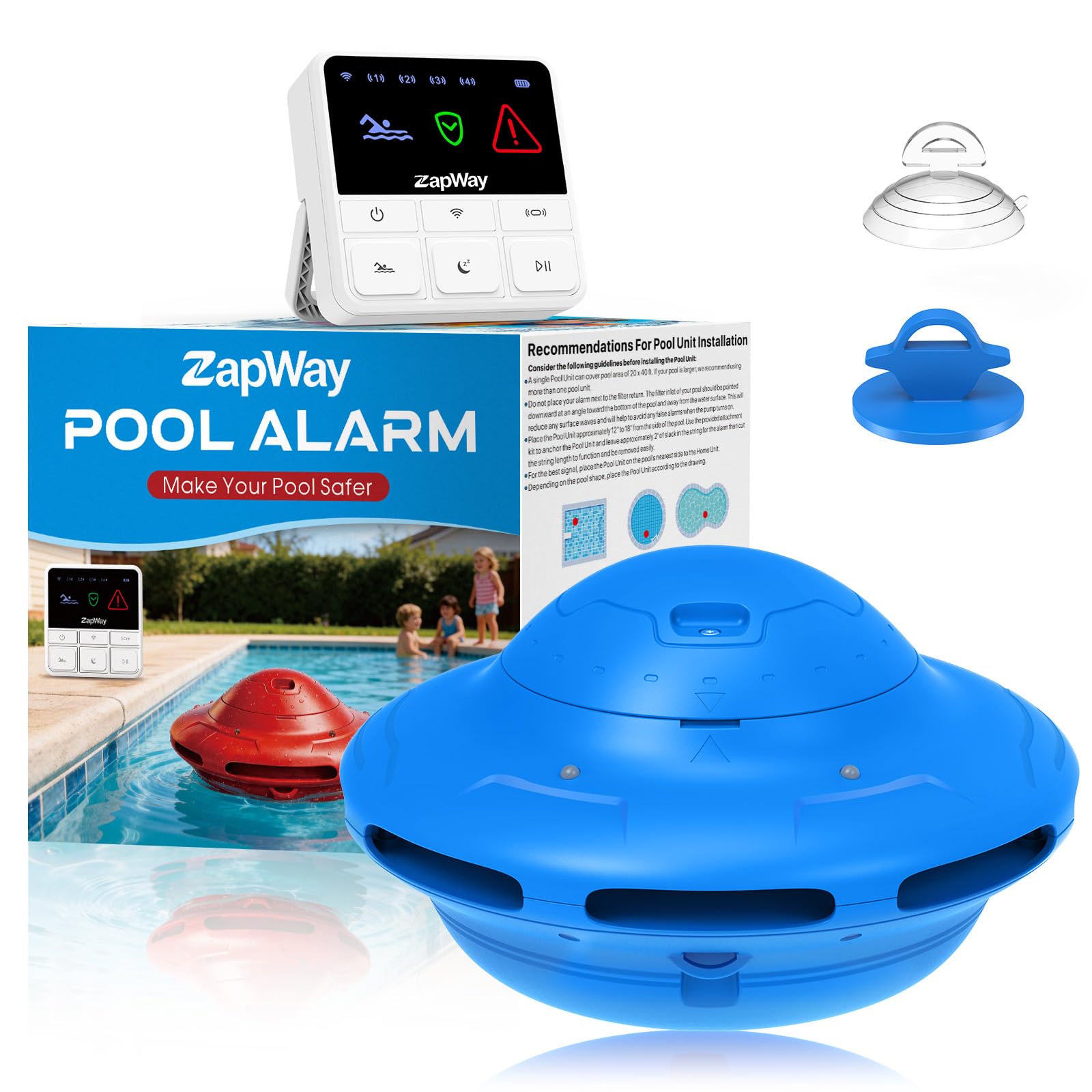
Type: Floating alarm with indoor receiver and app remote
Siren: 110dB
Coverage: Inground and above-ground pools
Sensitivity: Adjustable
Color: Blue
This model combines the two features the other picks split: an indoor receiver for audible alerts inside the house and app remote control for arming and checking from a phone. The 110dB siren and adjustable sensitivity put it in the same performance class as the receiver-only unit, and it works on both inground and above-ground pools. It is the most flexible pick in the group for a household that wants a loud indoor alert and remote access without choosing between them.
It suits buyers who want redundancy — an audible alarm indoors plus a phone alert — and families who arm and disarm the pool daily around swim schedules. The caution is complexity: two alert paths and an app mean more setup and more to troubleshoot than a single-purpose float, and the premium price reflects that. Buyers who just want a loud noise when the water moves are overpaying here.
Trade-off: Redundant alerts are genuinely useful, but the setup and price premium only pay off for households that will actually use the app.
5. Safe Pool Alarm for Gates, Doors, Windows, and Sliding Doors
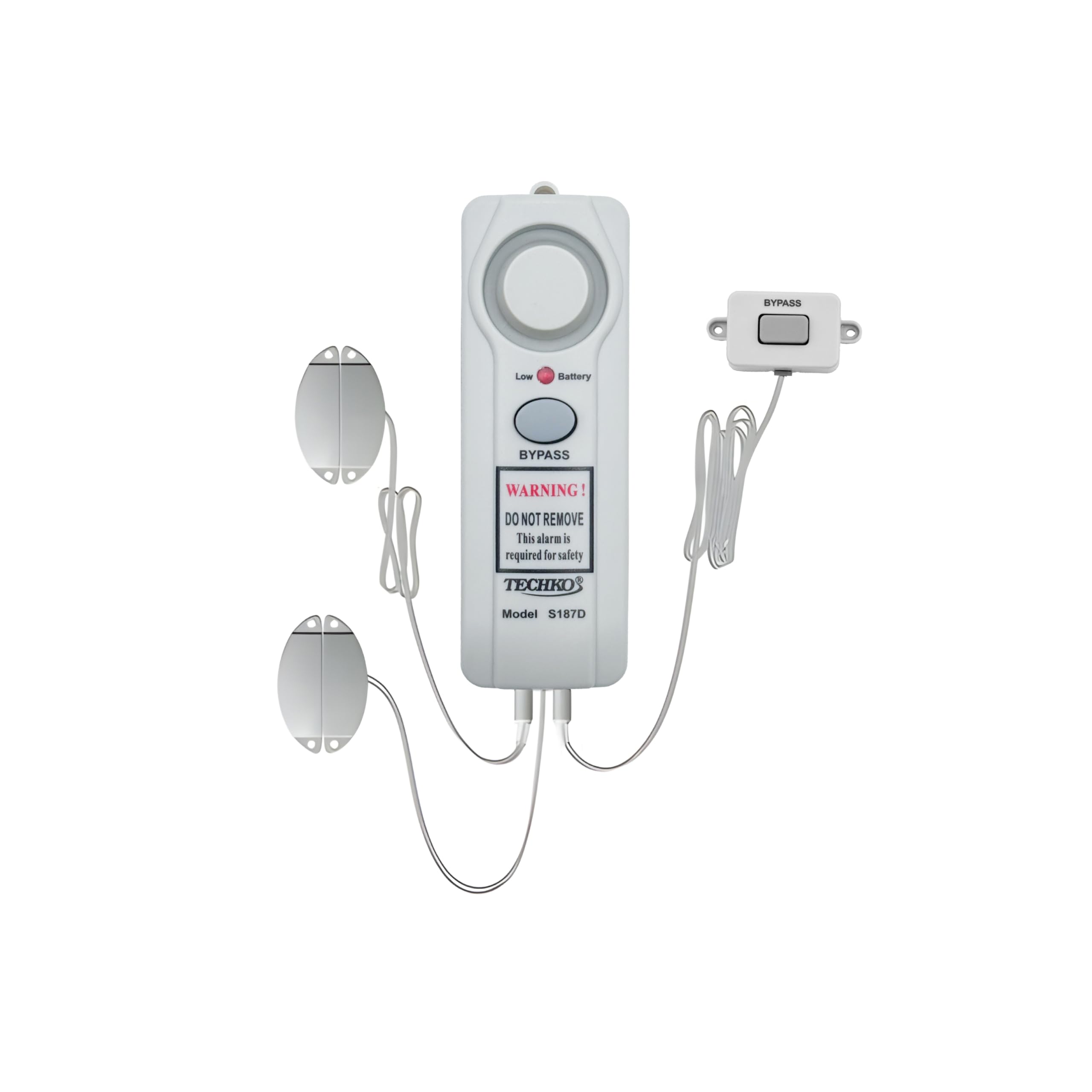
Type: Door and gate contact alarm
Intended use: Gates, doors, windows, sliding doors
Coverage: Entry points, not the water surface
Install: Contact-mounted on openings
Color: White
Safe Pool Alarm for Gates, Doors, Windows, and Sliding Doors S187D Safe Pool Alarm
This is a different tool from the floats: it mounts on the openings that lead to the pool — gates, doors, windows, and sliding doors — and sounds when one is opened. That makes it a barrier alarm rather than a surface alarm, and it is the budget pick of the group. It is the most-bought product here by a wide margin, which fits its low price and the fact that it protects the path to the water rather than the water itself.
It suits renters, grandparents’ houses, and any pool where the risk is a child or pet slipping out a back door rather than climbing over a fence. The caution is coverage: it does nothing once someone is already at the pool, so it works best paired with a floating alarm or a fence. Buyers who want surface detection should not expect it from this unit.
Trade-off: A low-cost barrier alarm protects the doorway, not the water, so it is a complement to a floating alarm rather than a replacement.
Before You Buy
- Type: Decide between a floating surface alarm and a door/gate contact alarm — they detect different things and work best together.
- Coverage: Match the float’s stated coverage to the pool’s footprint; a 20′ x 40′ rating is the common ceiling here.
- Alert location: Choose an indoor receiver if the alarm must be heard from inside the house, or app control for remote checks.
- Sensitivity: Adjustable sensitivity is worth having on any outdoor pool, where wind and rain cause false triggers.
- Connection: App-based alarms depend on Wi-Fi at the pool’s edge; confirm signal strength before relying on phone alerts.
- Install: Floating units need no wiring, while receiver and contact models need placement and, in some cases, mounting.
- Care: Weatherproof housings still need rinsing and battery checks, so plan a seasonal maintenance routine.
Frequently Asked Questions
-
Do pool safety alarms work for pets as well as kids?
Yes — a floating alarm triggers on surface disturbance, so a pet entering the water sets it off the same way a child would. Door and gate alarms catch pets slipping out of the house. -
Can a floating alarm be used on an above-ground pool?
Yes. The floating picks here are rated for both inground and above-ground pools, though the coverage figure should be checked against the pool’s size. -
Will rain or wind set off a pool alarm?
It can, which is why adjustable sensitivity matters. Tuning the trigger level reduces false alarms from ripples without missing a real entry. -
Do I need both a floating alarm and a gate alarm?
They cover different gaps. A gate alarm warns when someone leaves the house toward the pool; a floating alarm warns when something is already in the water. Together they cover both stages. -
How loud is a 110dB pool alarm?
110dB is roughly the level of a loud siren or a power tool at close range. It is loud enough to alert a household, but walls and distance can muffle it, which is why an indoor receiver helps. -
Does a smart pool alarm need Wi-Fi?
Yes — app control depends on a connection at the pool. A weak backyard signal can delay or block alerts, so the connection should be tested before relying on the app alone.
Bottom Line
The Pool Alarm with Indoor Receiver (Navy-Black) is the best pool safety alarm for most households: it floats on the surface, sounds a 110dB siren, and repeats the alert indoors where someone can actually hear it. Buyers who want remote checks should step up to the receiver-plus-app model, while renters and barrier-focused households can pair the budget gate alarm with any floating unit for full coverage.
