Why there are Amazon links here: Brave Review is paid a commission for qualifying Amazon purchases made through the links below. Your price does not change, and using our links is entirely optional. How this works
Best Power Cut Kit for a House With a Baby for Warm Bottles and Calm Nights
A power cut with a newborn in the house turns ordinary tasks into problems: a bottle that needs warming, a room that needs light for a 3 a.m. feed, a fridge that has to hold its temperature until morning. The best power cut kit for a house with a baby is the one that matches the household’s real load, not the biggest battery on the shelf.
This roundup covers five picks, from a small camping-class power station for phone charging and a lamp to a whole-home LFP battery that can carry a fridge, freezer and medical gear for hours. It suits apartment parents, suburban families and households with a medically fragile infant who cannot risk a cold night. The overview below ranks all five before the full reviews.
Overview of the Picks
| Product | Key Spec | Best Use | Price Tier |
|---|---|---|---|
| COSLUS C50 Baby Electric Nail File Trimmer | 16-in-1 kit, 360° night light | Nursery grooming during a blackout | Budget |
| Jackery HomePower 3600 Plus Power Station | 3584Wh, 3600W AC, expandable to 21kWh | Whole-home backup for long outages | Premium |
| Jackery HomePower 3000 Portable Power Station | 3072Wh, 3600W AC, 7200W surge | Fridge, freezer and bottle warmer backup | Premium |
| Jackery HomePower 2000 Plus v2 Power Station | 2048Wh, 2400W AC, expandable to 12kWh | Mid-size homes and RV use | Mid-range |
| Jackery Explorer 300 Portable Power Station | 292Wh, LiFePO4 | Phones, lamps and small devices | Budget |
1. COSLUS C50 Baby Electric Nail File Trimmer

Type: Electric baby nail file and trimmer kit
Kit Contents: 16-in-1
Lighting: 360° night light
Noise Design: Quiet operation for sleep-time grinding
Intended Use: Newborn, infant and toddler grooming
Color: Sky Blue
COSLUS C50 Baby Electric Nail File Trimmer is the nursery-care item on this list rather than a power source. It belongs in a baby blackout kit because trimming a newborn’s nails by hand in the dark, with a crying infant on the changing table, is exactly the moment a parent fumbles and nicks skin. The 360° night light removes that problem, and the quiet grinding head means the tool does not wake a sleeping baby mid-manicure.
The 16-in-1 kit covers the different filing heads a household needs as a baby grows from newborn to toddler, so one purchase lasts through the first couple of years. It is a small, battery-friendly device that fits in a diaper bag or a nightstand drawer and works without a wall outlet, which matters when the power is out and the usual routine has already fallen apart.
Who It Suits: Parents who want a safe, low-light grooming tool for the nursery and a kit that grows with the child. It is not for households looking for actual backup power — this is a care accessory, not a battery bank.
Trade-off: The filing heads are consumables, so a household that grooms weekly will need replacements sooner than the price suggests.
Check the current price on Amazon
2. Jackery HomePower 3600 Plus Power Station

Battery Chemistry: LFP (lithium iron phosphate)
Capacity: 3584Wh, expandable to 21kWh
AC Output: 3600W
Intended Use: Essential home backup, emergencies, RV
Solar Input: Solar panel optional
Expandability: Up to 21kWh with add-on batteries
Jackery HomePower 3600 Plus Power Station is the top of this lineup and the pick for households that treat a blackout as a multi-day event rather than a two-hour inconvenience. The LFP chemistry is the important detail for a baby household: it holds a charge for long stretches between uses, tolerates being topped up regularly and does not need the careful storage ritual older battery types demand. The 3600W AC output runs a fridge, a freezer, a bottle warmer and a lamp bank at the same time without tripping.
The expansion path to 21kWh is what separates this unit from a portable box. A family that starts with the base station can add battery modules later as the budget allows, eventually covering a furnace blower or a well pump alongside the nursery load. The trade-off is weight and footprint: this is a stationary appliance that lives in a utility room, not something carried up the stairs during a storm.
Who It Suits: Homeowners with a medically fragile infant, a large fridge-freezer, or a history of long winter outages. It is not for renters or anyone who needs backup power that fits in a closet.
Trade-off: The price tier is premium, and the solar panel needed for true independence is sold separately.
Check the current price on Amazon
3. Jackery HomePower 3000 Portable Power Station
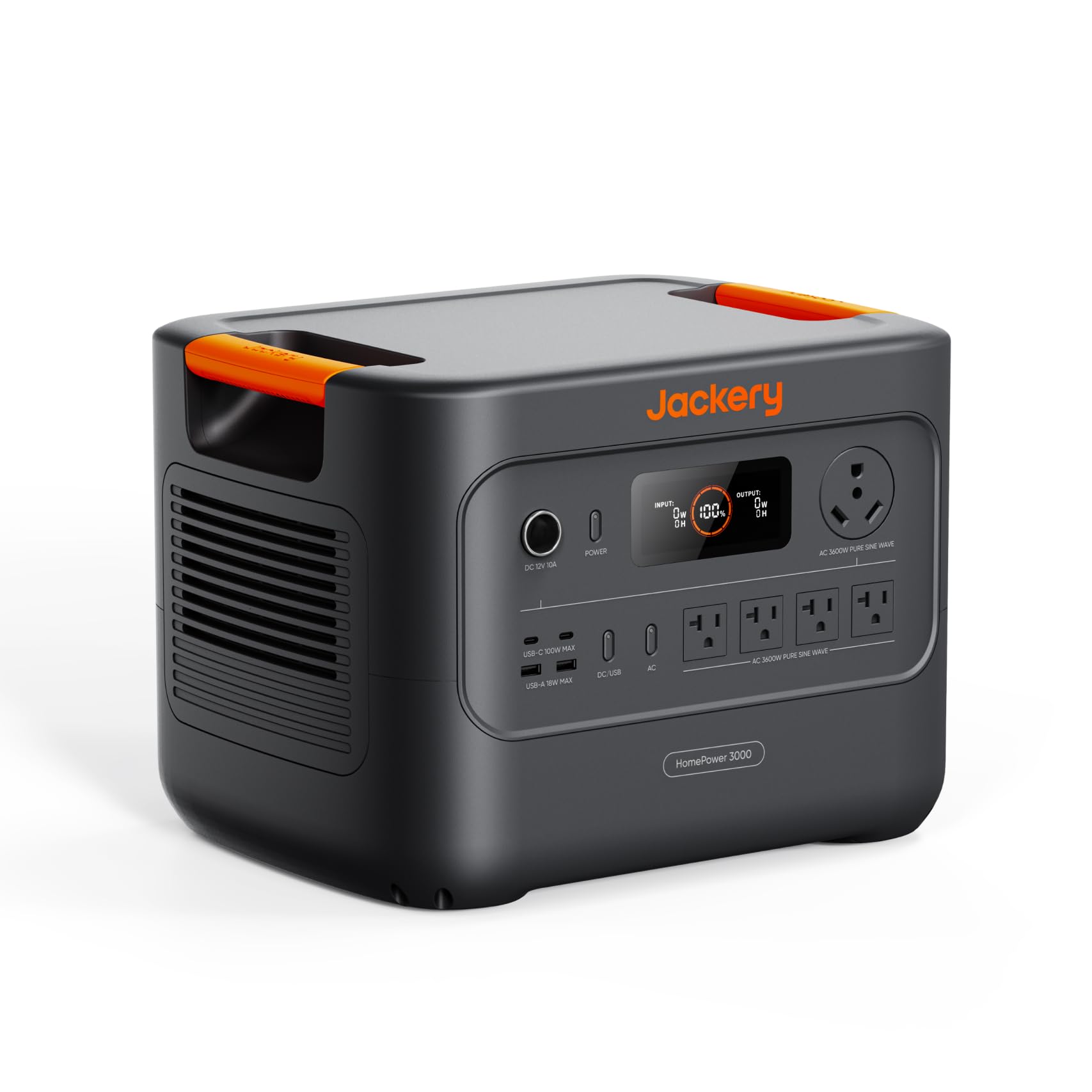
Battery Chemistry: LFP
Capacity: 3072Wh
AC Output: 3600W
Surge Rating: 7200W
Intended Use: Essential home backup, power outages
Solar Input: Solar panel optional
Jackery HomePower 3000 Portable Power Station sits just under the flagship and covers the load a baby household actually draws. The 7200W surge rating is the number that matters here: a fridge compressor and a bottle warmer both spike on startup, and a station with a lower surge ceiling will shut down at exactly the wrong moment. With 3072Wh of LFP capacity, the unit runs a fridge, a freezer, a few lamps and a phone charger through a long night and into the next day.
For a family that wants one box that handles the whole outage without a wiring project, this is the practical middle. It is lighter and simpler to place than the expandable flagship, and the LFP cells mean it can sit charged in a garage for months and still be ready when the grid drops.
Who It Suits: Suburban families with a standard fridge-freezer and a nursery on the same floor. It is not for households that need to run central air or a full electric heating system.
Trade-off: Capacity is fixed, so a household that later adds a medical device or a second freezer has no upgrade path short of a second unit.
Check the current price on Amazon
4. Jackery HomePower 2000 Plus v2 Power Station
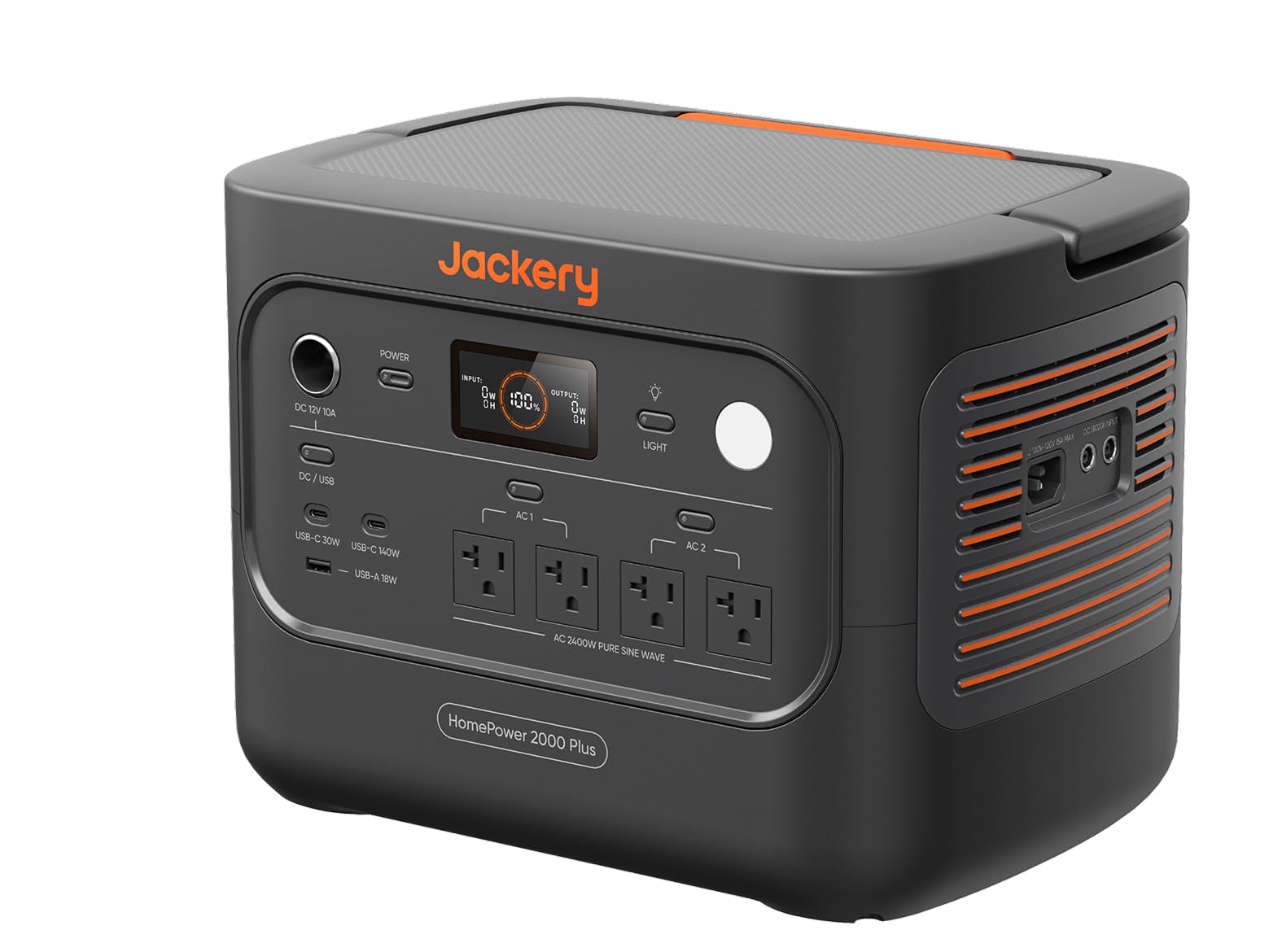
Battery Chemistry: LFP
Capacity: 2048Wh, expandable to 12kWh
AC Output: 2400W
Intended Use: Essential home backup, outages, emergencies, RV
Solar Input: Solar panel optional
Expandability: Up to 12kWh with add-on batteries
Jackery HomePower 2000 Plus v2 Power Station is the sensible pick for a household that wants real backup without paying for capacity it will never use. At 2048Wh it covers a fridge, a lamp, a baby monitor and a phone charger for a full evening and overnight stretch, which is the realistic shape of most residential outages. The 2400W AC output is enough for a bottle warmer and a small space heater on a cold night, though not both at once with the fridge running.
The expandability to 12kWh gives this unit a longer life than its base capacity suggests. A family can start here, size up with add-on batteries when a second child or a medical device enters the picture, and skip the flagship’s price and bulk in the meantime. It is also the pick that doubles as an RV or camping power source, so the money does double duty.
Who It Suits: Smaller homes, apartment dwellers with a balcony for a solar panel, and families that want one unit for both the house and the camper. It is not for households running a large fridge-freezer plus a well pump.
Trade-off: The 2400W ceiling rules out heavy appliances, so a household with electric heating or a large chest freezer should look at the 3000 or 3600 models.
Check the current price on Amazon
5. Jackery Explorer 300 Portable Power Station
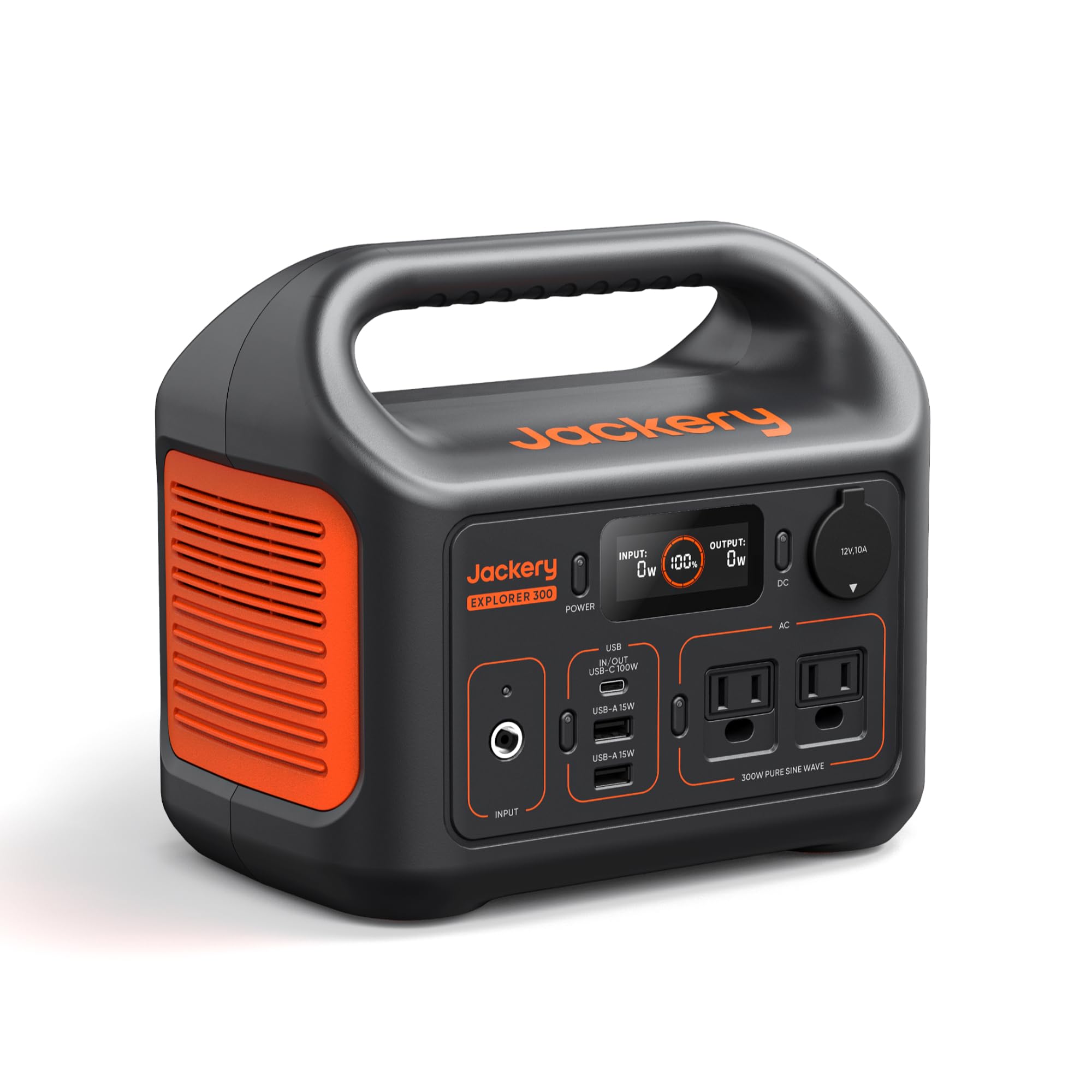
Battery Chemistry: LiFePO4
Capacity: 292Wh
Intended Use: Outdoors, camping, travel, hunting, blackout
Solar Input: Solar panel optional
Form Factor: Portable power station
Jackery Explorer 300 Portable Power Station is the smallest and most portable pick here, and the one that earns its place as a nursery grab-and-go unit. At 292Wh it will not run a fridge, but it will charge phones, keep a baby monitor and a night light alive, and power a small bottle warmer for a feed or two. The LiFePO4 cells give it the same long-storage, low-maintenance character as the larger units, in a body one adult can carry with one hand.
For apartment parents, renters and families in areas where outages are short but frequent, this is the realistic first purchase. It lives on a shelf, gets topped up monthly, and comes out when the lights flicker. A household that already owns a larger station can also treat it as the nursery-specific backup so the main unit stays in the kitchen.
Who It Suits: Renters, apartment families and anyone who wants a light, cheap first step into backup power. It is not for households that need to keep a fridge cold or run a space heater.
Trade-off: The 292Wh capacity is small enough that a cold night with a heater and a bottle warmer will drain it fast, so it works as a supplement rather than a whole-home solution.
Check the current price on Amazon
Before You Buy
- Capacity: Add up the watts of the fridge, the bottle warmer, the lamps and the baby monitor, then multiply by the hours the outage typically lasts. A 292Wh unit covers devices; a 2000Wh unit and up covers appliances.
- Surge rating: Compressors and heating elements spike on startup. A station with a high surge ceiling (7200W on the 3000 model) avoids shutdowns at the worst moment.
- Battery chemistry: LFP cells hold a charge for months and tolerate regular top-ups, which suits a kit that sits unused between storms.
- Noise and placement: A power station in a nursery needs to be out of reach of a crib and away from soft furnishings. Plan the cable run before the first outage.
- Solar compatibility: A panel is optional on every unit here, but a household facing multi-day outages should budget for one and check the panel’s connector matches the station.
- Care and storage: Store LFP units at partial charge in a dry room, top them up on a schedule, and keep the manual with the unit for the first year.
- Included accessories: Check what ships in the box — charging cables, an AC adapter, a carry handle — before assuming a station is ready to use out of the box.
Frequently Asked Questions
-
What size power station does a house with a baby actually need?
A 2000Wh-class unit covers a fridge, lamps and a bottle warmer overnight. A 300Wh unit covers phones, a monitor and a night light. The right size depends on how long the local outages run. -
Can a portable power station run a bottle warmer?
Yes, provided the station’s AC output exceeds the warmer’s wattage. The 2400W and 3600W models here handle most warmers with room to spare. -
Is LFP safer than other battery types for a nursery?
LFP chemistry is the more stable option for indoor storage and has a longer service life than older lithium formulations, which is why every large unit in this roundup uses it. -
Does a baby nail file belong in a power cut kit?
It does when the alternative is trimming a newborn’s nails by hand in the dark. The COSLUS C50’s night light and quiet motor make the job safer during an outage. -
How often should a backup station be charged?
LFP units should be topped up every few months and kept at partial charge in a dry room. A calendar reminder is the simplest way to keep one ready. -
Can a power station run a fridge and a freezer at the same time?
The 3000 and 3600 models can carry both. The 2000 Plus v2 handles one large appliance plus smaller loads, and the Explorer 300 is not built for either.
Bottom Line
For most families with a baby, the Jackery HomePower 3000 Portable Power Station is the best power cut kit for a house with a baby: its 7200W surge and 3072Wh of LFP capacity cover a fridge, a freezer and a bottle warmer through a long night without an expansion project. Households facing multi-day outages should step up to the expandable 3600 Plus, while renters and apartment parents can start with the Explorer 300 and the COSLUS C50 and still cover the nursery essentials.
