Why there are Amazon links here: Brave Review is paid a commission for qualifying Amazon purchases made through the links below. Your price does not change, and using our links is entirely optional. How this works
Best Power Station for a Flat With No Balcony
A flat with no balcony rules out a gas generator and makes a solar panel an awkward afterthought, so the practical answer is a battery power station that charges from a wall socket and sits in a cupboard. This guide covers five units that suit three kinds of buyer: the renter who wants cheap outage backup for a fridge and a few lights, the flat owner who wants a proper UPS for a home office, and the household that wants whole-flat reserve capacity. The overview table below puts the key differences side by side so a decision takes under a minute; the reviews explain the trade-offs.
Overview of the Picks
| Product | Key Spec | Best Use | Price Tier |
|---|---|---|---|
| Jackery HomePower 3600 Plus | 3584Wh, 3600W AC, expandable to 21kWh | Whole-flat backup and long outages | Premium |
| EBL 2400W Portable Power Station | 1843.2Wh, 2400W AC, 12 outlets | Big capacity on a mid budget | Mid |
| EF ECOFLOW Delta 3 Classic | 1024Wh, 1800W AC, 10ms UPS | Home office and router backup | Mid |
| Anker SOLIX S2000 | 2010Wh, 1500W output | Balanced all-round flat backup | Upper mid |
| 640Wh Portable Power Station | 640Wh, 1200W surge, 10ms UPS | Budget first unit for small loads | Budget |
Jackery HomePower 3600 Plus Power Station

Battery Chemistry: LiFePO4
Capacity: 3584Wh, expandable to 21kWh
AC Output: 3600W
Intended Use: Essential home backup, emergencies, RV
Solar Input: Solar panel optional
This is the pick for a flat where the goal is running the essentials for a day or more rather than topping up a phone. The LiFePO4 battery is built for repeated charge cycles, the 3600W AC output can start appliances that smaller units stall on, and the expansion path to 21kWh means the same system can grow with the household instead of being replaced. It is a serious piece of kit with a price to match, and it takes up real floor or cupboard space.
It earns its place for owners who have watched one too many winter outages and want a fixed backup reserve rather than a camping gadget. The caution is straightforward: at this capacity and price it is overkill for a studio or a single occupant, and the expansion batteries add cost and footprint on top of the base unit.
Trade-off: The capacity and expansion that make it a true backup system also make it the heaviest, priciest and least portable option here.
EBL 2400W Portable Power Station
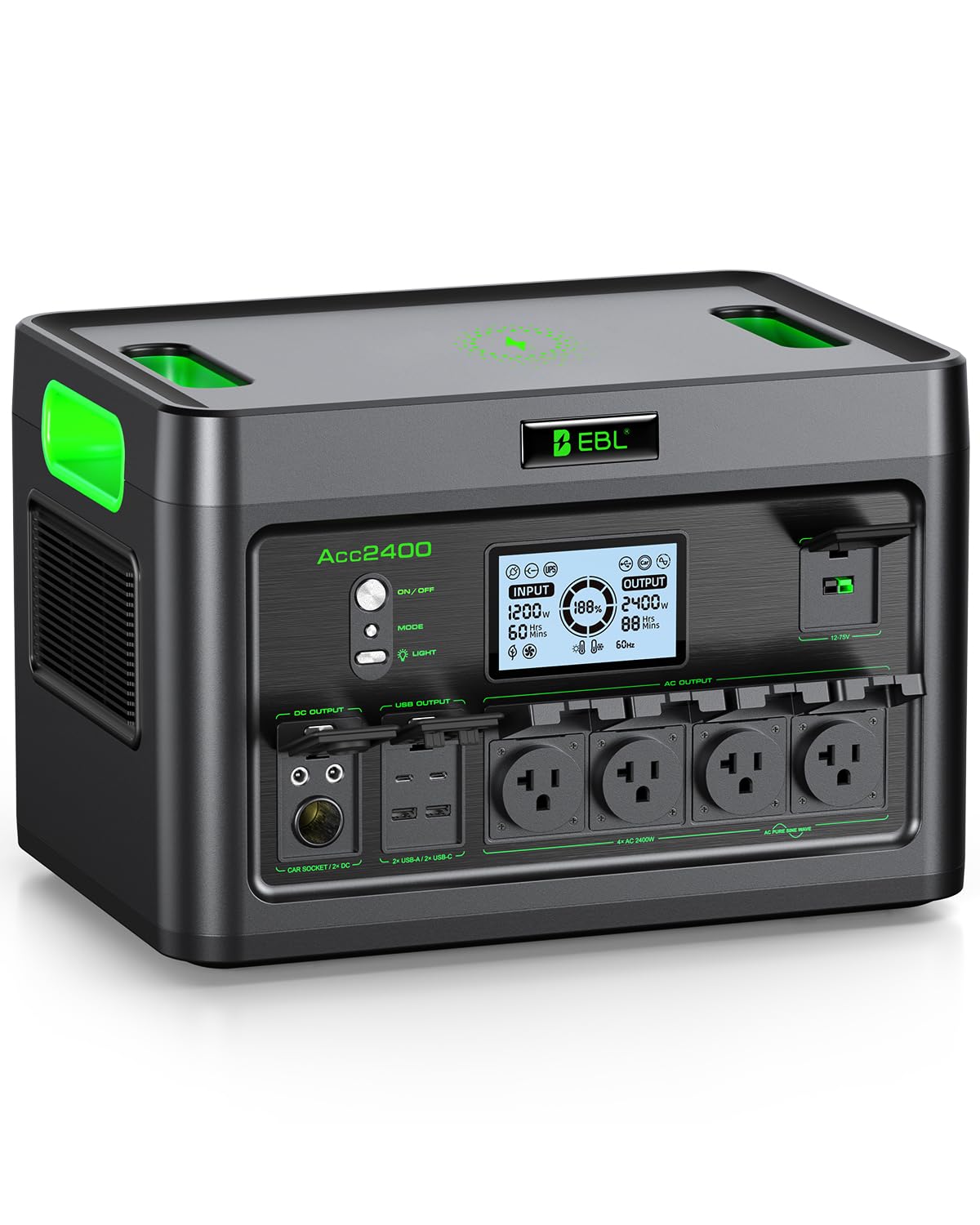
Battery Chemistry: LiFePO4
Capacity: 1843.2Wh
AC Output: 2400W across 12 outlets
USB-C Output: PD 100W
Recharge Time: 2 hours quick charge
Intended Use: Home use and battery backup
The EBL is the value play on capacity: nearly 1.8kWh and 2400W of AC output for a mid-tier price, with twelve outlets so a flat’s small devices can stay plugged in at once. The 100W USB-C port is enough for a laptop, and the two-hour recharge from a wall socket matters in a flat where the unit lives in a hallway cupboard and only comes out when needed. LiFePO4 chemistry is the right choice for something that may sit idle for months and then be asked to work hard.
It suits a household that wants meaningful reserve without paying premium prices, particularly renters who cannot install a fixed system. The trade-off is the outlet count: twelve ports on a unit at this price usually means shared power budgets and a busier faceplate, so the buyer should plan which appliances run together rather than assuming everything can draw at once.
Trade-off: The outlet count flatters the spec sheet; the total output is shared across all twelve, so heavy appliances still need to be run in sequence.
EF ECOFLOW Delta 3 Classic
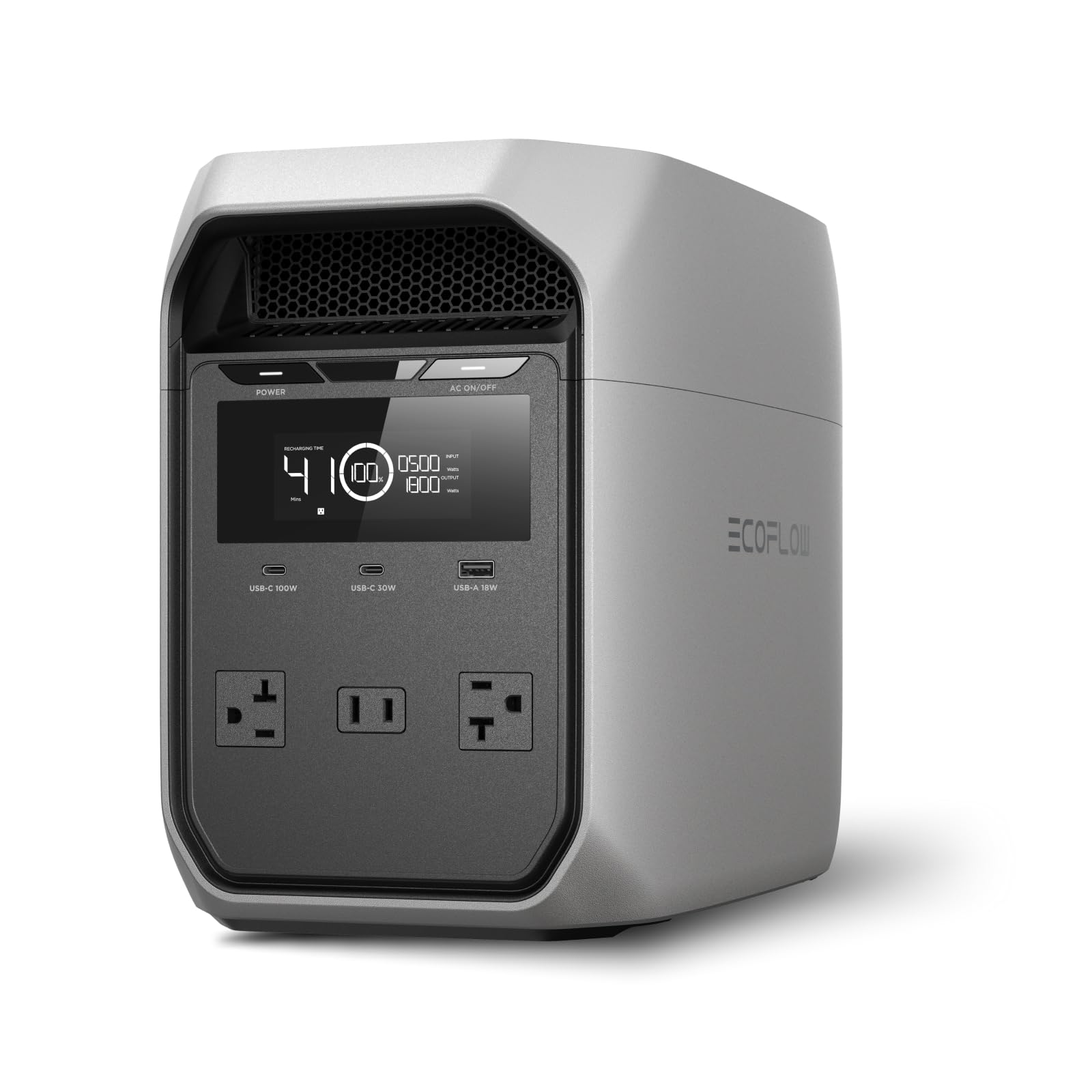
Battery Chemistry: LiFePO4
Capacity: 1024Wh
AC Output: 1800W, 3600W surge
UPS Switchover: 10ms
Recharge Time: 1 hour fast charge
USB-C Output: 100W
Intended Use: Home backup, camping, RVs
The Delta 3 Classic is the home-office answer. A 10ms UPS switchover means a desktop, router and monitor keep running through a brief cut without rebooting, and the one-hour recharge gets the unit back to full between outages faster than almost anything at this price. The 3600W surge handles motor loads like a small fridge compressor starting up, while the 1800W continuous rating keeps everyday draw in check.
It fits a flat where someone works from home and cannot afford to lose a call or an unsaved document, and the 1024Wh capacity is enough for hours of office load plus a few lights. The caution is capacity: this is not a whole-flat reserve, and a household expecting to run a fridge and heating for a day will empty it quickly.
Trade-off: The fast charging and UPS circuitry are excellent, but 1024Wh is a modest reserve for anything beyond a workspace and a few essentials.
Anker SOLIX S2000 Portable Power Station
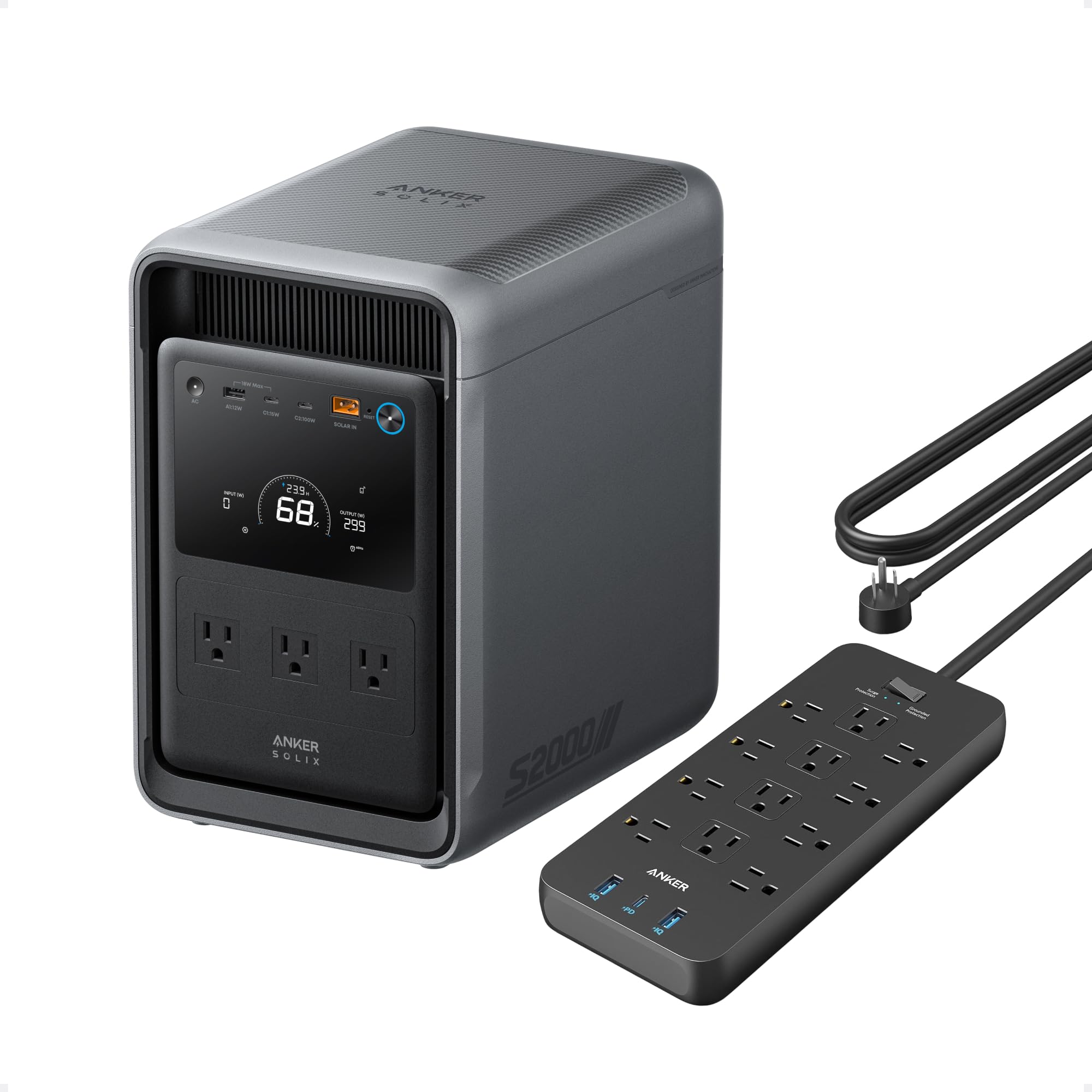
Battery Chemistry: LiFePO4
Capacity: 2010Wh
AC Output: 1500W
Intended Use: Home backup, outdoor and emergency use
Included Accessory: Power strip
The SOLIX S2000 sits in the sensible middle: 2kWh of LiFePO4 storage and 1500W of output, which is enough for a fridge, lights, router and phone charging through an evening outage without stretching to premium money. The bundled power strip is a small but genuinely useful addition in a flat, where wall sockets are often in the wrong place and a single AC outlet on the unit would otherwise mean daisy-chaining.
It suits a flat owner who wants one box that covers emergencies and the occasional balcony-free camping trip, and the capacity-to-price balance is the reason it made the list. The trade-off is output headroom: 1500W is fine for most appliances but leaves little margin for anything with a big startup draw, so buyers with a chest freezer or power tools should look at the higher-output picks.
Trade-off: Capacity is generous for the money, but the 1500W output ceiling limits which appliances can run at all, regardless of remaining battery.
640Wh Portable Power Station
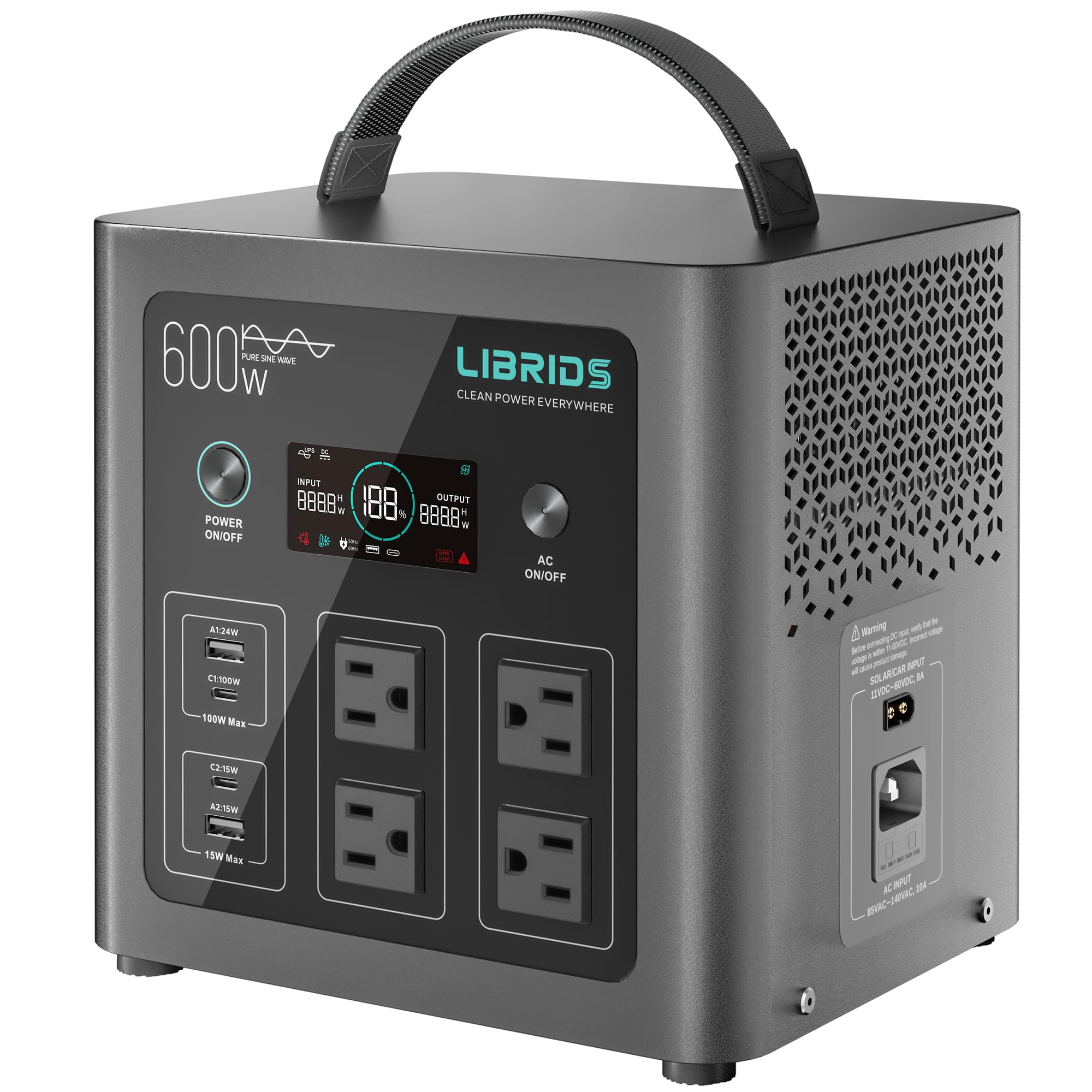
Battery Chemistry: LiFePO4
Capacity: 640Wh
AC Output: 1200W surge, 4 AC outlets
Total Ports: 8
UPS Switchover: 10ms
Recharge Time: 1.5 hours
Construction: Pure sine wave, metal design
Intended Use: RV camping, home backup, emergencies
This is the budget entry point, and it is a well-judged one: pure sine wave output protects sensitive electronics, a metal housing survives being shoved in a cupboard, and the 10ms UPS switchover is the same class of feature found on units costing several times more. Eight ports across four AC outlets, USB and USB-C cover a small flat’s essentials, and the 1.5-hour recharge keeps downtime short.
It suits a first-time buyer, a single occupant or a renter who wants outage protection for a router, laptop and lamp without spending mid-range money. The caution is capacity and surge: 640Wh and a 1200W surge ceiling mean it is a essentials-only unit, and anything with a compressor or heating element will either trip it or drain it in minutes.
Trade-off: The feature set is remarkable for the price, but 640Wh covers hours of small loads, not a fridge or any appliance that heats.
Before You Buy
- Capacity: Match watt-hours to the loads that matter most — router and lights need little, a fridge needs a great deal. Buy for the outage length expected, not the biggest number on the page.
- Output and surge: Continuous watts decide what runs; surge watts decide what starts. Compressors and motors need headroom, so check both figures against the appliance label.
- UPS switchover: A 10ms switchover keeps computers and routers alive through a cut. Flats with home-working occupants should treat this as a requirement rather than a bonus.
- Recharge speed: With no balcony for solar, wall charging is the main path. A fast recharge matters in a flat where the unit is only pulled out when needed.
- Size and storage: These units are heavy and need ventilated storage. Measure the cupboard or hallway spot before buying, and keep the unit where it can be reached quickly.
- Noise and ventilation: Fans run under load, so a bedroom cupboard is a poor home for a power station. A hallway or utility space is a better fit.
- Included accessories: A bundled power strip or multiple outlets saves buying extras, especially in a flat with few well-placed sockets.
Frequently Asked Questions
-
Can a power station run a fridge in a flat?
Yes, but only with enough capacity and surge output. A unit in the 2kWh class with a high continuous rating can carry a fridge for hours; a 640Wh unit will not. -
Is a power station safe to keep in a flat?
LiFePO4 units are sealed and produce no exhaust fumes, so they are suitable for indoor use. They should still be kept ventilated, away from damp, and out of reach of children. -
Do these units need a balcony or solar panel?
No. All five charge from a standard wall socket, which is the practical route in a flat. Solar input is optional and useful mainly for camping or a window-mounted panel. -
What size power station does a one-bedroom flat need?
For router, laptop, lights and phone charging, a budget unit in the 640Wh range is adequate. For a fridge and longer outages, 2kWh or more is the realistic starting point. -
Can a power station be used as a UPS for a desktop computer?
Only units with a fast switchover, such as the 10ms models here, are suitable. Check the switchover figure before relying on one for a desktop. -
How long can a power station sit unused?
LiFePO4 batteries hold charge well, but most units should be topped up periodically and stored cool and dry. A flat with no balcony should store the unit away from direct sun and radiators.
Bottom Line
For most flats with no balcony, the EF ECOFLOW Delta 3 Classic is the best power station for the job: fast wall charging, a true 10ms UPS for a home office, and enough capacity for essentials without premium pricing. Buyers who need to carry a fridge and a whole flat through a long outage should step up to the Jackery HomePower 3600 Plus, while the 640Wh unit remains the sensible first buy for a small household on a budget.
