Why there are Amazon links here: Brave Review is paid a commission for qualifying Amazon purchases made through the links below. Your price does not change, and using our links is entirely optional. How this works
Best Power Station for a Household with Young Children
A household with young children needs a power station that does two jobs at once: it keeps the fridge, the router and the baby monitor alive during an outage, and it stays safe and manageable around curious hands the rest of the time. The five picks below cover three buyer profiles — the apartment family that wants a compact grab-and-go unit, the suburban home that wants whole-circuit backup, and the camping family that wants one box for both. The overview table compares them side by side; detailed reviews, cautions and buying criteria follow.
Overview of the Picks
| Product | Key Spec | Best Use | Price Tier |
|---|---|---|---|
| Backup LiFePO4 Battery 640Wh, 1200W Surge | 640Wh, 10ms UPS, 8 ports | Small apartments and nursery backup | Budget |
| Jackery HomePower 3600 Plus | 3584Wh, expandable to 21kWh, 3600W | Whole-home outage protection | Premium |
| EF ECOFLOW Delta 3 Classic | 1024Wh, 1800W AC, 10ms UPS | Everyday family backup with fast charging | Mid-range |
| Jackery Explorer 1000 v2 | 1070Wh, 1500W | Camping plus light home backup | Mid-range |
| EBL 2400W Portable Power Station | 1843.2Wh, 2400W, 12 outlets | Large families with many devices | Upper mid-range |
1. Backup LiFePO4 Battery 640Wh Portable Power Station
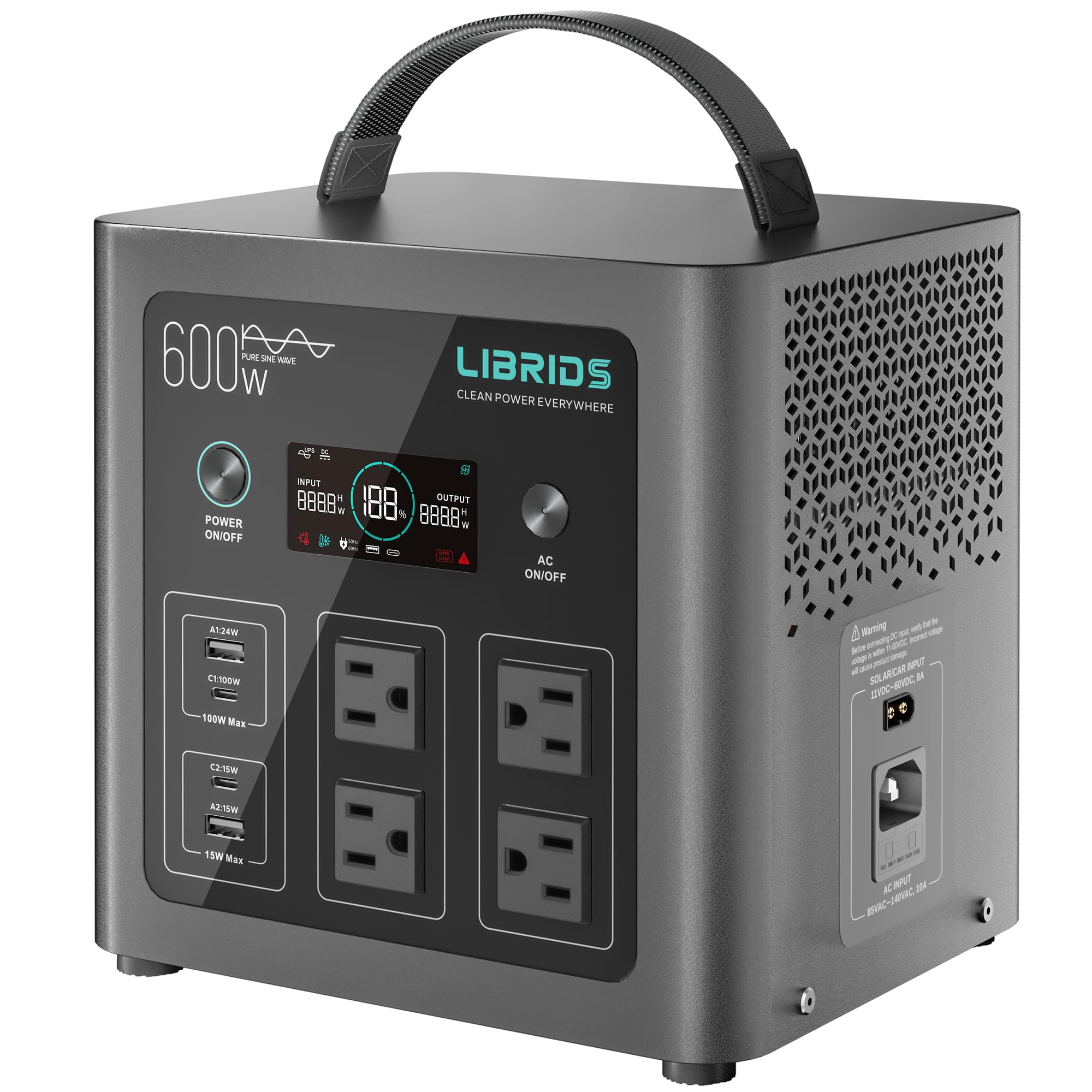
Battery Chemistry: LiFePO4
Capacity: 640Wh
AC Output: 4 AC ports, 1200W surge
Charge Time: 1.5 hours
UPS Switchover: 10ms
Ports: 8 total
Build: Metal housing, pure sine wave output
This is the smallest unit in the group and the one built for tight spaces. The metal housing is a meaningful choice for a household with toddlers — it resists knocks and dents better than the plastic shells common at this price, and it gives the unit a stable, tip-resistant feel on a shelf or floor corner. The 640Wh capacity is enough to run a router, a baby monitor, a few lamps and a phone charger through an evening outage, and the 10ms UPS switchover means the monitor never blinks when the grid drops. Four AC ports plus the remaining outlets cover a nursery or a small living room without a power strip.
The 1.5-hour recharge is the standout feature at this tier: a unit that refills quickly is one that gets rotated back into service instead of sitting dead in a closet. Buyers with a small apartment, a single nursery to protect, or a need for a grab-and-go box for the car will find the size and weight manageable in a way the larger units are not.
Trade-off: The 640Wh capacity and 1200W surge ceiling limit this unit to small loads — a space heater, a microwave or a full-size fridge startup will exceed what it can deliver.
2. Jackery HomePower 3600 Plus Power Station

Battery Chemistry: LFP (lithium iron phosphate)
Capacity: 3584Wh, expandable to 21kWh
AC Output: 3600W
Intended Use: Essential home backup, emergencies, RV
Expansion: Add-on batteries supported
Solar: Panel optional
This is the whole-home option and the only pick designed to grow with a family’s needs. The 3584Wh base capacity covers a refrigerator, lights, internet and medical or baby equipment for an extended outage, and the expansion path to 21kWh means a household can add capacity later rather than replacing the unit. The 3600W AC output is high enough to run large appliances, which matters in a house where the freezer and the sump pump cannot be allowed to stop.
The LFP chemistry is the right call for a home with children: it is the more thermally stable lithium formula and it holds up over many charge cycles, so the unit is not a disposable purchase. Buyers who own a house, expect multi-day outages, and want one system that covers the whole panel should start here.
Trade-off: This is a heavy, premium-priced system that is not realistically portable for camping or car trips, and the expansion batteries add cost quickly.
3. EF ECOFLOW Delta 3 Classic Portable Power Station
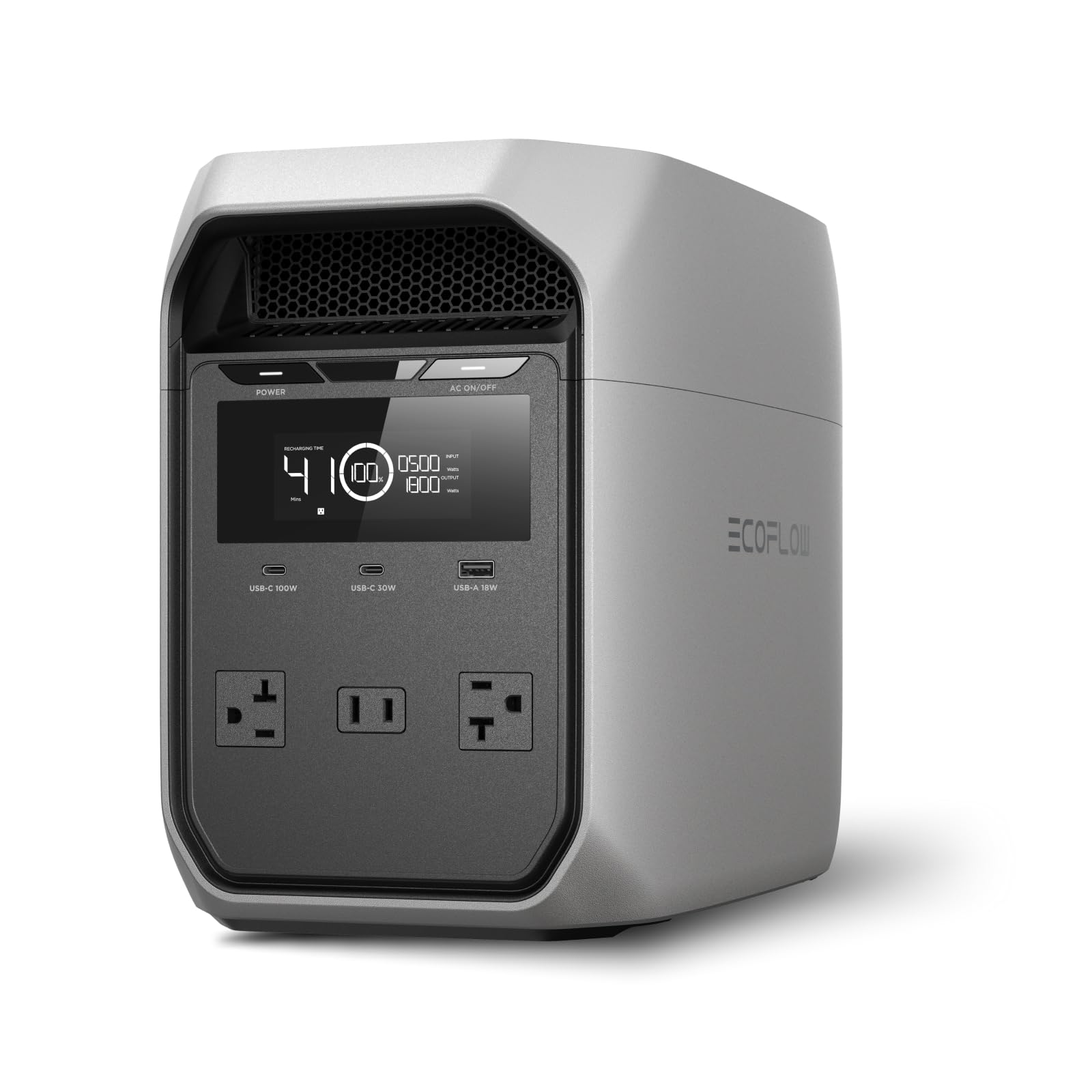
Battery Chemistry: LiFePO4
Capacity: 1024Wh
AC Output: 1800W continuous, 3600W surge
Charge Time: 1 hour
UPS Switchover: 10ms
USB-C Output: 100W
Intended Use: Home backup, camping, RVs
The Delta 3 Classic sits in the sweet spot for most families: roughly a kilowatt-hour of LFP storage, a one-hour recharge, and a 10ms UPS mode that protects sensitive electronics. The 1800W continuous output with a 3600W surge handles a fridge compressor starting up, which is the single most common failure point for smaller stations during an outage. The 100W USB-C port charges laptops and tablets at full speed without a power brick.
For a household with young children, the appeal is the combination of real backup capability and a size that one adult can move from room to room. It suits families who want dependable coverage for the fridge, the router and the kids’ devices without committing to a permanent home system.
Trade-off: A one-kilowatt-hour battery will not carry a whole house through a multi-day outage, and the fast-charge speed puts more heat and stress on the cells than a slow charge would.
4. Jackery Explorer 1000 v2 Portable Power Station

Battery Chemistry: LiFePO4
Capacity: 1070Wh
AC Output: 1500W
Charge Time: 1 hour
USB-C Output: 100W
Intended Use: Camping, emergency, RV
Solar: Panel optional
This is the most popular unit in the group, and the reason is versatility. The 1070Wh LFP battery and 1500W output cover a family camping weekend — a portable fridge, lights, device charging — and then double as a home emergency box when the trip is over. The one-hour recharge from a wall outlet means it is ready again the same day, and the 100W USB-C port keeps tablets and phones topped up without adapters.
Buyers who want one purchase to serve both outdoor trips and home outages will find this the easiest recommendation. It is lighter and more packable than the larger home units, and the LFP chemistry gives it a long service life for the money.
Trade-off: The 1500W ceiling is below what large appliances and some fridge startups demand, so it is a supplementary backup rather than a whole-home solution.
5. EBL 2400W Portable Power Station
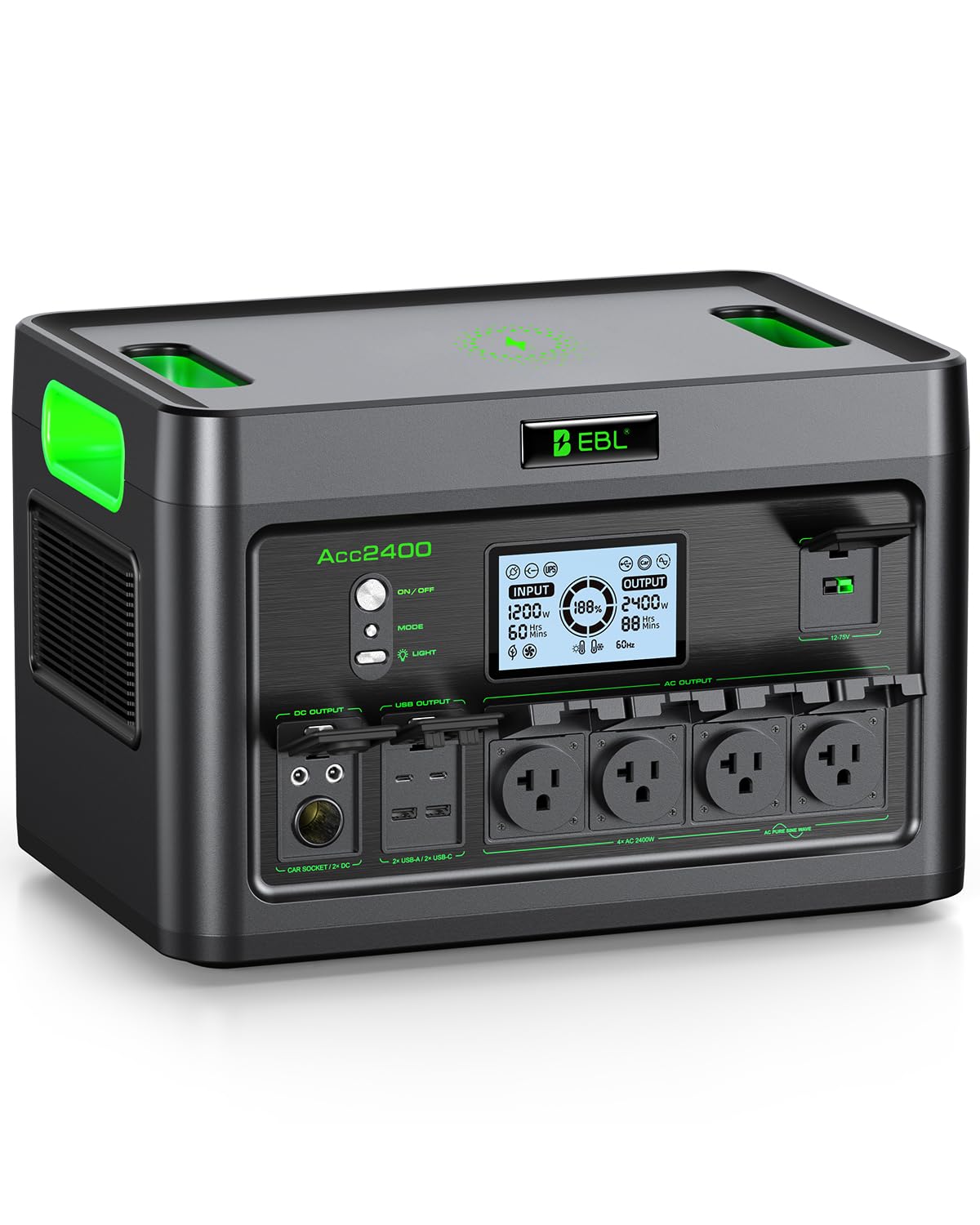
Battery Chemistry: LiFePO4
Capacity: 1843.2Wh
AC Output: 2400W
Outlets: 12 total
USB-C Output: PD 100W
Charge Time: 2 hours
Intended Use: Home use, home battery backup
The EBL is the capacity-per-dollar pick for a busy family. Nearly 1.9kWh of LFP storage and 2400W of AC output put it in whole-home-supplement territory, and the twelve outlets mean a household can plug in the fridge, the router, several lamps, a baby monitor and a stack of chargers without daisy-chaining power strips — a real safety advantage in a house with crawling children. The 100W USB-C PD port handles laptops and tablets directly.
This unit suits larger families or households with more equipment to keep running: a chest freezer, a CPAP machine, a home office. The two-hour recharge is slower than the fastest units here but still quick enough to be practical between outages.
Trade-off: At this capacity and weight it is a two-person lift for most adults, and it is priced above the entry-level units, so it only makes sense for households that genuinely need the extra outlets and wattage.
Before You Buy
- Capacity: Match watt-hours to the loads that must stay on — a router and monitor need far less than a fridge and freezer.
- Battery chemistry: LiFePO4 is the more thermally stable and longer-lived option and is the safer choice in a home with children.
- Output and surge: Check continuous watts and surge watts separately; fridge and pump motors draw far more at startup than they do running.
- Child safety: Prefer units with covered or shuttered outlets, a metal or sturdy housing, and no exposed high-voltage terminals; store the unit above floor level.
- UPS switchover: A 10ms transfer keeps computers, routers and medical devices running without a reboot when the grid drops.
- Recharge speed and solar: A fast wall recharge keeps the unit in rotation; optional solar panels extend runtime in a long outage.
- Placement and ventilation: Keep the unit out of reach of toddlers, away from heat sources, and never in a closed cabinet while charging.
Frequently Asked Questions
-
Is a power station safe to keep in a home with toddlers?
Yes, with precautions. LFP chemistry is thermally stable, and units with covered outlets and sturdy housings are the safer picks; the unit should still be stored out of reach and never left charging unattended in a child’s room. -
How much capacity does a family with young children actually need?
A router, baby monitor, lamps and phone charging run for hours on roughly 600–1000Wh. A fridge and freezer push the requirement toward 1800Wh or more. -
Can a power station run a fridge during an outage?
Yes, if the continuous and surge ratings are high enough. Check the fridge’s startup draw, not just its running watts, before relying on a unit. -
What does 10ms UPS mean for a nursery?
It means the unit switches from wall power to battery in about ten milliseconds, fast enough that a monitor or router keeps running without restarting. -
Can these units be charged with solar panels?
Several of the picks list solar as an optional input. A panel extends runtime in a long outage but adds cost and needs direct sun. -
How long do these batteries last?
LFP cells tolerate many charge cycles and degrade slowly, so a well-cared-for unit can serve a family for years before capacity drops noticeably.
Bottom Line
For most households with young children, the EF ECOFLOW Delta 3 Classic is the best balance of real backup capability, fast recharge and a size one adult can move — it protects the fridge, the router and the baby monitor without demanding a permanent installation. Families in a house that needs whole-panel coverage should step up to the Jackery HomePower 3600 Plus, and apartment dwellers should start with the compact Backup LiFePO4 640Wh.
