Why there are Amazon links here: Brave Review is paid a commission for qualifying Amazon purchases made through the links below. Your price does not change, and using our links is entirely optional. How this works
Best Power Station for a Shed with a Freezer and No Mains
Keeping a freezer alive in a shed with no mains supply comes down to three things: enough watt-hours to ride out the gaps between charges, enough surge output to start the compressor, and a fast enough recharge that the station is never the weak link. This roundup covers five units that fit that job at different budgets, from a compact entry model to a whole-shed expandable system. It suits three types of buyer: the shed owner running a single chest freezer on solar, the household that wants a backup circuit for the garage, and the off-grid user who plans to add capacity later. The overview table below puts all five side by side; the reviews explain which one fits which job.
Overview of the Picks
| Product | Key Spec | Best Use | Price Tier |
|---|---|---|---|
| EF ECOFLOW Delta 3 Classic | 1024Wh, 1800W AC, 3600W surge | Small freezer plus lights, fast turnaround | Mid |
| Jackery HomePower 3600 Plus | 3584Wh, 3600W AC, expandable to 21kWh | Whole-shed backup, long outages | Premium |
| Jackery Explorer 1000 v2 | 1070Wh, 1500W AC | Budget shed freezer on a solar top-up | Mid |
| PECRON F3000LFP | 3072Wh, 3600W AC, expandable to 10752Wh | Large freezer, growable off-grid setup | Mid |
| 640Wh Metal UPS Power Station | 640Wh, 1200W surge, 10ms UPS | Small freezer, short bridging, tight budget | Budget |
EF ECOFLOW Delta 3 Classic
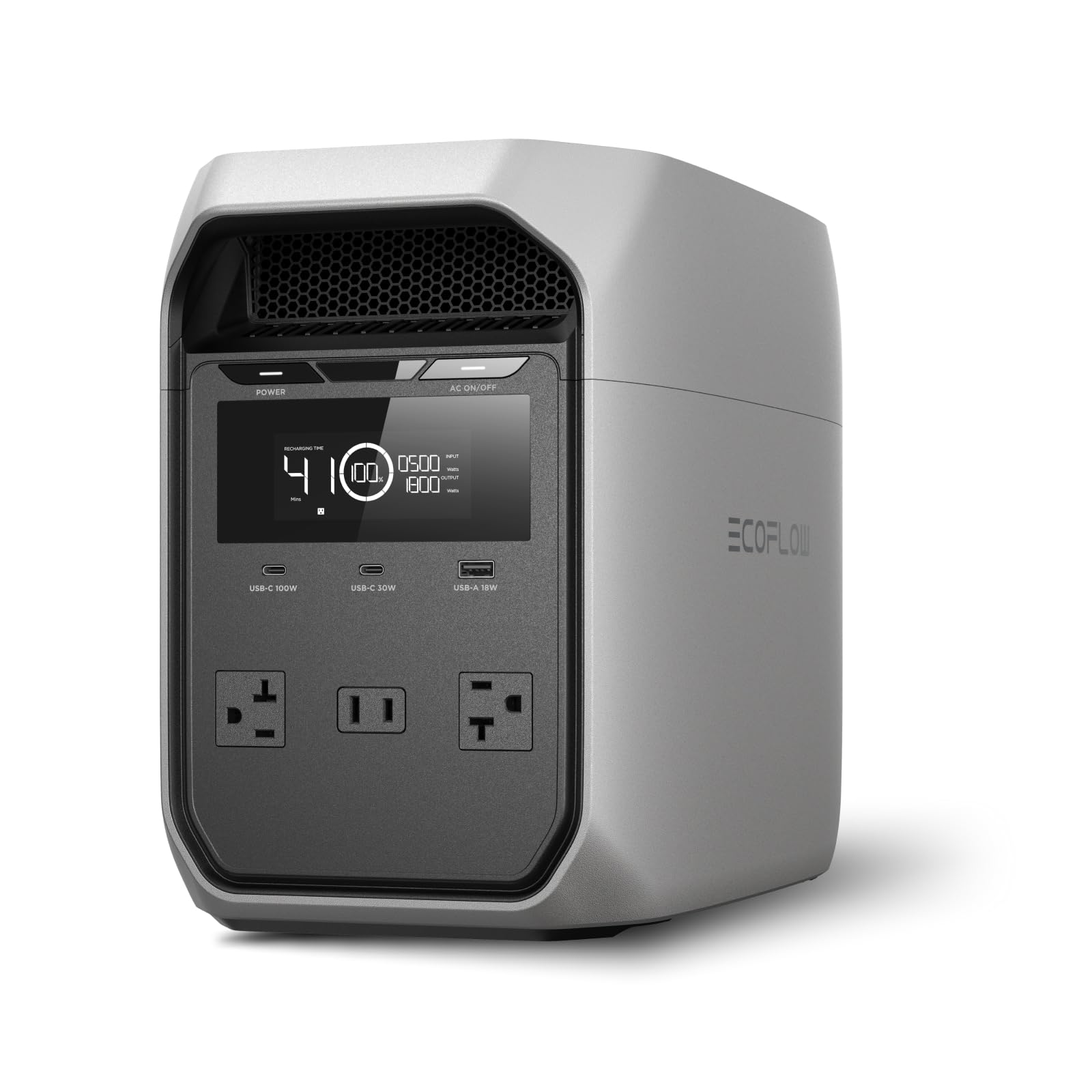
Battery Chemistry: LiFePO4
Capacity: 1024Wh
AC Output: 1800W continuous
Surge: 3600W
Recharge Time: 1 hour
UPS Switching: 10ms
USB-C Output: 100W
The Delta 3 Classic is the pick for a shed freezer that needs to come back online quickly after a drain. LiFePO4 chemistry gives it the cycle life a freezer duty cycle demands, and the one-hour recharge means a lunch break on a generator or a strong solar window is enough to refill it. The 3600W surge is the figure that matters here: freezer compressors pull well above their running wattage at startup, and this unit has the headroom to absorb that spike without tripping.
The 10ms UPS transfer is a genuine bonus for a shed that does have an intermittent mains feed, since the freezer keeps running through short cuts rather than restarting. Where it falls short is raw capacity — 1024Wh covers a modest freezer for a limited stretch, not a multi-day outage. Buyers running a large chest freezer or planning to add a second appliance should look at the bigger units below.
Trade-off: Capacity is the limiting factor here, so this suits a small-to-mid freezer and short outages rather than a full shed load over several days.
Check the current price on Amazon
Jackery HomePower 3600 Plus

Battery Chemistry: LFP
Capacity: 3584Wh
AC Output: 3600W
Expandable Capacity: Up to 21kWh
Intended Use: Home backup, emergencies, RV
Solar Panel: Optional
The HomePower 3600 Plus is the answer for a shed that is really a second utility room — a chest freezer, an upright freezer, a light circuit, maybe a tool charger. At 3584Wh it carries serious runtime, and the 3600W AC output means the freezer compressor is nowhere near the ceiling. The expandable design is the real differentiator: capacity can climb to 21kWh with add-on batteries, so the system grows with the load instead of being replaced when the shed gains another appliance.
LFP chemistry is the right call at this price, since it tolerates deep discharge and frequent cycling better than older lithium blends. The caveat is cost and weight — this is a premium, stationary-class unit, and buyers who only need to bridge a few hours on a single small freezer are overpaying. It earns its place for anyone treating the shed as critical backup rather than occasional use.
Trade-off: The price tier puts it well above what a single small freezer requires, so it only makes sense when the load is genuinely large or expansion is planned.
Check the current price on Amazon
Jackery Explorer 1000 v2

Battery Chemistry: LiFePO4
Capacity: 1070Wh
AC Output: 1500W
Recharge Time: 1 hour
USB-C Output: 100W
Solar Panel: Optional
The Explorer 1000 v2 is the practical middle ground for a shed freezer on a solar top-up. It shares the one-hour fast charge and LiFePO4 chemistry of the ECOFLOW above at a similar capacity, but its 1500W AC ceiling is lower, which matters for freezer startup surge. For a single modest chest freezer with a clean compressor start, that is workable; for a larger unit with a hard start, it is tight.
The 100W USB-C output and camping-oriented design make it a dual-purpose buy — it can run shed duty and still come home for trips. Buyers should treat it as a freezer-plus-lights unit, not a whole-shed solution. The lack of stated UPS transfer also means it is better suited to manual switchover than to riding through mains blips.
Trade-off: The 1500W AC output leaves less surge headroom than the premium picks, so a large or hard-starting freezer compressor may push it harder than is comfortable.
Check the current price on Amazon
PECRON F3000LFP
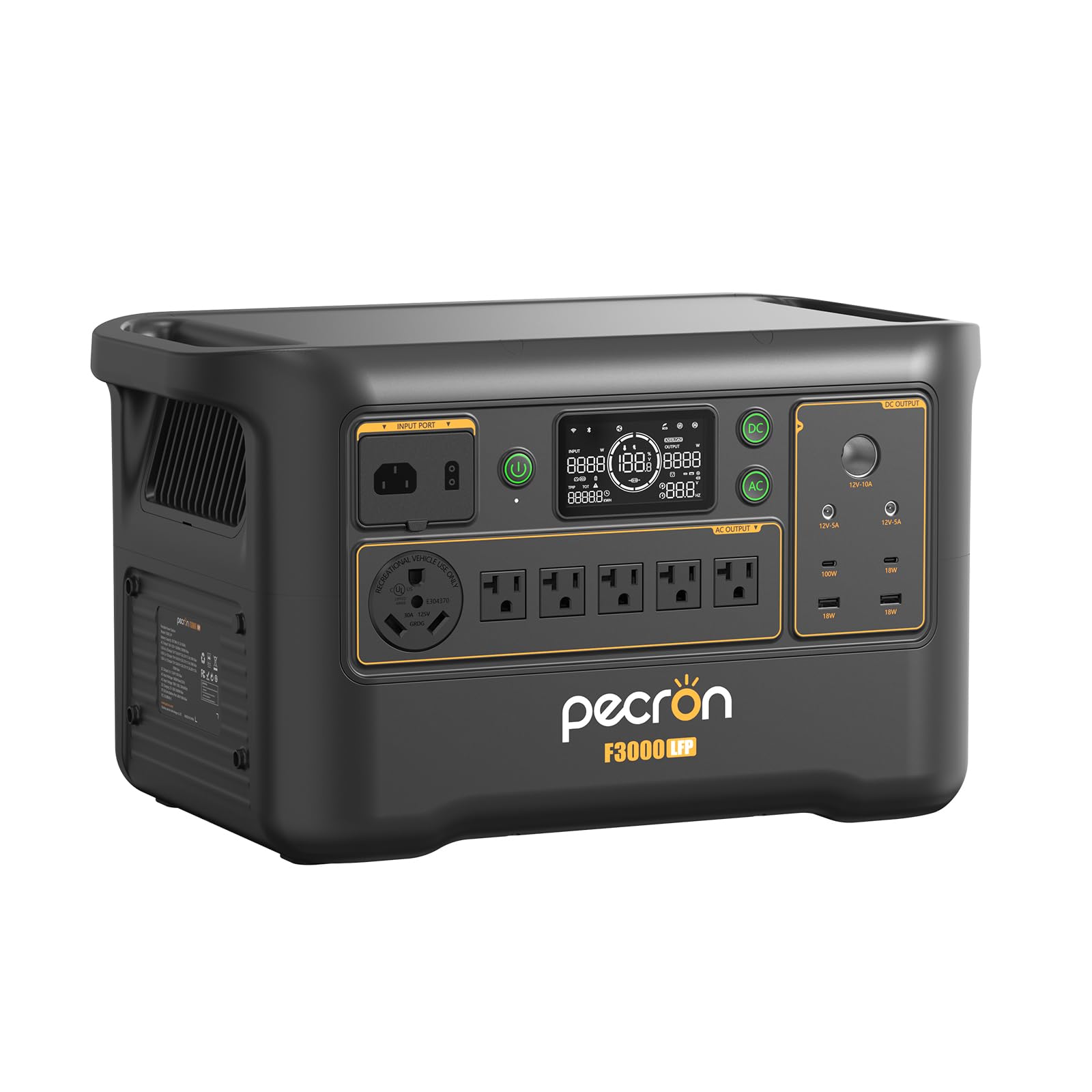
Battery Chemistry: LiFePO4
Capacity: 3072Wh
AC Output: 3600W
Expandable Capacity: Up to 10752Wh
Intended Use: Home backup, camping, RV
Charging: Fast charging
The F3000LFP is the value play in the large-capacity bracket: 3072Wh and 3600W AC for noticeably less than the Jackery premium unit, with the same LFP chemistry and a comparable expansion ceiling of 10752Wh. For a shed running a full-size freezer plus a second appliance, that combination of capacity and surge output covers the job without stepping into flagship pricing.
Expansion is the reason to choose it over a fixed-capacity unit — buyers can start with the base station and add batteries as the shed load grows. The trade-off is brand support and polish: at this price tier, buyers should expect fewer refinements in app features and accessories than the premium names offer, and should plan the solar input sizing carefully since the unit is designed to charge fast from a suitably sized array.
Trade-off: It undercuts the premium tier on price, and that usually shows up in app features and bundled accessories rather than in the core battery and inverter specs.
Check the current price on Amazon
640Wh Metal UPS Power Station
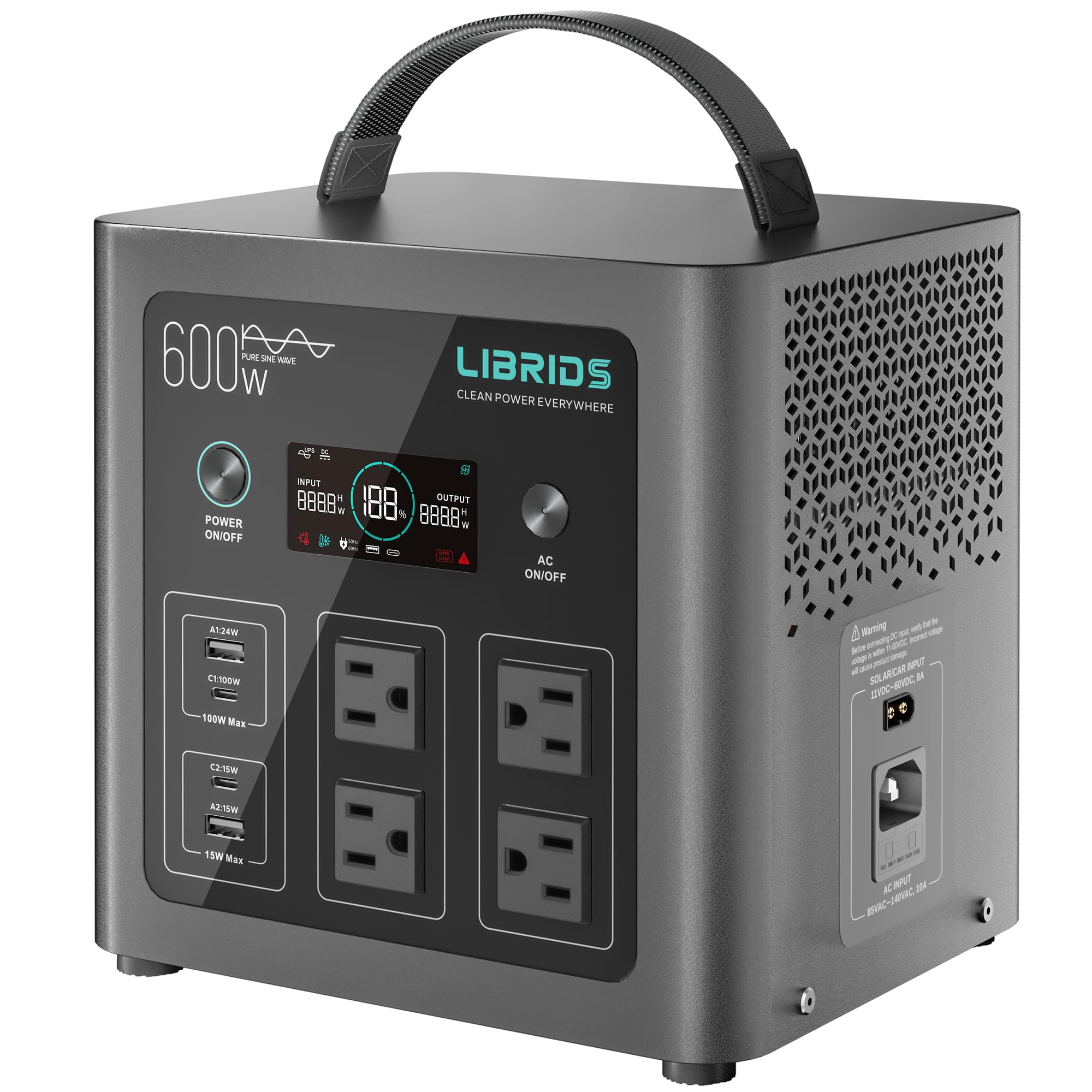
Battery Chemistry: LiFePO4
Capacity: 640Wh
Surge Output: 1200W
Recharge Time: 1.5 hours
UPS Switching: 10ms
Ports: 8 (4 AC)
Construction: Metal, pure sine wave
This is the budget entry for a small freezer in a shed that only needs short bridging — a few hours of cover during an outage or between solar charges. The 10ms UPS transfer and pure sine wave output are the standout features at this price, since clean sine power keeps a compressor motor happy and the fast transfer avoids a hard restart. The metal housing suggests it is built to sit in an unheated outbuilding rather than a living room.
Capacity is the honest limitation: 640Wh will not carry a freezer through a long outage, and the 1200W surge figure is modest relative to the larger units here. It suits a small under-counter or bar freezer, or as a second line of defense behind a bigger station. Buyers with a full-size chest freezer should size up.
Trade-off: The 640Wh capacity and 1200W surge make this a short-bridge unit, not a multi-day freezer backup.
Check the current price on Amazon
Before You Buy
- Capacity: Match watt-hours to the freezer’s daily consumption plus a margin for cloudy days; a small freezer and a large chest freezer are different classes of purchase.
- Surge output: Freezer compressors draw far more at startup than while running, so the surge rating matters as much as the continuous AC figure.
- UPS transfer: A 10ms switch keeps the compressor running through brief mains cuts; without it, expect a restart and a temperature climb.
- Battery chemistry: LiFePO4 tolerates deep discharge and frequent cycling better than older lithium blends, which suits the on-off duty cycle of a freezer.
- Recharge speed: A one-hour recharge lets a solar window or short generator run refill the station; slower charging needs a bigger array or longer runtime planning.
- Placement: A shed is an unheated, sometimes damp space, so housing material and port layout deserve a look before the unit is parked there permanently.
- Expansion: If the shed load is likely to grow, an expandable station avoids replacing the whole system when a second freezer arrives.
Frequently Asked Questions
- How many watt-hours does a shed freezer need? It depends on freezer size and duty cycle, but the general rule is to cover the freezer’s daily draw plus a margin for days without sun or generator time. The 3000Wh-plus units here suit full-size freezers; the 640Wh model suits small ones.
- Why does surge output matter for a freezer? Compressor motors pull a startup spike well above their running wattage, so a station with generous surge headroom starts the freezer cleanly instead of tripping or stalling.
- What does 10ms UPS switching do for a freezer? It transfers to battery almost instantly during a mains cut, so the compressor keeps running rather than restarting and the interior temperature stays stable.
- Is LiFePO4 the right chemistry for this job? Yes — it handles deep discharge and repeated cycling well, which matches the way a freezer loads a battery over months of use.
- Can a solar panel keep up with a shed freezer? A suitably sized array plus a fast-charging station can, but panel sizing has to match the freezer’s consumption and local sun hours. The stations here list solar as optional, so panels are a separate purchase.
- Can a power station run a freezer and other shed loads at once? The larger units can carry a freezer plus lights and a charger; the budget model is best kept to the freezer alone.
Bottom Line
For most shed owners running a freezer with no mains, the EF ECOFLOW Delta 3 Classic is the best balance of capacity, surge headroom and one-hour recharge at a mid-tier price. Buyers with a full-size freezer or plans to expand should step up to the PECRON F3000LFP for the capacity-to-price ratio, while the Jackery HomePower 3600 Plus is the pick when the shed is genuinely critical backup.
