Why there are Amazon links here: Brave Review is paid a commission for qualifying Amazon purchases made through the links below. Your price does not change, and using our links is entirely optional. How this works
Best Power Station for a Household with a Stairlift and a Router
A stairlift and a home router are two small loads with outsized importance: one moves a person, the other keeps the household connected. This guide ranks five home backup power stations on how well they carry those loads through an outage, from a compact budget unit to a whole-home-capable battery. Three buyer profiles are served here — the household that wants a simple always-on UPS for a router and a stairlift, the homeowner planning for longer outages, and the shopper who wants the smallest spend that still covers the basics. The overview table below puts all five side by side before the individual reviews.
Overview of the Picks
| Product | Key Spec | Best Use | Price Tier |
|---|---|---|---|
| Jackery HomePower 3600 Plus | 3584Wh, 3600W AC, expandable to 21kWh | Whole-home essentials and long outages | Premium |
| Jackery HomePower 3000 | 3072Wh, 3600W AC, 7200W surge | Large backup with motor start headroom | Upper mid |
| Jackery HomePower 1000 Plus v2 | 1024Wh, 1800W AC, 10ms UPS | Router and stairlift on a budget | Entry |
| Jackery HomePower 2000 Plus v2 | 2048Wh, 2400W AC, expandable to 12kWh | Balanced mid-size home backup | Mid |
| 640Wh Portable Power Station | 640Wh, 1200W surge, 10ms UPS, 8 ports | Smallest spend, short outages | Budget |
1. Jackery HomePower 3600 Plus Power Station
Type: LFP home backup power station
Capacity: 3584Wh, expandable to 21kWh
AC Output: 3600W
Battery Chemistry: LFP (lithium iron phosphate)
Intended Use: Essential home backup, emergencies, RV
Solar: Solar panel optional

The HomePower 3600 Plus is the largest unit here, built around an LFP battery that holds up to repeated charge cycles better than older lithium blends. Its 3600W AC output and 3584Wh base capacity cover a stairlift, a router and a long list of household essentials at the same time, and the expansion path to 21kWh lets a household grow the system as needs change. This is the pick for a home that treats backup power as infrastructure rather than an emergency kit.
It earns its place as the top pick for whole-home coverage, where the stairlift and router are only two of several loads that need to keep running. The caution is weight and price: a battery this size is not something a single person moves up a staircase, and the premium tier means the household pays for capacity it may never use if outages are short and rare.
Trade-off: The largest capacity in the lineup comes with the heaviest footprint and the highest cost, which is overkill for a household that only needs a router and a stairlift to survive a few hours.
2. Jackery HomePower 3000 Portable Power Station
Type: LFP portable power station
Capacity: 3072Wh
AC Output: 3600W
Surge: 7200W
Battery Chemistry: LFP (lithium iron phosphate)
Intended Use: Essential home backup, power outages
Solar: Solar panel optional
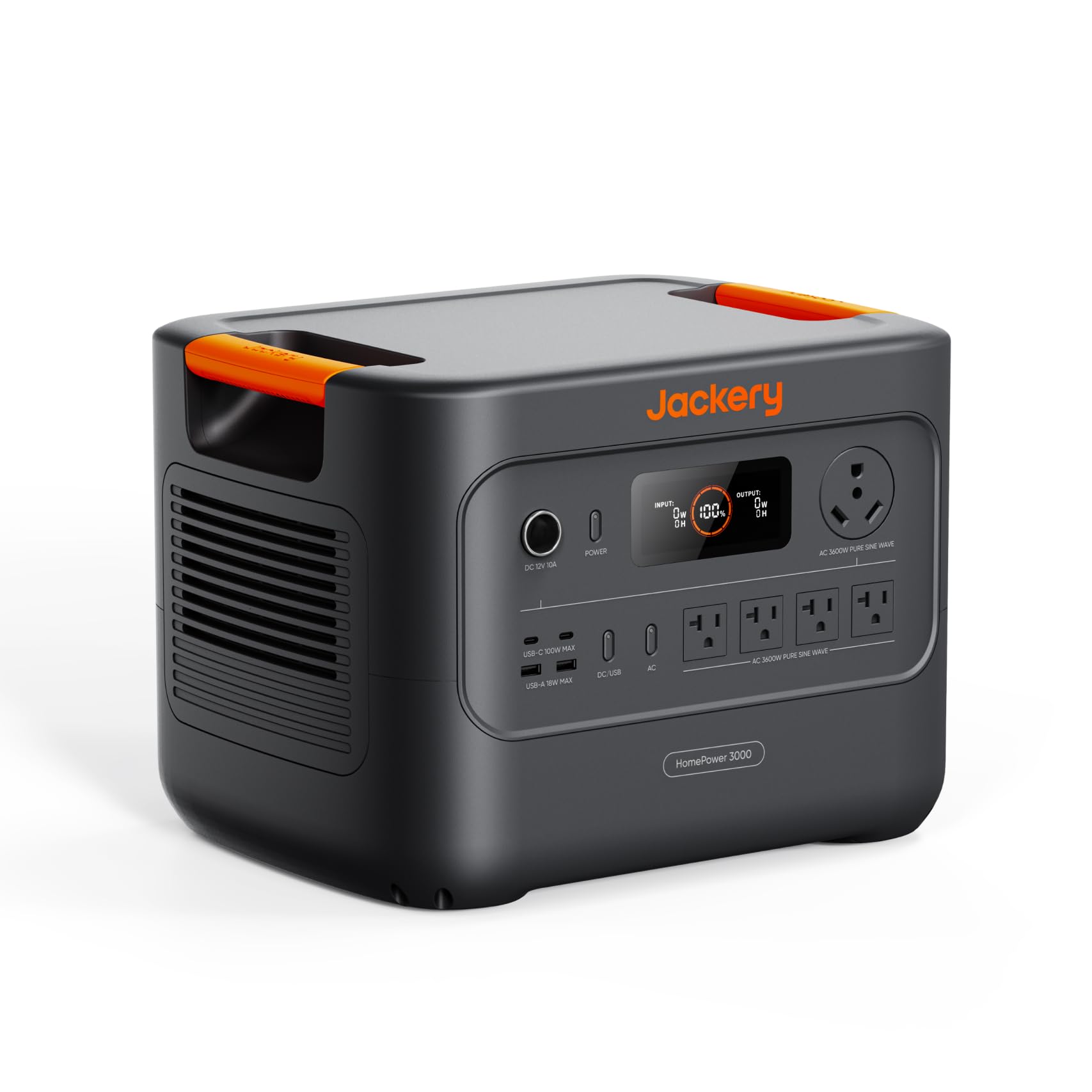
The HomePower 3000 pairs a 3072Wh LFP battery with the same 3600W continuous AC output as the larger model, plus a 7200W surge rating that matters when a motor starts. A stairlift motor draws a brief spike on startup, and that surge headroom is exactly the kind of margin a household wants when the lift has to move someone during an outage. It is a step down in capacity from the 3600 Plus but keeps the same power class.
This is the pick for a household that wants strong motor-start capability without paying for the biggest battery. The caution is that it does not advertise an expansion path in its name, so the capacity bought is the capacity the household lives with — a limitation worth weighing against the expandable models in this lineup.
Trade-off: Fixed capacity with no stated expansion path means a household that later wants more runtime has to buy a second unit rather than add a battery.
3. Jackery HomePower 1000 Plus v2 Portable Power Station
Type: LFP portable power station with UPS
Capacity: 1024Wh, expandable to 11kWh
AC Output: 1800W
USB-C Output: 140W
UPS Switchover: 10ms
Intended Use: Home backup, camping, off-grid, RV
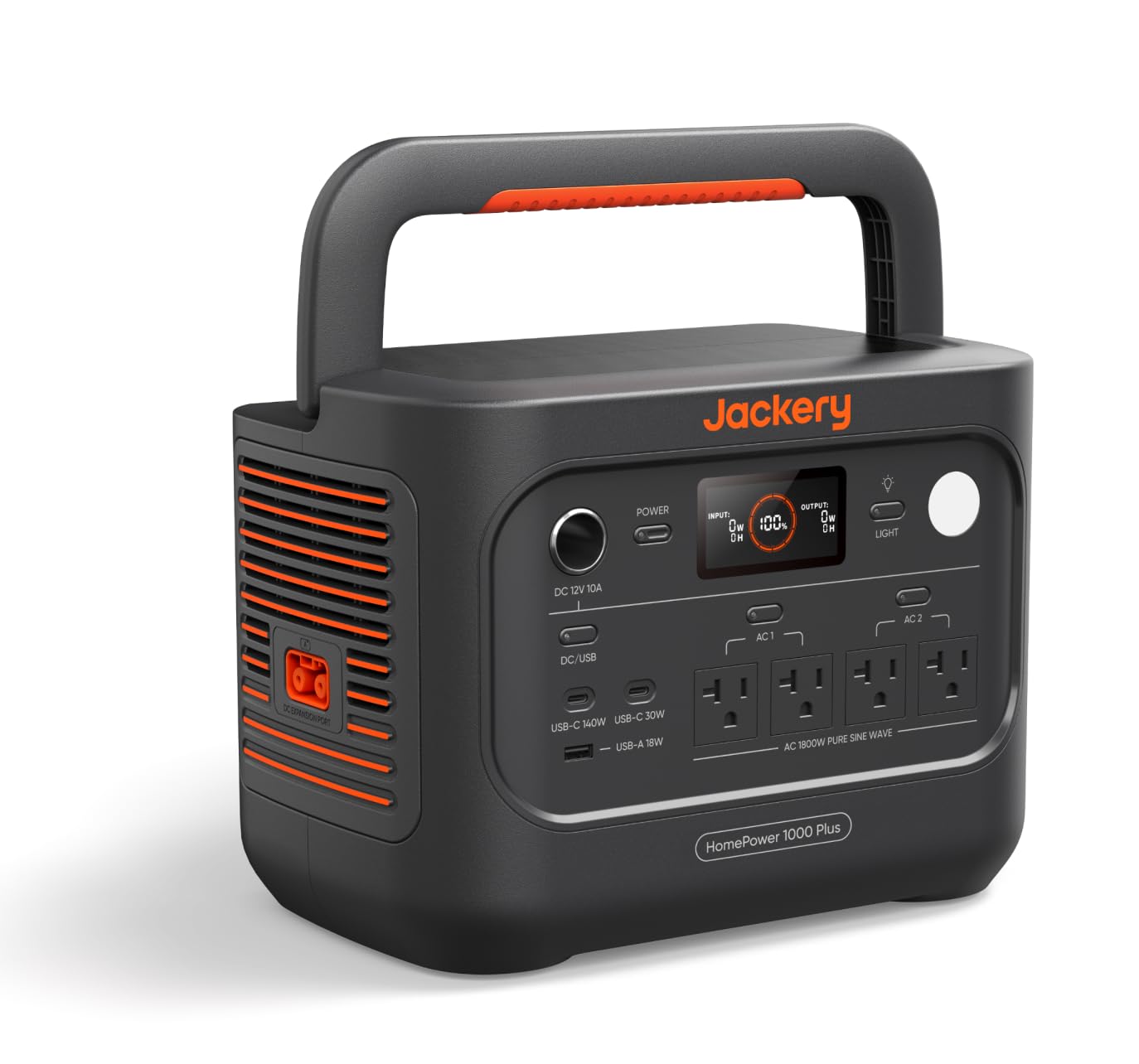
The HomePower 1000 Plus v2 is the value pick for this specific job. Its 10ms UPS switchover keeps a router from rebooting when grid power drops, and 1024Wh of LFP capacity covers a stairlift and router for a useful stretch of a short outage. The 1800W AC output handles the lift, and the 140W USB-C port keeps phones and tablets topped up while the household waits for power to return.
It suits the household that wants a dedicated router-and-stairlift backup without investing in whole-home hardware. The caution is scope: 1800W continuous output and a 1024Wh base battery are sized for essentials, not for running a refrigerator, furnace and lift together, and the expansion to 11kWh costs extra on top of the base unit.
Trade-off: The 1800W output ceiling and modest base capacity make this a dedicated essentials unit rather than a whole-home solution.
4. Jackery HomePower 2000 Plus v2 Power Station
Type: LFP home backup power station
Capacity: 2048Wh, expandable to 12kWh
AC Output: 2400W
Battery Chemistry: LFP (lithium iron phosphate)
Intended Use: Essential home backup, outages, emergencies, RV
Solar: Solar panel optional
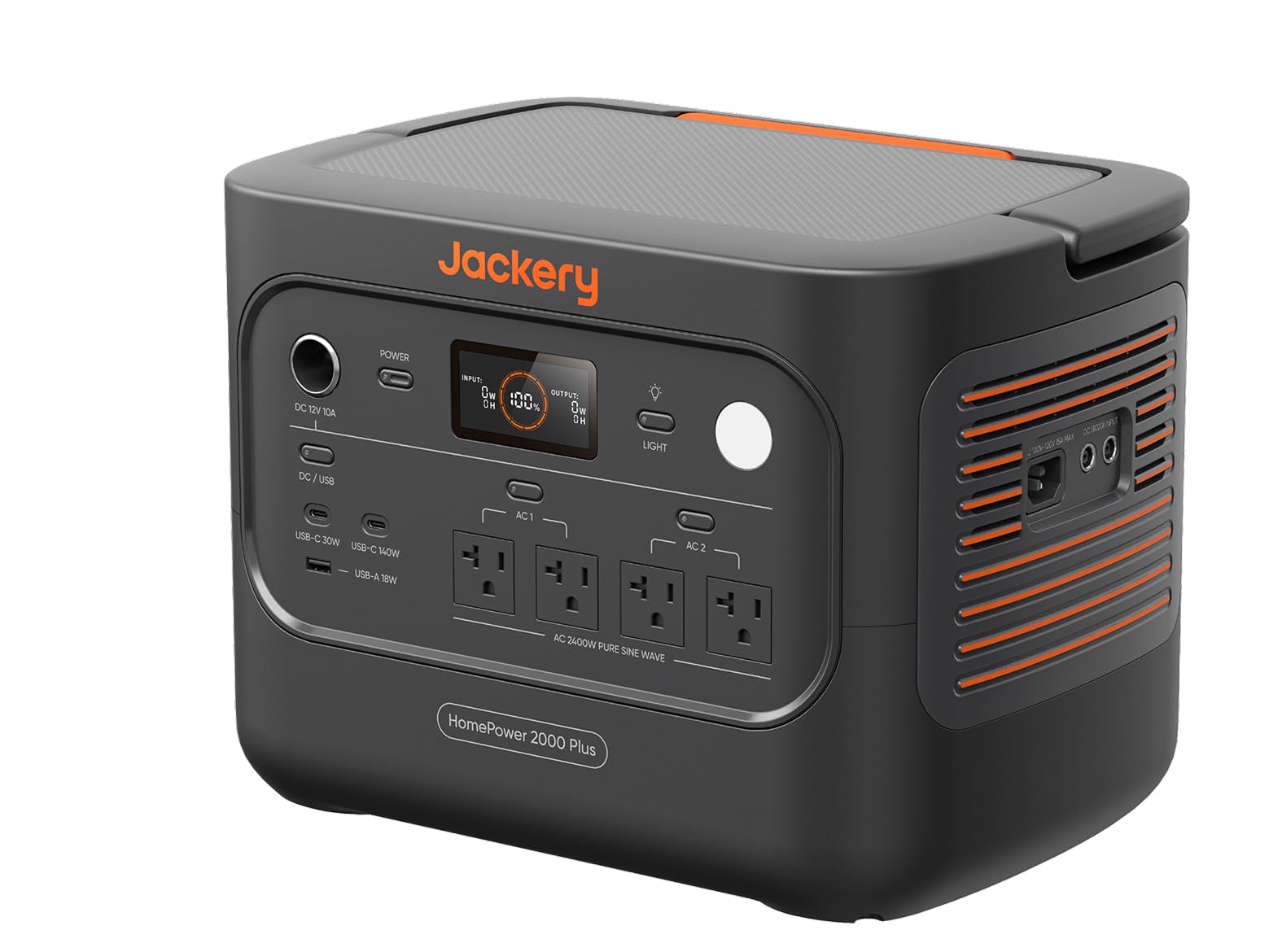
The HomePower 2000 Plus v2 sits in the middle of the lineup with a 2048Wh LFP battery, 2400W AC output and an expansion path to 12kWh. That combination covers a stairlift and router with room to spare for a few more essentials, and the expandable design means a household can start modest and add capacity later. It is the balanced choice for a home that wants meaningful runtime without the weight and cost of the largest units.
It earned its place as the mid-tier pick for households that expect outages to last longer than a few hours. The caution is that 2400W continuous output is lower than the two 3600W models, so a household planning to run larger motor loads or several appliances at once should look at the bigger units instead.
Trade-off: The lower 2400W output ceiling limits how many heavy loads can run at once compared with the 3600W models.
5. 640Wh Portable Power Station
Type: LFP portable power station with UPS
Capacity: 640Wh
AC Output: 1200W surge
UPS Switchover: 10ms
Ports: 8, including 4 AC
Charge Time: 1.5 hours
Construction: Metal design, pure sine wave output
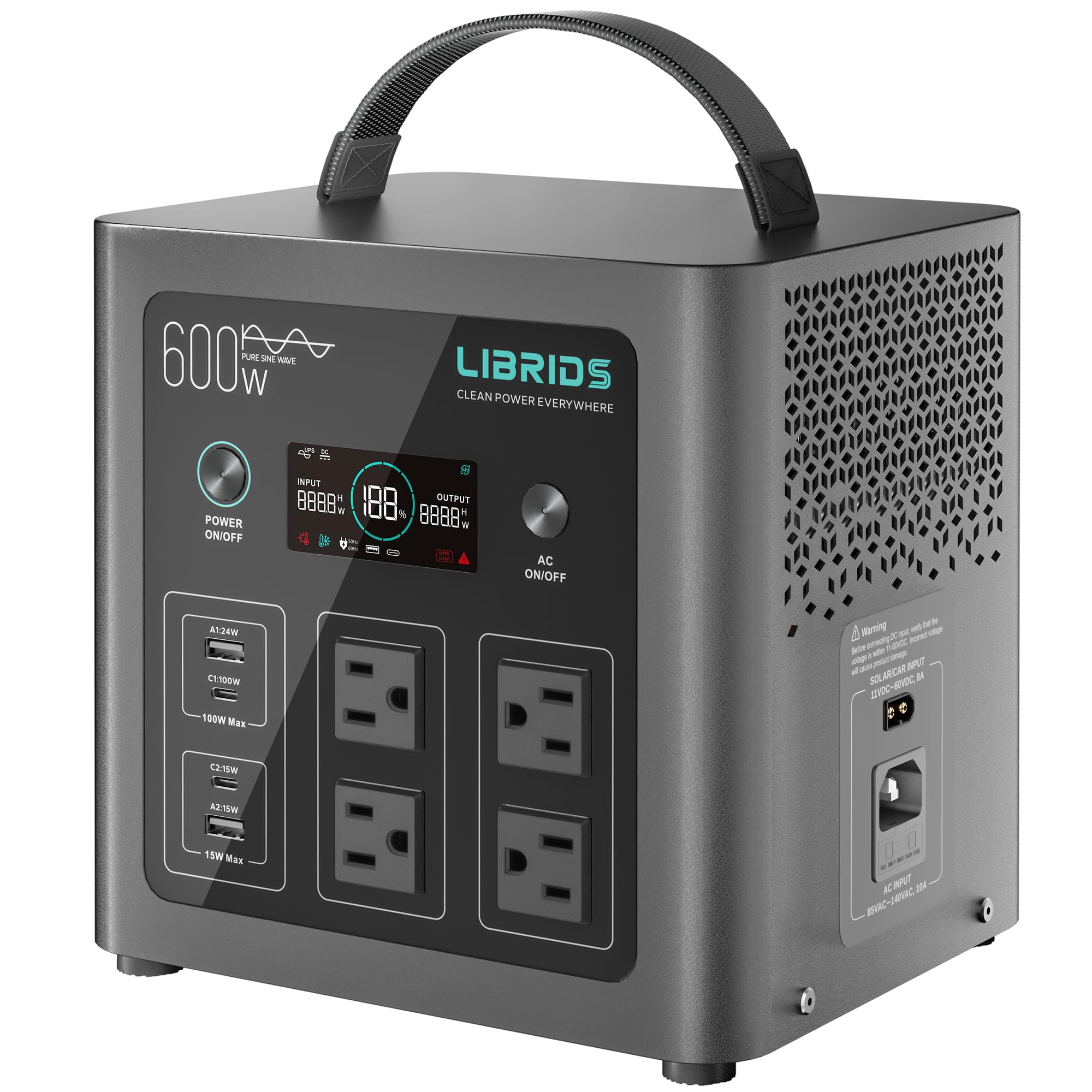
This compact unit is the budget entry, with a 640Wh LFP battery, a 10ms UPS switchover and eight ports including four AC outlets. The pure sine wave output is the detail that matters for a router and a stairlift control board, since sensitive electronics prefer clean power, and the metal housing suggests a sturdier build than the price tier implies. A 1.5-hour charge time means it recovers quickly between outages.
It suits the household that wants the smallest possible spend to keep a router alive and a stairlift usable for a short outage. The caution is capacity and output: 640Wh and a 1200W surge rating are sized for one or two devices at a time, so this unit should be treated as a short-bridge solution rather than a multi-day backup.
Trade-off: The smallest battery and surge rating in the lineup make this a short-outage bridge rather than a multi-day backup.
Before You Buy
- Capacity: Add up the stairlift’s draw and the router’s draw, then estimate how many hours of runtime the household needs; a router alone is a light load, but a stairlift motor is not.
- Surge headroom: A stairlift motor pulls a brief spike on startup, so a unit’s surge rating matters as much as its continuous output.
- UPS switchover: A 10ms switchover keeps a router from rebooting and keeps a stairlift’s control board from resetting; check the spec before buying.
- Output type: Pure sine wave output is the safer choice for sensitive electronics and motor controls.
- Expansion: Households that expect long outages should weigh models with an expansion path to add battery capacity later.
- Placement: A large battery is heavy; plan where it will live and whether it can stay near the stairlift and router rather than being carried between rooms.
- Solar readiness: All five units accept an optional solar panel, which extends runtime during a long outage if the household has one.
Frequently Asked Questions
-
Can a power station run a stairlift during an outage?
Yes, provided its continuous output covers the lift’s draw and its surge rating covers the motor’s startup spike. The larger units here offer the most headroom for that. -
Will a power station keep a router online without a reboot?
Only if it has a UPS mode with a fast switchover. The units listing a 10ms UPS switchover are designed to bridge the gap without dropping the router. -
How much capacity is needed for a stairlift and a router?
It depends on how often the lift is used and how long the outage lasts. A compact unit covers a short outage, while an expandable model is the safer choice for multi-day events. -
Is pure sine wave output important?
Yes for sensitive electronics and motor control boards. Pure sine wave output is the cleaner match for a router and a stairlift controller. -
Can these units be expanded later?
Several models here list an expansion path to a higher capacity, which lets a household add battery rather than replace the whole unit. The models without a stated expansion path are fixed at their base capacity. -
Do these power stations work with solar panels?
Each of the five lists a solar panel as optional, so a household can recharge during a long outage if a compatible panel is added.
Bottom Line
For a household that needs a stairlift and a router to keep working through an outage, the Jackery HomePower 3600 Plus is the top pick: its 3584Wh LFP battery, 3600W output and expansion to 21kWh cover the essentials with room to grow. Households that want a dedicated, lower-cost router-and-stairlift backup should look at the HomePower 1000 Plus v2, while the 640Wh unit is the smallest spend that still gets the job done for a short outage.
