Why there are Amazon links here: Brave Review is paid a commission for qualifying Amazon purchases made through the links below. Your price does not change, and using our links is entirely optional. How this works
Best Radiator Valve for a Conservatory With No Door
A conservatory that opens straight into the house is one of the hardest spaces to heat well. The room gains and loses heat faster than the rest of the home, and because there is no door to trap that heat, the radiator has to respond quickly and predictably. The five valves here cover the realistic options: manual vents and air valves for older or steam-style radiators, thermostatic valves for steady room-by-room control, and a programmable smart valve for households that want a schedule. The overview table below compares all five at a glance; the reviews explain who each one actually suits.
The Picks at a Glance
| Product | Key Spec | Best Use | Price Tier |
|---|---|---|---|
| 925005-00 Adjustable Angle Vent Valve | Adjustable angle vent | Single radiator, budget refresh | Budget |
| Varivalve 925005-00 3 Pack | Three adjustable angle vents | Multiple radiators, spares on hand | Mid |
| Smart Thermostatic Radiator Valve | Programmable temperature control | Scheduled heating, no-plumber swap | Mid |
| 20mm Copper Thermostatic Radiator Valve | 20mm two-way angle, water-filled sensor | Steady mechanical room control | Budget |
| MIDLINE VALVE 1/8 Inch Air Vent No. C | 1/8 inch angled steam vent, chrome | Steam radiators, air release | Budget |
1. 925005-00 Adjustable Angle Vent Valve
Type: Adjustable angle vent valve
Connection: Vent valve fitting
Adjustability: Adjustable angle
Intended use: Radiator venting
Price Tier: Budget

925005-00 Adjustable Angle Vent Valve
This is a vent valve rather than a thermostatic control, and that distinction matters in a conservatory. It manages the air side of a radiator so heat can actually fill the unit instead of sitting trapped at the top. The adjustable angle is the practical feature here: it lets the valve be oriented to suit the pipe run and the space around the radiator, which is useful in a conservatory where the radiator often sits tight against glazing or a low sill. The build is a straightforward metal vent body aimed at the replacement-parts market rather than the design market.
It earned its place as the single-unit budget pick for anyone servicing one radiator. Buyers with a single sluggish conservatory radiator and no interest in a full valve upgrade get the simplest possible fix. The trade-off is that one unit leaves no spare, and a vent valve alone does not give the room scheduled or thermostatic control.
Trade-off: A single vent unit means no spare on the shelf, and it addresses air release rather than room temperature regulation.
2. Varivalve 925005-00 Adjustable Angle Vent Valve – 3 Pack
Type: Adjustable angle vent valve, multi-pack
Pack Size: 3 valves
Adjustability: Adjustable angle
Intended use: Radiator venting across multiple units
Price Tier: Mid

Varivalve 925005-00 Adjustable Angle Vent Valve – 3 Pack
The same adjustable angle vent valve, supplied as a three-pack. That changes the economics: the per-unit cost drops, and a household gets spares for the radiators elsewhere in the house that will inevitably need attention. In a conservatory with no door, the radiator is working alongside the main system constantly, so venting is not a one-off job. Having matching valves on hand keeps the whole system consistent rather than mixing brands across rooms.
It suits the buyer who already knows the vent is the weak point and would rather fix the conservatory plus the two nearest radiators in one order. The adjustable angle keeps installation flexible across different radiator positions. The caution is straightforward: three valves are only good value if there are three radiators to fit, and a household with one radiator pays for two units it may never use.
Trade-off: The multi-pack only pays off across several radiators, so a single-radiator household ends up with unused stock.
3. Smart Thermostatic Radiator Valve Programmable Temperature Control Valve
Type: Programmable thermostatic radiator valve
Control: Programmable temperature control
Installation: No-install-hassle retrofit design
Climate Suitability: All climates
Price Tier: Mid
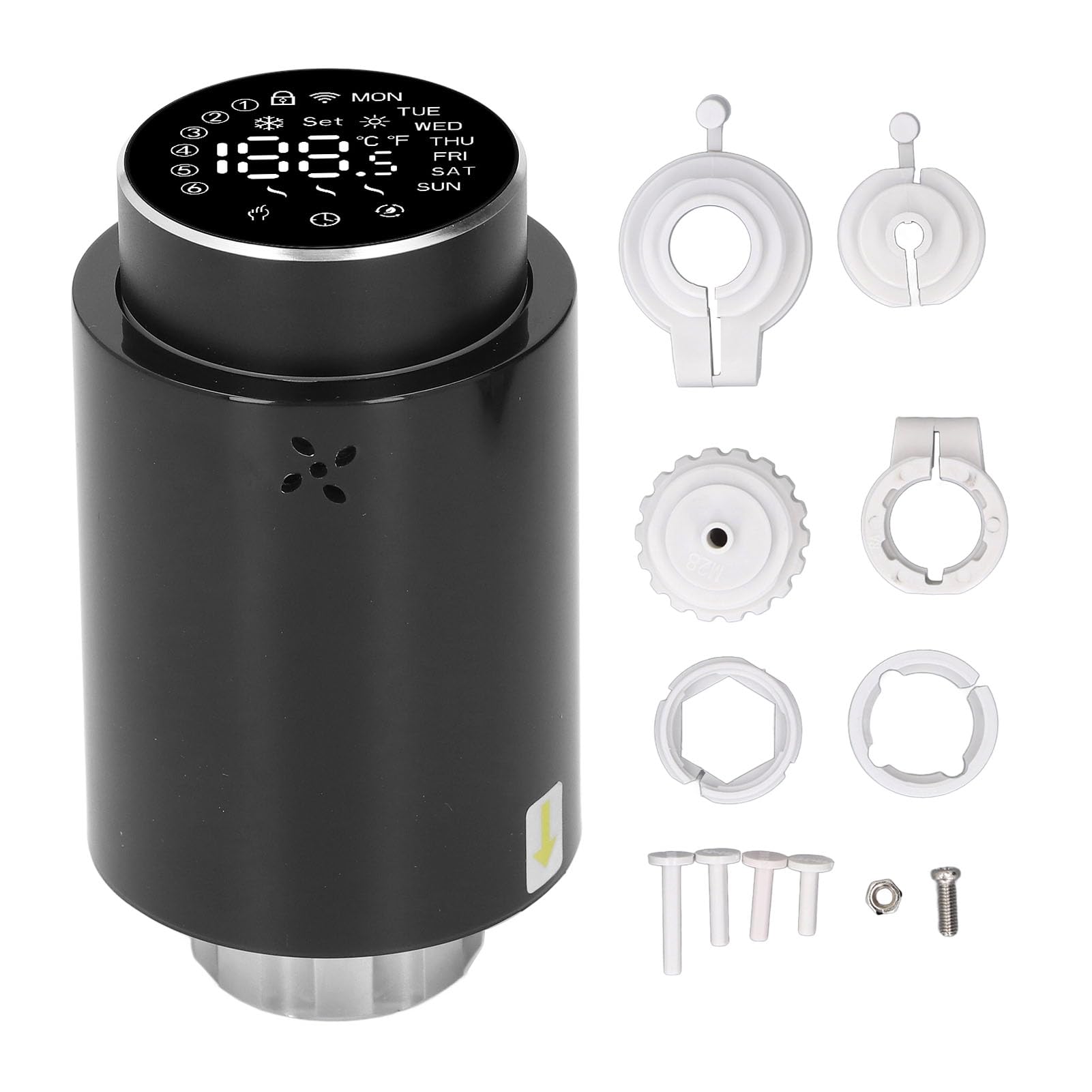
This is the pick for a conservatory that needs a schedule rather than a fixed setting. A programmable thermostatic valve lets the household set different temperatures for different times of day, which is exactly the behaviour an open-plan conservatory needs: warm in the evening when the room is used, cooler overnight when the heat would just bleed into the house. The no-install-hassle design points to a retrofit head that goes on in place of an existing valve head rather than requiring pipework changes, and the all-climate claim speaks to a head designed to cope with fluctuating conditions.
It earned its place because scheduling solves the core conservatory problem better than any manual valve can. A room with no door loses heat fast, so heating it on a timer beats heating it constantly. The trade-off is the usual one for smart retrofit heads: the valve depends on the existing valve body being compatible, and the programmable features only pay off if the household actually sets and maintains a schedule.
Trade-off: The smart functions add cost and setup effort, and depend on the existing valve body matching the retrofit head.
4. 20Mm Copper Thermostatic Radiator Valve
Type: Thermostatic radiator valve, two-way angle
Size: 20mm
Material: Copper
Sensor: Integrated water-filled sensor
Adjustability: Adjustable temperature levels
Intended use: Consistent room heating
Price Tier: Budget
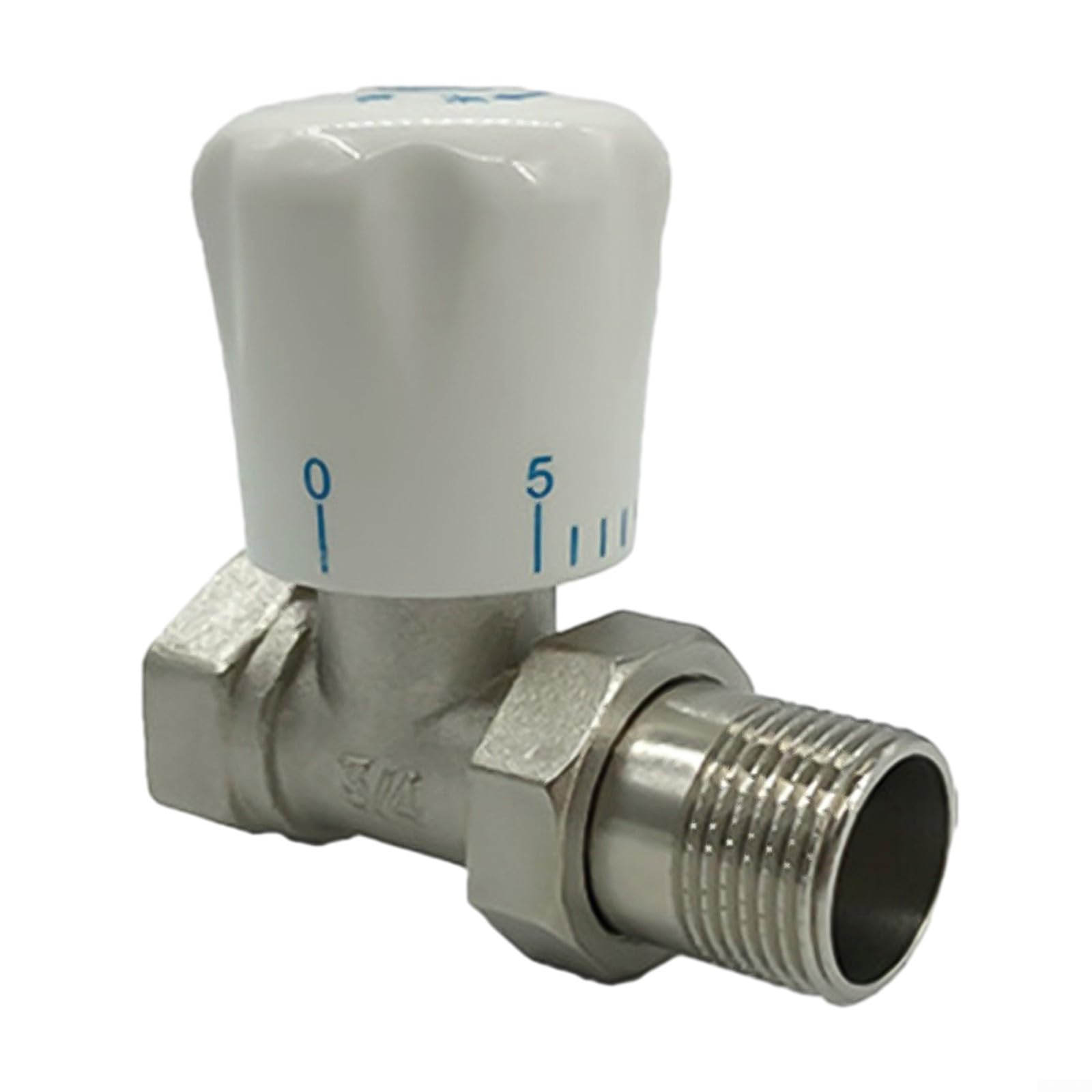
A mechanical thermostatic valve with a copper body and a water-filled sensor. The water-filled sensor is the detail worth knowing: it responds to room temperature changes with a smooth, gradual action rather than the snappy on-off of a cheaper wax sensor, which suits a conservatory where the temperature swings quickly and a jittery valve would be constantly cycling. The two-way angle design regulates flow to the radiator and fits the common pipe layout where the supply and return meet the radiator from the side.
The 20mm size is the specification to check before ordering, since it has to match the pipework at the radiator. It earned its place as the budget mechanical option for a household that wants proper thermostatic control without electronics or scheduling. The trade-off is that it is a manual-set valve: the temperature is chosen at the head and stays there, so nobody gets a timed schedule or remote control.
Trade-off: The 20mm fitting must match the existing pipework, and the valve holds one setting rather than following a schedule.
5. MIDLINE VALVE 1/8 Inch Air Vent No. C, 1/8" Angled Steam Air Vent
Type: Angled steam air vent
Size: 1/8 inch
Model: No. C
Finish: Chrome plated
Intended use: Radiator air release
Price Tier: Budget

MIDLINE VALVE 1/8 Inch Air Vent No. C, 1/8" Angled Steam Air Vent, Radiator Air Valve, Chrome Plated
This is a specialist part: a 1/8 inch angled steam air vent with a chrome-plated finish. It is built for steam radiators, where the vent controls how quickly air leaves the radiator so steam can enter, and the angled body lets it sit neatly on the end of the radiator without fouling nearby surfaces. The chrome finish keeps it looking tidy in a visible spot, which matters in a conservatory where the radiator is on show.
It earned its place for households running steam heat into the conservatory, where a standard thermostatic valve is not the right part at all. The No. C designation identifies the vent’s venting rate, so the buyer should match it to the radiator size and the run of pipe feeding it. The caution is that this is a narrow-application component: it does nothing for a hot-water radiator system, and the 1/8 inch thread has to match the tapping on the radiator.
Trade-off: The vent is specific to steam systems and a 1/8 inch tapping, so it is the wrong part for most hot-water conservatory radiators.
Before You Buy
- System type: Confirm whether the conservatory radiator runs on hot water or steam before choosing; a steam air vent and a thermostatic valve are not interchangeable.
- Thread and size: Match the valve to the radiator tapping or pipe size, whether that is a 1/8 inch vent thread or a 20mm valve body.
- Control style: Decide between a fixed mechanical setting, a programmable schedule, and a simple air vent, since each solves a different problem.
- Sensor type: A water-filled sensor gives smoother, more gradual response than a basic sensor, which helps in a room with fast temperature swings.
- Quantity: Count the radiators that need attention; a multi-pack only saves money when there are enough units to fit.
- Finish and visibility: A conservatory radiator is usually on show, so chrome or clean metal finishes are worth the small premium.
- Spares: Keeping one spare vent or valve on hand avoids a second order when the next radiator in the house needs the same job.
Frequently Asked Questions
-
Does a conservatory with no door need a different radiator valve?
Not a different type, but a more responsive one. Because heat escapes into the house rather than being trapped, a valve that reacts quickly to temperature change — a thermostatic valve or a programmable head — keeps the room more comfortable than a fixed manual setting. -
Is a thermostatic valve or a smart valve better for an open-plan conservatory?
A thermostatic valve holds a steady temperature with no setup. A programmable smart valve adds a schedule, which suits a room used mainly in the evenings. The right choice depends on whether the household wants set-and-forget or timed control. -
Can a steam air vent be used on a normal hot-water radiator?
No. A steam air vent is designed for steam systems, where it controls air release so steam can fill the radiator. Hot-water radiators use thermostatic or manual valves instead. -
What does a water-filled sensor do differently?
It responds to room temperature gradually rather than snapping open and shut, which gives more consistent heat and less cycling in a room where the temperature moves quickly. -
How many valves should be ordered at once?
Count every radiator that shows the same problem. A three-pack makes sense when the conservatory plus nearby rooms all need attention; a single unit is enough for one radiator. -
Does the finish matter on a radiator valve?
Only for appearance, but in a conservatory the radiator is often fully visible, so a chrome or clean metal finish is worth considering for the look alone.
Bottom Line
For most conservatories with no door, the Smart Thermostatic Radiator Valve is the strongest pick: programmable control matches the way an open-plan room is actually used, and the retrofit design keeps the job simple. Households that prefer mechanical control should look at the 20mm copper thermostatic valve, while steam-system owners need the MIDLINE air vent. Start with the Smart Thermostatic Radiator Valve and work back from there.
