Why there are Amazon links here: Brave Review is paid a commission for qualifying Amazon purchases made through the links below. Your price does not change, and using our links is entirely optional. How this works
Best Robot Vacuum for a House with a Dog and a Rug
Dog hair and rugs are the two things that break most robot vacuums: hair wraps the brush, and carpet fights the suction. This roundup covers five machines that handle both, sorted by what a household actually needs — a cheap starter, a self-emptying workhorse, and a premium navigator. The overview table below puts the key spec and price tier side by side, and each pick links straight to Amazon for current pricing.
Overview of the Picks
| Product | Key Spec | Best Use | Price Tier |
|---|---|---|---|
| Tikom G8000 Max | 5000Pa, 150 min max | Budget combo for hard floors and low rugs | Budget |
| LiDAR 3-in-1 Self-Empty Robot Vacuum | 11500Pa, 90-day self-empty | Hands-off pet hair on mixed floors | Mid-range |
| roborock Q7 M5+ | 10000Pa, dual anti-tangle | Heavy shedding on carpet | Mid-range |
| Shark AI Ultra AV2511AE | HEPA, Matrix Clean, anti-hair wrap | Allergy-minded homes with rugs | Premium |
| ROPVACNIC Robot Vacuum and Mop Combo | 5200Pa, obstacle avoidance | First-time buyers on a tight budget | Budget |
Tikom Robot Vacuum and Mop Combo (G8000 Max)

Type: Robot vacuum and mop combo
Suction: 5000Pa
Runtime: 150 min max
Control: App and remote
Best For: Hard floor, carpet, pet hair
Charging: Self-charge
The G8000 Max is a two-in-one vacuum and mop aimed at mixed flooring, with enough suction to lift pet hair off low-pile rugs and a mop function for hard floors. App and remote control cover both scheduling and manual runs, so a household can set a daily pass and forget it. Self-charging keeps it topped up between jobs.
It suits small homes and apartments where one compact unit covers kitchen tile and a living-room rug. The trade-off is that a budget combo mop typically drags a damp cloth rather than scrubbing, so sticky messes still need a manual pass. Check the current price on Amazon.
Trade-off: The mop is a light damp wipe, not a scrubber, and the dustbin is small enough to need emptying after most full-home runs.
3-in-1 Self-Emptying Robot Vacuum and Mop
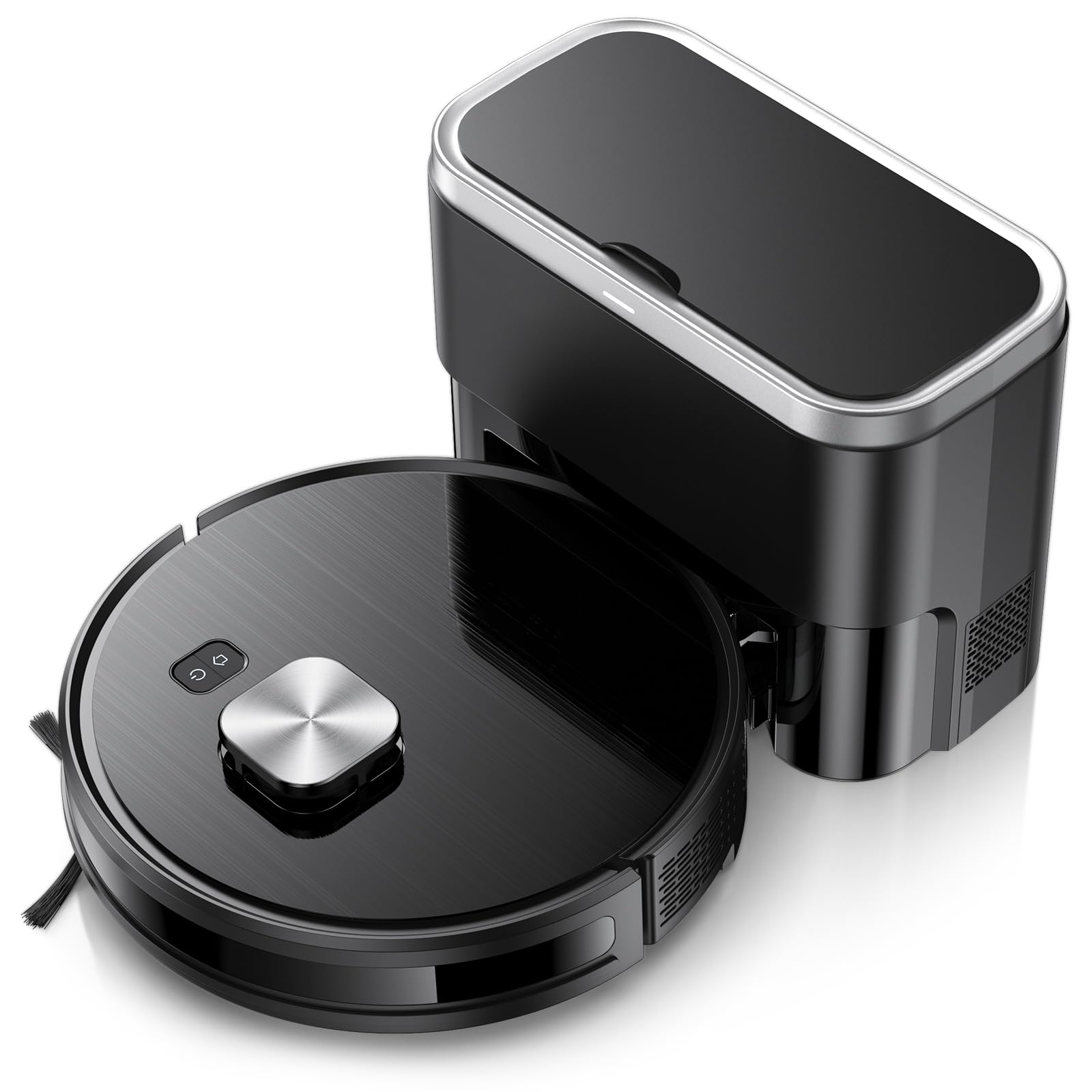
Type: 3-in-1 vacuum and mop with self-empty base
Suction: 11500Pa
Navigation: LiDAR
Runtime: 160 minutes
Self-Empty Interval: 90 days
Voice Control: Alexa and Google Assistant
This is the pick for a dog household that wants to stop thinking about the vacuum entirely. The 90-day self-emptying base means the bin gets emptied roughly once a quarter, and 11500Pa is the strongest suction in this roundup — useful when a dog beds down on a rug every night. LiDAR navigation maps rooms rather than bumping around, and voice control through Alexa or Google Assistant adds hands-free starts.
It suits busy owners with a mix of carpet and hard floor who would rather pay more up front than touch the machine weekly. The trade-off is the base itself: a self-empty dock takes up floor space and needs a bag or canister change on its own schedule. See today’s price on Amazon.
Trade-off: The self-empty base is bulky and adds a recurring consumable cost that a bin-only vacuum avoids.
roborock Q7 M5+ Robot Vacuum and Mop

Type: Robot vacuum and mop
Suction: 10000Pa
Navigation: PreciSense LiDAR
Anti-Tangle: Dual anti-tangle system
Self-Empty: Up to 7-9 weeks
Control: App
The Q7 M5+ is built around the two problems dog hair creates: wrapping and re-depositing. A dual anti-tangle system targets hair on the brush and the carpet, while 10000Pa of suction pulls embedded fur out of rug pile. PreciSense LiDAR handles mapping and app control covers scheduling and zone cleaning.
This is the strongest fit for a home with a medium or large shedder and at least one proper carpeted room. Self-emptying stretches to several weeks, which lands between the budget combos and the 90-day dock above. The trade-off is that anti-tangle systems reduce brush wrapping rather than eliminate it, so a periodic check of the brush ends is still part of ownership. Check availability on Amazon.
Trade-off: Hair still collects at the brush ends over time, and the mop side is a pad-style wipe rather than a deep clean.
Shark AI Ultra Robot Vacuum (AV2511AE)
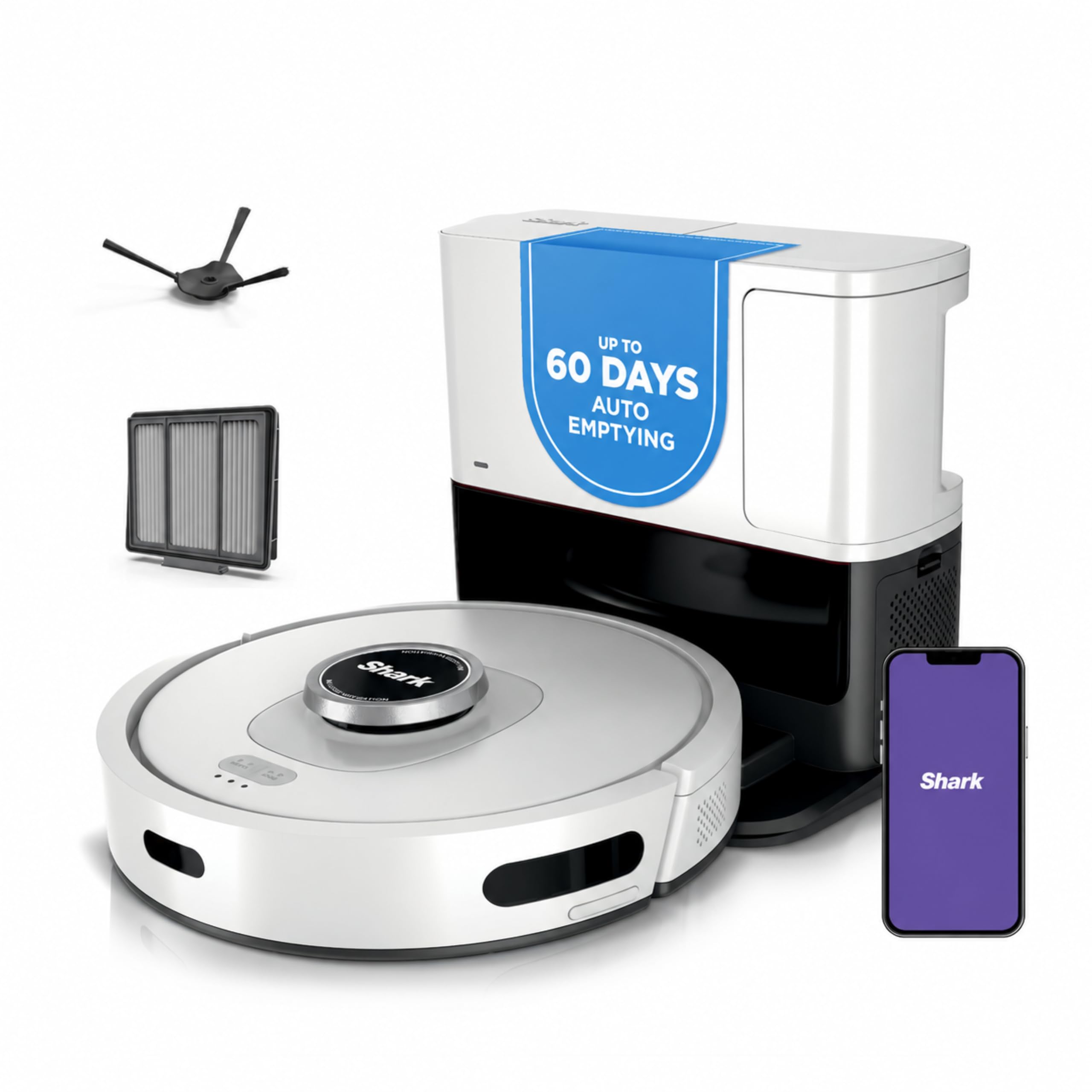
Type: Robot vacuum with HEPA filtration
Navigation: Matrix Clean, LiDAR mapping
Filtration: HEPA
Anti-Hair Wrap: Yes
Best For: Carpet, hard floors, pet hair
Control: Wi-Fi app
The Shark AI Ultra is the allergy-conscious option. HEPA filtration traps fine dander alongside hair, which matters in a home where the dog shares the rug and the sofa. Matrix Clean navigation is designed to pass over the same area in a grid rather than a random path, and LiDAR mapping plus Wi-Fi control supports room-by-room scheduling. Anti-hair wrap addresses the brush directly.
It suits households with a heavy shedder and someone sensitive to airborne dust, and it is the premium pick here for good reason. The trade-off is the price: at this tier the buyer is paying for filtration and navigation polish, and a cheaper vacuum with a standalone air purifier is a legitimate alternative. See the current price on Amazon.
Trade-off: Premium pricing puts it well above the other picks, and HEPA filters are a replaceable part that adds ongoing cost.
ROPVACNIC Robot Vacuum and Mop Combo
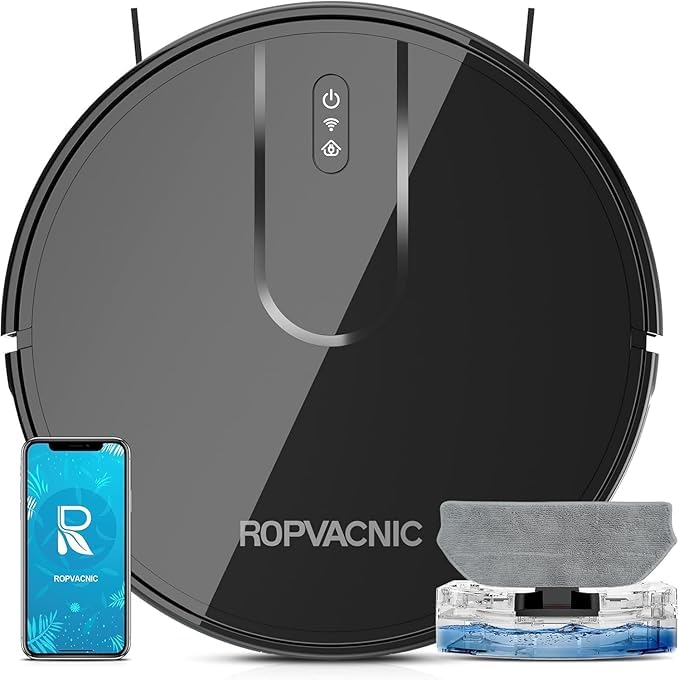
Type: Robot vacuum and mop combo
Suction: 5200Pa
Control: App
Obstacle Avoidance: Advanced
Cleaning Adjustments: Personalized settings
Charging: Self-charging
The ROPVACNIC combo is the entry point: 5200Pa of suction, app control, and obstacle avoidance that keeps it from dragging cables and socks across the floor. Personalized cleaning adjustments let a household tune suction and passes per room, which is more configurability than the price tier usually offers.
It fits a first robot vacuum for a smaller home with a dog and one or two low rugs, where the goal is fewer daily sweeps rather than a fully automated floor. The trade-off is that budget obstacle avoidance relies on sensors rather than a camera or advanced mapping, so it can still nudge into tight spots. Check the price on Amazon.
Trade-off: Navigation is sensor-based rather than mapped, so coverage in cluttered rooms is less thorough than the LiDAR picks.
Before You Buy
- Suction and carpet: Rugs need real suction — 5000Pa is a floor for low pile, and 10000Pa and up is the safer zone for thicker carpet and embedded dog hair.
- Brush design: An anti-tangle or anti-hair-wrap system cuts down on the maintenance that long dog hair otherwise creates.
- Self-empty vs. manual bin: A self-emptying base means weeks between bin changes but adds bulk, floor space, and consumable bags or canisters.
- Filtration: HEPA filtration matters in homes where dander and fine dust are a concern; standard filters handle hair but not fine particles as well.
- Navigation: LiDAR mapping gives structured, repeatable coverage; sensor-only navigation is cheaper but less thorough in cluttered rooms.
- Mop expectations: Combo units at budget and mid-range tiers wipe hard floors — they do not scrub stains.
- Runtime and home size: Match the stated runtime to the floor area; a longer runtime matters more in larger homes than in apartments.
Frequently Asked Questions
-
Can a robot vacuum handle dog hair on a rug?
Yes, with the right suction and brush design. A model rated around 10000Pa or more with an anti-tangle brush handles shed fur on low and medium pile best. -
Is a self-emptying robot vacuum worth it for pet owners?
For heavy shedders, yes. A self-empty base means the bin is handled every few weeks rather than every run, which removes the most frequent chore. -
Do robot mops work on carpet?
No — mop functions are for hard floors. Most combos let the mop be disabled or lifted so the unit can vacuum rugs without wetting them. -
How often does the brush need cleaning with a dog?
Weekly checks are realistic for a heavy shedder. Anti-tangle systems reduce wrapping, but hair still gathers at the brush ends over time. -
Is HEPA filtration necessary with a dog?
It is not required, but it helps in homes with allergy concerns because it captures fine dander that standard filters let back into the air. -
What is the minimum suction for pet hair?
Around 5000Pa handles low-pile rugs and hard floors. Thicker carpet and embedded fur benefit from 10000Pa and up.
Bottom Line
For most dog households with a rug, the roborock Q7 M5+ is the best balance of suction, anti-tangle design, and self-emptying convenience. Households that want the strongest suction and the longest hands-free interval should look at the 90-day self-emptying model, while allergy concerns point to the Shark AI Ultra and tight budgets point to one of the two budget combos.
