Why there are Amazon links here: Brave Review is paid a commission for qualifying Amazon purchases made through the links below. Your price does not change, and using our links is entirely optional. How this works
Best Sensor for a Gate Left Open for Instant Alerts and Peace of Mind
A gate left open is a security gap, an escape route for pets, and a headache for anyone managing a driveway, yard, or shared entrance. The right sensor closes that gap by alerting a homeowner, renter, or property manager the moment the gate swings wide. This short roundup covers five picks that suit different setups: a simple standalone alarm, app-connected monitors, a hub-based long-range sensor, a wired budget option, and a weather-resistant outdoor unit. The overview table below shows each pick at a glance, then the reviews explain who each one fits.
Overview of the Picks
| Product | Key Spec | Best Use | Price Tier |
|---|---|---|---|
| 3-in-1 Alarm Door Left Open Alarm | 80–120 dB chime, 0/5/10/30/60 sec and 2/5 min delay | Simple local reminder, no app | Budget |
| YoLink Outdoor Gate & Door Contact Sensor | LoRa protocol up to 2034 ft, hub required | Long-distance outdoor gate alerts to a phone | Mid-range |
| Zooz 800 Series Z-Wave Long Range Open|Close XS Sensor | Z-Wave 800LR, hub required | Smart-home integration on gates and windows | Upper mid-range |
| Gebildet 5pcs Recessed Wired Contact Sensor | 5-pack, normally closed magnetic reed switch | Wired DIY projects and multi-gate coverage | Budget |
| Ring Outside Door Sensor | Weather-resistant, no base station needed | Quick outdoor coverage with app alerts | Mid-range |
1. 3-in-1 Alarm – Door Left Open Alarm

Type: Standalone door/window alarm with chime
Alert: 80 to 120 dB audible alarm
Delay options: 0/5/10/30/60 seconds and 2/5 minutes
Use: Doors, windows, freezer and gate reminders
Power source: Battery-powered local unit
Connectivity: None required
This is the simplest way to stop a gate from being left open: a self-contained unit that sounds a loud chime the moment the contact breaks. The 80 to 120 dB range is genuinely loud, which helps when the gate is far from the house, and the selectable delays let a household tune out brief openings while still flagging a gate that stays ajar. It runs without a phone, hub, or Wi-Fi, so there is nothing to configure beyond mounting and setting the delay.
The trade-off is that the alert stays local. There is no app, text, or email notification, so nobody hears about an open gate when away from home, and the alarm can be annoying if mounted near a busy doorway. Buyers who want simple in-home coverage will find it easy to live with; buyers who need remote alerts should look further down this list.
Trade-off: The alarm only sounds where the unit is mounted, so it offers no remote notification when the house is empty.
Best for: Homeowners and renters who want a cheap, no-setup audible reminder and are usually nearby when the gate is used.
2. YoLink Outdoor Gate & Door Contact Sensor

Type: Outdoor gate and door contact sensor
Protocol: LoRa YoLink, up to 2034 feet range
Alerts: App, email, and text notifications
Integration: Works with IFTTT
Requirement: YoLink hub required (sold separately)
Use: Outdoor gates, doors, and remote property monitoring
This sensor is built for exactly the problem in the keyword: a gate at the far edge of a property. The LoRa protocol reaches up to 2034 feet, which is far beyond typical Wi-Fi or Bluetooth, so a gate at the back of a long driveway can still report its status. Once paired with a hub, it sends app, email, and text alerts and supports IFTTT routines, so an open gate can trigger lights or other actions.
The catch is the hub. Buyers who do not already own a YoLink hub must add one to the cart, which raises the real cost and adds a setup step. The long-range radio is also a single-purpose ecosystem, so it does not plug into every smart-home platform the way Z-Wave or Zigbee gear does. For a large outdoor property, though, that range is hard to beat.
Trade-off: The hub is mandatory and sold separately, so the total cost is higher than the sticker price suggests.
Best for: Owners of large yards, farms, or long driveways who need a gate alert on their phone from a genuinely long distance.
3. Zooz 800 Series Z-Wave Long Range Open|Close XS Sensor

Type: Z-Wave open/close contact sensor
Series: 800 Series Z-Wave Long Range (800LR)
Compatibility: SmartThings, Hubitat, Ring Alarm
Requirement: Hub required (sold separately)
Use: Door, window, and gate monitoring
Form factor: XS compact body
This is the pick for a household already invested in a smart-home hub. The 800 Series Z-Wave Long Range radio improves reach over older Z-Wave gear, and the compact XS body mounts neatly on a gate frame or post where space is tight. It reports open and closed states to SmartThings, Hubitat, or Ring Alarm, so an open gate can drive automations, notifications, and routines alongside the rest of the home.
The limitation is ecosystem lock-in and the hub requirement. Buyers without a compatible hub cannot use it at all, and the sensor is a small contact device rather than a weather-hardened outdoor unit, so exposed gates need a sheltered mounting spot. It is a strong fit for smart-home tinkerers, less so for someone who wants a plug-and-play alarm.
Trade-off: It needs a compatible Z-Wave hub and is not built as a fully weatherproof outdoor unit, so exposed gates need a sheltered mount.
Best for: Smart-home users on SmartThings, Hubitat, or Ring Alarm who want gate status folded into existing automations.
4. Gebildet 5pcs Recessed Wired Security Contact Sensor

Type: Wired magnetic reed switch contact sensor
Quantity: 5 pieces per pack
Mounting: Recessed installation
Circuit: Normally closed
Color: Black
Use: Windows, gates, and alarm panel wiring
This five-pack is the budget route for anyone wiring a gate into an existing alarm panel or DIY controller. Recessed mounting keeps the sensor flush and out of sight, which suits gates and frames where surface-mounted pucks would look clumsy or get knocked. The normally closed circuit is the standard configuration for alarm loops, so the set integrates with conventional wired systems rather than app-based platforms.
The obvious caveat is that this is a component, not a finished alarm. There is no radio, no battery, and no notification on its own; it needs a panel, wiring, and some installation skill to be useful. Buyers covering several gates or windows on one wired loop get excellent value per unit, while anyone expecting a ready-to-use alert should choose a different pick.
Trade-off: It is a bare wired component with no alerts of its own, so it only works as part of a larger alarm or controller installation.
Best for: DIYers and alarm-panel owners who want several low-cost recessed contacts for gates and windows on one wired loop.
5. Ring Outside Door Sensor
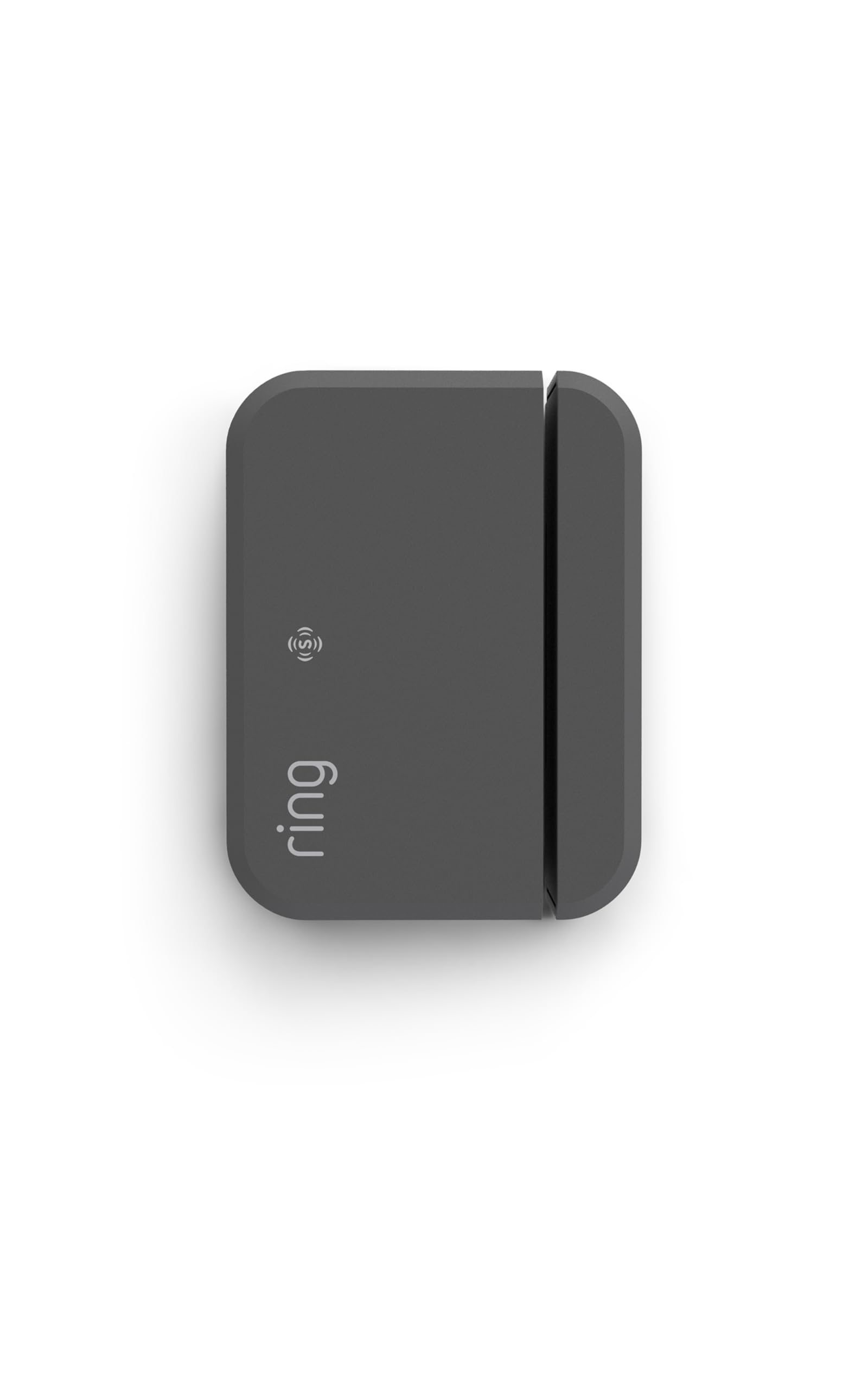
Type: Outdoor contact sensor
Weather resistance: Weather-resistant housing
Alerts: Instant app alerts
Setup: No base station needed
Use: Gates, garages, and sheds
Optional service: Professional Monitoring sold separately
This is the fastest route to phone alerts on an outdoor gate for most households. The weather-resistant housing is designed for gates, garages, and sheds, and Ring states no base station is needed, so setup is quicker than hub-based systems. Instant alerts land in the Ring app, and professional monitoring is available as an add-on for buyers who want the gate covered by a monitored system.
The trade-off is service dependence. Full features lean on the Ring app and optional subscription services, so the experience is tied to that ecosystem and its terms. Buyers who want a purely local alarm with no account should look at the standalone chime instead; buyers who want quick outdoor app alerts and already use Ring products will find this the easiest fit.
Trade-off: The best features lean on the Ring app and optional paid services, so it is not a fully local, account-free solution.
Best for: Ring households and anyone who wants quick, weather-resistant outdoor gate alerts without a base station.
Before You Buy
- Power and wiring: Battery units install in minutes, but wired reed switches need a panel and cabling, so match the pick to the installation skill available.
- Hub or base station: Several picks need a hub or ecosystem to send alerts; confirm what is already in the home before buying.
- Range: Long driveways and detached gates need long-range radio such as LoRa or Z-Wave Long Range rather than standard Wi-Fi or Bluetooth.
- Weather exposure: A gate in open rain needs a weather-resistant housing; indoor-rated contacts belong under a sheltered overhang.
- Alert type: Decide between a loud local chime, app and text alerts, or a wired alarm loop, because each pick delivers only one style.
- Quantity: Multi-packs and five-piece sets suit several gates or windows, while single sensors keep the cost down for one gate.
- Mounting space: Recessed sensors need a drilled pocket, while surface pucks and compact bodies fit frames and posts with little room.
Frequently Asked Questions
-
What is the best sensor for a gate left open?
It depends on the setup. A standalone chime suits local reminders, while a long-range contact sensor such as the YoLink unit suits large properties that need phone alerts. -
Do gate sensors need Wi-Fi?
Not always. Standalone alarms and wired reed switches work without any network, while app-based sensors rely on a hub, base station, or the manufacturer’s ecosystem. -
Can a gate sensor work outdoors in the rain?
Only if it is rated for outdoor use. Weather-resistant models are built for gates and sheds, while indoor contacts should be mounted under cover. -
How far can a gate sensor reach?
Range varies widely. LoRa units reach up to 2034 feet, Z-Wave Long Range improves on older Z-Wave, and standard Wi-Fi or Bluetooth gear covers much shorter distances. -
Is a wired or wireless gate sensor better?
Wired contacts are inexpensive and reliable once installed but need a panel and cabling, while wireless units install faster and send app alerts without running wires. -
Can a gate sensor send a text or email alert?
Yes, hub-based and app-based models can push app, email, and text notifications, while standalone alarms only sound a local chime.
Bottom Line
For most households, the Ring Outside Door Sensor is the best sensor for a gate left open: it is weather-resistant, needs no base station, and sends instant alerts to a phone with minimal setup. Buyers on a large property who need extreme range should choose the YoLink sensor with its hub, and anyone who wants a simple local reminder can save money with the 3-in-1 Alarm chime.