Why there are Amazon links here: Brave Review is paid a commission for qualifying Amazon purchases made through the links below. Your price does not change, and using our links is entirely optional. How this works
Best Sensors for a Listed or Period Property: 5 Smart Picks for Old Homes
Old buildings leak, settle and hide their bones behind lath and plaster, and most modern smart-home gear is built for drywall and new pipework. The best sensors for a listed or period property are the ones that go in without drilling, wiring or altering the fabric of the building. This roundup covers five picks for three kinds of buyer: the owner of a basement or cellar that floods, the renovator who needs to find a stud without wrecking a wall, and the household trying to heat a draughty period home efficiently. The overview below sorts all five at a glance.
The Picks at a Glance
| Product | Key Spec | Best Use | Price Tier |
|---|---|---|---|
| GoveeLife Upgraded Smart Water Leak Detector 5 Pack | 1804 ft range, 5-yr battery, IP67 | Cellars and basements far from the router | Mid-range |
| Franklin Sensors ProSensor M210 | 13 sensors, full stud width, live wire detection | Finding studs in lath and plaster | Premium |
| ecobee SmartSensor 2-Pack | Temperature and occupancy, magnetic mount | Zoning a hard-to-heat period home | Mid-range |
| 5 Pack Water Leak Detectors (100dB alarm) | 100 dB local alarm, no hub | Cheap coverage under sinks and boilers | Budget |
| Moen Flo Detector 3 pcs | WiFi water and moisture sensors | App alerts in a second home or annex | Premium |
1. GoveeLife Upgraded Smart Water Leak Detector 5 Pack — Best for Long-Range Basement Coverage
Type: WiFi water leak detector, 5-pack
Range: 1804 ft ultra-long range
Alerts: SMS, email and app push
Battery Life: 5 years
Rating: IP67
Response Time: 1 second

GoveeLife Upgraded Smart Water Leak Detector 5 Pack — Check the current price on Amazon
This five-pack is aimed squarely at the problem period properties create: pipework and cellars tucked far from the router. The 1804 ft range means a detector can sit in a stone outbuilding or a deep basement and still reach the app, and the IP67 rating means splashes and damp floors are not a problem. The five-year battery life keeps maintenance visits rare, and the one-second alarm response is quick enough to catch a burst before it spreads.
It earns its place because it combines range, sealed construction and long battery life in one set, which is exactly what remote parts of an old house need. Buyers who only want a local alarm will find it over-specified and dependent on a stable WiFi signal. The trade-off is that the app-and-hub style setup is more complex than a simple standalone alarm, so the first install takes patience.
Trade-off: Long range and app alerts come at the cost of a more involved setup and reliance on a strong WiFi signal in thick-walled rooms.
2. Franklin Sensors ProSensor M210 — Best Stud Finder for Lath and Plaster Walls
Type: Electronic stud finder and wall scanner
Sensors: 13-sensor array
Detection: Wood and metal studs, full stud width, live wire detection
Origin: Made in the USA
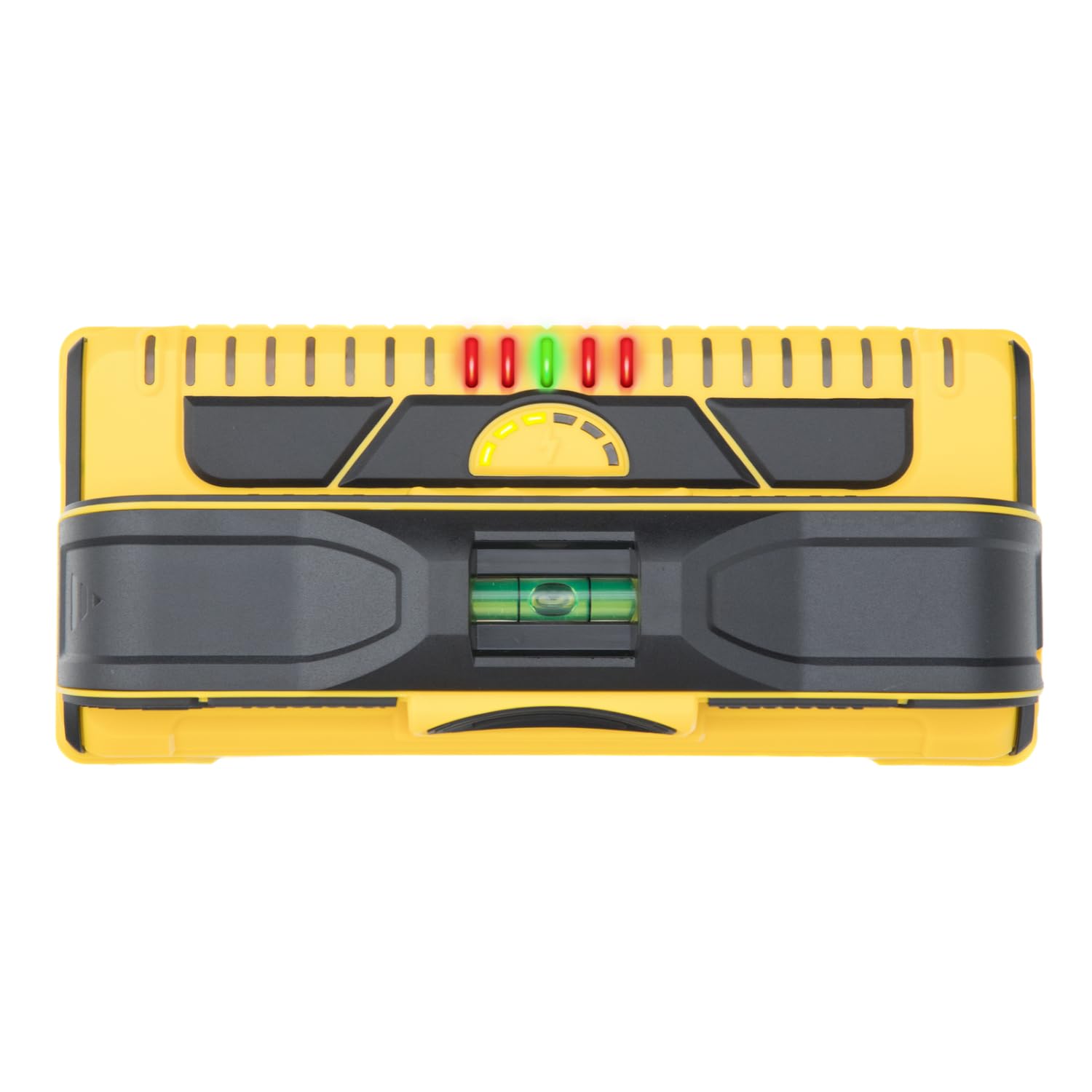
Franklin Sensors ProSensor M210 13-Sensor Stud Finder — Check the current price on Amazon
Period homes rarely have clean, evenly spaced studs, and the M210 is built for that mess. The 13-sensor array shows the full width of a stud rather than a single beep point, so a thick timber or an irregular noggin reads clearly. Live wire detection is a genuine safety feature in old walls where cable runs are not always where a modern plan would put them.
It suits the renovator hanging shelves, radiators or kitchen units in a building with lath and plaster, brick nogging or timber framing. Its place in this list comes from that full-width readout, which saves repeated test holes in fragile surfaces. Buyers working only on modern drywall will pay for sensitivity they do not need.
Trade-off: The multi-sensor readout is a premium feature, so the price sits well above a basic single-point stud finder.
3. ecobee SmartSensor 2-Pack — Best for Zoning a Cold Period Home
Type: Temperature and occupancy sensor, 2-pack
Compatibility: ecobee thermostats
Mounting: Wireless and magnetic

ecobee SmartSensor 2-Pack — Check the current price on Amazon
Old houses have hot and cold rooms that a single thermostat cannot fix, and this two-pack addresses that without any rewiring. Each sensor reads temperature and occupancy and feeds that back to an ecobee thermostat, so heating follows the rooms that are actually in use. The magnetic mounting means a sensor can sit on a radiator cover or a metal shelf with no screws and no damage to historic finishes.
It suits households already running an ecobee thermostat in a period property with a cold extension, attic conversion or north-facing bedroom. It made the list because it is the least invasive way to balance temperatures room by room. Buyers without an ecobee thermostat cannot use it at all, which is the main limitation.
Trade-off: The sensors only work within the ecobee ecosystem, so they are useless to anyone with a different thermostat brand.
4. 5 Pack Water Leak Detectors with 100dB Alarm — Best Budget Coverage
Type: Standalone water leak alarm, 5-pack
Alarm: 100 dB local siren
Placement: Pipes, drains, sinks, faucets, bathrooms, kitchens, toilets, laundry rooms, basements

5 Pack Water Leak Detectors for Home — Check the current price on Amazon
This set takes the simplest possible approach: a puck that sits on the floor and sounds a 100 dB siren when water reaches it. There is no app, no hub and no pairing, which makes it the easiest option to scatter under sinks, behind the washing machine and beside the boiler. The five-pack covers the usual suspects in a period property in one purchase, and the loud alarm carries through a solid old house.
It suits owners who want immediate local warning and do not need remote alerts, and it works well as a first line of defence while a bigger system is planned. The budget price is the reason it is here. The trade-off is clear: nobody hears the alarm if the house is empty.
Trade-off: Without app or SMS alerts, a leak that starts while the property is empty goes unnoticed until someone is home.
5. Moen Flo Detector 3 pcs — Best for Remote Monitoring
Type: WiFi water and moisture sensor, 3-pack
Model: 920-005
Alerts: App-based
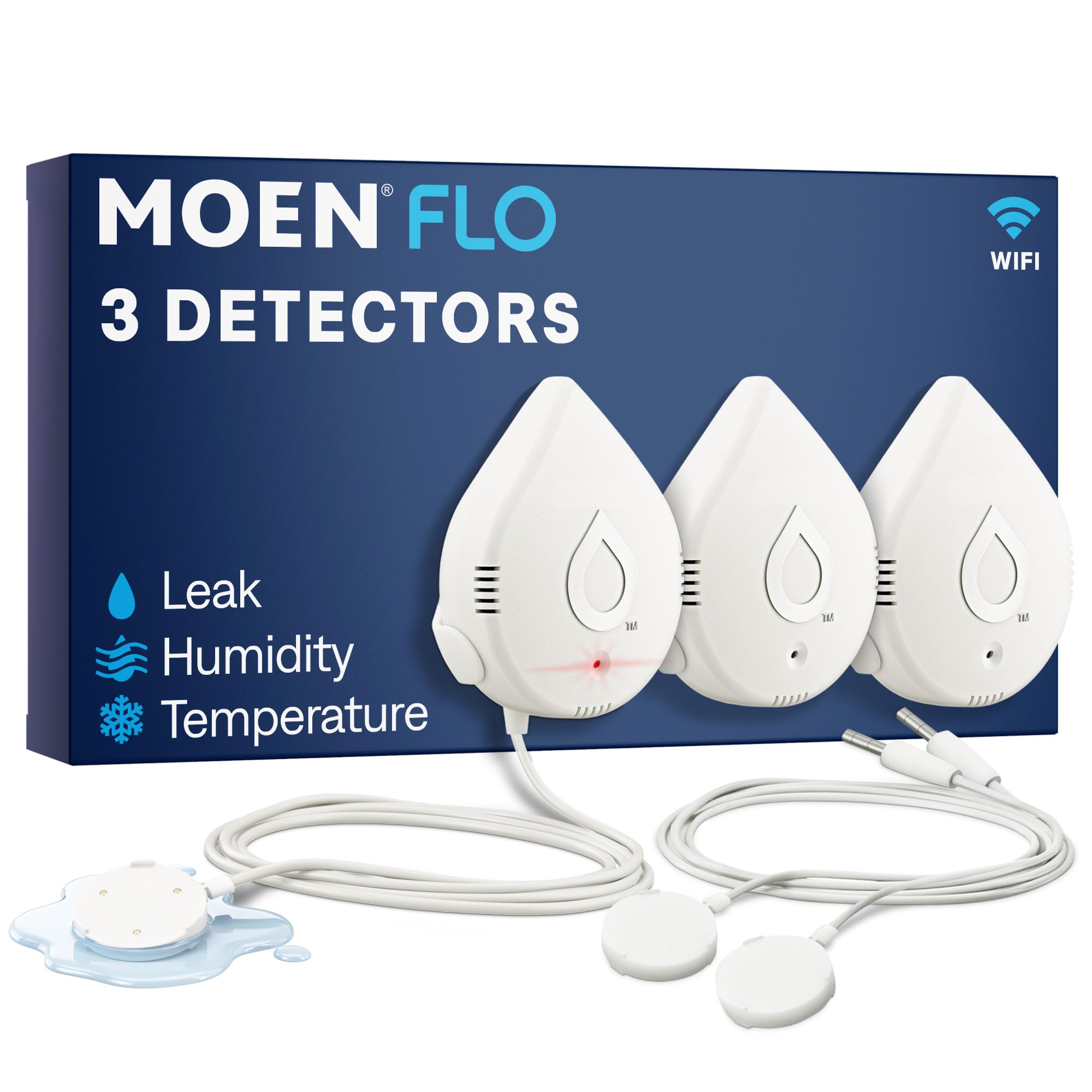
Moen Flo Detector 3 pcs — Check the current price on Amazon
The Moen Flo Detector is a WiFi-enabled sensor that reports water and moisture to an app, which makes it the pick for a property that is not always occupied. Three units cover the highest-risk spots — under the kitchen sink, beside the water heater, in the basement — and the branding ties it into a wider Moen water-management setup. It is a neat, low-profile design that sits unobtrusively on a floor or in a cupboard.
It suits owners of a second home, a holiday let or a listed property with an annexe who need to know about a leak from elsewhere. It is on the list because remote alerting is the feature that matters most when nobody is on site. Buyers who want a loud local siren as well will need to add a standalone alarm.
Trade-off: The premium price buys app connectivity rather than a loud on-site siren, so it works best paired with a local alarm.
Before You Buy
- Power source: Battery-powered sensors suit listed buildings where new wiring is restricted; check battery life before committing to a set.
- Connectivity: WiFi sensors need a signal in the cellar or outbuilding — thick stone walls weaken it, so confirm range before buying.
- Ecosystem: The ecobee sensors need an ecobee thermostat, and the Moen detectors work best within Moen’s own system.
- Mounting: Magnetic and adhesive mounts avoid drilling into historic plaster, timber or tile.
- Alert type: Decide up front whether a loud local siren or a remote app notification matters more for the property.
- Coverage: Count the risk spots — under sinks, near the boiler, behind the washing machine, in the basement — before choosing a pack size.
Frequently Asked Questions
-
Can sensors be used in a listed building without permission?
Yes, in most cases. Battery-powered, freestanding and magnetic-mounted sensors involve no fixing or alteration to the fabric, which is what listed consent usually protects. -
Do water leak sensors work in a basement with no WiFi?
A standalone alarm with a loud siren works without any network. WiFi models need a signal, so a long-range set or a booster is the safer choice in a deep cellar. -
How many water sensors does a period property need?
Most homes need at least one under the kitchen sink, one by the boiler or water heater, one behind the washing machine and one in the basement or cellar. -
Will a stud finder work on lath and plaster?
A multi-sensor model that shows full stud width handles irregular timber and plaster far better than a basic single-point detector. -
Are smart thermostat sensors worth it in an old house?
They help where rooms heat unevenly, because the thermostat responds to the room in use rather than one fixed hallway reading. -
Do these sensors need professional installation?
No. All five picks are designed for a householder to place and set up without tools or a tradesperson.
Bottom Line
For most period properties, the GoveeLife Upgraded Smart Water Leak Detector 5 Pack is the strongest single buy: long range for thick walls, a sealed IP67 body for damp cellars and five years between battery changes. Pair it with the Franklin Sensors ProSensor M210 if renovation is on the cards, and add the budget 100 dB alarms for loud local warning. Check the current price on Amazon before deciding.
