Why there are Amazon links here: Brave Review is paid a commission for qualifying Amazon purchases made through the links below. Your price does not change, and using our links is entirely optional. How this works
Best Smart Control for an Electric Heater for Warmer Rooms and Lower Bills
The best smart control for an electric heater depends on what is already mounted on the wall. Owners of baseboard or in-wall heaters need a smart thermostat that replaces the existing dial, while a renter or anyone without wiring is better served by a complete smart wall heater. This roundup covers five options across both routes, sorted by price tier and compatibility.
Three buyer profiles drive the picks: the homeowner upgrading a baseboard heater, the budget shopper who wants app and voice control without paying for a premium brand, and the renter who cannot rewire anything. The overview below shows the key spec and best use for each before the detailed reviews.
Overview of the Picks
| Product | Key Spec | Best Use | Price Tier |
|---|---|---|---|
| Mysa Smart Thermostat LITE | 120V–240V, HomeKit/Alexa/Google | Line-voltage baseboard heaters | Mid |
| meross Matter Smart Thermostat (Black) | Matter, 120–240V, 4 wires | Matter-first smart homes | Budget |
| meross Smart Thermostat for Baseboard | HomeKit/Alexa/Google, 4 wires | Simple app control on a budget | Budget |
| meross Matter Smart Thermostat (C-Wire) | C-wire required, Matter | Standard low-voltage heating systems | Entry |
| DREO Smart Wall Heater | 1500W, 120° oscillation, Alexa | Renters and rooms with no thermostat | Premium |
1. Mysa Smart Thermostat LITE for Electric Baseboard Heaters
Type: Line-voltage smart thermostat
Compatibility: HomeKit, Alexa, Google
Scheduling: 7-day
Voltage: 120V–240V
Claimed Savings: Up to 26% on heating
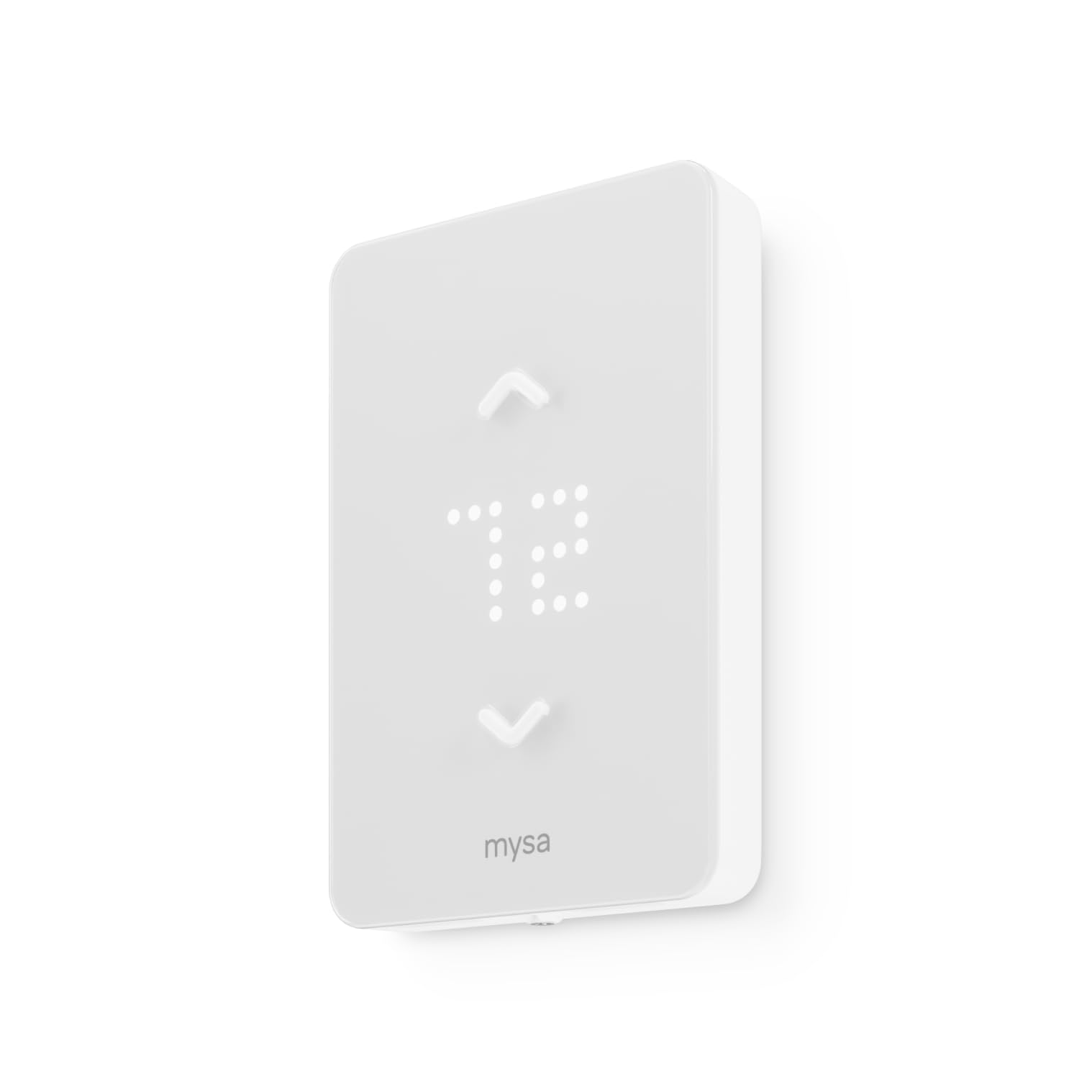
Mysa Smart Thermostat LITE for Electric Baseboard Heaters
The Mysa LITE is built for one job: replacing the wall dial on a line-voltage electric baseboard heater. It handles 120V and 240V circuits, which is the range baseboard heaters actually run on, and it speaks to all three major voice platforms plus Apple HomeKit. The 7-day scheduling lets a household set different routines for weekdays and weekends rather than one blanket program. The LITE badge means Mysa stripped the feature set back to the essentials, so expect scheduling, remote control and voice commands rather than room-by-room zoning or occupancy sensing.
This is the pick for a homeowner with existing baseboard heaters who wants app control without changing the hardware. It earns its place on compatibility breadth, since HomeKit support is rare among line-voltage thermostats. Buyers with a low-voltage system or a heat pump should look elsewhere, because this unit is designed around resistive line-voltage heat.
Trade-off: Line-voltage installation involves mains wiring, so a household that is not comfortable shutting off a breaker and working inside a wall box will need to budget for an electrician.
2. meross Matter Smart Thermostat for Electric Baseboard Heater
Type: Line-voltage smart thermostat
Compatibility: Matter, HomeKit, Alexa, Google Home, SmartThings
Voltage: 120–240V
Wiring: 4 wires needed
Color: Black
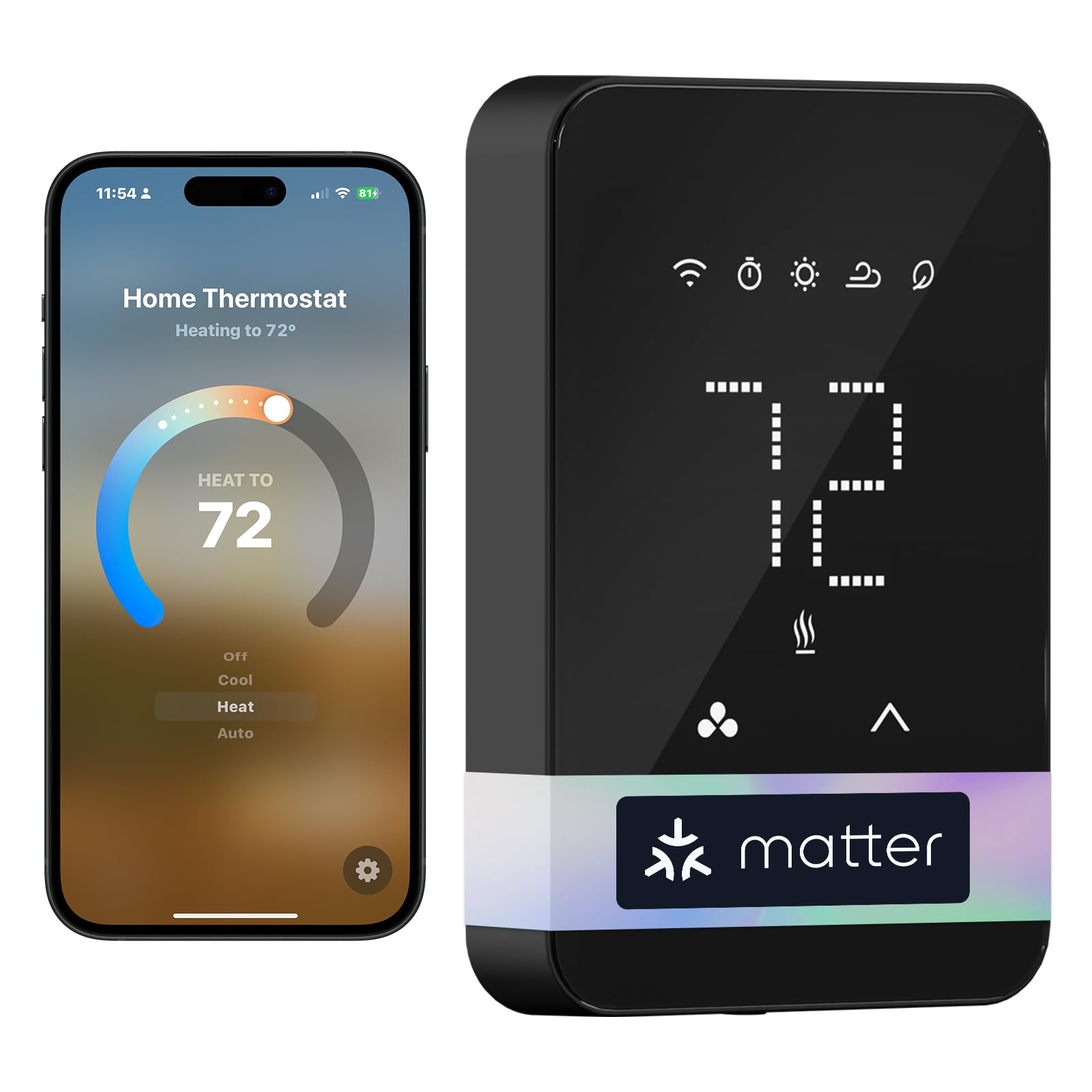
WiFi Programmable Thermostat Works with HomeKit, Alexa, Google Home & SmartThings
This meross unit is the Matter-native option, which matters for a household that has already standardized on a Matter hub. It supports the four big ecosystems plus SmartThings, so it slots into almost any existing smart home without a bridge. The 120–240V range covers standard baseboard heaters, and the four-wire requirement means it drops into a conventional line-voltage box rather than needing a neutral run added. The black finish is a deliberate design choice that hides better against dark wall plates than the usual white plastic.
The pick suits a buyer building a Matter-based smart home who wants one app and one automation engine for everything. It is a budget-tier thermostat with a mid-tier protocol, which is the appeal. Anyone with a two-wire setup or an older heater without a spare conductor should confirm the wiring before ordering.
Trade-off: The four-wire requirement rules out some older baseboard installations, and the Matter pairing process can be fussier than a plain Wi-Fi setup for buyers unfamiliar with the standard.
3. meross Smart Thermostat for Electric Baseboard and In-Wall Heaters
Type: Line-voltage smart thermostat
Compatibility: HomeKit, Alexa, Google Home
Voltage: 120V–240V
Wiring: 4 wires needed
Installation: Easy install
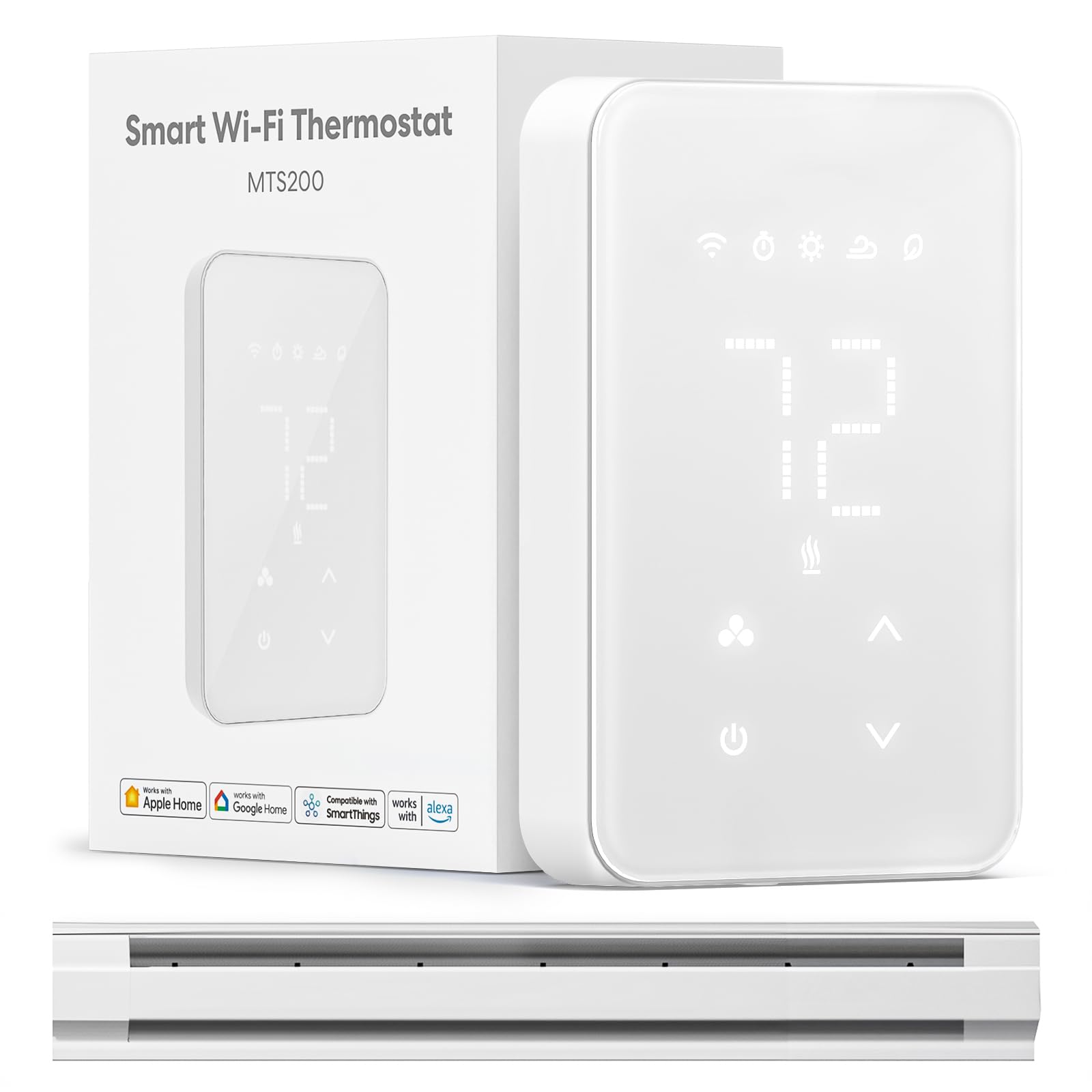
meross Smart Thermostat for Electric Baseboard and in-Wall Heaters
This meross model is the plain Wi-Fi version of the same idea, and it covers both baseboard and in-wall heaters, which widens its reach to a second heater type. It runs on 120V–240V and works with HomeKit, Alexa and Google Home without needing a Matter hub in the middle. The four-wire requirement and the easy-install framing point to a unit aimed at straightforward replacement jobs rather than new wiring.
It suits a buyer who wants app scheduling and voice control on a budget and does not care about Matter. The energy-saving programming is the core feature here, so expect schedules and remote control rather than advanced analytics. Homes with two-wire heaters or with a heat pump should not buy this one.
Trade-off: Without Matter, this thermostat depends on the meross app and cloud service for remote features, so a household that wants local-only control should step up to the Matter version.
4. meross Matter Smart Thermostat for Home
Type: Low-voltage smart thermostat
Compatibility: HomeKit, Alexa, Google Assistant, Matter
Power: C-wire required
Control: Remote and voice

This is the entry-price pick and the odd one out in the group, because it is a standard low-voltage thermostat rather than a line-voltage unit. The C-wire requirement is the giveaway: it is designed for conventional heating systems that supply a dedicated power conductor, not for baseboard heaters wired straight to mains. It supports HomeKit, Alexa, Google Assistant and Matter, so the smart-home coverage is as broad as anything else here.
It suits a household with a C-wire already present that wants the cheapest route into Matter and voice control. The easy setup claim holds up best when the wiring is already in place. Buyers with electric baseboard heaters should skip it, because it will not drive a line-voltage load.
Trade-off: The C-wire requirement disqualifies most baseboard setups and many older homes, so this is the narrowest pick in the roundup despite its low price.
5. DREO Smart Wall Heater, 1500W Space Heater for Bedroom
Type: Complete smart wall heater
Power: 1500W
Features: 120° oscillation, ECO mode, adjustable thermostat, 24H timer
Mounting: Easy-mount, wall
Compatibility: Alexa

The DREO is the only product here that is a heater rather than a control, which makes it the answer for anyone who cannot or will not rewire a thermostat. It mounts on the wall, delivers 1500W, and oscillates through 120 degrees to push warm air across a room instead of straight out. The adjustable thermostat, ECO mode and 24-hour timer give it the scheduling basics, and Alexa support adds voice control without a hub. A remote is included for buyers who do not want to talk to a speaker.
This is the pick for renters, offices and bedrooms with no existing thermostat wiring, because it sidesteps the whole installation question. It earns its place as the premium option on the strength of being a complete heating solution. Households that already have baseboard heaters and just want smarter control will get more value from a thermostat.
Trade-off: A single 1500W wall unit heats one room, not a whole home, and it draws enough power that it should run on its own circuit rather than sharing an outlet with other appliances.
Before You Buy
- Wiring: Line-voltage thermostats need the heater’s mains wiring and typically four conductors; a C-wire thermostat needs a low-voltage control circuit instead. Confirm which one the wall box has before ordering.
- Heater type: Baseboard and in-wall heaters take line-voltage controls; central furnaces and heat pumps take low-voltage ones. The two are not interchangeable.
- Compatibility: HomeKit, Alexa, Google Home, SmartThings and Matter are not all present on every unit. Match the thermostat to the ecosystem already in the home.
- Installation comfort: Replacing a line-voltage thermostat means working inside a live wall box. A household without electrical experience should price an electrician into the total.
- Room size: A 1500W wall heater is a single-room solution. Whole-home coverage needs a thermostat on an existing system, not a space heater.
- Mounting: Wall heaters need a suitable wall surface and clearance around the vents. Check the mounting location before buying.
- Local versus cloud control: Matter models generally keep more control local; plain Wi-Fi models lean on the manufacturer’s app and cloud service.
Frequently Asked Questions
-
Can any smart thermostat control an electric baseboard heater?
No. Baseboard heaters run on line voltage, so they need a line-voltage thermostat rated for 120V–240V. Standard low-voltage thermostats such as the C-wire meross model will not work. -
What is the best smart control for an electric heater if there is no wiring in the wall?
A complete smart wall heater like the DREO is the practical answer, since it provides both the heat and the smart control without a thermostat replacement. -
Is Matter worth paying for in a heater thermostat?
Matter helps when a household already runs a Matter hub and wants one automation system. Homes with a single ecosystem already covered by HomeKit, Alexa or Google can save money with a plain Wi-Fi model. -
Does a smart thermostat actually cut heating costs?
Scheduling and remote control reduce wasted heating by turning the heater down when a room is empty. The Mysa LITE name cites savings up to 26%, though actual results depend on the household’s routine and the local climate. -
How many wires does a line-voltage smart thermostat need?
The meross baseboard models specify four wires. Buyers should check the existing wall box before ordering, because older two-wire setups will not support them. -
Can a renter install any of these?
A plug-in or wall-mounted heater like the DREO is the renter-friendly route. Thermostat replacements alter the fixed wiring and usually need the landlord’s approval.
Bottom Line
For most households with existing electric baseboard heaters, the Mysa Smart Thermostat LITE is the best smart control for an electric heater: it covers both voltages, works with all three major voice platforms including HomeKit, and keeps the feature set focused on scheduling and remote control. Buyers without thermostat wiring should take the DREO wall heater instead, and budget shoppers with a Matter hub should look at the black meross model.
