Why there are Amazon links here: Brave Review is paid a commission for qualifying Amazon purchases made through the links below. Your price does not change, and using our links is entirely optional. How this works
Best Smart Radiator Valve for a Room Above a Garage
A room above a garage is the hardest space in the house to keep comfortable: it sits over an unheated slab, loses heat through the roof and often runs colder than the rest of the home. The best smart radiator valve for a room above a garage gives that one radiator its own schedule and its own temperature target instead of borrowing the house thermostat’s reading. This short roundup covers five picks — a budget Zigbee valve for Tuya households, a Bluetooth valve for Home Assistant users, a compact Zigbee unit for rental spaces, a WiFi valve for app-only setups, and a simple actuator for anyone who wants no app at all. The overview table below shows the differences in one glance.
The Picks at a Glance
| Product | Key Spec | Best Use | Price Tier |
|---|---|---|---|
| Smart Thermostat Radiator Valve (Zigbee, Tuya) | Zigbee, Tuya hub required, Alexa/Google | Budget smart control in an existing Tuya home | Budget |
| Shelly Blu TRV & Blu Gateway Gen3 | Bluetooth, Home Assistant, Alexa/Google | Local control without a cloud account | Mid |
| Smart Radiator Thermostat Valve (ZigBee, Tuya) | Zigbee, Tuya app, ABS body | Simple app control in flats and rentals | Budget |
| Smart Radiator Valve (WiFi) | WiFi, timing function, no hub named | Homes with no hub and no Zigbee | Budget |
| Honeywell T1002W0NA Actuator | Thermostatic actuator, integral sensor | Set-and-forget heating, no app | Premium |
1. Smart Thermostat Radiator Valve (Zigbee, Tuya)
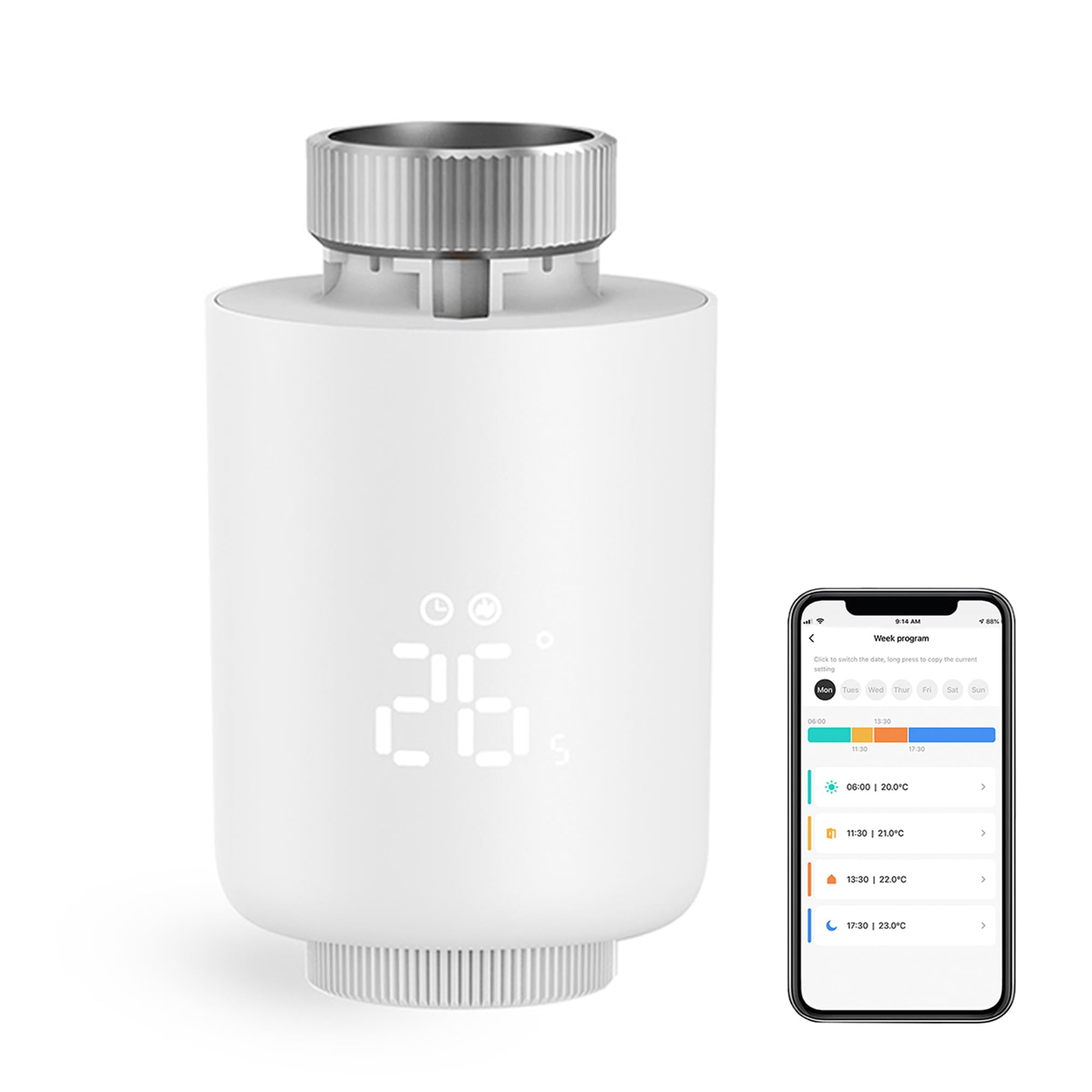
Type: Programmable thermostatic radiator valve
Protocol: Zigbee
Hub requirement: Tuya Zigbee hub required
Voice control: Compatible with Alexa and Google Home
Color: White
Smart Thermostat Radiator Valve — Check Price on Amazon
This is the classic smart valve shape: a white motorised head that screws onto the radiator tail in place of the manual knob, with a small display and buttons for local adjustment. Because it speaks Zigbee, it needs a Tuya Zigbee hub in the home before the app and the schedules work — that hub is the trade for the low price. Once paired, the valve becomes a programmable thermostat in its own right, with temperature adjustment from the phone and voice commands through Alexa or Google Home.
It suits a household that already runs Tuya devices, since the hub is already there and the valve simply joins the existing app. The room above the garage gets its own heating schedule, so it can be warmed before use and dropped back when empty. Buyers with no Zigbee hub should price one in before committing — this valve is not a standalone device.
Trade-off: The hub requirement adds cost and setup steps that a WiFi valve avoids, so the low sticker price only holds for homes already inside the Tuya ecosystem.
2. Shelly Blu TRV & Blu Gateway Gen3
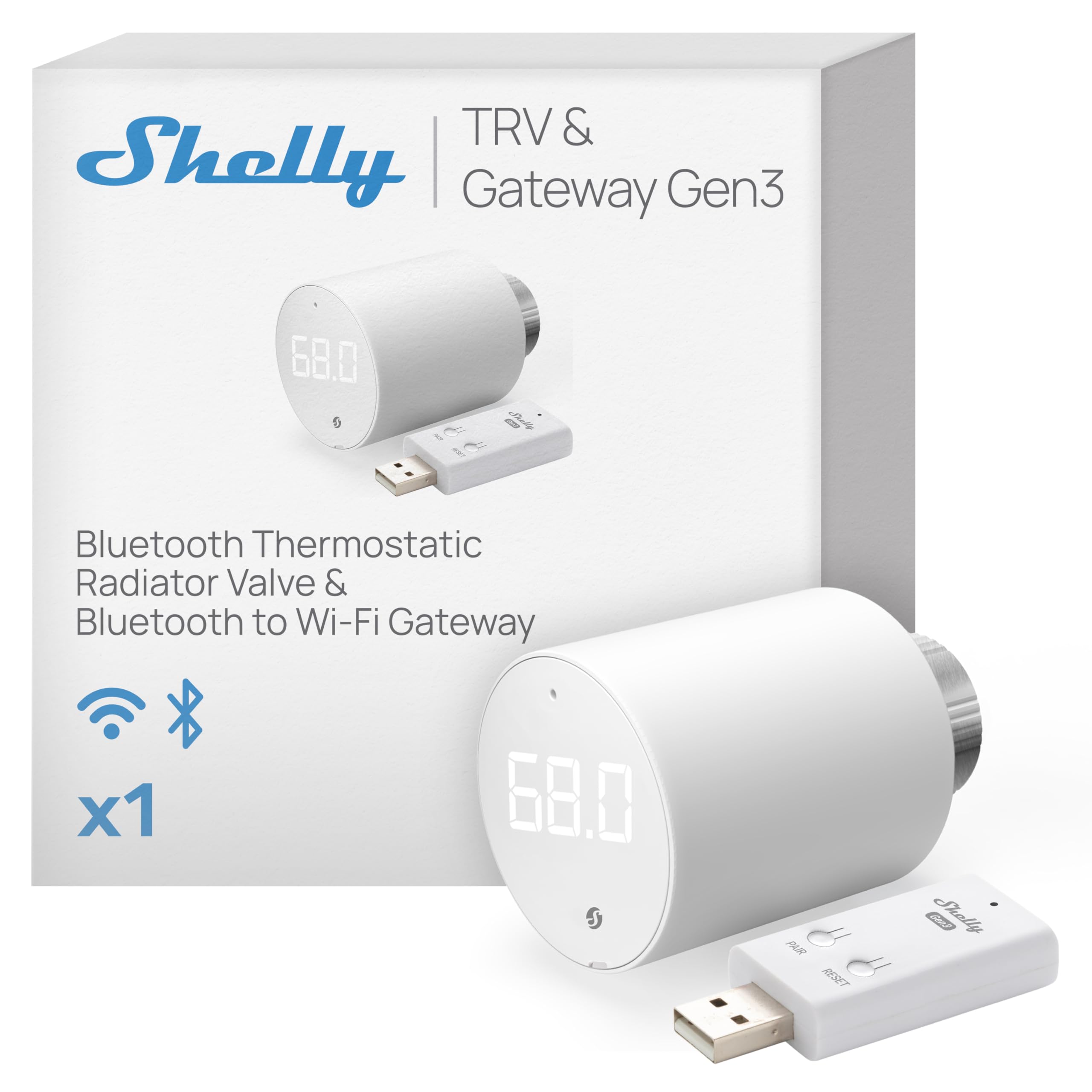
Type: Smart thermostatic radiator valve with gateway
Connectivity: Bluetooth
Included: Blu Gateway Gen3
Ecosystems: Alexa, Google, Home Assistant
Use case: Home automation
Shelly Blu TRV & Blu Gateway Gen3 — Check Price on Amazon
Shelly’s approach is Bluetooth rather than Zigbee or WiFi, and the bundle includes the Blu Gateway Gen3 that bridges the valve to the home network. That gateway matters for Home Assistant users in particular: local control is the point of the Shelly ecosystem, and the valve plus gateway pair is designed to be automated rather than tapped at one device at a time. The head still works as a temperature control valve, but the automation layer is what justifies the higher price.
This is the pick for a technically comfortable buyer who wants the garage-top room folded into a Home Assistant dashboard or a local automation routine. Alexa and Google compatibility means it also works for ordinary voice control. Buyers who want a plug-and-play appliance with no gateway and no automation platform will find it more machinery than they need.
Trade-off: The Bluetooth-plus-gateway design is the most setup-heavy option here and pays off only if the buyer actually uses an automation platform.
3. Smart Radiator Thermostat Valve (ZigBee, Tuya)
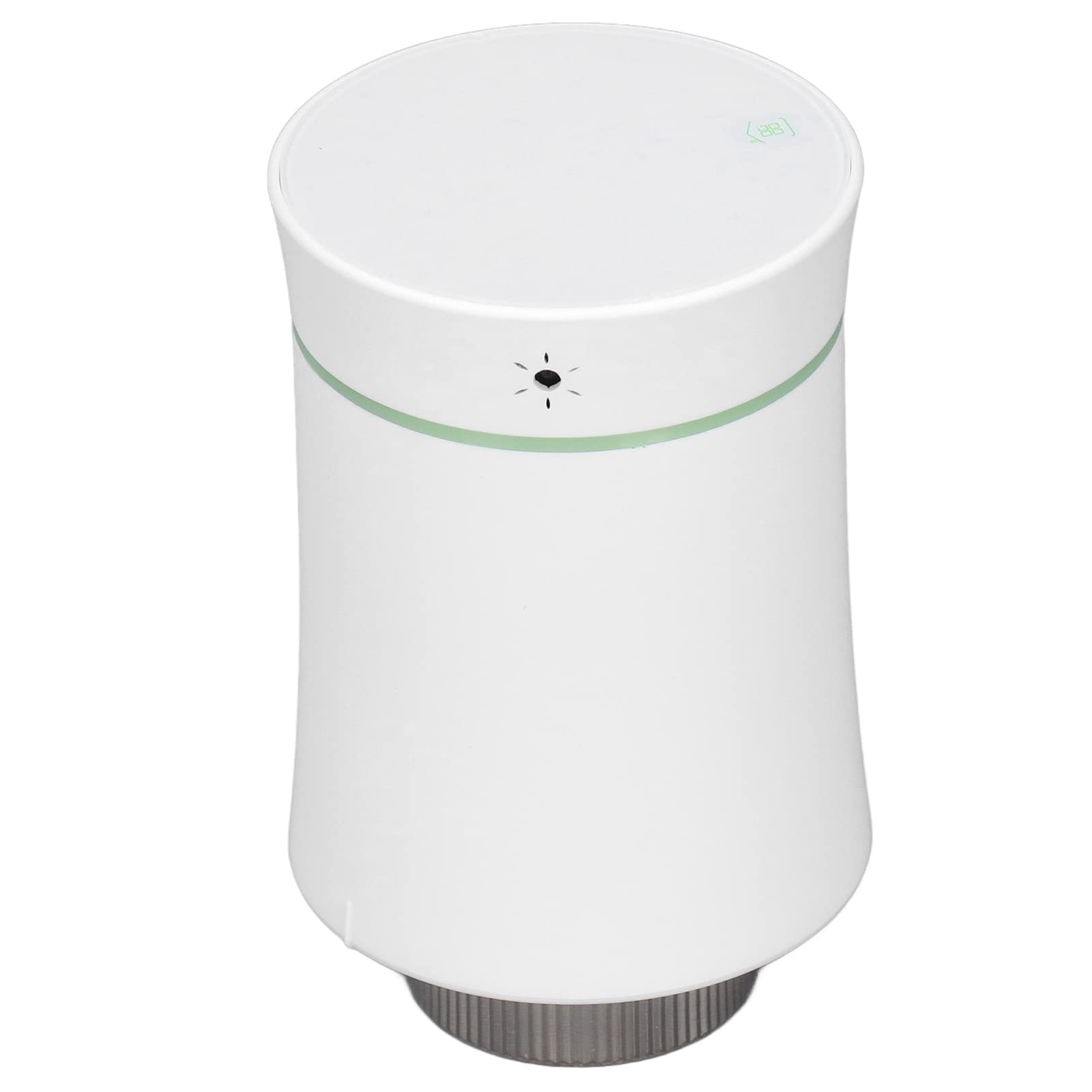
Type: Wireless smart radiator thermostat valve
Protocol: Zigbee
App: Tuya app, remote control
Material: ABS
Intended use: Residential buildings and hotels
Color: White
Smart Radiator Thermostat Valve — Check Price on Amazon
This valve is positioned for residential buildings and hotels, which says a lot about its design: a straightforward white ABS head, Zigbee wireless control through the Tuya app, and remote adjustment rather than deep customisation. The ABS body keeps weight and cost down, and the plain white finish blends with a standard radiator. It is a sensible second radiator valve for a landlord or a small guest space that needs remote heating control without a premium price.
It suits a buyer who already has a Tuya or Zigbee setup and wants an inexpensive extra valve for a spare room. The hotel framing also makes it a reasonable fit for a short-let or guest room above a garage that needs to be warm on arrival. Anyone expecting richer scheduling or energy reporting should look at the more automation-focused picks instead.
Trade-off: The ABS housing and budget positioning suggest a valve built for light residential duty rather than years of heavy cycling in a hard-worked room.
4. Smart Radiator Valve (WiFi)
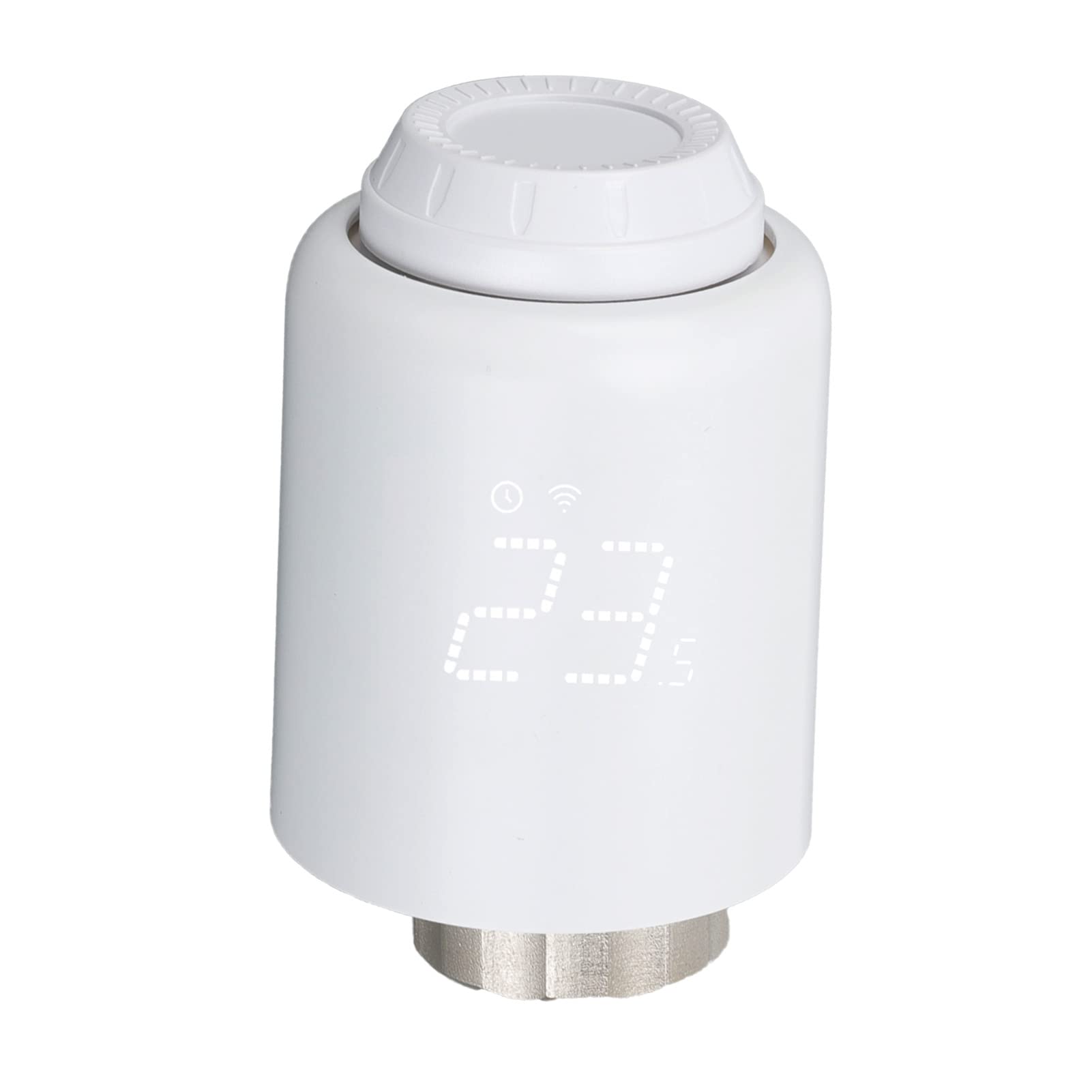
Type: WiFi thermostatic radiator valve controller
Connectivity: WiFi
Feature: Timing function
Control: Wireless temperature control
System: Home heating system
Smart Radiator Valve WiFi — Check Price on Amazon
This is the no-hub option: the valve connects over WiFi directly, so there is no separate Zigbee or Bluetooth bridge to buy or power. The timing function is the core feature — the radiator can be set to warm on a schedule rather than left to a manual knob — and temperature control is handled wirelessly from a phone. For a room above a garage that is used at predictable times, a timer is often all the intelligence the space actually needs.
It suits a household with decent WiFi reach and no existing smart-home hub, and it is the simplest route to scheduled heating for a single radiator. The catch is that WiFi at the far end of a house over a garage can be weak, so signal at the radiator is worth checking before buying. Buyers already inside a Zigbee or Home Assistant setup gain nothing here and lose integration.
Trade-off: Direct WiFi is convenient, but the valve depends on a strong signal in what is often the weakest corner of the home network.
5. Honeywell T1002W0NA Thermostatic Radiator Actuator
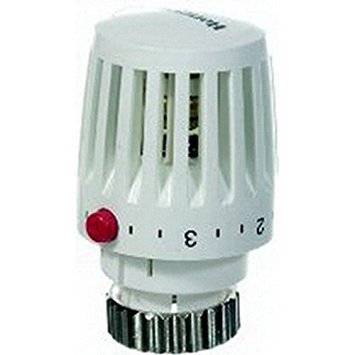
Type: Thermostatic radiator actuator
Sensor: Integral sensor
Control: Local thermostatic
App: None
Smart home: None
Honeywell T1002W0NA Thermostatic Radiator Actuator — Check Price on Amazon
This is the odd one out and deliberately so: a Honeywell thermostatic radiator actuator with an integral sensor, no app and no wireless protocol. It replaces the manual valve head and holds the radiator at a set temperature on its own, using the sensor built into the unit rather than a phone or a hub. For a room above a garage that just needs to stop swinging between cold and stifling, that local control is genuinely useful and completely maintenance-free from a software point of view.
It suits a buyer who wants better heating control without a smart home at all — a spare room, a workshop, a guest space, or a household that does not want another app. The integral sensor also means the valve reacts to the temperature at the radiator itself. Buyers who want schedules, remote control or voice commands should look at the other four picks, because this one offers none of that.
Trade-off: The premium price buys reliability and simplicity, not connectivity — there is no remote control, no scheduling and no way to check the room from a phone.
Before You Buy
- Compatibility: Check whether the radiator takes a standard thermostatic valve thread before ordering any head, and confirm the valve’s protocol matches an existing hub.
- Hub requirement: Zigbee valves need a Zigbee hub; the Shelly bundle includes its own gateway; WiFi valves need no hub but need strong signal.
- Signal at the radiator: A room above a garage is often the weakest point for WiFi and Zigbee, so test coverage there before committing to a protocol.
- Temperature range and frost: Confirm the valve’s lowest setting suits a space that may drop cold overnight, since frost protection matters in an over-garage room.
- Power source: Most smart heads run on batteries, so factor in the cost and access for regular replacement in a hard-to-reach spot.
- Control style: Decide up front between app and schedule control versus local thermostatic control, because the Honeywell pick cannot be upgraded to smart later.
- Fit and finish: Match the head to the radiator valve body and check the finish against the room, especially in a visible guest or living space.
Frequently Asked Questions
-
Do smart radiator valves work in a room above a garage?
Yes, provided the radiator has a standard thermostatic valve body and the wireless signal reaches the room. The valve controls that radiator independently, which is exactly what an over-garage room needs. -
Do I need a hub for a smart radiator valve?
It depends on the protocol. Zigbee valves need a Zigbee hub such as Tuya, the Shelly bundle includes its own gateway, and WiFi valves need no hub at all. -
Which pick is best for Home Assistant?
The Shelly Blu TRV with the Blu Gateway Gen3, because local Bluetooth control and the Home Assistant ecosystem are its main design goals. -
Can a smart radiator valve save money in a little-used room?
It can help by heating only when the room is scheduled or occupied, rather than running the radiator continuously. The saving depends on how the room is used and how the rest of the heating is zoned. -
Is a smart valve better than a manual thermostatic head?
A smart valve adds scheduling, remote control and voice commands, while a manual thermostatic head such as the Honeywell actuator holds a set temperature with no app or hub. The better choice depends on whether remote control matters. -
What should be checked before ordering?
The radiator valve thread, the protocol or hub already in the home, WiFi or Zigbee coverage at the radiator, and the battery access once the head is fitted.
Bottom Line
For most homes, the best smart radiator valve for a room above a garage is the Smart Thermostat Radiator Valve (Zigbee, Tuya): it is the cheapest route to scheduled, app-controlled heating for that one cold room, and the Tuya hub it needs is a one-time purchase that serves the rest of the house too. Buyers already running Home Assistant should step up to the Shelly bundle for local control, and anyone who wants no app at all should take the Honeywell actuator and accept the loss of remote control.
