Why there are Amazon links here: Brave Review is paid a commission for qualifying Amazon purchases made through the links below. Your price does not change, and using our links is entirely optional. How this works
Best Smart Radiator Valves for a Single Pipe System: 5 Picks for Efficient Home Heating
Single pipe radiator systems are common in older homes and apartment blocks, and upgrading them with smart control takes some care. The picks below suit three buyer types: the budget-minded tinkerer who wants automatic temperature control without an app, the smart-home enthusiast building a Bluetooth or ZigBee setup, and the owner of a one-pipe steam system who needs a proper replacement valve rather than a retrofit thermostat. The overview table below lines up all five so the right one is obvious in under a minute.
Overview of the Picks
| Product | Key Spec | Best Use | Price Tier |
|---|---|---|---|
| G1/2" & G3/4" Radiator Temperature Control Valve | Liquid sensor, manual control, frost protection | Budget automatic control, no app needed | Budget |
| Shelly Blu TRV & Blu Gateway Gen3 Smart Thermostatic Valve | Bluetooth, Alexa/Google/Home Assistant | App and voice control in a smart home | Premium |
| Smart Radiator Thermostat Valve Wireless Control for ZigBee | ZigBee, Tuya app, ABS body | Budget smart home with a hub | Mid-range |
| Smart Radiator Valve for Home Heating with Digital Display | WiFi, programmable schedule, digital display | Standalone scheduling without a hub | Mid-range |
| Honeywell V2042HSL10 One-Pipe Steam Radiator Valve | 1/8" pipe size, one-pipe steam | Replacing a failed steam radiator valve | Premium |
1. G1/2" & G3/4" Radiator Temperature Control Valve
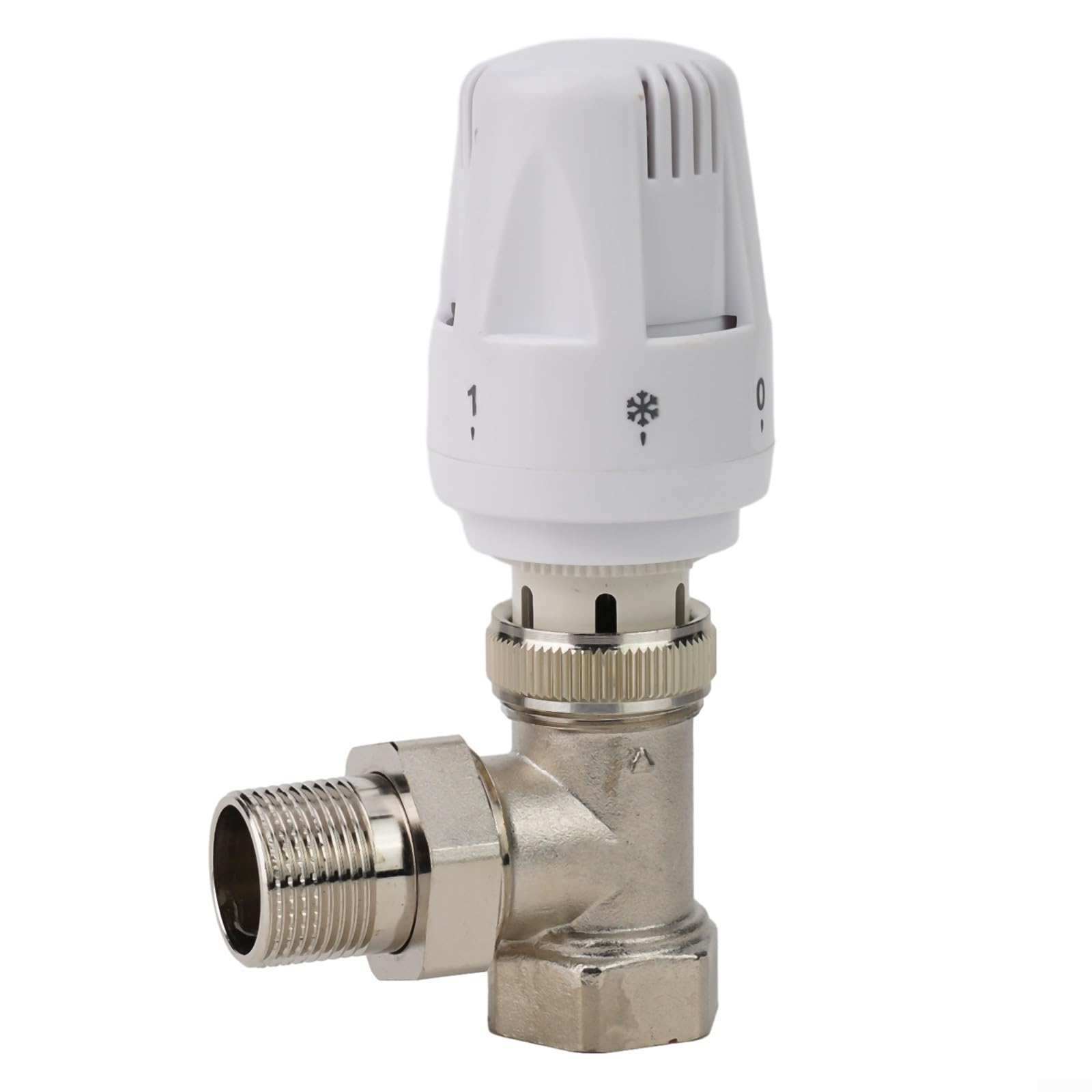
Type: Thermostatic radiator valve
Connection Sizes: G1/2" and G3/4" (DN20)
Material: Copper angle body
Sensor: Liquid sensor
Controls: Manual control with frost protection
Power Source: None required
G1/2" & G3/4" Radiator Temperature Control Valve
This valve is the no-frills option for a single pipe system that just needs reliable, automatic temperature regulation. The copper angle body is built for a standard radiator connection, and the liquid sensor responds to room temperature without any wiring or batteries. Two connection sizes in one package make it easier to match an existing pipe thread. It is aimed at buyers who want frost protection and set-and-forget comfort rather than app control.
The pick earns its place as the budget entry because it delivers automatic thermostatic control at a price that undercuts every smart valve here. It is not for buyers who want scheduling, remote access or voice commands — there is no connectivity at all. Buyers should also confirm the pipe thread and valve orientation before ordering, since a physical valve swap leaves little room for error.
Trade-off: The lack of any app or schedule means comfort settings must be adjusted by hand at the radiator.
2. Shelly Blu TRV & Blu Gateway Gen3 Smart Thermostatic Valve
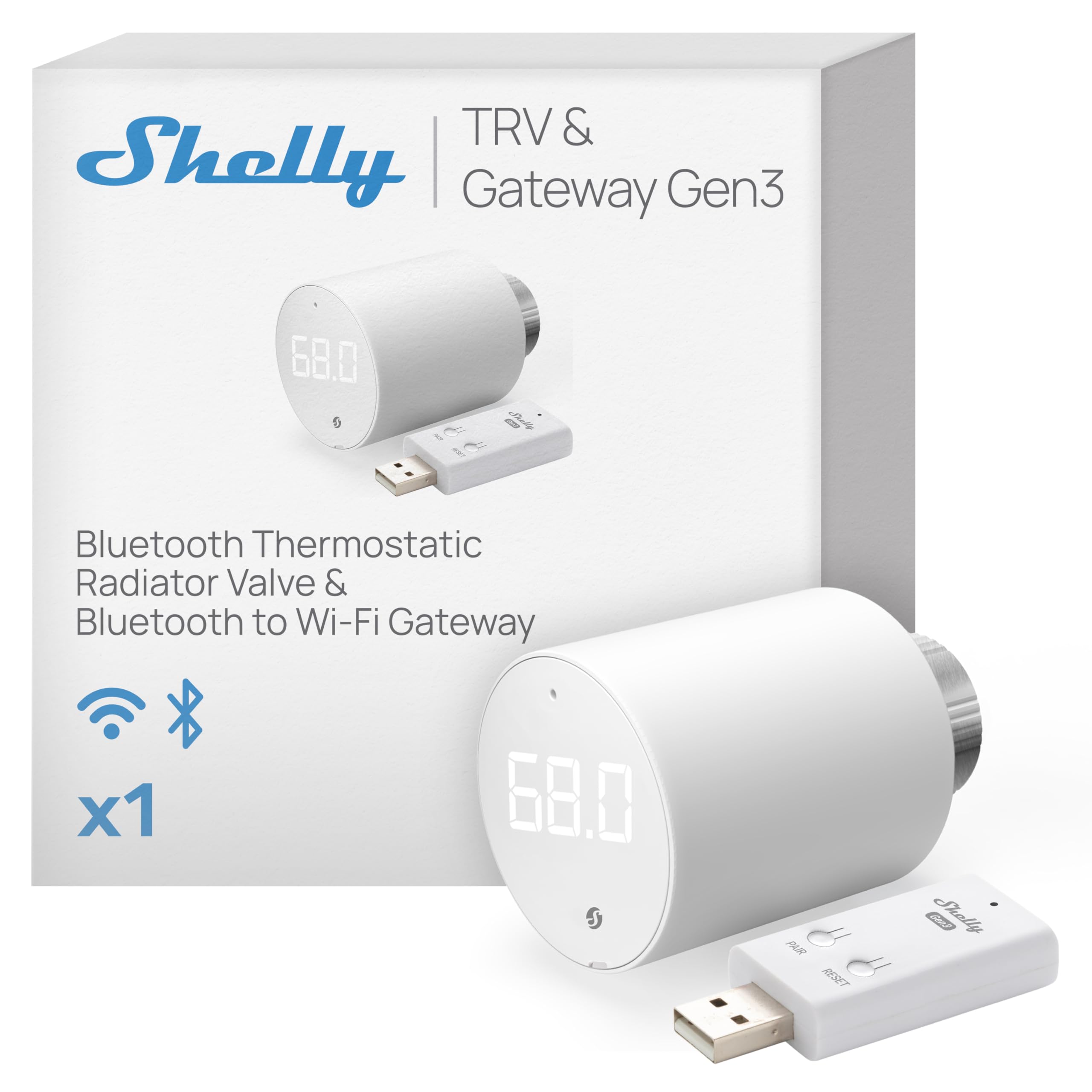
Type: Smart thermostatic radiator valve
Connectivity: Bluetooth with included gateway
Voice Assistants: Alexa, Google, Home Assistant
Power Source: Battery (TRV)
Control: App-based scheduling and automation
Compatibility: Shelly smart home ecosystem
This is the premium pick for buyers already invested in a smart home. The bundle pairs a Bluetooth radiator valve with a gateway, so the valve can be reached remotely and tied into Alexa, Google or Home Assistant routines. Bluetooth keeps battery drain low compared with WiFi, and the gateway bridges the valve to the wider network. It suits households that want per-room heating schedules triggered by presence or time.
It earns its premium price through ecosystem depth rather than raw hardware. The Bluetooth link means the gateway is mandatory — without it, remote control and voice integration do not work. Buyers who want a simple standalone thermostat will find this overkill and overpriced for the job.
Trade-off: The system depends entirely on the included gateway, so a gateway failure takes the whole setup offline.
3. Smart Radiator Thermostat Valve Wireless Control for ZigBee
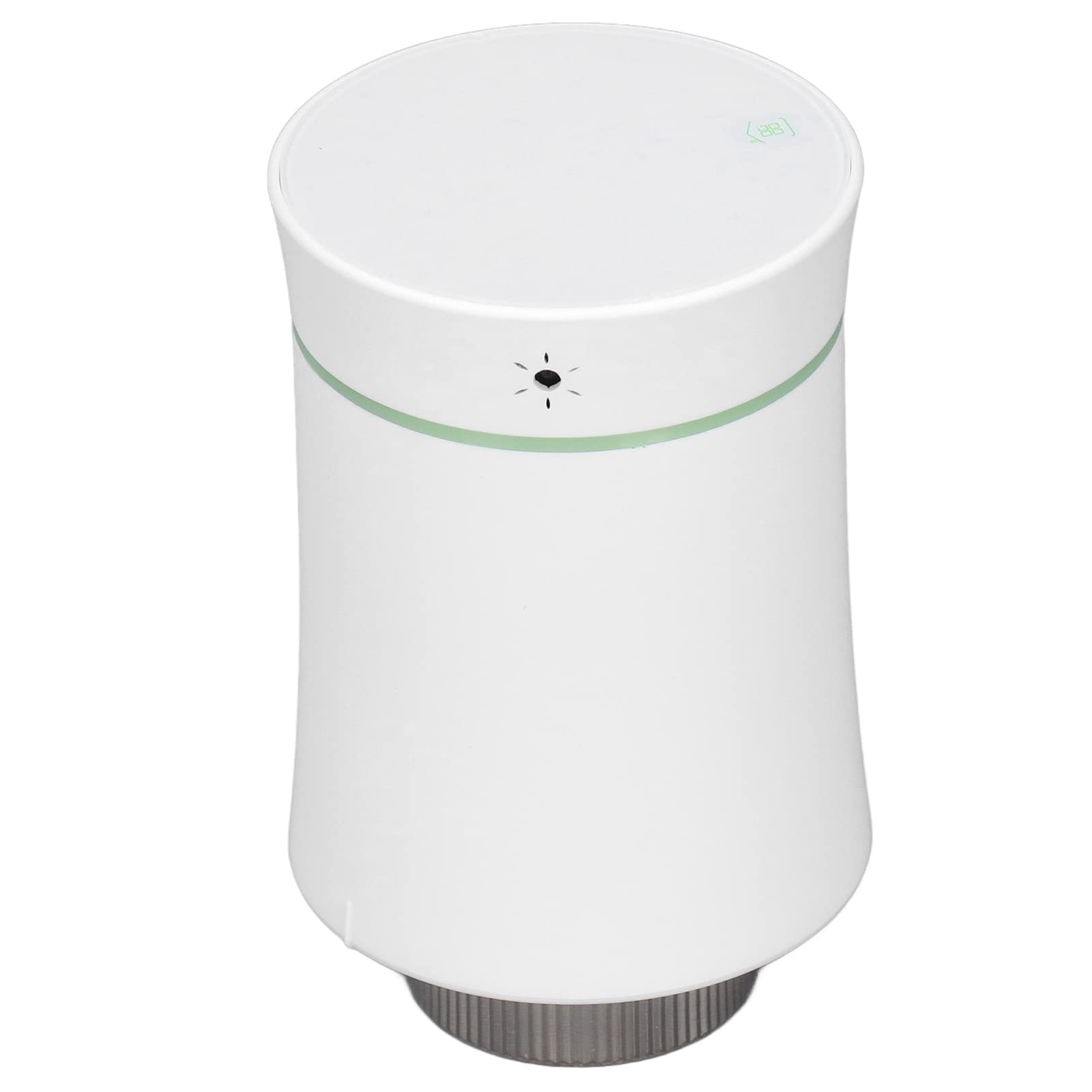
Type: ZigBee smart radiator valve
Connectivity: ZigBee wireless
App: Tuya
Material: ABS plastic
Color: White
Intended Use: Residential buildings and hotels
Smart Radiator Thermostat Valve Wireless Control for ZigBee
This ZigBee valve is the value route into app-controlled heating. ZigBee is a low-power mesh protocol, so the valve runs on batteries for long stretches and slots into an existing ZigBee hub. The Tuya app handles remote control and scheduling, and the white ABS housing blends into most radiator setups. It is pitched at residential and hotel use, where many rooms need individual control.
The pick suits buyers who already own a ZigBee hub and want smart control without paying Bluetooth-gateway prices. It is not for anyone without a hub — ZigBee devices need a coordinator to join a network. The ABS body is lighter and less robust than metal alternatives, so it is better suited to indoor residential radiators than to high-traffic commercial installations.
Trade-off: A ZigBee hub is required before the valve does anything smart, which adds cost for first-time buyers.
4. Smart Radiator Valve for Home Heating with Digital Display

Type: Programmable WiFi radiator valve
Connectivity: WiFi
Display: Digital display
Control: App scheduling and thermostat programming
Power Source: Battery
Best For: Standalone smart heating without a hub
Smart Radiator Valve for Home Heating with Digital Display
This WiFi valve is the simplest way to add scheduling to a single pipe system. Because WiFi connects directly to the home router, no separate hub or gateway is needed, and the digital display lets occupants check and adjust settings at the radiator itself. The programmable thermostat handles daily schedules through the app. It suits renters and homeowners who want smart scheduling with the least possible infrastructure.
It earns its place as the easiest standalone smart upgrade, and the on-device display is a genuine convenience when the phone is not at hand. It is not for buyers who want deep integration with Home Assistant or other local platforms — WiFi consumer valves typically live inside their own app. WiFi radios also draw more battery than ZigBee or Bluetooth, so expect more frequent battery changes.
Trade-off: Direct WiFi connection drains batteries faster than low-power mesh protocols, and the app ecosystem is closed.
5. Honeywell V2042HSL10 One-Pipe Steam Radiator Valve

Type: One-pipe steam radiator valve
Pipe Size: 1/8"
System: One-pipe steam
Brand: Honeywell
Use: Replacement valve for steam radiators
Control: Thermostatic
Honeywell V2042HSL10 One-Pipe Steam Radiator Valve
This is a genuine one-pipe steam valve rather than a retrofit smart thermostat, and that distinction matters. Steam systems run at far higher temperatures than hot-water systems, so a standard TRV body is not a safe substitute. The Honeywell valve is built for the 1/8" pipe size used on many residential steam radiators and provides thermostatic control at the radiator. It suits owners replacing a failed or leaking valve on an existing steam system.
It earns its place because it is the only pick here designed specifically for one-pipe steam, which makes it the correct choice when the job is replacement rather than upgrade. It is not for buyers on a hot-water single pipe system, and it is not a smart device — there is no app, schedule or remote control. Buyers should confirm the existing valve’s pipe size and thread before ordering.
Trade-off: This is a mechanical replacement valve with no connectivity, so it delivers comfort control but not smart-home automation.
Before You Buy
- System type: Confirm whether the system is one-pipe steam or single pipe hot water, because the two need different valve bodies and are not interchangeable.
- Pipe size and thread: Match the valve to the radiator’s connection size — the picks here cover G1/2", G3/4" and 1/8" — and check the thread standard before ordering.
- Hub or gateway needs: ZigBee and Bluetooth valves need a coordinator or gateway, while WiFi valves connect directly to the router.
- Power source: Battery valves need periodic cell changes; WiFi models drain faster than mesh or Bluetooth models.
- Material and location: Metal bodies suit heavy-duty or commercial use, while ABS housings are better for indoor residential radiators.
- Frost protection: For unheated rooms, choose a valve with frost protection so pipes are not put at risk in cold snaps.
- Ecosystem fit: Check that the valve works with the existing app, voice assistant or smart-home platform before buying.
Frequently Asked Questions
-
Can a smart radiator valve be fitted to a single pipe system?
Yes, provided the valve matches the pipe size and system type. Hot-water single pipe systems accept standard thermostatic valves, while one-pipe steam systems need a dedicated steam valve. -
Do smart radiator valves need a hub?
It depends on the protocol. ZigBee and Bluetooth models need a hub or gateway, while WiFi models connect straight to the home router. -
Which pick is best for a tight budget?
The G1/2" & G3/4" thermostatic valve is the cheapest route to automatic control, though it offers no app or scheduling. -
Are these valves suitable for steam radiators?
Only the Honeywell V2042HSL10 is designed for one-pipe steam. The smart valves here are intended for hot-water systems. -
How often do batteries need changing?
WiFi valves typically need cells changed more often than ZigBee or Bluetooth models, which use lower-power radios. -
Can several valves be controlled together?
Yes, within one ecosystem. Multiple ZigBee, Bluetooth or WiFi valves can be grouped in their app for room-by-room scheduling.
Bottom Line
For most buyers upgrading a single pipe hot-water system, the Shelly Blu TRV & Blu Gateway Gen3 bundle is the top pick: it delivers app scheduling, voice control and broad smart-home compatibility in one package. Budget buyers who just want automatic thermostatic control should take the G1/2" & G3/4" valve, while owners of one-pipe steam systems should choose the Honeywell V2042HSL10.
