Why there are Amazon links here: Brave Review is paid a commission for qualifying Amazon purchases made through the links below. Your price does not change, and using our links is entirely optional. How this works
Best Smart Thermostat for a Flat with Electric Radiators: 5 Picks That Cut Heating Bills
Finding the best smart thermostat for a flat with electric radiators comes down to one question: does the unit actually control a resistive electric load, or does it assume a gas boiler? Most big-name thermostats are built for central heating, so the shortlist narrows fast. This guide covers five units that suit renters, owner-occupiers upgrading a single zone, and buyers who want app control without ripping out wiring. The overview table below lets a reader pick in under a minute.
Overview of the Picks
| Product | Key Spec | Best Use | Price Tier |
|---|---|---|---|
| Mysa Smart Thermostat LITE | 120V–240V electric baseboard, HomeKit/Alexa/Google | Budget flat upgrade | Budget |
| Sensi Smart Thermostat ST55 | Wi-Fi DIY, Energy Star Certified, Alexa | Simple app control on a budget | Budget |
| ecobee Smart Thermostat Essential | Siri/Alexa/Google, Energy Star Certified | Voice-first homes | Mid-range |
| Electric Warmup 7iE Smart Thermostat | Underfloor & radiator control, Matter, single zone | Radiant and underfloor systems | Premium |
| Mysa Smart Thermostat V2 | Humidity sensor, touchscreen, geofencing, no subscription | Full-feature flat heating | Mid-range |
1. Mysa Smart Thermostat LITE for Electric Baseboard Heaters
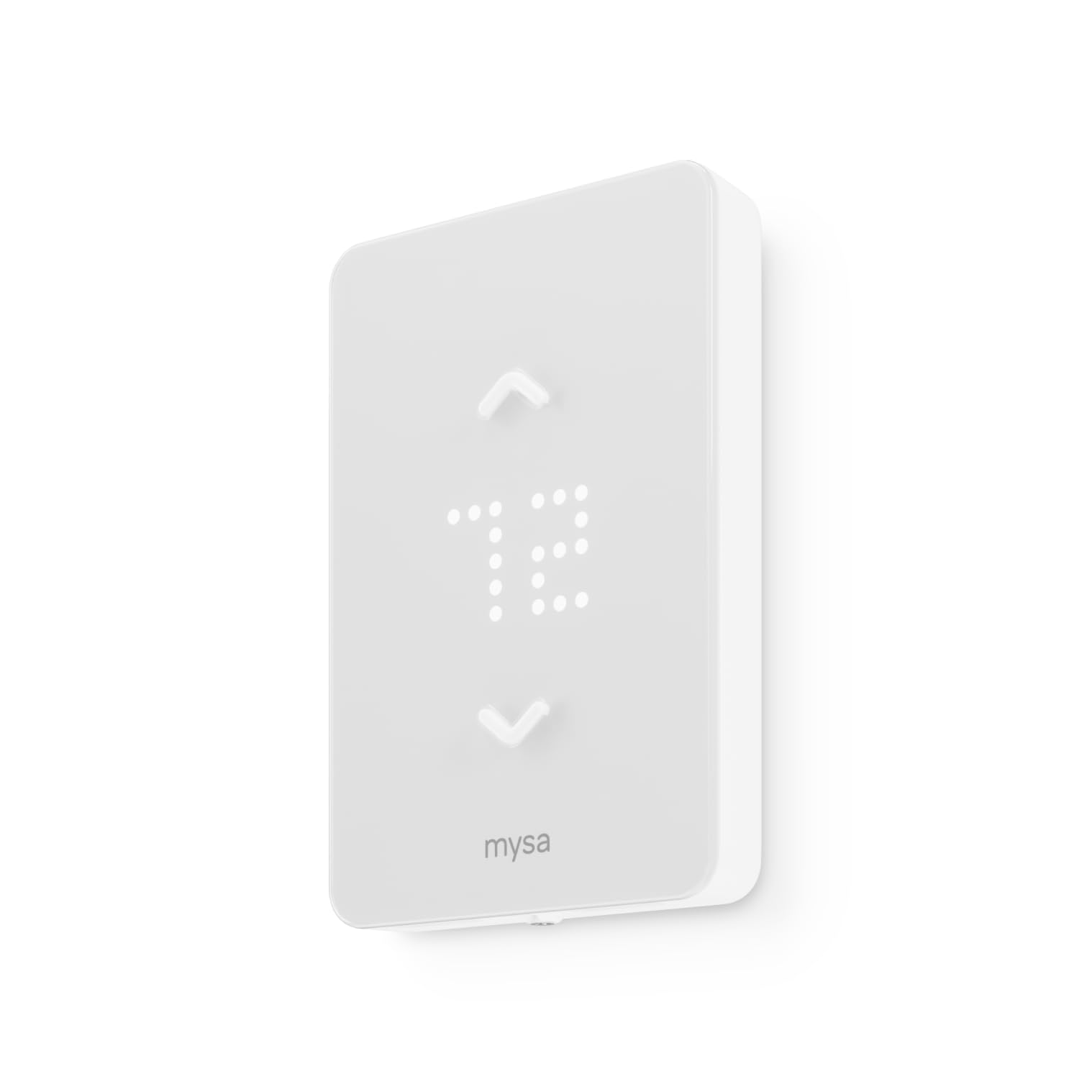
Voltage: 120V–240V
Heat type: Electric baseboard heaters
Connectivity: Wi-Fi
Scheduling: 7-day
Voice platforms: HomeKit, Alexa, Google
Claimed saving: Up to 26% on heating
Mysa Smart Thermostat LITE for Electric Baseboard Heaters is the entry point into line-voltage control. It handles 120V and 240V circuits directly, which is the critical detail for a flat running electric radiators or baseboard panels rather than a wet central heating system.
The LITE keeps the essentials and drops the extras: seven-day scheduling, app control and all three major voice platforms, at a price that undercuts most line-voltage rivals. A flat with two or three radiators can be brought under one app without a rewiring project. The 26% heating saving claim applies to scheduled setback rather than any hardware trick, so the payoff depends on how disciplined the schedule is.
Who it suits: renters and first-time smart-thermostat buyers with a single electric radiator circuit who want app and voice control without paying for sensors they will not use. It earned its place as the budget pick because line-voltage compatibility at this price is rare.
Trade-off: The LITE strips out the humidity sensing and on-device touchscreen of the full Mysa, so anyone who wants to adjust settings at the wall without reaching for a phone will find it limiting.
Check the current price on Amazon
2. Sensi Smart Thermostat, Wi-Fi, DIY, Alexa, Energy Star Certified, ST55
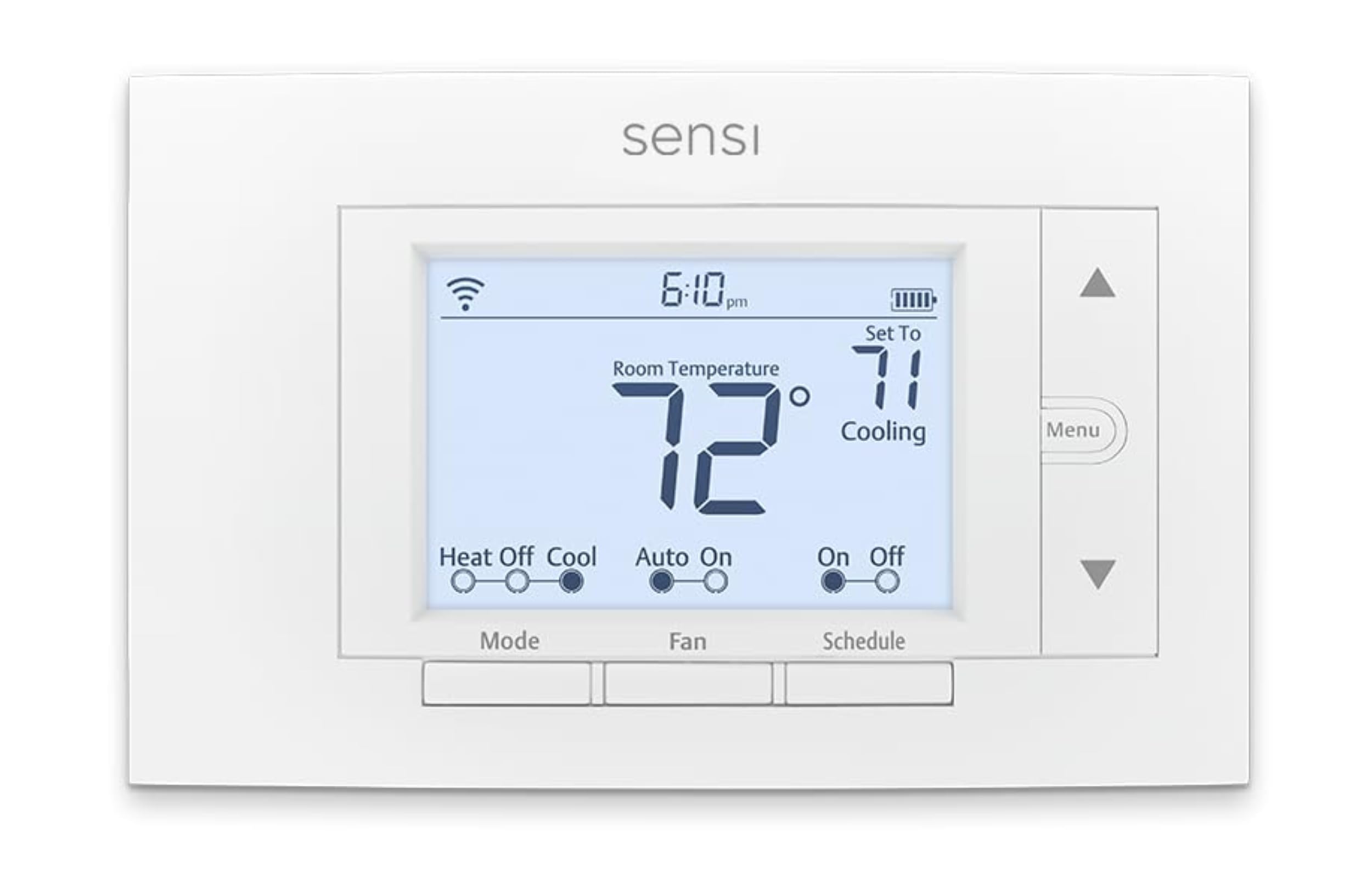
Type: Smart thermostat
Connectivity: Wi-Fi
Installation: DIY
Voice platform: Alexa
Certification: Energy Star Certified
Model: ST55
Sensi Smart Thermostat, Wi-Fi, DIY, Alexa, Energy Star Certified, ST55 is the cheapest route into app-controlled heating on this list. The DIY framing matters: the ST55 is designed for a homeowner or competent renter to swap in without a contractor, and the Energy Star certification signals it meets a recognised efficiency benchmark.
The appeal is simplicity. Wi-Fi control, Alexa voice commands and a scheduling app cover the basics without a hub or subscription. Buyers who mainly want to stop heating an empty flat during the workday will get most of the benefit here for the least money.
Who it suits: budget-conscious buyers with a straightforward low-voltage heating setup who want scheduling and Alexa control and nothing more. It is the volume seller of the group for exactly that reason.
Trade-off: A low-voltage thermostat of this type is generally aimed at conventional heating control rather than high-current line-voltage electric radiators, so buyers with 240V resistive loads need to confirm compatibility before ordering.
Check the current price on Amazon
3. ecobee Smart Thermostat Essential

Type: Wi-Fi programmable thermostat
Voice platforms: Siri, Alexa, Google Assistant
Certification: Energy Star Certified
Line: ecobee Smart Thermostat Essential
Function: Energy-saving scheduling
ecobee Smart Thermostat Essential sits in the middle of the market and leans hard into voice control. All three major assistants are supported, so an Apple Home household and a Google household get the same experience, and the Energy Star certification keeps efficiency credentials consistent with the rest of the ecobee range.
The Essential branding signals a trimmed feature set against ecobee’s flagship models, but the core proposition holds: programmable Wi-Fi scheduling with strong platform support. Flats already built around smart speakers will find the setup natural, and the app handles scheduling without a subscription.
Who it suits: buyers who run their flat on voice commands and want a mainstream brand with broad assistant support. It is the pick for anyone who values ecosystem fit over line-voltage specialisation.
Trade-off: Like most mainstream smart thermostats, this model is oriented toward conventional central heating systems, so a flat with high-voltage electric radiators may need a relay or a different control approach.
Check the current price on Amazon
4. Electric Warmup 7iE Smart Thermostat
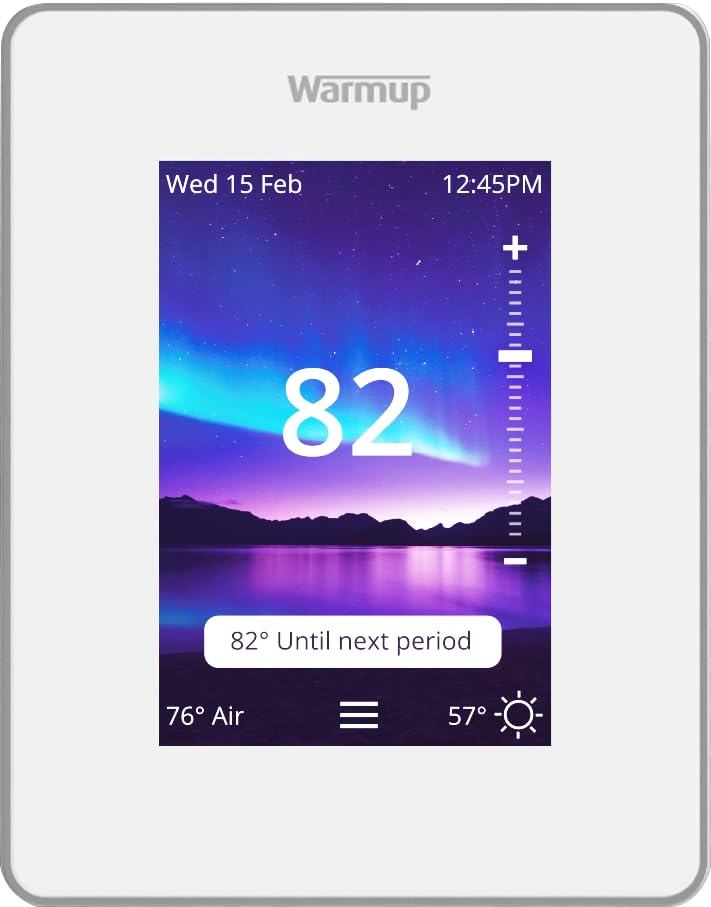
Type: Wired smart thermostat
Heating control: Underfloor and radiator
Installation: DIY
Zones: Single zone
Protocol: Matter
Colour: White
Electric Warmup 7iE Smart Thermostat is the specialist of the group. It is built for radiant heat, covering both underfloor systems and radiator heating control, which makes it the only pick here that explicitly names radiator control in its own description.
Matter support is the headline for future-proofing: the thermostat can join a cross-brand smart home rather than locking into one ecosystem. Single-zone control keeps the wiring simple, and the DIY installation framing means a competent flat owner can fit it without a specialist. This is a small-business brand product rather than a mass-market one, and the price reflects the niche.
Who it suits: owner-occupiers with electric underfloor heating or a dedicated radiator zone who want Matter compatibility and are prepared to pay for a specialist unit.
Trade-off: At the top of the price range and limited to a single zone, this thermostat costs more per room than the budget picks and offers no economy of scale for a whole flat.
Check the current price on Amazon
5. Mysa Smart Thermostat V2 for Electric Baseboard Heaters
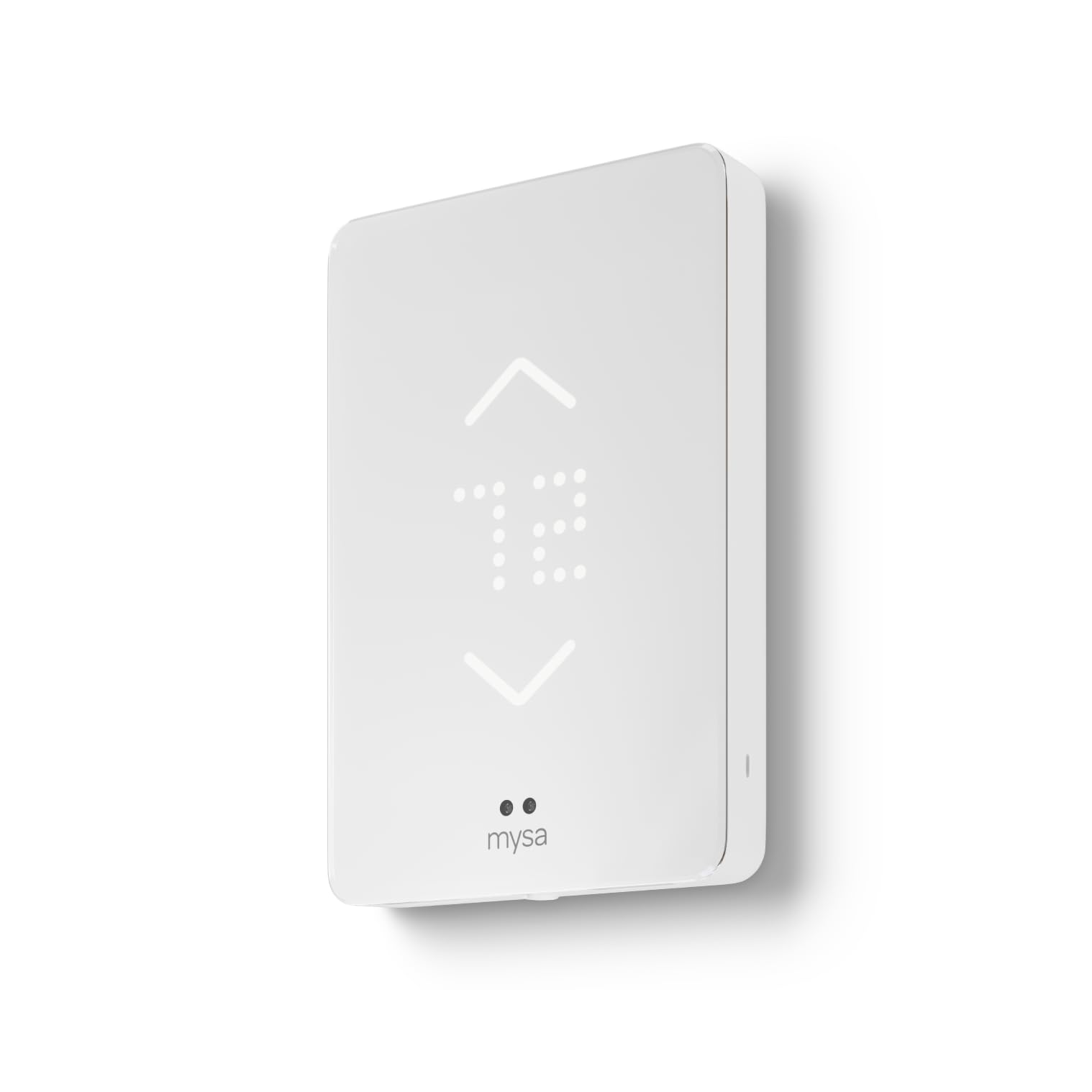
Voltage: 120V–240V
Heat type: Electric baseboard heaters
Sensors: Humidity sensor
Display: Touchscreen
Features: Scheduling, geofencing
Subscriptions: None
Voice platforms: Apple Home, Alexa, Google
Mysa Smart Thermostat V2 for Electric Baseboard Heaters is the full-fat version of the LITE and the strongest all-rounder for a flat on electric radiators. Line-voltage support at 120V–240V is the foundation, and everything above it is quality of life: a humidity sensor, a touchscreen for wall-side control, geofencing and scheduling.
No subscription is a meaningful differentiator, since some smart thermostats gate useful features behind a monthly fee. Geofencing in particular earns its keep in a flat, cutting heat when nobody is home without requiring a manual schedule. The touchscreen means guests and visiting family can adjust the temperature without the app.
Who it suits: buyers who want the most complete feature set for electric baseboard and radiator heating and are willing to pay mid-range money for it. It is the best smart thermostat for a flat with electric radiators where budget allows.
Trade-off: The V2 costs noticeably more than the LITE for the same core heating control, and the extra sensors and screen only pay off for households that will actually use geofencing and on-wall adjustments.
Check the current price on Amazon
Before You Buy
- Voltage: Electric radiators usually run on line voltage, so a thermostat rated for 120V–240V is the safe starting point. Low-voltage models may need a relay.
- Load rating: Confirm the thermostat can handle the total wattage of the radiators on that circuit, not just one panel.
- Compatibility: Check the heating type named in the product description — baseboard, radiant, underfloor or conventional — against the actual system in the flat.
- Wiring: A two-wire setup is simplest; homes with extra control wires have more options. Renters should confirm the landlord permits a swap.
- Ecosystem: Match the thermostat to the household’s voice platform and hub, and favour Matter support if the smart home may expand.
- Subscriptions: Verify whether scheduling, geofencing or history sit behind a paid plan before committing.
- Zoning: A single-zone unit controls one circuit. A flat with separately wired rooms needs one thermostat per zone or a multi-zone system.
Frequently Asked Questions
-
Can a smart thermostat control electric radiators?
Yes, provided the thermostat is rated for line voltage and the load of the radiator circuit. Line-voltage models such as the Mysa units are purpose-built for this; conventional low-voltage thermostats generally are not. -
Does a smart thermostat really save money on electric heating?
Savings come from scheduling and setback rather than the hardware itself. Keeping rooms cooler when empty and heating only occupied spaces is where the reduction shows up on the bill. -
Is a neutral wire needed for these thermostats?
Line-voltage thermostats for electric baseboard heating are designed around the existing two-wire supply in most flats. Buyers should check the wiring requirements for their specific model before ordering. -
Can renters install a smart thermostat in a flat?
Many line-voltage models are marketed as DIY-friendly, but a rental agreement may require landlord consent or a qualified electrician. Renters should confirm before touching the wiring. -
What is Matter, and does it matter here?
Matter is a cross-brand smart home standard that lets devices work across ecosystems. It is useful if the flat’s smart home may grow beyond one brand, but it is not essential for basic heating control. -
Do these thermostats need a subscription?
The Mysa models are sold without a subscription requirement, and the ecobee Essential and Sensi are built around free app control. Buyers should confirm feature access for any model before purchase.
Bottom Line
For most flats with electric radiators, the Mysa Smart Thermostat V2 for Electric Baseboard Heaters is the pick: true line-voltage compatibility, geofencing, a humidity sensor and no subscription. Buyers on a tight budget should take the Mysa LITE for the same core control at a lower tier, while anyone with underfloor or dedicated radiant zones should look at the Electric Warmup 7iE.
