Why there are Amazon links here: Brave Review is paid a commission for qualifying Amazon purchases made through the links below. Your price does not change, and using our links is entirely optional. How this works
Best Smart TRV for a Room That Never Gets Warm
A room that never gets warm is usually a control problem, not a boiler problem. The best smart TRV for a room that never gets warm gives that one radiator its own schedule, its own setpoint and its own voice command, so the rest of the house stops stealing the heat. This shortlist covers five picks: two smart radiator valves for existing radiators, two Wi-Fi thermostats for zoned or whole-home control, and two wall heaters for rooms with no radiator at all. Buyers who rent, buyers who own, and buyers heating a converted loft or extension should all find a fit in the overview below.
The Picks at a Glance
| Product | Key Spec | Best Use | Price Tier |
|---|---|---|---|
| Shelly Blu TRV & Blu Gateway Gen3 | Bluetooth TRV + gateway, Alexa/Google/Home Assistant | Existing radiator, local smart control | Mid |
| Smart Thermostatic Radiator Valve (Programmable TRV) | Programmable TRV, voice assistant compatible | Budget radiator zoning | Budget |
| ecobee Smart Thermostat Essential | Wi-Fi, Siri/Alexa/Google, Energy Star | Whole-home or zoned thermostat control | Mid |
| DREO Smart Wall Heater 1500W | 1500W, 120° oscillation, Alexa | Small cold room, no radiator | Budget |
| DREO Smart Electric Wall Heater (Large Room) | IP24, app + remote, Alexa | Large cold room, quiet operation | Mid |
1. Shelly Blu TRV & Blu Gateway Gen3 Smart Thermostatic Valve
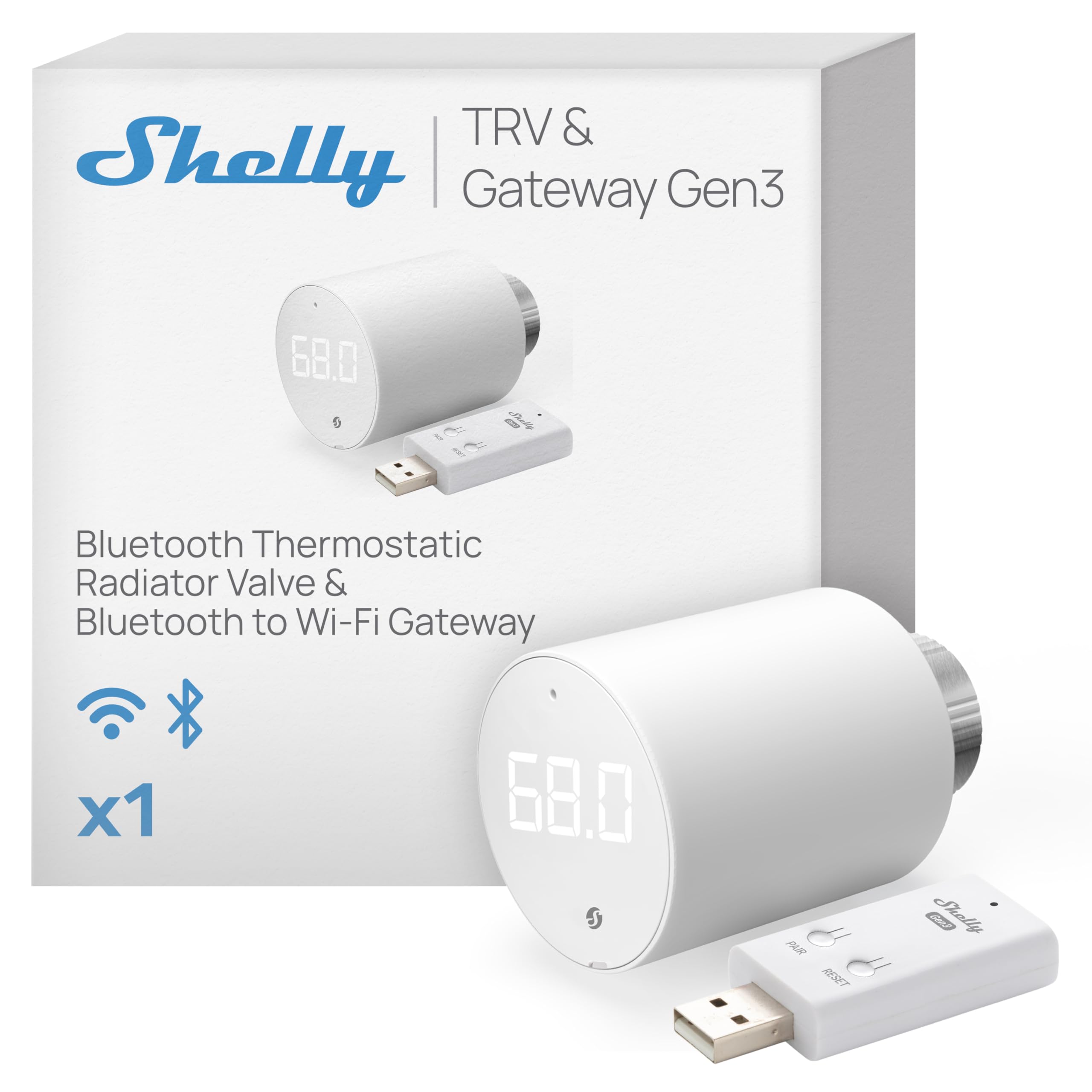
Type: Smart thermostatic radiator valve with gateway
Connectivity: Bluetooth-operated, via included gateway
Voice Control: Alexa, Google, Home Assistant
Function: Radiator temperature control and home automation
Best For: Local, cloud-light smart heating
Shelly Blu TRV & Blu Gateway Gen3 Smart Thermostatic Valve is the pick for buyers who want radiator-level control without handing their heating schedule to a big cloud platform. The bundle pairs the valve with a Gen3 gateway, which is the part that bridges Bluetooth to the home network and exposes the valve to Alexa, Google and Home Assistant. That gateway is what separates this from a bare Bluetooth valve that only works within phone range.
The Shelly ecosystem suits tinkerers and Home Assistant users in particular, because automation lives locally rather than in a vendor app. For a cold room, that means a schedule and a setpoint that fire on their own, plus the option to tie the valve to other sensors later. Buyers who want a plug-and-play app with zero setup should look elsewhere.
Trade-off: The gateway dependency adds a device to set up and power, and Bluetooth-based control is less forgiving than Wi-Fi for buyers who want remote access without extra configuration.
Check the current price on Amazon
2. Smart Thermostatic Radiator Valve, Programmable TRV
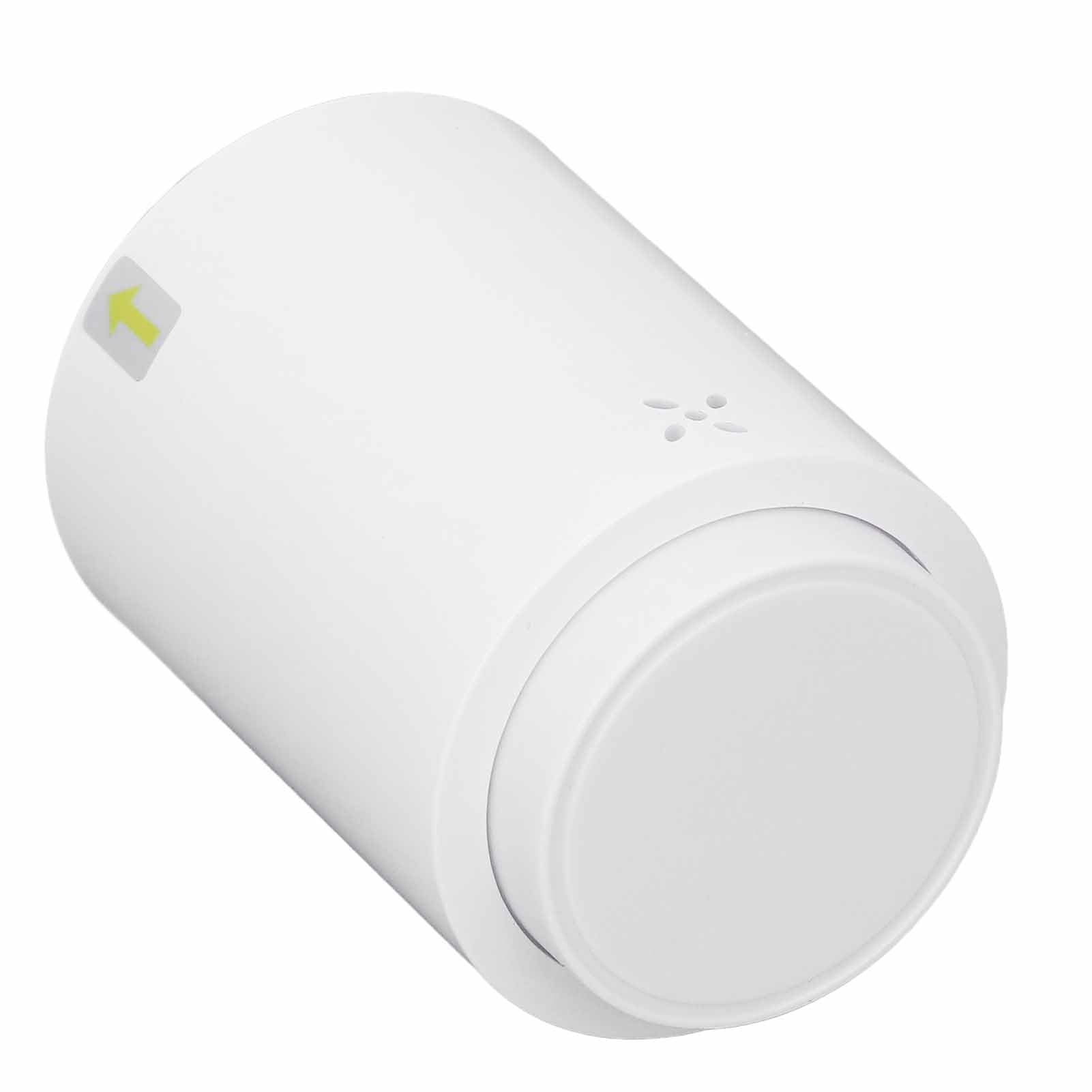
Type: Programmable smart TRV
Intended Use: Home and hotel heating control
Voice Control: Voice assistant compatible
Function: Energy-saving scheduling
Best For: Cheap first step into radiator zoning
Smart Thermostatic Radiator Valve, Programmable TRV is the budget entry point: a single valve head that replaces the manual TRV on a cold radiator and adds programmable schedules plus voice assistant compatibility. There is no gateway in the box, so the buyer gets one room under control for the lowest outlay on this list. For a bedroom or box room that never warms up, that is often enough.
The trade-off at this tier is app polish and ecosystem depth. Expect a functional scheduling app rather than a rich automation platform, and expect the voice integration to cover the basics rather than everything. It is the right pick for a first smart valve, not for a whole-house rollout.
Trade-off: Budget TRVs typically skimp on hub integration and long-term firmware support, so this suits a single stubborn radiator rather than a full-home system.
Check the current price on Amazon
3. ecobee Smart Thermostat Essential

Type: Programmable Wi-Fi thermostat
Voice Control: Siri, Alexa, Google Assistant
Certification: Energy Star certified
Function: Energy-saving whole-home scheduling
Best For: Replacing a dumb wall thermostat
ecobee Smart Thermostat Essential attacks the cold room from the other end: instead of throttling one radiator, it takes over the wall thermostat and lets the household run schedules and setpoints from an app. The Essential model covers the core ecobee feature set — Wi-Fi programming, all three major voice assistants and Energy Star certification — without the premium sensors of the flagship line.
This is the pick for a house where the cold room is cold because the thermostat is badly placed or badly scheduled. It is not a radiator valve, so it cannot zone individual rooms on its own; buyers with a single cold radiator should pair it with a TRV rather than expect a thermostat to fix a balancing problem. Installation involves low-voltage wiring, which is a job for a confident DIYer.
Trade-off: A whole-home thermostat cannot zone a single radiator, so it fixes scheduling and setpoint issues rather than a genuinely undersized or badly balanced radiator.
Check the current price on Amazon
4. DREO Smart Wall Heater, 1500W

Type: Wall-mounted electric space heater
Power: 1500W
Features: 120° oscillation, ECO mode, adjustable thermostat, 24H timer
Voice Control: Works with Alexa
Best For: A cold room with no radiator
DREO Smart Wall Heater, 1500W is the answer when the cold room has no radiator to put a TRV on. It mounts to the wall, oscillates through 120 degrees to spread heat, and carries an adjustable thermostat, ECO mode and a 24-hour timer, all reachable through Alexa. For a box room, home office or converted garage, it delivers targeted heat without a plumber.
The 1500W rating is standard for a plug-in wall heater and suits a small-to-medium room rather than a large open space. Buyers should also plan the mount and the socket location before ordering, because a wall heater is a semi-permanent install. It is a heating appliance first and a smart device second, which is the right priority for a room the central system has given up on.
Trade-off: A 1500W wall heater is a small-room solution, and the permanent wall mount plus a nearby outlet make it a poor fit for renters or anyone who needs portable heat.
Check the current price on Amazon
5. DREO Smart Electric Wall Heater for Large Rooms

Type: Wall-mounted electric space heater
Rating: IP24
Airflow: 11.5 ft/s heating
Noise: 28dB quiet operation
Controls: App and remote, digital thermostat, ECO mode
Voice Control: Works with Alexa
Best For: Large cold rooms needing quiet heat
DREO Smart Electric Wall Heater for Large Rooms is the step up for bigger, colder spaces. The IP24 rating means it is protected against splashing water, which opens up bathrooms and utility rooms that a standard heater cannot safely serve. The 28dB noise figure is genuinely quiet for a fan-driven heater, and the 11.5 ft/s airflow figure points to a stronger fan than the smaller DREO above.
App and remote control plus a digital thermostat and ECO mode give the same smart control layer as the 1500W model, with Alexa on top. The quiet operation matters in a bedroom or study where a noisy fan would defeat the purpose. This is the pick for a large room that the central heating never reaches, not a small box room where the cheaper unit is enough.
Trade-off: The larger chassis and higher output cost more and demand a more careful wall location, and the heater is still a supplementary solution rather than a fix for an undersized central system.
Check the current price on Amazon
Before You Buy
- Heating type: A smart TRV only works on a wet radiator with a compatible valve body; a room with no radiator needs a wall heater or a thermostat fix instead.
- Compatibility: Check the valve thread and any adapter requirements before buying a TRV, and confirm the hub or gateway situation — some valves need one, some do not.
- Ecosystem: Match the valve or thermostat to the voice assistant and smart home platform already in the house, since cross-platform support varies widely.
- Room size: Match heater output to the room; a 1500W wall heater suits a small room, and larger spaces need the higher-airflow model.
- Installation: Thermostats involve low-voltage wiring, wall heaters need mounting and a nearby outlet, and TRVs need the old valve head removed.
- Power and placement: For wall heaters, confirm the socket location and clearance before mounting; for TRVs, confirm the radiator is not in a sealed enclosure that traps heat.
- Scheduling: The whole point is a schedule that runs the cold room independently, so check the app supports per-room or per-device schedules before committing.
Frequently Asked Questions
-
Will a smart TRV make a cold room warmer?
Yes, if the radiator is undersized in run time rather than in output. A TRV lets that radiator call for heat on its own schedule instead of being held back by a central thermostat, which is the usual cause of a room that never gets warm. -
Does a smart TRV need a hub or gateway?
It depends on the model. Some valves connect directly over Wi-Fi or Bluetooth to a phone, while others — like the Shelly bundle here — include or require a gateway to bridge to the network and to voice assistants. -
Can a smart thermostat fix one cold room?
Only if the problem is scheduling or thermostat placement. A whole-home thermostat cannot zone a single radiator, so a cold room with a working radiator usually needs a TRV rather than a new thermostat. -
What if the cold room has no radiator at all?
A wall-mounted electric heater is the practical answer. The DREO models here mount permanently, run on a standard household circuit and add app, remote and Alexa control so the room can be heated independently. -
Are smart TRVs renter-friendly?
Usually yes, provided the original valve head can be refitted when moving out. Wall heaters are less renter-friendly because of the permanent mount, which is why the TRV picks come first for anyone renting. -
How many smart TRVs does a cold room need?
One per radiator. A single stubborn radiator needs one valve; a cold room with two radiators needs two, and both should be on the same schedule for consistent heat.
Bottom Line
For most buyers with a radiator that never gets warm, the best smart TRV for a room that never gets warm is the Shelly Blu TRV & Blu Gateway Gen3, because the included gateway delivers local, platform-flexible control that suits Home Assistant users and voice-assistant households alike. Buyers on a tight budget should start with the programmable TRV, and buyers with no radiator at all should go straight to the DREO large-room wall heater.
